Superfoods
In recent years, the conversation around food has shifted dramatically. People are no longer asking only whether their meals taste good—they’re asking whether those meals can improve their health, strengthen their immune systems, support digestion, and even help protect the environment. This growing awareness has placed superfoods at the center of global attention.
By 2026, farmers around the world are embracing a new generation of crops that do much more than fill plates. These crops are packed with essential nutrients, naturally rich in fiber, vitamins, antioxidants, and plant compounds that support overall wellness. Even more importantly, many of these plants are proving resilient against changing weather patterns, drought, and declining soil quality.
That combination is exactly why these crops are gaining popularity among both farmers and consumers.
Today’s health-conscious shoppers are searching for foods that improve gut health, reduce inflammation, and provide long-lasting nutritional value. At the same time, farmers are seeking crops that can withstand climate uncertainty while remaining profitable and environmentally friendly. The result is a perfect meeting point between agriculture and nutrition.
This isn’t simply another food trend.
It represents a major shift toward healthier diets, sustainable farming, and smarter food production.
As researchers continue uncovering the powerful relationship between the digestive system and overall health, interest in healthy nutrition has reached unprecedented levels. Scientists increasingly recognize the gut as one of the body’s most influential systems, affecting immunity, mental wellbeing, metabolism, and even heart health. Foods naturally rich in fiber and beneficial plant compounds have therefore become more valuable than ever.
Fortunately, many of these foods begin their journey on farms.
Across continents, growers are investing in climate-resilient crops that not only survive challenging growing conditions but also deliver exceptional nutritional benefits. These crops help create healthier people while supporting healthier ecosystems—a win for everyone involved.
In this guide, you’ll discover four remarkable superfoods that farmers are increasingly cultivating in 2026. You’ll also learn why these crops are transforming modern agriculture, how they naturally improve digestive wellness, and why nutrition experts believe they will remain among the world’s most important foods well beyond 2027.

Why Superfoods Are More Important Than Ever for Gut Health in 2026
The word superfood has become extremely common, but what does it actually mean?
While there is no official scientific definition, nutrition experts generally use the term to describe foods exceptionally rich in nutrients relative to their calorie content. These foods often contain impressive amounts of vitamins, minerals, antioxidants, fiber, healthy fats, and beneficial phytochemicals.
What makes them especially valuable today is their ability to support multiple aspects of health simultaneously.
Some improve digestion.
Others reduce inflammation.
Many strengthen immunity.
Several help regulate blood sugar and cholesterol.
The best ones accomplish all of these benefits naturally.
Why Gut Health Has Become a Global Priority
The digestive system contains trillions of microorganisms collectively known as the gut microbiome.
These bacteria influence:
- Immune function
- Nutrient absorption
- Mental wellbeing
- Weight management
- Energy production
- Hormone balance
- Inflammation control
When these microorganisms remain balanced, the body performs far more efficiently.
However, processed foods, stress, antibiotics, poor sleep, and unhealthy lifestyles can disrupt this delicate ecosystem.
This explains why nutritionists increasingly recommend foods naturally rich in dietary fiber and plant nutrients.
Farm-grown superfoods provide exactly that.
How Climate-Resilient Crops Are Transforming Healthy Nutrition
Modern agriculture faces enormous challenges.
Farmers must now produce more food while using fewer natural resources.
They also face:
- Longer drought periods
- Unpredictable rainfall
- Rising temperatures
- New crop diseases
- Declining soil fertility
- Increasing production costs
Instead of relying solely on traditional farming methods, many producers are turning toward climate-resilient crops.
These crops can better tolerate environmental stress while maintaining impressive nutritional quality.
This shift benefits everyone.
Benefits for Farmers
- Higher crop survival rates
- Better yields during unpredictable seasons
- Lower production risks
- Improved soil sustainability
- Greater market demand
Benefits for Consumers
- More nutritious foods
- Increased food availability
- Better digestive health
- Reduced environmental impact
- Improved food security
This is one reason searches for climate-resilient superfoods farmers are growing in 2026 continue increasing.
Consumers are becoming interested not only in what they eat but also how those foods are produced.
Comparison Table: Why These Superfoods Stand Out
| Superfood | Main Gut Health Benefit | Climate Resilience | Rich Nutrients | Sustainability Score |
|---|---|---|---|---|
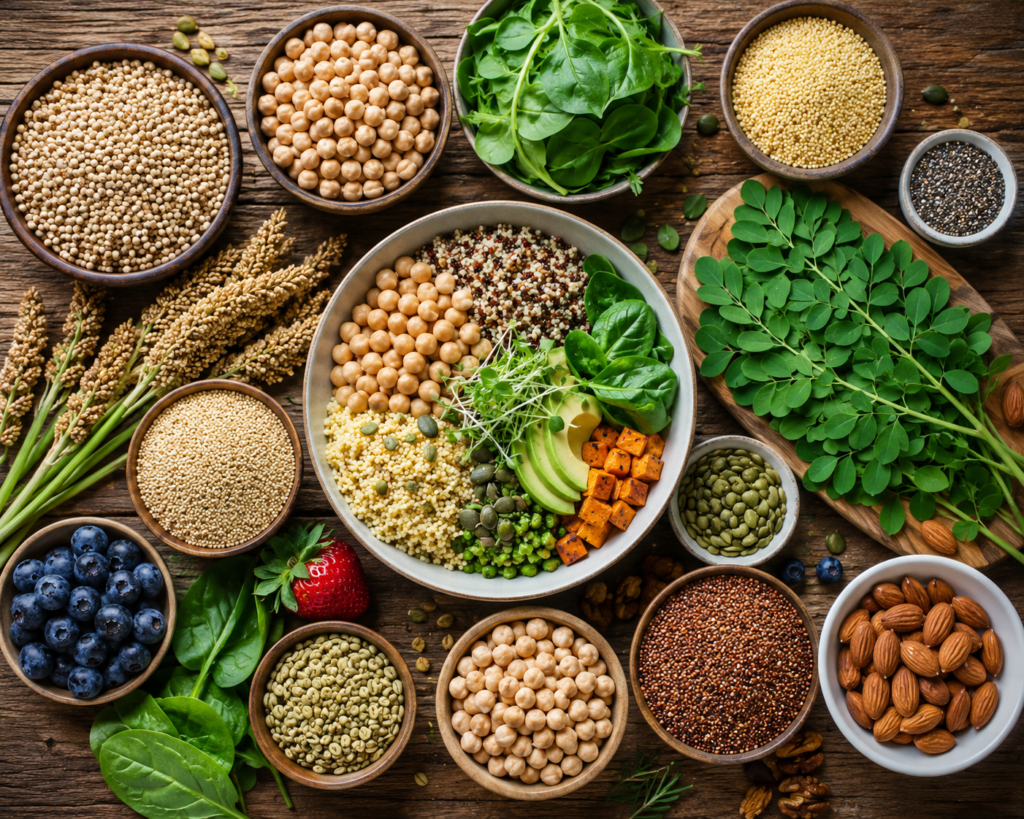
| Sorghum | Excellent source of prebiotic fiber | Excellent | Fiber, Iron, Magnesium | ★★★★★ |
| Moringa | Supports beneficial gut bacteria | Very High | Vitamin A, C, Calcium, Protein | ★★★★★ |
| Millet | Improves digestion naturally | Excellent | Fiber, B Vitamins, Iron | ★★★★★ |
| Chickpeas | Promotes microbiome diversity | High | Protein, Fiber, Folate | ★★★★☆ |
Superfoods #1: Sorghum – The Ancient Grain Powering Modern Gut Health
Among all the crops attracting attention in 2026, few have experienced a stronger comeback than sorghum.
Once considered a traditional cereal grown mainly in arid regions, sorghum is now being recognized globally as one of the best superfoods for gut health in 2026.
Its growing popularity isn’t accidental.
Nutrition researchers, farmers, food manufacturers, and consumers have all begun appreciating its remarkable combination of resilience and nutrition.
Why Farmers Love Growing Sorghum
Unlike many conventional grains, sorghum performs exceptionally well under difficult environmental conditions.
It tolerates:
- Heat
- Drought
- Water shortages
- Poor soils
- High temperatures
Because of these qualities, sorghum has become one of the leading climate-resilient crops helping farmers adapt to changing weather patterns.
For growers, this means greater productivity with fewer agricultural inputs.
For consumers, it means a reliable source of nutritious food.
How Sorghum Supports Gut Health Naturally
One of sorghum’s greatest strengths is its naturally high fiber content.
Fiber serves as food for beneficial gut bacteria.
When these microorganisms ferment fiber inside the digestive tract, they produce compounds known as short-chain fatty acids.
These compounds help:
- Strengthen the intestinal lining
- Reduce digestive inflammation
- Improve nutrient absorption
- Support immune function
- Promote regular bowel movements
Unlike highly processed grains, whole-grain sorghum retains much of its natural nutritional profile.
That makes it an excellent addition to diets focused on healthy nutrition.
Nutritional Highlights of Sorghum
Sorghum provides an impressive collection of nutrients, including:
- Dietary fiber
- Plant protein
- Magnesium
- Iron
- Potassium
- Zinc
- B vitamins
- Powerful antioxidants called phenolic compounds
Its antioxidant content may also help reduce oxidative stress, protecting cells from everyday damage caused by free radicals.
This makes sorghum valuable not only for digestive health but also for long-term wellness.
Simple Ways to Enjoy Sorghum
Sorghum is surprisingly versatile in the kitchen.
You can enjoy it as:
- Breakfast porridge
- Grain bowls
- Salads
- Gluten-free flour for baking
- Soups
- Side dishes similar to rice
- Popped snacks similar to popcorn
As consumers increasingly seek nutrient-rich crops for better health and sustainable farming, sorghum is positioned to remain one of the most important superfoods for years to come.
Superfood #2: Moringa – The Nutrient-Dense Tree Revolutionizing Healthy Nutrition
If there is one plant that has earned its reputation as a true superfood, it is moringa. Often referred to as the “miracle tree,” moringa has been cultivated for centuries in tropical and subtropical regions. In 2026, however, it has gained even greater recognition as one of the top healthy superfoods grown by farmers for better nutrition.
The growing popularity of moringa is no coincidence. As consumers become more interested in natural wellness and preventive healthcare, they are looking for foods that deliver exceptional nutritional value without relying on synthetic supplements. Moringa meets that demand remarkably well.
Why Farmers Are Growing More Moringa
One of moringa’s greatest advantages is its adaptability. Unlike many leafy vegetables that require frequent watering and fertile soil, moringa thrives in challenging environments.
Farmers appreciate moringa because it:
- Tolerates drought exceptionally well.
- Grows rapidly with minimal maintenance.
- Produces edible leaves almost year-round.
- Requires relatively few chemical inputs.
- Helps improve biodiversity on farms.
These qualities make moringa one of the leading climate-resilient superfoods farmers are growing in 2026.
As climate variability continues to affect agricultural production worldwide, resilient crops like moringa provide farmers with a reliable source of income while supporting sustainable food production.
How Moringa Supports Gut Health
Although moringa is famous for its impressive vitamin profile, its contribution to gut health is equally important.
Its leaves contain dietary fiber that nourishes beneficial gut bacteria. A healthy gut microbiome relies on fiber-rich foods to maintain microbial diversity, which plays an essential role in digestion, nutrient absorption, and immune function.
Moringa also contains naturally occurring plant compounds with antioxidant and anti-inflammatory properties. These compounds help reduce oxidative stress in the digestive tract and may support overall intestinal health when consumed as part of a balanced diet.
For individuals looking to improve digestive wellness naturally, moringa is among the best superfoods for gut health in 2026.
Outstanding Nutritional Profile
Moringa leaves are packed with essential nutrients, including:
- Vitamin A
- Vitamin C
- Vitamin E
- Calcium
- Potassium
- Iron
- Magnesium
- Plant protein
- Dietary fiber
Its remarkable nutritional density explains why nutrition experts continue recommending moringa as part of a varied, plant-rich diet.
Easy Ways to Add Moringa to Your Diet
One of moringa’s biggest strengths is its versatility.
You can enjoy it in many forms:
- Fresh leaves in salads
- Smoothies
- Herbal teas
- Soups
- Stir-fries
- Omelets
- Green powders mixed into yogurt
- Homemade energy balls
Because of its mild earthy flavor, moringa blends well into many everyday meals without overwhelming other ingredients.

Superfood #3: Millet – The Ancient Grain Making a Modern Comeback
Millet has nourished communities for thousands of years, yet for decades it remained overshadowed by wheat, rice, and corn.
That is rapidly changing.
In 2026, millet is receiving global recognition as one of the smartest grains for sustainable agriculture and one of the top healthy superfoods grown by farmers for better nutrition.
Food and Agriculture Organization of the United Nations (FAO) – Sustainable agriculture, climate-resilient farming, crop diversity, and global food security. https://www.fao.org/
As more people embrace whole grains and plant-based diets, millet has become a favorite among nutritionists and environmentally conscious consumers alike.
Why Millet Is Becoming Popular Again
Unlike many commercial grains, millet requires relatively little water and performs exceptionally well under hot, dry conditions.
For farmers, millet offers several advantages:
- Excellent drought tolerance
- Fast growth cycle
- Lower water requirements
- Ability to grow in poor soils
- Reduced production costs
- Improved crop diversity
These benefits position millet among the most promising climate-resilient crops for the future.
Millet’s Role in Gut Health
Whole millet is naturally rich in dietary fiber.
Fiber performs several important functions inside the digestive system:
- Encourages regular bowel movements.
- Supports beneficial gut bacteria.
- Promotes satiety.
- Helps regulate blood sugar.
- Supports healthy cholesterol levels.
Unlike refined grains, millet retains its bran and germ when consumed whole, preserving valuable nutrients that contribute to digestive health.
Its combination of soluble and insoluble fiber makes it an excellent choice for anyone seeking healthy nutrition through whole foods.
Key Nutrients Found in Millet
Millet provides:
- Complex carbohydrates
- Dietary fiber
- Iron
- Magnesium
- Phosphorus
- Zinc
- B vitamins
- Plant protein
These nutrients contribute not only to digestive health but also to sustained energy production and overall wellbeing.
Simple Ways to Enjoy Millet
Millet adapts well to both savory and sweet dishes.
Popular uses include:
- Breakfast porridge
- Grain salads
- Stuffed vegetables
- Vegetable bowls
- Side dishes
- Homemade veggie burgers
- Gluten-free baking
Its mild flavor makes it easy to incorporate into everyday meals.
Superfood #4: Chickpeas – Small Legumes with Big Nutritional Benefits
Chickpeas have long been valued as an affordable source of plant protein, but their health benefits extend far beyond protein content.
In 2026, chickpeas continue gaining popularity as one of the best superfoods for gut health in 2026 because they provide an impressive balance of fiber, protein, vitamins, and minerals.
Their versatility has also made them a staple ingredient in healthy diets around the world.
Why Farmers Continue Investing in Chickpeas
Chickpeas contribute positively to both farming systems and soil health.
Unlike many crops, chickpeas naturally fix atmospheric nitrogen through beneficial soil bacteria.
This process helps:
- Improve soil fertility.
- Reduce fertilizer needs.
- Support crop rotation.
- Lower production costs.
- Encourage sustainable farming.
These characteristics make chickpeas an important part of modern climate-smart agriculture.
How Chickpeas Improve Gut Health
Chickpeas are exceptionally rich in resistant starch and dietary fiber.
These nutrients serve as prebiotics, feeding beneficial bacteria living inside the digestive tract.
A healthier microbiome can contribute to:
- Better digestion
- Stronger immunity
- Reduced digestive discomfort
- Improved bowel regularity
- Better nutrient absorption
Because chickpeas digest slowly, they also help stabilize blood sugar and promote longer-lasting fullness after meals.
Nutritional Benefits of Chickpeas
A serving of chickpeas supplies:
- Plant protein
- Fiber
- Folate
- Iron
- Magnesium
- Potassium
- Zinc
- Manganese
This nutritional profile supports cardiovascular health, muscle maintenance, and digestive wellness simultaneously.
Delicious Ways to Eat Chickpeas
Chickpeas are among the most versatile ingredients available.
You can enjoy them as:
- Hummus
- Roasted snacks
- Salads
- Soups
- Curries
- Grain bowls
- Pasta alternatives
- Plant-based burgers
Their ability to absorb flavors makes them suitable for countless recipes.
Why Climate-Resilient Crops Are the Future of Healthy Nutrition
One of the most important agricultural trends in 2026 is the growing emphasis on resilience.
Climate change continues to challenge food production through unpredictable rainfall, prolonged droughts, rising temperatures, and increasing pest pressure. Farmers can no longer rely solely on traditional crop choices if they want consistent harvests and long-term sustainability.
This is where climate-resilient crops become essential.
These crops are specifically valued because they continue producing nutritious harvests even under difficult environmental conditions. Their ability to withstand stress makes them vital for protecting food supplies while reducing pressure on natural resources.
Benefits for Farmers
Growing climate-resilient crops offers several advantages:
- Reduced risk of crop failure.
- Better adaptation to extreme weather.
- Lower irrigation requirements.
- Improved soil conservation.
- Greater long-term profitability.
- Increased resilience against changing climates.
Benefits for Consumers
Consumers also benefit significantly from these farming practices:
- Access to nutrient-rich foods.
- Greater food security.
- Improved dietary diversity.
- More sustainable food systems.
- Reduced environmental impact.
This is why interest in nutrient-rich crops for better health and sustainable farming continues to grow among health professionals, environmental organizations, and consumers alike.
How Farmers Are Producing Nutrient-Rich Crops Sustainably
Today’s farmers understand that producing healthy food requires more than simply planting seeds. Long-term success depends on protecting soil, conserving water, and maintaining biodiversity.
Many growers are adopting sustainable farming practices that improve crop quality while reducing environmental impact.
Common approaches include:
- Crop rotation to improve soil fertility.
- Compost application to enrich organic matter.
- Reduced chemical inputs where appropriate.
- Water-efficient irrigation systems.
- Cover cropping to protect soil.
- Integrated pest management.
- Agroforestry systems that combine trees with crops.
These methods help produce healthier harvests while preserving natural resources for future generations.
By combining sustainable farming with nutrient-dense crops such as sorghum, moringa, millet, and chickpeas, farmers are helping build food systems that support both healthy nutrition and environmental resilience.
World Health Organization (WHO) – Healthy diet recommendations, nutrition guidance, and public health resources. https://www.who.int/

Final Thoughts
The future of food is being shaped in fields and farms long before it reaches our tables. By embracing superfoods such as sorghum, moringa, millet, and chickpeas, farmers are cultivating crops that not only withstand environmental challenges but also provide the foundation for better gut health and healthy nutrition.
As awareness of sustainable agriculture and preventive health continues to grow, these climate-resilient crops are well positioned to remain essential components of healthy diets for years to come. Whether you’re a consumer looking to improve your eating habits or someone interested in the future of farming, choosing nutrient-rich, sustainably grown foods is a meaningful step toward a healthier future—for yourself and for the planet.
About The Author