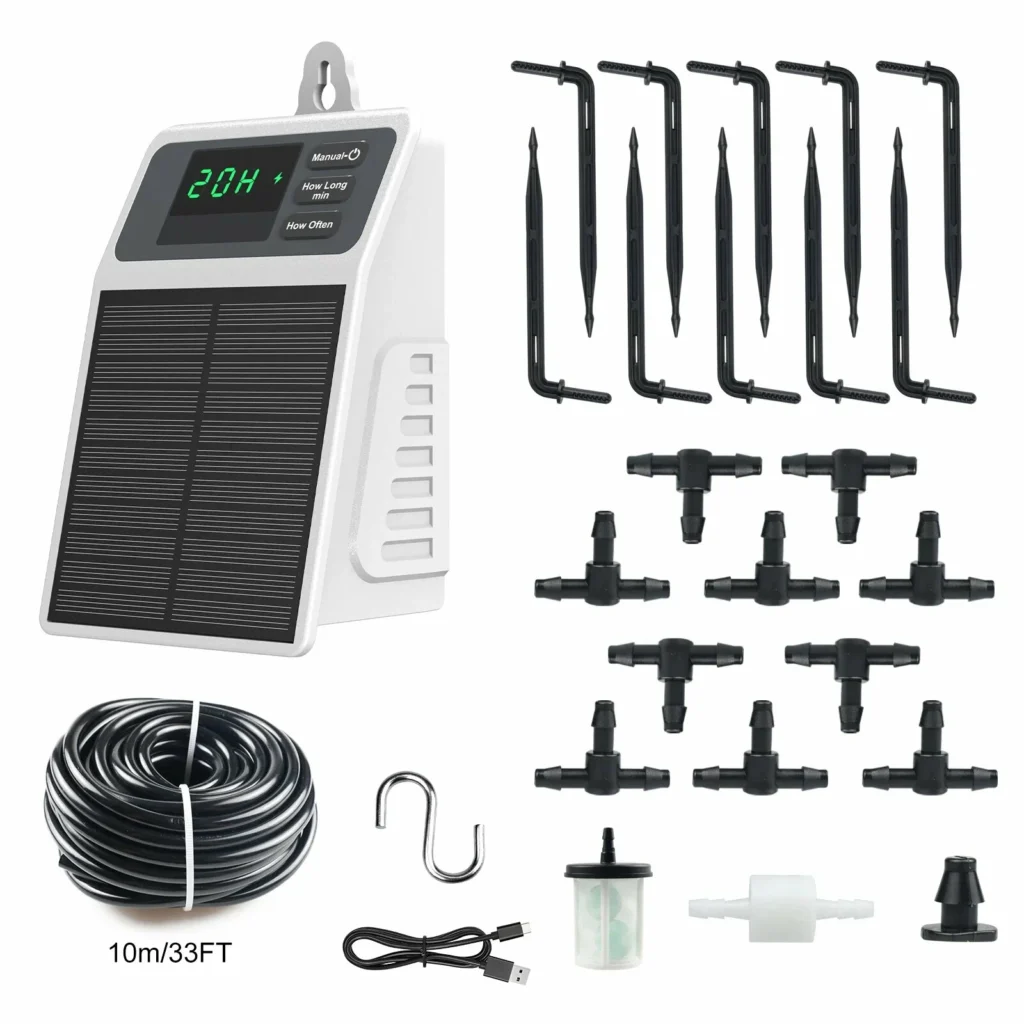
Solar Irrigation System
Imagine running a vegetable farm during the dry season without having to worry constantly about the rising cost of petrol or diesel. Instead of spending money every few days to power a water pump, you use sunlight to generate electricity, pump water from a reliable source and distribute it to your crops.
That is the opportunity solar irrigation creates.
However, installing a solar irrigation system involves more than simply purchasing solar panels and connecting them to a water pump. Farmers need to understand how the technology works, which type of pump is appropriate, how much water their crops require, what equipment is necessary and how much the complete installation may cost.
A poorly designed system can waste money, provide insufficient water or fail to meet the farm‘s irrigation requirements. On the other hand, a properly planned system can reduce recurring energy expenses, improve water management and support productive farming for many years.
In this comprehensive guide, we explore how a solar irrigation system works, its ten major benefits, the equipment required, installation procedures, estimated costs, maintenance requirements and how to choose the best solar irrigation system for small farms.
Whether you operate a small vegetable garden, a commercial crop farm or a larger agricultural enterprise, this guide will help you understand whether solar-powered irrigation is a worthwhile investment for your farming operation.
Agriculture is changing, and one of the biggest challenges facing farmers today is how to secure a reliable water supply without allowing the cost of irrigation to consume their profits. For generations, farmers have depended on rainfall, rivers, streams, wells and manually operated watering systems to keep their crops growing. While these methods still support agricultural production, changing weather patterns, rising fuel prices and unreliable electricity have made irrigation planning increasingly important.
In Nigeria and other parts of Africa, many farmers experience a frustrating situation. The rainy season may provide enough water for several months, but once the dry season arrives, crop production becomes more difficult. Some farmers abandon their fields temporarily, while others spend substantial amounts on petrol and diesel to operate water pumps. The result is higher production costs, limited planting opportunities and uncertainty about the final harvest.
This is where a solar irrigation system becomes particularly useful.
A solar irrigation system uses energy generated by sunlight to operate a water pump that supplies water to agricultural fields. Instead of depending entirely on petrol, diesel or electricity from the national grid, farmers can use solar panels to generate the power needed to move water from a river, well, reservoir, dam or borehole to their crops.
The technology is particularly attractive to farmers operating in rural communities where electricity supply is unreliable or unavailable. It can also benefit commercial farmers who want to reduce their long-term energy expenses and improve the efficiency of their irrigation operations.
Solar-powered irrigation is not simply about replacing a conventional pump with a solar-powered alternative. It is about creating a more dependable relationship between energy, water availability and agricultural production.
According to the Food and Agriculture Organization of the United Nations (FAO), solar photovoltaic pumping can provide an alternative energy source for irrigation, particularly in areas where electricity networks are unavailable. Its technical guidance also emphasizes proper system design, operation, inspection and maintenance.
Research published in 2026 in Frontiers in Sustainable Food Systems also examined solar-powered water solutions for sustainable irrigation in rural Nigerian communities, highlighting the potential economic and environmental advantages of the technology
However, solar irrigation is not automatically suitable for every farm. The size of the farm, water source, depth of the water, crop requirements, sunlight availability and irrigation method all influence the type of system required.
In this guide, we will examine everything farmers need to know before investing in this technology, including its benefits, limitations, equipment, installation procedures, costs and maintenance requirements.

What Is a Solar Irrigation System?
A solar irrigation system is an agricultural watering arrangement that uses electricity generated by solar panels to operate a water pump. The pump draws water from a suitable source and delivers it to crops through pipes, hoses, sprinklers, drip lines or other distribution equipment.
The basic idea is straightforward: sunlight provides energy, solar panels convert that energy into electricity, and the electricity powers a pump that moves water to the farm.
Unlike conventional irrigation systems that depend on fuel-powered engines or grid electricity, solar-powered irrigation can operate independently of the electricity network when properly designed.
For example, imagine a farmer growing tomatoes, peppers and cucumbers on a one-hectare farm. The farm has access to a borehole, but there is no reliable electricity supply. Instead of purchasing petrol every few days to operate a generator and pump water, the farmer installs solar panels connected to a compatible water pump.
During sunny periods, the panels generate electricity that operates the pump. Water can then be delivered directly to the crops or stored in an elevated tank for distribution later.
This arrangement can reduce dependence on fuel and make irrigation more convenient.
How Solar Irrigation System Technology Works
The operation of a solar irrigation system involves several interconnected components. Each component performs a specific function, and the entire arrangement must be correctly matched to the farm’s water requirements.
The process generally follows these stages:
-
Sunlight reaches the solar panels: Solar panels absorb sunlight and convert it into direct-current electricity.
-
The controller manages the power: A solar pump controller regulates the electricity supplied to the pump and helps protect the equipment.
-
The pump draws water: The solar water pump draws water from a borehole, well, river, pond or storage reservoir.
-
Water travels through pipes: The pump pushes the water through pipes or hoses toward the farm.
-
The irrigation system distributes water: Water reaches crops through drip irrigation lines, sprinklers, furrows or other suitable methods.
-
Water is stored when necessary: Excess water pumped during sunny hours can be stored in a tank or reservoir for use when solar production decreases.
The arrangement can be modified depending on the farm’s size, available water source and irrigation requirements.
For example, a small vegetable farm may use a relatively simple solar pump connected to a storage tank and drip irrigation lines. A larger commercial farm may require several solar panels, a higher-capacity pump, filtration equipment, larger pipes and automated irrigation controls.
The important point is that the system must be designed around the quantity of water the crops actually need, rather than selecting equipment simply because it has a high horsepower rating.
What Makes Solar Powered Irrigation Different from Conventional Irrigation?
Traditional irrigation and solar-powered irrigation can use similar water distribution methods. The major difference is the energy source used to operate the pump.
A petrol-powered irrigation system burns fuel to generate mechanical energy. A diesel-powered pump works in a similar way, while an electrically powered pump receives energy from an electricity supply.
A solar irrigation system uses photovoltaic panels to generate electricity from sunlight.
This difference affects operating expenses, maintenance requirements, environmental impact and the suitability of each system for different farming locations.
Solar-powered irrigation is particularly attractive when a farm needs water regularly and fuel or grid electricity is expensive, unreliable or difficult to access.
10 Powerful Benefits of a Solar Irrigation System for Farming
The growing interest in solar irrigation is connected to several practical advantages. Although the initial investment can be significant, the long-term benefits may make the technology worthwhile for farmers with suitable water resources and consistent irrigation needs.
Here are ten important benefits worth understanding before purchasing a system.
1. Solar Irrigation System Reduces Fuel and Electricity Expenses
One of the most attractive benefits of installing a solar irrigation system is the potential reduction in recurring energy expenses.
Farmers who use petrol or diesel pumps must continuously purchase fuel to keep their irrigation operations running. Depending on the size of the pump and the number of operating hours, fuel expenses can become a substantial part of farm production costs.
Consider a farmer who operates a petrol-powered water pump for several hours every day. The farmer must budget for petrol, transportation, occasional engine servicing and other running expenses. If fuel prices increase, irrigation becomes more expensive even when the farm’s selling prices remain unchanged.
Solar irrigation changes this arrangement.
Once the solar panels, pump and supporting equipment have been installed, sunlight becomes the primary energy source. There is no need to purchase petrol or diesel to operate the pump during normal solar-powered operation.
This does not mean the system is completely free to operate. Farmers still need to consider maintenance, cleaning, replacement components and occasional repairs. However, the absence of regular fuel purchases can produce substantial savings over time.
For farmers operating in areas where fuel is expensive or difficult to obtain, this advantage can be particularly important.
How farmers benefit:
-
Reduced dependence on petrol and diesel.
-
Lower recurring energy expenses.
-
Less money spent transporting fuel to remote farms.
-
Better predictability of irrigation operating costs.
-
Greater protection against sudden fuel-price increases.
A farmer can redirect some of the money previously spent on fuel toward improved seeds, fertilizers, pest control, labour and other important production activities.
The actual savings will depend on the farm’s water demand, pumping depth, system efficiency, local fuel prices and installation cost.
2. Solar Irrigation System Supports Dry-Season Farming
Rainfall is one of the most important factors influencing agricultural production. However, farmers who depend entirely on rainfall often face limitations when the rainy season ends.
In many Nigerian communities, the dry season creates opportunities for irrigation-based vegetable production, but farmers need a dependable source of water to take advantage of those opportunities.
A solar irrigation system can help farmers continue cultivating crops outside the main rainy season.
For example, a farmer who grows tomatoes during the rainy season may use solar-powered irrigation to continue production during drier months, provided there is enough water available.
This can support the cultivation of:
-
Tomatoes.
-
Peppers.
-
Cucumbers.
-
Lettuce.
-
Watermelons.
-
Onions.
-
Cabbage.
-
Spinach.
-
Okra.
-
Other vegetables and suitable field crops.
Dry-season production can also provide access to markets when some farmers reduce production because of water shortages.
However, successful dry-season farming requires more than a solar pump. Farmers must consider crop selection, water availability, temperature, soil conditions, pest pressure and market demand.
The greatest advantage is that irrigation gives farmers more control over water delivery instead of depending exclusively on unpredictable rainfall.
3. Solar Irrigation System Provides Access to Water in Remote Areas
Many agricultural communities are located far from reliable electricity networks. In such locations, farmers may find it difficult to operate conventional electric water pumps.
Extending electricity infrastructure to isolated farms can be expensive and time-consuming. Even where electricity connections exist, frequent power interruptions can disrupt irrigation schedules.
Solar irrigation provides another option.
Because solar panels generate electricity directly from sunlight, farmers can operate appropriately designed pumping systems without requiring a connection to the national electricity grid.
This is particularly useful for:
-
Rural farms located far from towns.
-
Farms in remote agricultural settlements.
-
Irrigation projects near rivers and reservoirs.
-
Farms without reliable electricity.
-
Smallholder farmers operating in off-grid communities.
The system can also be designed to work with existing boreholes, wells and water storage facilities, provided the pump is suitable for the source.
However, remote installation requires careful planning. Solar panels should be mounted securely, electrical connections must be protected, and pumps should be selected according to the actual pumping requirements.
4. Solar Irrigation System Helps Improve Water Management
Water is one of the most valuable resources in agriculture, and using it efficiently is essential for sustainable crop production.
A poorly managed irrigation system can waste water through excessive application, leakage, runoff and unnecessary evaporation.
Solar-powered irrigation can support better water management when it is combined with an appropriate irrigation method and suitable controls.
For example, farmers can connect a solar water pump to a drip irrigation system that delivers water close to the root zones of crops.
This can reduce unnecessary water distribution across areas where plants do not need it.
Farmers can also install:
-
Water storage tanks.
-
Flow-control valves.
-
Moisture sensors.
-
Timers.
-
Drip irrigation lines.
-
Sprinkler systems.
-
Automated irrigation controllers.
These components help farmers control when water is delivered and how much is distributed.
It is important to understand that solar energy itself does not guarantee water savings. A solar-powered flood irrigation system may still waste substantial amounts of water if it is poorly managed.
The water-saving benefits come mainly from combining an appropriately sized pump with an efficient irrigation and water-management strategy.
5. Solar Irrigation System Reduces Environmental Pollution
Traditional fuel-powered pumps produce exhaust emissions when operating. Fuel transportation, storage and accidental spills can also create environmental concerns.
Solar irrigation uses sunlight to generate electricity, reducing the need to burn petrol or diesel during pumping.
This can help reduce direct operational greenhouse gas emissions and local air pollution associated with conventional fuel-powered pumping.
The technology can be particularly useful for farmers who want to adopt more environmentally responsible agricultural practices.
Additional environmental advantages may include:
-
Reduced fuel consumption.
-
Less exhaust smoke around agricultural fields.
-
Reduced risk of fuel spills.
-
Lower noise levels compared with many combustion-engine pumps.
-
Reduced dependence on fossil-fuel energy.
Solar panels and electrical equipment still have environmental impacts associated with manufacturing, transportation and disposal. Batteries also require responsible management when they reach the end of their useful lives.
Nevertheless, when properly maintained over their operating lifetime, solar-powered pumping systems can provide a lower-emission alternative to fuel-powered irrigation.
6. Solar Irrigation System Can Improve Crop Productivity
Water availability has a direct influence on crop development.
Plants require adequate water for nutrient absorption, photosynthesis, cell development and other biological processes. When water becomes insufficient, crops may experience wilting, poor growth, reduced flowering and lower yields.
A reliable irrigation arrangement can help farmers provide water when crops need it.
For example, tomatoes require consistent moisture during important growth and fruit-development stages. Water stress during these periods can affect fruit size, quality and overall production.
Similarly, vegetables such as lettuce, cabbage and cucumbers may perform poorly when exposed to prolonged water shortages.
By using a solar irrigation system, farmers can establish more consistent irrigation schedules.
Potential benefits include:
-
Better control over watering schedules.
-
Reduced crop exposure to drought stress.
-
More reliable water delivery.
-
Opportunities for improved crop management.
-
Potentially better harvest quality and marketable yields.
However, installing a solar pump does not automatically increase agricultural productivity.
Farmers must still use appropriate seeds, maintain soil fertility, control weeds and pests, and follow suitable crop-management practices.
The pump provides access to water; good agricultural management determines how effectively that water is converted into productive crops.
7. Solar Irrigation System Requires Less Routine Mechanical Maintenance
Another advantage of solar-powered irrigation is that photovoltaic panels have no moving mechanical parts.
This makes the solar energy-generation component relatively simple to maintain compared with fuel-powered engines that contain moving parts requiring regular servicing.
A petrol or diesel pump may require:
-
Engine oil changes.
-
Fuel filter replacement.
-
Spark plug maintenance, where applicable.
-
Air filter cleaning.
-
Fuel system servicing.
-
Engine repairs.
A solar pumping system does not have these engine-related maintenance requirements.
However, this does not mean that the entire solar irrigation system is maintenance-free.
The pump itself may contain moving components that wear out. Filters may become clogged, pipes may leak and electrical connections may deteriorate.
Solar panels also require periodic cleaning, particularly in dusty agricultural environments.
Farmers should therefore view solar irrigation as a system with generally lower routine energy and engine-maintenance demands, rather than equipment that never needs attention.
8. Solar Irrigation System Supports Agricultural Business Expansion
Reliable irrigation can create opportunities for farmers to increase production and expand their agricultural businesses.
A farmer who previously cultivated only during the rainy season may be able to produce vegetables during additional months of the year.
This can improve the farmer’s ability to plan production, supply markets and diversify crops.
For example, a smallholder farmer may begin with a vegetable garden and gradually expand production as the business becomes more profitable.
Possible opportunities include:
-
Supplying vegetables to local markets.
-
Selling fresh produce to restaurants.
-
Supplying supermarkets and food distributors.
-
Producing seedlings for other farmers.
-
Operating a commercial vegetable farm.
-
Providing irrigation services to neighbouring farmers.
In some communities, farmers may also develop shared irrigation arrangements in which several growers contribute toward a pumping system and share access according to an agreed schedule.
However, shared systems require clear rules concerning operating hours, maintenance contributions, water allocation and equipment ownership.
The business advantage of solar irrigation is therefore not limited to reducing energy expenses. It can also help farmers create additional production and income opportunities.
9. Solar Irrigation System Offers Long-Term Energy Independence
Agricultural operations become difficult when farmers cannot predict whether electricity or fuel will be available when irrigation is required.
A solar-powered system can reduce this uncertainty because it generates electricity from an available natural resource.
During periods of adequate sunlight, the system can operate without relying on the national electricity grid.
Farmers can also use elevated storage tanks to store pumped water during sunny hours and distribute it later.
This is an important design consideration because solar panels generate less electricity during cloudy conditions and do not produce electricity at night.
Water storage can therefore provide practical flexibility without requiring expensive battery storage in every installation.
For farms with consistent water demand, this approach may offer a more economical alternative to installing batteries solely to operate irrigation pumps after sunset.
10. Solar Irrigation System Encourages Sustainable Agricultural Development
Sustainable agriculture involves producing food while managing natural resources responsibly.
Solar irrigation can support this objective by providing an alternative energy source for pumping water and reducing dependence on fossil fuels.
However, sustainability depends on how the technology is used.
An improperly managed solar pumping system can encourage excessive groundwater extraction because the farmer no longer has to pay for fuel every time water is pumped.
This is an important issue, particularly in communities where groundwater is already under pressure.
The World Bank has highlighted the risk that uncontrolled photovoltaic groundwater pumping can threaten groundwater-dependent ecosystems.
World Bank
Responsible solar irrigation should therefore involve:
-
Understanding the available water supply.
-
Avoiding excessive groundwater extraction.
-
Monitoring water levels where possible.
-
Using efficient irrigation methods.
-
Applying water according to crop requirements.
-
Maintaining the pump and distribution system.
-
Following local water-use regulations.
When these practices are combined, solar irrigation can contribute to more resilient and environmentally responsible agricultural production.
How a Solar Irrigation System Works: Main Components Explained
A solar irrigation system consists of several components that work together to generate electricity, pump water and distribute it to crops.
Understanding these components helps farmers make better purchasing decisions and avoid spending money on equipment that is unsuitable for their farms.
1. Solar Panels
Solar panels are responsible for converting sunlight into electrical energy.
They are usually installed on a suitable mounting structure where they receive sufficient sunlight throughout the day.
The number and capacity of solar panels required depend on the pump’s electrical requirements, local sunlight conditions and the amount of water the farm needs.
For example, a small irrigation pump may operate with a relatively modest solar array, while a larger pump designed to lift water from a deep borehole may require a much larger array.
When selecting solar panels, consider:
-
Total panel wattage.
-
Panel efficiency.
-
Manufacturer specifications.
-
Warranty.
-
Physical durability.
-
Compatibility with the pump controller.
-
Available installation space.
Avoid purchasing panels based only on their physical size or advertised wattage. The complete system must be electrically compatible.
2. Solar Water Pump
The solar water pump is the component that moves water from the source to the farm.
It receives electricity from the solar panels, usually through a suitable controller, and uses that power to draw or push water through the irrigation network.
The pump must be selected according to the water source, required flow rate and total pumping head.
The wrong pump can create serious problems.
A pump with insufficient capacity may fail to deliver enough water to the crops, while an unnecessarily large pump may increase installation costs and require a bigger solar array.
3. Solar Pump Controller
The controller manages the electrical power supplied to the pump.
Some controllers use maximum power point tracking (MPPT), a technology that helps extract suitable electrical power from the solar panels under changing sunlight conditions.
Depending on the model, the controller may also provide protective functions such as:
-
Overvoltage protection.
-
Overcurrent protection.
-
Dry-run protection.
-
Overload protection.
-
Temperature protection.
-
Low-voltage protection.
A dry-run protection feature is particularly useful because it can stop the pump when the water source becomes insufficient.
Running a pump without adequate water can damage equipment and create unnecessary repair expenses.
4. Pipes and Water Distribution Equipment
Pipes transport water from the pump to the farm.
The size and material of the pipes influence how efficiently water moves through the system.
If pipes are too narrow, water resistance can increase and reduce the amount of water delivered to the field.
A well-designed arrangement may include:
-
Main distribution pipes.
-
Secondary pipes.
-
Flexible hoses.
-
Valves.
-
Connectors.
-
Filters.
-
Pressure regulators.
-
Drip irrigation lines or sprinklers.
The distribution network should be designed according to the farm’s layout and irrigation method.
5. Water Storage Tank or Reservoir
A water storage tank is not compulsory for every solar irrigation system, but it can be extremely useful.
Solar panels generate electricity mainly during daylight hours. A storage tank allows farmers to pump water when sunlight is available and use the stored water later.
An elevated tank can also provide gravity-fed water distribution.
This arrangement can reduce dependence on battery storage and make irrigation more flexible.
The tank should be sized according to the farm’s daily water demand, available pumping capacity and intended irrigation schedule.
6. Filters and Irrigation Controls
Filters help remove particles that could block drip emitters, sprinklers and other irrigation equipment.
This is especially important when water comes from rivers, ponds, dams or other sources containing sand, organic matter or suspended particles.
Depending on the water quality, the system may require:
-
Screen filters.
-
Disc filters.
-
Sand media filters.
-
Automatic flushing arrangements.
Irrigation controls can also help farmers manage water delivery.
Timers, moisture sensors and automatic valves can reduce unnecessary irrigation and improve the consistency of water application.
Types of Solar Water Pumps Used for Agricultural Irrigation
Not all solar water pumps are designed for the same purpose. Selecting the right pump is one of the most important decisions when establishing a solar farm irrigation project.
The two major categories are surface pumps and submersible pumps.
1. Surface Solar Water Pumps
Surface pumps are installed outside the water source, usually near a river, pond, tank or shallow water collection point.
They draw water through an inlet pipe and push it toward the irrigation system.
These pumps are commonly used when the water source is accessible and the suction conditions are suitable.
Advantages include:
-
Easier access for inspection and servicing.
-
Convenient installation near open water sources.
-
Suitable for certain shallow-water applications.
-
Some models are relatively affordable.
Limitations include:
-
They have limited suction capability.
-
They must be installed appropriately to avoid loss of prime.
-
They may not be suitable for deep boreholes.
-
Suction performance can be affected by installation conditions.
A surface pump is often a practical option for farms using accessible rivers, ponds or storage tanks.
2. Submersible Solar Water Pumps
Submersible pumps are designed to operate underwater.
They are commonly installed inside boreholes or deep wells and push water upward toward the surface.
These pumps are useful when the water source is located significantly below ground level.
Advantages include:
-
Suitable for deep water sources.
-
No need for the pump to draw water through a long suction pipe.
-
Can provide reliable water delivery when correctly sized.
-
Suitable for certain borehole and deep-well applications.
Limitations include:
-
Installation and removal may require specialist assistance.
-
Pump selection depends heavily on borehole conditions.
-
Repairs can be more difficult than with accessible surface pumps.
-
The pump must be suitable for the water quality and borehole dimensions.
A submersible solar water pump for agricultural irrigation is often appropriate for farmers using boreholes, but the correct model must be selected according to the dynamic water level and required discharge.
3. DC Solar Water Pumps
DC pumps operate using direct-current electricity.
They are often used in solar pumping systems because solar panels naturally generate DC electricity.
Some models connect to solar panels through a dedicated controller.
Their suitability depends on the pump design, electrical specifications and required pumping capacity.
4. AC Solar Water Pumps
AC pumps operate using alternating-current electricity.
They can be used in solar irrigation systems with a compatible solar inverter or pump drive.
Some AC solar pumping arrangements offer flexibility because they can operate with solar power and, depending on the equipment, another AC electricity source.
However, the inverter or controller must be properly matched to the motor.
Which Solar Water Pump Is Best for Agricultural Irrigation?
There is no single pump that is best for every farm.
The right choice depends on:
-
Whether the water comes from a borehole, river, pond or tank.
-
The depth of the water source.
-
The required daily water volume.
-
The distance between the source and the field.
-
The elevation difference.
-
The irrigation method.
-
The pump’s flow rate and efficiency.
For example, a farmer drawing water from a nearby pond may need a surface pump, while a farmer using a deep borehole may require a submersible pump.
The most important lesson is to select the pump according to the farm’s actual water requirements rather than choosing equipment simply because it has a higher horsepower rating.
Solar Farm Irrigation Methods: Choosing the Right Water Distribution System
The solar pump provides water, but the irrigation method determines how that water reaches the crops.
Farmers should choose a distribution method that suits their crops, soil type, farm layout and available water supply.
1. Solar-Powered Drip Irrigation
Drip irrigation delivers water slowly and directly to the soil near the plant roots.
Water moves through pipes and small emitters that release controlled quantities of moisture.
This method is particularly useful for vegetable production and other crops that benefit from consistent soil moisture.
Advantages include:
-
Efficient water delivery.
-
Reduced water loss from unnecessary wetting.
-
Suitable for rows of vegetables.
-
Better control over water application.
-
Can support fertigation when properly designed.
Fertigation means applying suitable dissolved fertilizers through an irrigation system.
However, drip irrigation requires filtration and regular inspection because small emitters can become blocked.
2. Solar-Powered Sprinkler Irrigation
Sprinkler irrigation distributes water through nozzles that spray it over crops.
It can be useful for crops grown across larger field areas, depending on the sprinkler type and operating pressure.
However, sprinkler systems may require more pressure than some drip arrangements.
Farmers should also consider wind conditions and evaporation because these factors can affect how evenly water reaches the crops.
3. Solar-Powered Surface or Furrow Irrigation
Surface irrigation involves distributing water across the soil surface.
In furrow irrigation, water flows through shallow channels between crop rows.
This method may be appropriate for certain field crops and soil conditions.
It can be less expensive to establish than some pressurized irrigation systems, but poor management may result in uneven watering, runoff and water loss.
4. Solar Irrigation with Water Storage
A solar pump can fill a storage tank during daylight hours.
Farmers can then use the stored water when necessary.
This arrangement can be particularly useful when solar energy production does not match the exact time crops need watering.
It can also provide flexibility when gravity-fed irrigation is suitable.
For many small farms, combining solar pumping with water storage and drip irrigation can be a practical approach to reducing both fuel consumption and unnecessary water use.
Solar Powered Irrigation System Cost and Installation in 2026
One of the first questions farmers ask before adopting solar irrigation is how much the complete system will cost.
The answer depends on several factors, including the size of the farm, the depth of the water source, the type of pump, the number of solar panels, the irrigation method and the amount of water required every day.
A small vegetable garden does not require the same equipment as a commercial farm covering several hectares. Similarly, pumping water from a shallow pond is generally a different technical and financial exercise from pumping water out of a deep borehole.
For this reason, farmers should avoid using the price of a small solar pump kit as the expected cost of a complete agricultural irrigation project.
How Much Does a Solar Irrigation System Cost in Nigeria?
In Nigeria, solar irrigation equipment is available through agricultural equipment suppliers, solar companies and online marketplaces. Prices vary considerably according to equipment quality, pump capacity, installation requirements and the components included in a package.
The following examples provide a snapshot of publicly listed Nigerian prices available in 2026. They are market references rather than guaranteed quotations for a complete farm installation.
| Equipment or system | Published price reference |
|---|---|
| Small solar irrigation kit | ₦668,825 |
| 0.5 HP surface solar pump | ₦1,000,000 |
| 0.5 HP submersible solar pump | ₦1,500,000 |
| 0.75 HP submersible solar pump | ₦1,800,000 |
| 1 HP submersible solar pump | ₦2,300,000 |
| 1.5 HP submersible solar pump | ₦2,500,000 |
| 2 HP submersible solar pump | ₦2,800,000 |
The small irrigation kit listed by FarmPays, for example, is advertised with a 350-watt solar panel arrangement and a pump rated at approximately 1,200 litres per hour, with a stated maximum head of 60 metres. These specifications should not be interpreted as a guarantee of that flow rate at the maximum head; actual performance depends on operating conditions
Feed The West Agro Allied Ltd also publishes prices for different solar irrigation pumps, including surface and submersible models. Its listed prices demonstrate how costs can increase with pump capacity and equipment specifications.
These examples show why it is important to compare complete specifications rather than purchase equipment based on price alone.
A cheaper pump may appear attractive initially, but if it cannot deliver the required quantity of water, it may become an expensive mistake.
Factors That Determine Solar Irrigation System Cost
Several factors influence the total investment required to establish a solar-powered irrigation project.
1. Pump capacity
Pump capacity influences the amount of water the system can deliver.
A small garden may require a relatively low-capacity pump, while a commercial farm may need a more powerful system.
However, pump horsepower alone does not determine performance. The pump’s flow rate at the required pumping head is more important.
2. Depth of the water source
The depth from which water must be lifted affects pump selection and energy requirements.
A shallow pond and a deep borehole have different pumping requirements.
A deep borehole may require a specialised submersible pump and a larger solar array.
3. Number and capacity of solar panels
The pump requires an appropriate amount of electrical power.
Larger pumping requirements may require additional solar panels, suitable mounting structures and compatible electrical equipment.
4. Solar pump controller
A controller regulates power delivery and may provide important protection functions.
Advanced controllers with MPPT and additional protective features may cost more than basic models.
5. Water storage facilities
Farmers who want to store water during sunny periods may need tanks, concrete bases, reservoirs, float switches and additional pipework.
6. Irrigation distribution system
A farm using drip irrigation requires pipes, emitters, filters, connectors and valves.
A sprinkler system may require different pipe sizes, pressure ratings and distribution equipment.
7. Installation and transportation
The cost of transporting equipment to remote farms, mounting solar panels, installing borehole pumps and connecting irrigation pipes should be included in the project budget.
8. Water-source development
If the farm does not already have a suitable water source, the farmer may need to budget separately for a well, borehole, reservoir or other water infrastructure.
This can represent a substantial part of the overall investment.
Solar Irrigation System Cost for Small Farms
Smallholder farmers should consider starting with a system that matches their actual production needs.
For example, a farmer cultivating a small vegetable plot may not need a large commercial solar pumping arrangement.
A basic installation could consist of:
-
A suitable solar pump.
-
Compatible solar panels.
-
A pump controller.
-
Delivery pipes.
-
A water storage tank, if required.
-
A simple drip irrigation arrangement.
-
Essential valves and filters.
A farmer with an existing shallow well and a small cultivated area may have lower infrastructure expenses than someone developing a new borehole and installing a large irrigation network.
The best approach is to obtain a site-specific quotation that separates the equipment cost from installation, water-source development and irrigation distribution expenses.

How to Calculate Whether Solar Irrigation Is Worth the Investment
Before purchasing equipment, farmers should compare the total cost of solar irrigation with the cost of their existing pumping arrangement.
Consider a hypothetical example.
A farmer spends ₦100,000 every month on petrol and routine engine-related expenses to operate a conventional irrigation pump.
Over 12 months, the operating expense becomes:
If a suitable solar irrigation installation costs ₦2,400,000, a very simple comparison would suggest that the investment equals two years of the farmer’s current annual operating expenses.
However, this is not a complete payback calculation.
The farmer must also account for:
-
Solar system maintenance.
-
Pump replacement risk.
-
Possible battery replacement.
-
Repairs.
-
Installation expenses.
-
Financing costs.
-
Seasonal differences in water demand.
-
The useful life of the equipment.
The solar system may become financially attractive over time, but the actual payback period depends on the farm’s operating conditions.
A farmer who pumps water for several hours every day may save more than someone who irrigates occasionally.
Solar Irrigation System Cost: Questions to Ask Suppliers Before Paying
Before purchasing a solar water pump, request clear answers to the following questions:
-
What is the pump’s rated flow rate?
-
What flow rate can it deliver at my required pumping head?
-
How many solar panels are included?
-
What is the total solar array capacity?
-
Is the pump controller included?
-
Does the controller have dry-run protection?
-
What is the maximum recommended pumping depth?
-
What is the warranty period?
-
Are installation and transportation included?
-
Are pipes, fittings and filters included?
-
Can the pump operate during cloudy conditions?
-
Are replacement parts available locally?
A reputable supplier should be able to explain the equipment specifications and demonstrate how the proposed system meets the farm’s water requirements.
How to Install a Solar Irrigation System on a Farm: Step-by-Step Guide
Installing a solar irrigation system requires careful planning. Although small plug-and-play kits may be relatively simple to assemble, larger agricultural pumping installations should be handled by qualified technicians.
A good installation begins with understanding the farm’s water requirements rather than purchasing equipment first.
Here is a practical installation process.
Step 1: Assess Your Farm’s Irrigation Requirements
Before buying solar panels or a pump, determine how much water the farm requires.
Different crops have different water requirements, and the amount needed also changes according to growth stage, temperature, rainfall, soil type and local climate.
For example, a vegetable farm during a hot, dry period may require more irrigation water than the same farm during a cooler period.
Consider the following:
-
Total cultivated area.
-
Types of crops.
-
Number of plants.
-
Soil characteristics.
-
Daily crop water demand.
-
Irrigation frequency.
-
Watering method.
-
Seasonal rainfall.
The goal is to establish the volume of water that must be delivered each day.
This figure will help determine the appropriate pump capacity.
Step 2: Identify and Test Your Water Source
A solar water pump is only useful when there is a dependable water source.
Possible sources include:
-
Boreholes.
-
Hand-dug wells.
-
Rivers.
-
Streams.
-
Dams.
-
Farm ponds.
-
Reservoirs.
-
Rainwater storage facilities.
Farmers should investigate whether the source can supply enough water throughout the intended irrigation season.
For boreholes, it is particularly important to determine the static water level, dynamic water level and sustainable yield.
The static water level is the depth to the water surface when pumping is not taking place.
The dynamic water level is the water level while the pump is operating.
The difference matters because the pump must work against the actual operating conditions, not simply the total depth of the borehole.
Where groundwater is used, farmers should also consider seasonal changes in water levels and avoid pumping faster than the source can sustainably replenish.
Step 3: Calculate the Required Pumping Head
Pumping head describes the height and resistance against which a pump must move water.
It is not simply the depth of the borehole.
The total dynamic head generally considers:
-
Vertical lift from the pumping water level.
-
Elevation difference between the water source and the delivery point.
-
Pressure required at the irrigation outlets.
-
Friction losses in pipes, bends, valves and fittings.
For example, a farmer may pump water from a borehole where the operating water level is 30 metres below ground.
If the water must also travel uphill and through a pipe network, the total pumping head will be greater than 30 metres.
This is why a supplier must not select a pump using borehole depth alone.
The pump’s performance curve should be checked to establish the flow it can deliver at the calculated total dynamic head.
Step 4: Choose the Appropriate Solar Water Pump
After establishing the water requirements and pumping head, select a pump that can deliver the required daily water volume.
Consider:
-
Surface or submersible design.
-
DC or AC motor type.
-
Flow rate.
-
Total dynamic head.
-
Power rating.
-
Water quality compatibility.
-
Controller specifications.
-
Manufacturer’s warranty.
A pump should be selected based on actual operating performance.
For example, a pump advertised as capable of delivering 5,000 litres per hour may deliver much less when pumping from a deep borehole or through a long pipeline.
Always request the manufacturer’s pump curve or performance table.
Step 5: Determine the Solar Panel Capacity
Once the pump has been selected, determine the solar array required to operate it.
The solar panel capacity must be compatible with the pump and its controller.
Important considerations include:
-
Pump electrical power requirements.
-
Solar radiation available at the location.
-
Panel temperature.
-
Electrical losses.
-
Shading.
-
Seasonal changes.
-
Controller input voltage and current limits.
Solar panels should be installed in an open location where buildings, trees and other structures do not create significant shading.
The mounting structure should be strong enough to withstand wind and other local weather conditions.
Electrical connections should be installed and protected according to the manufacturer’s instructions and applicable electrical safety standards.
Step 6: Install the Solar Pump Controller
The controller should be installed in a protected location with suitable ventilation and protection from water, dust and excessive heat.
It must be compatible with the pump motor and the solar array.
Where required, a qualified installer should configure:
-
Operating voltage.
-
Current limits.
-
Pump protection settings.
-
Dry-run protection.
-
Float-switch connections.
-
Overload protection.
Do not connect random solar panels to a pump simply because their combined wattage appears sufficient.
Voltage, current and controller compatibility are equally important.
Step 7: Install the Pump and Water Delivery Pipes
The pump should be installed according to the manufacturer’s requirements.
For submersible pumps, the installation must consider:
-
Borehole diameter.
-
Pump position.
-
Minimum water submergence.
-
Cooling requirements.
-
Electrical cable protection.
-
Delivery pipe strength.
-
Safe lifting arrangements.
For surface pumps, installation should account for suction lift, pipe diameter, foot valves and protection against air leaks.
The delivery pipes should be sized to reduce unnecessary friction losses.
A qualified technician should check the complete arrangement before operation.
Step 8: Connect the Irrigation Distribution System
After the pump and delivery pipes have been installed, connect the irrigation distribution equipment.
Depending on the farm’s needs, this could involve:
-
Drip irrigation lines.
-
Sprinklers.
-
Furrow distribution channels.
-
Storage tanks.
-
Mainline pipes.
-
Secondary pipes.
-
Pressure regulators.
-
Filtration equipment.
Farmers using drip irrigation should pay particular attention to filtration because particles can block the small openings in drip emitters.
The irrigation system should also be divided into manageable sections when necessary.
This allows the farmer to water different parts of the farm without demanding more flow or pressure than the pump can provide.
Step 9: Test the Complete Solar Irrigation System
Before using the installation for regular crop production, conduct a complete system test.
Check whether:
-
The solar panels generate the expected electrical output under suitable conditions.
-
The controller operates correctly.
-
The pump starts and runs properly.
-
Water reaches the delivery point.
-
The flow rate is sufficient.
-
Pressure is appropriate for the irrigation method.
-
There are no significant pipe leaks.
-
Filters work correctly.
-
Automatic controls operate as intended.
Measure the actual water output rather than relying only on the supplier’s advertised specifications.
A system that starts successfully may still fail to meet the farm’s daily irrigation requirements.
Step 10: Establish an Irrigation and Maintenance Schedule
Once installation is complete, create a simple operating schedule.
The schedule should explain:
-
When the pump should operate.
-
How long each irrigation section should run.
-
How much water should be delivered.
-
When filters should be cleaned.
-
When panels should be inspected.
-
How water levels should be monitored.
-
Who is responsible for maintenance.
Farmers should keep basic records of pumping hours, water volumes and maintenance activities.
These records make it easier to detect performance problems before they become serious.
Solar Irrigation System Sizing: How Much Water Does Your Farm Need?
Correct system sizing is one of the most important aspects of solar irrigation.
A pump that is too small may not supply enough water, while an oversized system may cost more than necessary.
The first step is to estimate the daily irrigation requirement.
Understanding Crop Water Requirements
Crop water requirements describe the amount of water a crop needs to grow under specific environmental conditions.
They are influenced by:
-
Crop species.
-
Growth stage.
-
Temperature.
-
Humidity.
-
Wind speed.
-
Solar radiation.
-
Soil characteristics.
-
Effective rainfall.
Agricultural specialists often use evapotranspiration to estimate crop water requirements.
Evapotranspiration combines water lost through evaporation from the soil and transpiration through plants.
A widely used approach calculates crop evapotranspiration using reference evapotranspiration multiplied by a crop coefficient:
Where:
-
\(ET_c\) = crop evapotranspiration.
-
\(ET_0\) = reference evapotranspiration.
-
\(K_c\) = crop coefficient.
The crop coefficient changes according to the crop and its growth stage.
This calculation helps farmers estimate crop water needs more accurately than simply applying the same quantity of water every day.
Example of Daily Water Requirement
Consider a hypothetical farm with a cultivated area of 0.5 hectares.
Suppose the estimated net irrigation requirement is 5 millimetres per day.
Because one millimetre of water over one hectare equals 10 cubic metres, the daily net water requirement is:
This equals 25,000 litres per day.
However, the pump must deliver more than the net crop water requirement when the irrigation system loses some water during distribution and application.
For example, if the overall application efficiency is assumed to be 80%, the gross water requirement becomes:
The farmer would therefore need approximately 31,250 litres of pumped water per day under these hypothetical conditions.
Actual requirements should be calculated using local crop and climate information, effective rainfall and the performance of the chosen irrigation method.
How to Estimate the Required Pump Flow Rate
Once the daily water volume is known, the required pumping flow rate can be estimated.
Suppose the farm needs 31,250 litres per day and the pump is expected to operate for five effective pumping hours.
The required average flow rate is:
This is approximately 104 litres per minute.
The selected pump must be capable of delivering this flow at the actual total dynamic head, during the available solar pumping period.
It is not enough for a supplier to advertise a pump with a maximum flow rate of 6,250 litres per hour if that figure is achieved only at very low pumping head.
The real operating flow must be verified.
Use Professional Pump-Sizing Guidance
The International Water Management Institute (IWMI) provides a solar irrigation pump sizing tool that considers crop water requirements, discharge estimation, head losses and pump selection.
Its tool is developed for India, so its location-specific datasets should not be applied directly to Nigerian farms without appropriate local adjustments. However, its design approach is useful for understanding the information required when sizing a solar irrigation project.
For more detailed technical guidance, farmers and irrigation planners can consult the FAO’s sourcebook on the use of solar energy in irrigated agriculture.

Best Solar Irrigation System for Small Farms: How to Choose the Right One
Small farms often have different requirements from large commercial agricultural operations.
A smallholder farmer may need to irrigate a vegetable garden, nursery or a few crop plots without spending excessively on equipment.
The best solar irrigation system for small farms should be affordable, reliable, easy to maintain and capable of delivering the required water volume.
Important Features to Look For
1. Appropriate pump capacity
Choose a pump that meets your actual water requirements.
A high-capacity pump is not necessarily the best choice for a small farm.
2. Compatible solar panels
The solar array should match the pump controller’s electrical specifications.
3. Reliable controller
A controller with appropriate protection features can help reduce equipment damage.
4. Available replacement parts
Choose equipment from a supplier that can provide replacement components and technical support.
5. Suitable water storage
A storage tank can help make solar-powered water delivery more flexible.
6. Easy maintenance
Farmers should be able to access filters, connections and other serviceable components without unnecessary difficulty.
7. Warranty and supplier support
A product warranty is useful only when the supplier can honour it and replacement parts are available.
Recommended System Arrangements for Different Farm Sizes
| Farm type | Possible arrangement | Important consideration |
|---|---|---|
| Home vegetable garden | Small solar pump and storage tank | Low daily water demand |
| Small vegetable farm | Solar pump with drip irrigation | Correct pump sizing |
| Medium-sized crop farm | Larger solar array and zoned irrigation | Flow and pressure requirements |
| Borehole irrigation farm | Submersible solar pump | Dynamic water level |
| Commercial farm | Engineered solar pumping and distribution system | Detailed technical design |
These are general system configurations, not fixed pump or panel specifications. The actual design must be based on water demand and pumping conditions.
Is a Solar Irrigation Kit Better Than Buying Individual Components?
Both approaches have advantages.
A complete solar irrigation kit may be convenient because the pump, panels and controller are supplied as a compatible package.
This can reduce the risk of buying components that are electrically incompatible.
However, farmers should check exactly what the package includes.
Some kits may not include:
-
Water storage tanks.
-
Delivery pipes.
-
Drip lines.
-
Filters.
-
Installation labour.
-
Borehole equipment.
-
Additional electrical protection.
Buying individual components may offer greater flexibility, particularly for larger farms with specific requirements.
However, the components must be selected by someone who understands solar pumping system design.
For many smallholder farmers, a complete package from a reputable supplier can be a convenient starting point, provided its specifications match the farm’s needs.
Solar Irrigation System vs Petrol and Diesel Water Pumps
Before investing in solar-powered irrigation, farmers should understand how it compares with conventional pumping methods.
Solar, petrol and diesel pumps can all provide water for agricultural production, but their energy sources and operating requirements differ.
| Comparison factor | Solar irrigation | Petrol pump | Diesel pump |
|---|---|---|---|
| Energy source | Sunlight | Petrol | Diesel |
| Fuel expenses | No regular pumping fuel | Continuous | Continuous |
| Grid electricity | Not necessarily required | Not required | Not required |
| Routine engine servicing | No combustion engine in the solar panels | Required | Required |
| Noise | Generally low | Relatively high | Relatively high |
| Exhaust emissions during operation | None from solar electricity generation | Yes | Yes |
| Initial investment | Can be high | Often lower | Often moderate to high |
| Weather dependence | Solar output varies with sunlight | Less direct dependence | Less direct dependence |
| Best application | Regular pumping with suitable sunlight and water source | Flexible or occasional pumping | Heavy-duty pumping and suitable fuel access |
Which Irrigation Pump Is More Economical?
There is no universal answer.
A farmer who operates a conventional pump for only a few hours each month may find the initial cost of solar equipment difficult to justify.
However, a farmer who pumps water every day may benefit from reduced fuel expenses over the long term.
The decision should consider:
-
Purchase price.
-
Installation expenses.
-
Fuel consumption.
-
Local fuel prices.
-
Annual operating hours.
-
Maintenance.
-
Equipment lifespan.
-
Financing charges.
-
Water requirements.
The most economical system is the one that delivers the required quantity of water reliably at an acceptable total cost over its useful life.
Disadvantages of Solar Irrigation System Technology
Although solar irrigation offers important benefits, farmers should understand its limitations before making an investment.
A balanced decision requires examining both the opportunities and the challenges.
1. High Initial Installation Cost
The purchase and installation of a complete solar pumping system can require a substantial amount of money.
Solar panels, pumps, controllers, mounting structures, cables and water distribution equipment all contribute to the total cost.
For smallholder farmers with limited capital, this can become a major barrier.
Possible solutions include:
-
Cooperative ownership.
-
Equipment leasing.
-
Agricultural financing.
-
Supplier instalment arrangements.
-
Shared irrigation infrastructure.
-
Starting with a smaller system and expanding gradually.
Farmers should be cautious about borrowing money without estimating whether additional crop income and energy savings can support repayment.
2. Dependence on Sunlight
Solar panels generate electricity according to available sunlight.
Cloudy weather can reduce output, while nighttime eliminates solar generation altogether.
This may affect pumping schedules during periods of poor weather.
Farmers can address this by:
-
Pumping water into storage tanks during sunny hours.
-
Scheduling irrigation around solar production.
-
Designing the system with suitable capacity margins.
-
Using compatible backup energy where necessary.
-
Considering batteries only when their additional cost is justified.
Water storage is often a practical solution for agricultural pumping because storing water can be cheaper than storing enough electricity to operate a large pump.
3. Risk of Groundwater Depletion
Solar-powered pumps can make it easier to extract water because farmers no longer have to purchase fuel every time they operate the pump.
Without proper water management, this convenience can encourage excessive groundwater use.
Farmers should establish sustainable pumping limits, monitor borehole performance and use water efficiently.
A solar pump should never be treated as permission to extract unlimited water.
4. Equipment Theft and Security
Solar panels, pumps and controllers may attract theft, especially when installed on isolated farms.
Farmers should consider:
-
Secure mounting structures.
-
Protective fencing.
-
Lockable equipment enclosures.
-
Proper identification of equipment.
-
Community security arrangements.
-
Strategic panel placement.
Submersible pumps and electrical components should also be protected against unauthorised access.
5. Technical Installation Requirements
Correctly installing a solar irrigation system requires technical knowledge.
Poor wiring, incorrect pump sizing, unsuitable pipe dimensions and inadequate protection can reduce performance or damage equipment.
Farmers should work with qualified installers and request documentation showing the equipment specifications and installation arrangements.
6. Battery Replacement and Additional Costs
Some solar irrigation systems use batteries, especially when water must be pumped at night or during periods without sufficient sunlight.
Batteries increase the initial cost and introduce additional maintenance and replacement requirements.
They should not automatically be included in every agricultural solar pumping system.
Where possible, pumping water during daylight hours into a storage tank may be a more economical option.
7. Pump Performance Can Be Affected by Water Depth and Pipe Losses
A pump advertised with an impressive maximum flow rate may perform very differently when operating against a high pumping head.
Farmers who ignore water depth, pipe friction and required irrigation pressure may purchase equipment that cannot deliver sufficient water.
A professional pump assessment helps avoid this problem.
How to Maintain a Solar Irrigation System for Long-Term Performance
Proper maintenance helps preserve system performance and reduces the likelihood of expensive breakdowns.
Although solar panels require less routine mechanical maintenance than fuel-powered engines, the complete irrigation system still needs regular inspection.
1. Clean Solar Panels Regularly
Dust, bird droppings, leaves and other materials can reduce the amount of sunlight reaching the photovoltaic cells.
This is particularly important in dusty agricultural environments.
Farmers should inspect the panels and clean them when necessary using suitable methods recommended by the manufacturer.
Avoid abrasive materials that could scratch the panel surface.
2. Inspect Electrical Connections
Loose or damaged electrical connections can affect performance and create safety hazards.
Check for:
-
Damaged cables.
-
Corrosion.
-
Exposed wiring.
-
Loose connectors.
-
Water entering electrical enclosures.
-
Unusual controller warnings.
Electrical repairs should be handled by qualified personnel.
3. Monitor Pump Performance
Pay attention to changes in water flow.
If the pump suddenly delivers less water, possible causes include:
-
Reduced solar output.
-
Blocked filters.
-
Pipe leakage.
-
Falling water levels.
-
Pump wear.
-
Controller faults.
Do not immediately assume that the pump needs replacement.
Investigate the complete system to identify the actual cause.
4. Clean Filters and Inspect Drip Lines
Filters should be cleaned according to water quality and manufacturer recommendations.
Drip emitters should also be inspected for blockages.
A blocked irrigation line can cause some crops to receive less water than others.
5. Check the Water Source
Farmers using boreholes should monitor water levels and pump performance.
A falling water level may indicate that the pumping rate is too high for the source or that seasonal conditions are affecting groundwater availability.
6. Protect Equipment from Weather and Physical Damage
Solar panels should be firmly mounted, and electrical controllers should be protected from direct rainfall and excessive heat according to manufacturer instructions.
Pipes should also be protected from machinery, animals and unnecessary physical pressure.
7. Keep Maintenance Records
Maintain a simple record of:
-
Cleaning dates.
-
Pump operating hours.
-
Water output.
-
Repairs.
-
Filter servicing.
-
Electrical inspections.
-
Replacement parts.
These records can help farmers identify performance changes and plan maintenance before a breakdown interrupts irrigation.
Best Crops to Grow with a Solar Irrigation System
Solar irrigation can support many agricultural crops, provided the system supplies adequate water and the irrigation method suits the crop.
The technology is especially useful for farms that produce crops with regular watering requirements and reliable market demand.
1. Tomato Farming
Tomatoes are an important commercial vegetable crop.
They require appropriate soil moisture throughout their growth cycle, particularly during flowering and fruit development.
Solar-powered drip irrigation can help tomato farmers provide water consistently while reducing unnecessary wetting of leaves and surrounding soil.
However, overwatering should be avoided because it can contribute to root problems and other production challenges.
2. Pepper Farming
Pepper crops can benefit from carefully managed irrigation, especially during dry periods.
A solar irrigation system can support consistent water delivery and help farmers extend production beyond the rainy season.
3. Cucumber Farming
Cucumber plants have substantial water requirements, particularly when producing fruits.
Drip irrigation can provide controlled water delivery near the root zone.
This makes cucumber farming a potential application for small and medium-sized solar irrigation systems.
4. Watermelon Farming
Watermelon can be grown with irrigation where suitable soil, climate and water conditions exist.
Farmers should pay attention to water management during important growth stages and avoid excessive irrigation near maturity where it may affect fruit quality.
5. Onion Farming
Onion production can benefit from carefully managed irrigation.
However, water requirements vary with growth stage, soil conditions and local climate.
A solar pumping system combined with an appropriate distribution arrangement can support production where water availability is adequate.
6. Cabbage and Leafy Vegetable Farming
Cabbage, lettuce and other leafy vegetables can be grown using solar-powered irrigation.
These crops may benefit from consistent moisture, particularly during warm weather.
However, irrigation schedules must be adjusted to prevent waterlogging and disease-promoting conditions.
7. Maize and Other Field Crops
Solar irrigation can also be used for maize and other field crops.
The feasibility depends on the cultivated area, water requirements, pumping depth and economic value of the expected harvest.
Large fields may require a much bigger system than small vegetable plots.
Why Crop Selection Matters
Farmers should not choose crops simply because a solar pump is available.
The most profitable crop depends on market demand, seed costs, labour, fertilizer, pest management, harvesting expenses and expected selling prices.
Before investing in irrigation, estimate the full production cost and identify where the harvested produce will be sold.
A reliable water supply is valuable, but profitability still depends on good farm management.
Smart Installation Tips to Make Your Solar Farm Irrigation More Efficient
A well-installed system can perform poorly when the farm’s irrigation strategy is not properly planned.
The following practical tips can help farmers obtain better value from their investment.
1. Combine Solar Pumping with Drip Irrigation Where Appropriate
For many vegetable farms, drip irrigation can complement solar pumping.
The pump moves water to the farm, while drip lines deliver it close to plant roots.
This combination can improve water control and reduce unnecessary water application.
2. Use Water Storage to Improve Flexibility
Rather than relying entirely on direct pumping during irrigation, consider storing water when sunlight is available.
A properly designed storage arrangement can make water available at more convenient times.
3. Avoid Shading Solar Panels
Solar panels should be installed in locations where trees, buildings and other structures do not significantly block sunlight.
Even partial shading can reduce system performance, depending on panel and string configuration.
4. Purchase Equipment with Local Technical Support
Choose suppliers that can provide installation assistance, warranties and replacement parts.
A cheap pump that cannot be repaired locally may become an expensive problem when it fails during an important crop-growth period.
5. Size the System for Peak Water Demand
Do not calculate pump capacity using only the average water requirement.
Consider the period when the farm needs the most irrigation water.
The system should be designed to meet that requirement under realistic solar conditions.
6. Monitor Water Application
Check whether all sections of the farm receive the intended quantity of water.
Uneven distribution can result in some plants receiving too little water while others receive too much.
7. Protect the Water Source
Keep livestock waste, chemicals and other contaminants away from water sources.
Where necessary, test water quality to ensure it is suitable for the intended crop and irrigation method.
8. Avoid Buying Equipment Based Only on Horsepower
Horsepower is not enough to establish whether a pump is suitable.
Ask for the pump’s performance at the required head, together with its power requirements and expected daily water delivery.
9. Plan for Cloudy Days
Solar pumping output can change with weather conditions.
Use water storage or a suitable backup arrangement where interruptions would create unacceptable crop risks.
10. Work with Qualified Solar and Irrigation Professionals
Solar electrical design and irrigation hydraulics are connected.
An experienced installer should understand both the electrical requirements and the water-distribution requirements.
This helps ensure the complete system works as intended.
Is Solar Irrigation a Good Investment for Nigerian Farmers in 2026?
Solar irrigation has strong potential in Nigeria because many agricultural communities experience unreliable electricity, high fuel expenses and seasonal water challenges.
The interest is not merely theoretical.
A Nigerian-focused study published in 2026 examined solar-powered water solutions for sustainable irrigation in rural communities, while a 2026 report on farmer experiences in Niger State described growing interest in solar irrigation as fuel expenses made conventional pumping more difficult.
Frontiers+1
For Nigerian farmers, the technology may be particularly attractive in areas where:
-
There is adequate sunlight.
-
A reliable water source is available.
-
Fuel-powered pumping is expensive.
-
Electricity supply is unreliable.
-
Irrigation is required regularly.
-
There is a market for dry-season crops.
However, the high initial equipment cost remains an important consideration.
A farmer should not install solar irrigation simply because the technology is popular.
The investment should make financial sense for the farm.
What Nigerian Farmers Should Consider Before Investing
Location: Solar energy availability differs by location and season. The system should be designed using local solar conditions.
Water source: Confirm that the farm has sufficient water for the intended production period.
Crop profitability: Estimate expected revenue and production expenses.
Equipment quality: Buy from suppliers who provide proper specifications and after-sales support.
Financing: Compare the cost of purchasing outright with cooperative financing, leasing or other available arrangements.
Water sustainability: Avoid excessive extraction, particularly where groundwater resources are limited.
For farmers who operate regularly irrigated vegetable farms, solar irrigation can be a worthwhile long-term investment. For farmers who only pump occasionally, a conventional pump or shared solar system may be more economical.
The decision should be based on actual farm economics rather than assumptions.
The Future of Solar Powered Irrigation in Agriculture
The future of agricultural irrigation is likely to involve greater integration of renewable energy, water-efficient distribution systems and digital farm management.
Solar-powered irrigation is part of this development.
As solar technologies become more accessible, farmers may increasingly combine pumping systems with sensors, automated valves, water storage and improved irrigation scheduling.
Some important developments include:
1. Smart Irrigation Controllers
Smart controllers can use information from sensors and weather conditions to determine when irrigation is required.
This may help farmers avoid unnecessary watering and improve water management.
2. Soil Moisture Sensors
Soil moisture sensors measure water conditions in the soil.
When properly installed and interpreted, they can help farmers decide when to irrigate and avoid applying water unnecessarily.
3. Automated Drip Irrigation
Automated drip irrigation systems can control water distribution through scheduled valves and other electronic equipment.
This can reduce the amount of manual work required to operate an irrigation network.
4. Improved Solar Pump Technology
Developments in solar panels, pump motors and controllers may improve the performance and affordability of solar pumping equipment.
However, farmers should evaluate actual product specifications instead of assuming that every new product is more efficient.
5. Shared Solar Irrigation Services
In some communities, farmers may benefit from cooperative ownership or commercial irrigation services.
Instead of each farmer purchasing an entire pumping system, several farmers can share infrastructure or pay for water delivery.
Such arrangements can improve access for smallholder farmers who cannot afford a complete installation individually.
6. Better Financing Models
Agricultural financing can help address the initial investment barrier.
Payment arrangements that reflect harvesting and marketing seasons may be more suitable for farmers than conventional repayment schedules.
These developments could make solar irrigation more accessible, particularly in regions where smallholder agriculture is important.
Frequently Asked Questions About Solar Irrigation System for Farming
1. What is a solar irrigation system?
A solar irrigation system is an agricultural watering system that uses electricity generated by solar panels to power a water pump. The pump draws water from a source such as a borehole, river, pond or well and distributes it to crops through drip lines, sprinklers or other irrigation methods.
2. How does a solar water pump work?
A solar water pump receives electricity generated by solar panels, usually through a controller. The electricity powers the pump motor, which moves water from the source to the farm.
Some systems pump water directly into irrigation pipes, while others fill storage tanks for later use.
3. How much does a solar irrigation system cost in Nigeria?
The cost varies according to pump capacity, solar panel wattage, installation requirements and irrigation equipment.
Published Nigerian examples in 2026 include a small solar irrigation kit priced around ₦668,825 and larger pump products listed above ₦1 million. A complete farm installation may cost considerably more depending on the water source and distribution infrastructure.
Farmers should request a quotation based on their actual requirements.
4. Can solar irrigation work during cloudy weather?
Yes, solar irrigation systems can operate during cloudy weather, but their pumping output may decrease because solar panels generally generate less electricity when sunlight is reduced.
A properly designed system can use water storage or an appropriate backup arrangement to maintain water availability.
5. Can a solar water pump operate at night?
A solar water pump cannot generate electricity directly from sunlight at night.
However, it can operate using stored electricity from compatible batteries or another suitable power source.
Another option is to pump water during the day and store it in a tank for nighttime irrigation.
6. Which solar water pump is best for farming?
The best pump depends on the water source and farm requirements.
-
Surface pumps are suitable for certain shallow and accessible water sources.
-
Submersible pumps are suitable for deep wells and boreholes.
-
DC pumps can be convenient for direct solar applications.
-
AC pumps can work with compatible solar inverters or pump drives.
Always compare pump performance at the required pumping head.
7. Can I use solar irrigation for tomato farming?
Yes. Solar irrigation can support tomato production, particularly when combined with drip irrigation.
It allows farmers to deliver water consistently to tomato plants and can help extend production into the dry season.
However, irrigation should be managed carefully to prevent waterlogging and other moisture-related problems.
8. How many solar panels are needed to run an irrigation pump?
There is no fixed number of panels for every pump.
The number depends on the pump’s electrical power requirements, controller specifications, local sunlight conditions and the number of pumping hours required.
A qualified installer should calculate the appropriate solar array capacity.
9. Does solar irrigation require batteries?
No. Batteries are not compulsory for every solar irrigation system.
Many agricultural systems operate during daylight hours and pump water into storage tanks for later use.
Batteries are useful when electricity must be stored for pumping outside solar production hours, but they increase the initial investment and introduce additional maintenance requirements.
10. Is solar irrigation better than petrol-powered irrigation?
Solar irrigation can be more economical over time for farms that pump water frequently because it reduces recurring fuel expenses.
However, petrol pumps may be more affordable initially and can provide greater flexibility for occasional pumping.
The better option depends on the farm’s water requirements, available capital, fuel prices and expected operating hours.
11. Can solar irrigation be used for large commercial farms?
Yes. Solar pumping systems can be designed for commercial agricultural operations.
Large installations may require multiple pumps, larger solar arrays, storage reservoirs, advanced controllers and extensive water distribution networks.
Professional engineering is essential to ensure sufficient water delivery.
12. How long does a solar irrigation system last?
The lifespan depends on the quality of the equipment, operating conditions, maintenance and manufacturer’s specifications.
Solar panels are generally designed for long-term operation, often with performance warranties extending over 20–25 years. Pumps, controllers, batteries and other components may require servicing or replacement sooner.
Farmers should check the warranty and expected service life of each component separately.
13. Can solar irrigation increase farm income?
It can improve income opportunities by reducing recurring pumping expenses and making additional production periods possible.
However, increased profitability depends on crop yields, market prices, production costs, water availability and effective farm management.
14. What is the difference between solar irrigation and drip irrigation?
Solar irrigation describes the energy source used to power water pumping, while drip irrigation describes the method used to distribute water to crops.
They can be combined in one agricultural system.
For example, solar panels can power a water pump that supplies a drip irrigation network.
15. Is solar irrigation suitable for smallholder farmers in Nigeria?
Yes. Smallholder farmers can use appropriately sized solar pumping systems, especially when they have a reliable water source and cultivate crops requiring regular irrigation.
Cooperative ownership, equipment financing and shared irrigation services may also help reduce the initial investment burden.
Conclusion: Is a Solar Irrigation System Worth Investing in for Successful Farming?
A solar irrigation system represents an important opportunity for farmers who want to reduce their dependence on expensive fuel, improve water management and make agricultural production more reliable throughout the year.
By using sunlight to operate water pumps, farmers can reduce recurring energy expenses while gaining greater control over when and how water is delivered to their crops.
The technology offers several important advantages, including lower fuel dependence, opportunities for dry-season farming, reduced operational emissions, improved irrigation flexibility and potential support for agricultural business expansion.
However, successful solar irrigation requires proper planning.
Farmers must understand their crops’ water requirements, assess the available water source, calculate the required pumping head, select an appropriate solar water pump and install a distribution system that delivers water efficiently.
The initial investment should also be carefully evaluated. Purchasing an oversized pump or an unsuitable solar package can create unnecessary expenses without improving farm productivity.
For smallholder farmers, starting with a properly sized system and expanding gradually may be a practical approach. Commercial farmers should consider professional system design to ensure that the installation meets their daily water requirements.
Perhaps the most important consideration is responsible water management. Solar-powered pumping makes water delivery easier, but groundwater and other natural water resources must still be protected against excessive extraction.
Ultimately, solar irrigation is not simply about installing solar panels on a farm. It is about using renewable energy, appropriate pumping technology and efficient irrigation practices to build a more productive and resilient agricultural business.
For farmers who have access to a dependable water source and regularly need to irrigate their crops, investing in the right solar irrigation system could be a valuable step toward more sustainable farming in 2026 and beyond.
-
FAO: The Use of Solar Energy in Irrigated Agriculture – A Sourcebook for Irrigation Water Management. This provides technical guidance on solar pumping system design, operation and maintenance.
-
IWMI: Solar Irrigation Pump Sizing Tool. This demonstrates how crop water requirements, pump discharge and head losses can inform pump selection. Its datasets are designed for India, so use local Nigerian data when sizing a Nigerian installation.
About The Author