Health benefits of vegetables
The health benefits of vegetables go far beyond adding colour to your plate. Vegetables supply vitamins, minerals, dietary fibre, antioxidants and other natural plant compounds that support digestion, healthy vision, heart function and overall well-being. They can also help you build balanced meals, manage your appetite and improve the nutritional quality of your diet without relying on expensive speciality foods.
Think about a typical Nigerian meal of rice and stew. Adding fresh tomatoes, carrots and a generous serving of green vegetables can make that meal more varied and nutritious. Similarly, adding spinach to eggs, carrots to a salad or leafy greens to a pot of soup creates simple opportunities to improve your everyday eating habits.
The encouraging part is that healthy eating does not always require a complete change in lifestyle. Sometimes, it begins with small decisions: buying a few more vegetables at the market, including vegetables in lunch and dinner, or choosing a carrot instead of a heavily processed snack.
In this comprehensive guide, you will discover 11 important health benefits of vegetables, the nutritional value of tomatoes and carrots, the benefits of leafy green vegetables, how to choose nutritious produce and practical ways to eat more vegetables every day.
You will also learn how to wash, prepare and store vegetables safely, which varieties are worth including in your diet, and why eating a colourful mixture is generally more beneficial than depending on just one type.

Understanding the Health Benefits of Vegetables
Vegetables are edible parts of plants, including their leaves, stems, roots, flowers and fruits. Common examples include tomatoes, carrots, spinach, pumpkin leaves, cabbage, okra, lettuce, broccoli and green peppers.
Although vegetables differ in taste, texture and nutritional composition, most contribute important nutrients to a balanced diet. Some are particularly rich in vitamin C, others supply beta-carotene, while many leafy varieties provide folate, vitamin K and minerals.
Vegetables also contain phytochemicals, which are naturally occurring plant substances. Some act as antioxidants, while others influence biological processes associated with normal health. Their effects depend on the particular compound, the quantity consumed and the overall dietary pattern.
According to the World Health Organization’s guidance on healthy eating, people older than 10 years should aim to consume at least 400 grams of fruits and vegetables daily. This recommendation reflects the importance of including plant foods regularly as part of a balanced diet.
It is important to understand that no single vegetable supplies every nutrient the body needs. Eating tomatoes every day, for example, does not replace the nutritional benefits of carrots, leafy greens, beans, whole grains, fruits and other foods.
The most useful approach is to eat a variety of vegetables throughout the week and prepare them in ways that preserve their nutritional value.
Why Tomatoes, Carrots and Leafy Green Vegetables Deserve Attention
Tomatoes, carrots and leafy green vegetables are especially useful examples because they offer different nutritional strengths.
Tomatoes contain vitamin C and lycopene, a natural red pigment belonging to the carotenoid family. Carrots are well known for beta-carotene, which the body can convert into vitamin A. Leafy greens such as spinach and pumpkin leaves supply varying amounts of folate, vitamin K, carotenoids and other essential nutrients.
Together, these foods demonstrate why dietary variety matters.
-
Tomatoes add moisture, flavour, vitamin C and lycopene to meals.
-
Carrots provide beta-carotene, fibre and a naturally sweet flavour.
-
Leafy green vegetables contribute a range of vitamins, minerals and plant compounds that vary by species.
-
Combining different vegetables helps broaden the range of nutrients available in your diet.
These foods are also adaptable. They can be eaten raw when appropriate, cooked in soups and stews, added to sauces, mixed into rice dishes or served alongside protein-rich foods.
For households working with a limited food budget, locally available vegetables can make nutritious meals more accessible. The best choices depend on seasonal availability, price, personal preferences and the nutritional needs of the people eating them.

11 Powerful Health Benefits of Vegetables
Eating vegetables regularly can contribute to better health in several ways. The benefits depend on the types of vegetables you choose, how you prepare them, the quantity you consume and what else you eat.
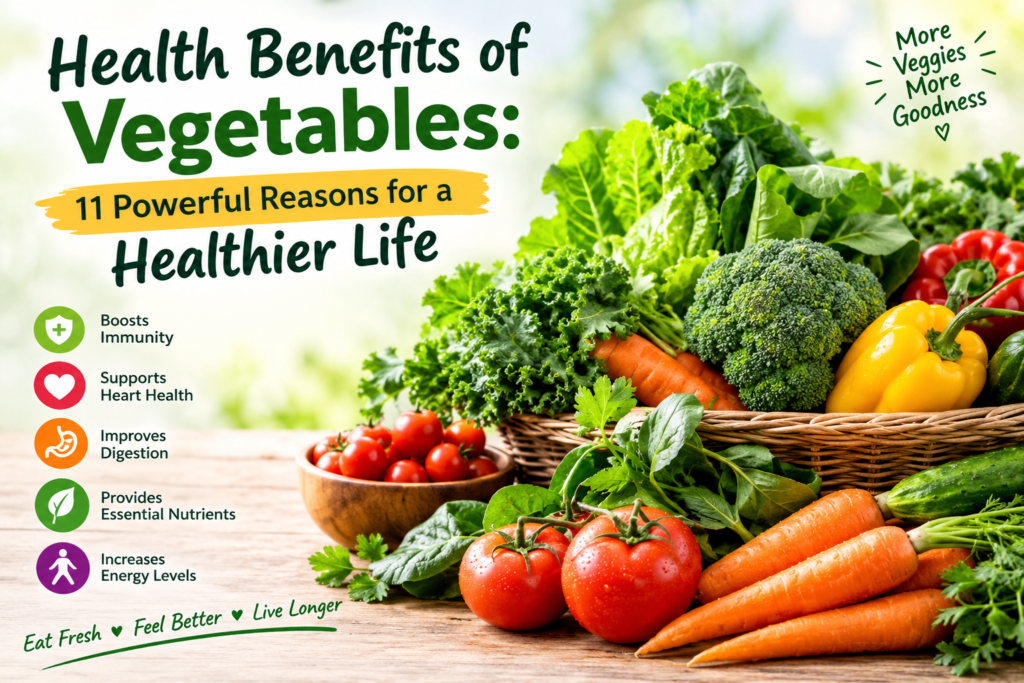
Here are 11 important reasons to include vegetables such as tomatoes, carrots and leafy greens in your daily meals.
1. Health Benefits of Vegetables for a Stronger Immune System
Your immune system protects your body against harmful microorganisms and helps it respond to infections. It relies on several nutrients to function properly, including vitamin C, vitamin A, folate, vitamin B6 and minerals such as zinc.
Different vegetables contribute different amounts of these nutrients.
Tomatoes provide vitamin C, which supports normal immune function and helps the body produce collagen. Carrots supply beta-carotene, which the body can convert into vitamin A. Vitamin A plays an important role in maintaining the health of the skin and the linings of the respiratory and digestive tracts, which help form barriers against harmful microorganisms.
Leafy green vegetables also contribute vitamins, minerals and other compounds involved in normal immune processes.
However, eating vegetables does not make someone immune to every infection. Their value lies in helping provide the nutrients the body needs to maintain its normal defences.
How to support your immune system with vegetables:
-
Add tomatoes to soups, sauces, stews and other meals.
-
Include carrots in salads, vegetable rice or homemade soups.
-
Eat leafy greens such as spinach, ugu and other locally available greens.
-
Include fruits, beans, eggs, fish and other nutritious foods to complement your vegetable intake.
-
Maintain good sleep, regular physical activity and appropriate hygiene alongside a balanced diet.
A bowl of vegetable-rich soup, for example, can contribute several useful nutrients in one meal. When combined with a source of protein and a suitable staple food, it becomes part of a more balanced eating pattern.
The important lesson is that a healthy immune system depends on consistent nutrition rather than a single so-called superfood.
2. Health Benefits of Vegetables for Healthy Vision
Healthy vision depends on several factors, including genetics, age, eye health and the availability of particular nutrients. Vegetables can contribute to maintaining normal vision because some contain carotenoids and vitamins involved in eye function.
Carrots are particularly well known for their beta-carotene content. The body converts beta-carotene into vitamin A when needed. Vitamin A is essential for the normal functioning of the retina, the light-sensitive tissue at the back of the eye.
Severe vitamin A deficiency can cause night blindness and, in advanced cases, serious damage to the eyes. Eating beta-carotene-rich foods can help support adequate vitamin A intake, although carrots alone cannot treat every cause of poor vision.
Leafy green vegetables offer a different nutritional advantage. Spinach and some other dark green leaves contain lutein and zeaxanthin, carotenoids that accumulate in the retina. These compounds are being studied for their role in protecting eye tissues from oxidative damage.
Tomatoes also contain carotenoids, including lycopene, although their nutritional contribution differs from that of carrots and dark green vegetables.
Practical ways to include eye-supporting vegetables in your diet include:
-
Eating carrots as a snack or adding them to meals.
-
Including spinach, kale or other dark leafy greens in soups and stews.
-
Combining red, orange and green vegetables across different meals.
-
Eating a varied diet rather than relying on carrots alone.
One important distinction is that eating more carrots does not automatically give you perfect eyesight. Vegetables can help meet nutritional needs, but they do not correct every vision problem, such as nearsightedness or cataracts.
If you experience persistent blurred vision, eye pain or sudden changes in eyesight, seek appropriate medical attention rather than attempting to correct the problem through food alone.
3. Health Benefits of Vegetables for Heart Health
Heart health is influenced by blood pressure, blood cholesterol, physical activity, smoking, genetics and overall dietary habits. Vegetables can support a heart-friendly eating pattern because they provide fibre, potassium and various plant compounds while generally contributing relatively few calories.
Leafy green vegetables are especially useful components of this pattern. Many varieties supply potassium, which helps the body regulate fluid balance and supports normal muscle and nerve function. Potassium also plays a role in blood pressure regulation.
Some vegetables provide dietary fibre, which contributes to digestive health and can help support healthy blood cholesterol levels as part of an appropriate diet.
Tomatoes contribute potassium and lycopene, while carrots supply fibre and carotenoids. Leafy greens add further nutrients, making these foods useful additions to varied meals.
The strongest evidence supports an overall dietary pattern rich in vegetables, fruits, whole grains, legumes and other nutritious foods, rather than relying on one vegetable to prevent heart disease.
Simple ways to make vegetables part of a heart-friendly diet include:
-
Adding vegetables to meals that would otherwise contain very little produce.
-
Using herbs, spices, onions and tomatoes to develop flavour without depending heavily on salt.
-
Choosing cooking methods such as steaming, boiling or light sautéing when suitable.
-
Limiting excessive salt, particularly from heavily seasoned sauces and processed foods.
-
Pairing vegetables with beans, fish, nuts or other suitable protein sources.
For example, a meal of beans, a moderate portion of a staple food and a generous serving of vegetables can provide a useful combination of fibre and other nutrients.
Vegetables are not a replacement for prescribed blood pressure or cholesterol medication. People with existing cardiovascular conditions should continue following the advice of their healthcare professionals.
4. Health Benefits of Vegetables for Better Digestion
Digestion is one of the most practical areas in which vegetables can make a difference. Many vegetables contain dietary fibre, the part of plant foods that is not completely broken down by digestive enzymes.
Fibre supports bowel function in several ways. Some types hold water and help soften stool, while others contribute bulk and support regular bowel movements.
When people consume too little fibre, they may be more likely to experience constipation, particularly when their fluid intake and physical activity are also inadequate.
Carrots, green peas, cabbage, okra and various leafy vegetables can contribute fibre to the diet. The exact amount differs according to the vegetable, serving size and preparation method.
Vegetables also contribute water, although drinking sufficient fluids remains important, especially when increasing fibre intake.
How vegetables support digestive health
-
Bowel regularity: Fibre helps support the movement of waste through the digestive tract.
-
Stool consistency: Certain fibres absorb water and can help make stool easier to pass.
-
Gut bacteria: Some fibres are fermented by beneficial microorganisms living in the large intestine.
-
Dietary variety: Different plant foods provide different fibres and plant compounds, helping broaden the range of nutrients in your diet.
To increase your fibre intake, begin by including vegetables in meals you already eat. You might add carrots to rice, leafy greens to soup or tomatoes and cabbage to a sandwich.
If you are not accustomed to eating much fibre, increase your intake gradually. A sudden, substantial increase can cause bloating or gas in some people. Drinking enough water may also help.
People with certain digestive conditions may need individual advice about the quantity and types of vegetables they tolerate. Cooking vegetables until tender may make them easier to eat and digest for some individuals.
The goal is not simply to eat the largest possible quantity of vegetables. It is to develop a sustainable eating pattern that supports regular digestion and suits your body.
5. Health Benefits of Vegetables for Healthy Skin
Healthy skin requires adequate nutrition, hydration, protection from excessive sunlight and appropriate care. Vegetables can contribute to skin health by providing nutrients involved in normal tissue maintenance and repair.
Vitamin C, found in tomatoes and many other vegetables, is required for collagen production. Collagen is a structural protein that helps provide strength and support to skin and other tissues.
Carrots provide beta-carotene, which the body can convert into vitamin A. Vitamin A is involved in normal cell growth and the maintenance of skin and other epithelial tissues.
Leafy green vegetables contribute folate and other micronutrients, depending on the variety. These nutrients support broader bodily functions that also contribute to normal tissue health.
Vegetables additionally contain various antioxidants. These compounds can help counter oxidative stress within the body, although the effects of individual foods on visible skin changes vary and should not be overstated.
For a diet that supports healthy skin:
-
Eat a mixture of red, orange and dark green vegetables.
-
Include adequate protein from foods such as beans, eggs, fish or other suitable sources.
-
Drink water regularly.
-
Protect your skin from excessive sunlight.
-
Avoid smoking and maintain a balanced overall diet.
It is worth remembering that vegetables are not guaranteed treatments for acne, dark spots, eczema or premature ageing. Skin conditions can have several causes, and persistent symptoms may require professional assessment.
A nutritious diet supports the body’s normal processes, but it cannot replace appropriate treatment when a skin condition needs medical care.
6. Health Benefits of Vegetables for Healthy Weight Management
Vegetables can be useful for people who want to manage their weight because many non-starchy varieties provide a relatively large food volume for comparatively few calories.
This matters because the amount of food you eat, its energy content and how satisfied you feel after a meal all influence your overall eating pattern.
Fibre-rich vegetables can contribute to fullness. When you include them alongside adequate protein and other nutritious foods, they may help you feel satisfied without needing to rely as heavily on energy-dense, nutrient-poor snacks.
For instance, adding cabbage, carrots and leafy greens to a meal can increase its volume and variety. Replacing part of a very large serving of a refined, energy-dense food with vegetables may also reduce the meal’s total calorie content, depending on the ingredients and portion sizes.
However, adding vegetables to your existing meals without changing anything else does not automatically cause weight loss. The overall balance between energy intake and energy use still matters.
Which vegetables are useful for weight management?
| Vegetable | Nutritional advantage | Practical use |
|---|---|---|
| Tomatoes | Water, vitamin C and lycopene | Stews, sauces and salads |
| Carrots | Fibre and beta-carotene | Snacks, salads and soups |
| Spinach | Folate, vitamin K and carotenoids | Soups, eggs and stir-fries |
| Cabbage | Fibre and vitamin C | Salads, soups and side dishes |
| Lettuce | Water and a light, crisp texture | Salads and sandwiches |
| Okra | Fibre and a thickening texture | Soups and stews |
| Pumpkin leaves | Various vitamins and minerals | Vegetable soups and sauces |
| Broccoli | Fibre, vitamin C and other micronutrients | Steamed sides and stir-fries |
These are general nutritional descriptions, not a ranking of the vegetables with the fewest calories. Exact nutritional values depend on the variety, serving size and preparation.
Practical weight-management tips:
-
Include vegetables in both lunch and dinner, then work towards incorporating them into other meals.
-
Pair vegetables with protein-rich foods such as beans, fish, eggs or lean meat.
-
Choose water more often than sugar-sweetened drinks.
-
Pay attention to added oils, creamy dressings and large amounts of salty seasoning.
-
Avoid extreme diets that eliminate entire food groups without a sound medical reason.
A healthy approach to weight management should be sustainable and nutritionally adequate. Vegetables can make that approach easier, but they are not a substitute for an appropriate overall eating pattern.
7. Health Benefits of Vegetables for Healthy Blood Sugar Levels
Blood sugar refers to the amount of glucose circulating in the blood. The body uses glucose for energy, and hormones such as insulin help regulate its movement from the bloodstream into cells.
Food choices influence blood sugar responses, but the effect of a meal depends on more than one ingredient. Portion size, carbohydrate content, fibre, preparation method and the combination of foods all matter.
Non-starchy vegetables can be particularly helpful in balanced meals because they often provide fibre and have relatively little digestible carbohydrate compared with many starchy foods.
For example, adding leafy greens, tomatoes and cabbage to a meal can increase its nutritional variety without adding as much carbohydrate as an equivalent volume of rice, bread or another starch.
Fibre may also slow digestion, depending on its type and the structure of the food. This can influence how quickly glucose enters the bloodstream.
How to include vegetables in a blood-sugar-conscious diet
-
Combine vegetables with appropriate portions of carbohydrate-containing foods.
-
Include protein sources such as beans, fish, eggs or poultry.
-
Choose whole vegetables more often than sweetened vegetable drinks.
-
Avoid assuming that every food labelled natural is automatically low in sugar or carbohydrate.
-
Monitor your individual response if you have diabetes and have been advised to track blood glucose.
Carrots and tomatoes can fit into a healthy diet for most people, including many people living with diabetes. They do not need to be eliminated simply because they contain natural sugars or carbohydrates.
However, vegetables do not cure diabetes, and eating them does not guarantee that blood sugar will remain within a particular range. Anyone taking diabetes medication should follow their prescribed treatment plan and discuss significant dietary changes with their healthcare professional.
8. Health Benefits of Vegetables Through Antioxidants and Plant Compounds
One reason vegetables receive so much attention in nutrition research is that they contain numerous naturally occurring plant compounds.
Antioxidants are substances that can help limit damage associated with reactive molecules in the body. These molecules are produced through normal metabolism and can also increase in response to certain environmental exposures.
The term antioxidant is sometimes used in advertising as though it automatically means a food prevents disease. The reality is more complex. A compound’s effects in laboratory studies do not always translate directly into measurable health benefits when people eat the food.
Nevertheless, vegetables provide a valuable combination of vitamins, minerals, fibre and diverse plant chemicals that contribute to a healthy dietary pattern.
Different colours can provide clues about some of the compounds present.
-
Red vegetables: Tomatoes contain lycopene, a carotenoid associated with their red colour.
-
Orange vegetables: Carrots contain beta-carotene.
-
Dark green vegetables: Spinach and similar greens provide folate, vitamin K and various carotenoids.
-
Cruciferous vegetables: Cabbage, broccoli and related plants contain glucosinolates and other distinctive plant compounds.
-
Purple vegetables: Some purple varieties contain anthocyanins, a group of pigments also found in certain fruits.
Eating a mixture of these foods helps you obtain a broader range of nutrients and plant compounds than relying on one vegetable alone.
For example, a meal containing tomatoes, carrots and leafy greens combines different colours and nutritional characteristics. Adding beans or fish can further improve the meal’s overall nutritional balance.
The best strategy is to eat a variety of whole vegetables regularly rather than purchasing expensive products that promise concentrated antioxidant effects.
9. Health Benefits of Vegetables for Strong Bones and Normal Body Function
When people think about bone health, they often think about milk and other dairy products. However, certain vegetables also supply nutrients that contribute to maintaining healthy bones and supporting other important bodily functions.
Vitamin K, found in leafy green vegetables, is involved in the production of proteins that participate in normal blood clotting and bone metabolism. Leafy greens can therefore contribute to vitamin K intake, although their calcium content and how much calcium the body absorbs vary by vegetable.
Some vegetables also provide calcium, potassium and other minerals. The quantities differ considerably, so it is important not to assume that every green vegetable is an equally rich source of every mineral.
Bone health also depends on adequate calcium, vitamin D, protein, regular weight-bearing physical activity and other factors.
Vegetables that can contribute to a bone-supporting diet
-
Kale: Supplies vitamin K and other nutrients.
-
Broccoli: Provides vitamin C, vitamin K and some calcium.
-
Spinach: Contains vitamin K and other micronutrients, although its oxalates reduce calcium absorption.
-
Pumpkin leaves: Can contribute several vitamins and minerals, depending on the variety.
-
Cabbage: Supplies vitamin C and smaller amounts of other micronutrients.
Vegetables also contribute to normal muscle and nerve function through nutrients such as potassium and magnesium, although the amount of each nutrient depends on the food.
For people who do not consume dairy products, vegetables can contribute to calcium intake, but not all varieties provide enough absorbable calcium to meet daily requirements. Other suitable calcium sources may include calcium-fortified foods, calcium-set tofu and selected fish eaten with their edible bones.
The key is to build a varied diet rather than depending on a single food to supply everything your bones need.
10. Health Benefits of Vegetables for Healthy Ageing
Healthy ageing involves maintaining physical function, independence, mobility and overall quality of life as the years pass. Nutrition is one part of this process, alongside exercise, sleep, preventive healthcare and social well-being.
Vegetables can contribute to healthy ageing because they provide nutrients needed for normal bodily functions throughout life.
For example, vitamin C supports collagen production, while folate contributes to normal cell division. Vitamin K plays a role in blood clotting, and carotenoids found in certain vegetables contribute to normal vitamin A functions or have other roles in the body.
Fibre-rich vegetables can also support digestive regularity, which may become particularly important for older adults who are less physically active or experience changes in bowel habits.
Another advantage is that vegetables can help make meals more varied. Eating a wider range of foods can improve the likelihood of meeting nutritional needs, particularly when appetite changes or dietary preferences become more restrictive.
Ways older adults can enjoy more vegetables include:
-
Adding soft, cooked vegetables to soups and stews.
-
Including chopped vegetables in eggs, beans and other familiar dishes.
-
Using tender vegetables when chewing becomes difficult.
-
Preparing manageable portions to reduce food waste.
-
Pairing vegetables with adequate protein and energy-rich foods when appetite is low.
Older adults should not assume that vegetables alone can prevent memory loss, dementia or other age-related diseases. Research into diet and healthy ageing is complex, and no individual food can guarantee protection.
The practical lesson is that vegetables can support a nutritious eating pattern that helps the body meet its needs over time.
11. Health Benefits of Vegetables for a More Balanced and Nutritious Diet
Perhaps the most important benefit of vegetables is that they help improve the overall quality of everyday meals.
A diet can provide enough calories to keep a person going while still lacking important vitamins, minerals and fibre. This can happen when meals depend heavily on a narrow range of refined grains, fried foods or highly processed snacks.
Adding vegetables introduces nutrients and variety that may otherwise be missing.
Consider three familiar meals:
-
Rice and stew become more varied when prepared with tomatoes, onions, carrots and other vegetables.
-
Beans can be served with leafy greens to increase the variety of nutrients and textures in the meal.
-
Eggs can be combined with tomatoes, spinach and peppers to create a more vegetable-rich breakfast.
These changes do not require completely abandoning familiar foods. Instead, they improve the nutritional composition of meals that people already enjoy.
Vegetables can also make food more appealing. The sweetness of carrots, the acidity of tomatoes and the distinctive flavours of leafy greens provide variety without requiring every meal to taste the same.
A balanced diet should still include appropriate sources of protein, carbohydrates, healthy fats and other essential nutrients. Vegetables are an important part of that pattern, not a replacement for every other food group.
The most sustainable approach is to make vegetables a normal part of your meals rather than treating them as a temporary health challenge.
Tomato Health Benefits: Why Fresh Tomatoes Deserve a Place on Your Plate
Tomatoes are among the most widely used vegetables in home cooking, even though botanically they are fruits. Their versatility makes them particularly useful for people who want to improve their diets without dramatically changing their cooking habits.
They can be eaten fresh, chopped into salads, cooked into stews, blended into sauces or combined with other vegetables.
Nutritional value of tomatoes
Tomatoes provide several useful nutrients and plant compounds.
1. Vitamin C
Vitamin C supports normal immune function, collagen formation and the absorption of non-haem iron from plant foods. Adding tomatoes to a meal containing beans or leafy greens can therefore contribute vitamin C to a combination of nutritious foods.
2. Lycopene
Lycopene is a red carotenoid pigment found in tomatoes. It has attracted research interest because of its antioxidant properties and possible associations with certain health outcomes.
However, evidence about lycopene and specific diseases is not conclusive enough to claim that eating tomatoes prevents or treats cancer.
3. Potassium
Tomatoes contribute potassium, a mineral involved in fluid balance, muscle function and blood pressure regulation.
4. Water
Fresh tomatoes contain substantial water, which contributes to their refreshing texture and helps make them a useful component of meals.
Are cooked tomatoes healthier than raw tomatoes?
Both raw and cooked tomatoes can be nutritious. The better choice depends on the nutrient being considered, the cooking method and the rest of the meal.
Cooking can increase the amount of lycopene that is available for absorption in some circumstances because heat softens the plant structure. Adding a modest amount of oil may also improve the absorption of this fat-soluble compound.
On the other hand, prolonged cooking can reduce some heat-sensitive nutrients, including vitamin C.
This does not mean you should always cook tomatoes or always eat them raw. A varied approach allows you to enjoy their different nutritional advantages.
For example:
-
Eat fresh tomatoes in salads when appropriate.
-
Use tomatoes in homemade stew or soup.
-
Combine tomato-based dishes with other vegetables.
-
Avoid adding excessive salt or oil simply to make tomato dishes taste richer.
Tomato health benefits in everyday Nigerian meals
Tomatoes are especially easy to include in Nigerian cooking. They can be used in jollof rice, vegetable stews, egg sauces, soups and other familiar dishes.
When preparing tomato stew, consider adding carrots, peppers and other vegetables to increase variety. You can also reduce the amount of added salt by using onions, garlic, ginger and other seasonings to develop flavour.
Tomatoes are nutritious, affordable in some seasons and adaptable to many cooking methods. These qualities make them a practical choice for a vegetable-rich diet.

Carrot Health Benefits: Why This Orange Vegetable Is So Valuable
Carrots are known for their bright orange colour, crunchy texture and naturally sweet flavour. They can be eaten raw, steamed, boiled, roasted or incorporated into numerous meals.
Their best-known nutritional feature is beta-carotene, which the body can convert into vitamin A.
1. Carrots support normal vision
Vitamin A is essential for the normal functioning of the retina, including the processes that allow the eyes to respond to light.
Carrots can help supply beta-carotene, which supports vitamin A intake. This is especially useful as part of a varied diet that includes other sources of essential nutrients.
However, carrots cannot reverse all forms of poor eyesight, and eating additional carrots will not necessarily improve vision in someone who already meets their vitamin A requirements.
2. Carrots contribute to healthy skin and tissues
The body’s vitamin A functions include maintaining normal skin and epithelial tissues. Beta-carotene-rich foods can help support vitamin A intake, while carrots also provide fibre and other plant compounds.
This makes carrots a useful addition to a balanced diet, but not a guaranteed remedy for skin problems.
3. Carrots provide dietary fibre
Carrots contain fibre that contributes to digestive health. Eating whole carrots also involves chewing, making them a convenient snack for people who want alternatives to highly processed foods.
Their natural sweetness makes them suitable for both savoury and mildly sweet dishes.
4. Carrots contribute to dietary variety
Although beta-carotene receives most of the attention, carrots should not be viewed only as a source of vitamin A.
They can help diversify the foods you eat and make vegetable-rich meals more enjoyable. Their colour also creates an easy opportunity to combine orange vegetables with red tomatoes and green leafy vegetables.
How to eat carrots for the best practical benefits
-
Wash carrots thoroughly under clean running water before eating or preparing them.
-
Eat them raw when suitable, or cook them until tender.
-
Add grated carrots to salads and sandwiches.
-
Include chopped carrots in rice, stews and soups.
-
Combine carrots with a modest amount of healthy fat in meals to support carotenoid absorption.
You do not need to drink carrot juice every morning to benefit from carrots. Whole carrots provide fibre that is reduced when juice is strained, so eating the whole vegetable is often a useful choice.
Leafy Green Vegetables Benefits: Why Green Leaves Matter
Leafy green vegetables are an important part of many traditional diets around the world. In Nigeria, common examples include ugu, spinach, ewedu, bitter leaf, waterleaf and other locally available edible greens.
These vegetables differ in taste, texture and nutrient content. Some are best suited to soups, while others can be steamed, sautéed or used in sauces.
Why leafy greens are nutritionally valuable
Dark green leaves often provide vitamin K, folate, carotenoids and other micronutrients. Some varieties contribute calcium, iron and vitamin C, although the amounts and their bioavailability vary.
Folate is important for normal cell division and DNA synthesis. It is particularly important before and during early pregnancy because adequate folate intake helps reduce the risk of neural tube defects.
Vitamin K supports normal blood clotting and is involved in bone metabolism.
Some leafy vegetables also contain carotenoids such as lutein and zeaxanthin, which are studied for their roles in eye health.
The best leafy vegetables for a healthy diet
| Leafy vegetable | Nutritional features | Common ways to eat it |
|---|---|---|
| Ugu (fluted pumpkin leaves) | Contributes several vitamins and minerals | Vegetable soup and sauces |
| Spinach | Folate, vitamin K and carotenoids | Soups, eggs and cooked side dishes |
| Ewedu (jute leaves) | Provides fibre and various micronutrients | Traditional soup |
| Bitter leaf | Contributes fibre and other plant nutrients | Soups and stews |
| Waterleaf | Provides water and various nutrients | Soups and vegetable mixtures |
| Kale | Vitamin K, vitamin C and carotenoids | Steamed sides, soups and stir-fries |
| Cabbage | Vitamin C, fibre and other nutrients | Salads, soups and cooked dishes |
| Lettuce | Water, folate and other micronutrients | Salads and sandwiches |
This table provides general comparisons, not exact nutrient rankings. Nutrient concentrations vary with the plant variety, soil, maturity, storage and preparation method.
Can leafy green vegetables help prevent anaemia?
Leafy greens can contribute folate and, in some cases, iron to the diet. Folate is needed for normal red blood cell production, while iron is necessary for making haemoglobin, the protein that carries oxygen in the blood.
However, not all leafy greens are rich sources of readily absorbed iron. Certain plants contain compounds that reduce the absorption of non-haem iron.
To improve iron intake, combine suitable plant foods with other sources of iron, such as beans, lentils, meat or fish, depending on your dietary preferences. Vitamin C-rich foods can improve the absorption of non-haem iron from plant foods.
Anaemia has several possible causes, including iron deficiency, vitamin deficiencies, blood loss and certain illnesses. Eating leafy vegetables alone may not correct it. Anyone experiencing persistent fatigue, weakness, breathlessness or other concerning symptoms should seek medical assessment.
How often should you eat leafy vegetables?
There is no single number of servings that is ideal for every individual. A useful starting point is to include leafy greens in meals several times throughout the week, then increase their frequency according to your preferences, availability and nutritional needs.
If you enjoy vegetable soup, you can rotate between different leaves rather than relying on one type. This provides variety and helps keep meals interesting.
Health Benefits of Tomatoes, Carrots and Leafy Vegetables When Eaten Together
Eating tomatoes, carrots and leafy greens together can be a practical way to diversify your nutrient intake.
Each food has a different nutritional profile, so combining them allows you to obtain a broader range of nutrients in one meal.
Consider a vegetable stew containing tomatoes, carrots, onions and spinach. Tomatoes contribute vitamin C and lycopene, carrots provide beta-carotene and fibre, and spinach contributes folate, vitamin K and carotenoids.
A small amount of oil used in cooking may help the body absorb fat-soluble carotenoids. However, the quantity of oil matters because excessive amounts can substantially increase the meal’s energy content.
You can create similar combinations in salads, vegetable rice, soups, omelettes and other dishes.
A simple vegetable combination guide
| Meal idea | Vegetables to include | Main advantage |
|---|---|---|
| Breakfast omelette | Tomatoes and spinach | Adds vegetables to a protein-rich meal |
| Vegetable rice | Carrots, peas and green vegetables | Increases colour and variety |
| Homemade stew | Tomatoes, carrots and peppers | Adds flavour and plant nutrients |
| Fresh salad | Tomatoes, carrots and lettuce | Provides crunch, water and fibre |
| Vegetable soup | Ugu, waterleaf and tomatoes | Combines different greens and other vegetables |
| Beans with vegetables | Tomatoes, cabbage and leafy greens | Adds variety to a fibre-rich, protein-containing meal |
The goal is not to combine every vegetable at every meal. Eating different varieties across the day and week is a more flexible approach.
Benefits of Eating Fresh Vegetables Daily: How Much Do You Need?
A common question is whether vegetables should be eaten every day and how much is enough.
The World Health Organization recommends that everyone older than 10 years aim for at least 400 grams of fruits and vegetables per day. This is a combined target for fruits and vegetables, not 400 grams of vegetables alone.
For younger children, the recommended amounts are lower and depend on age. The appropriate dietary pattern also varies according to individual needs, cultural practices, availability and health conditions.
For further guidance, consult the World Health Organization’s healthy diet recommendations, which explain the importance of dietary diversity, fruit and vegetable intake, fibre and other aspects of healthy eating.
What does 400 grams look like in practice?
You do not need to weigh every vegetable you eat. The following example illustrates how different foods can contribute towards a daily fruit-and-vegetable target.
| Meal | Example | Approximate amount |
|---|---|---|
| Breakfast | A serving of fruit | 100 g |
| Lunch | Tomatoes and leafy greens with a meal | 100 g |
| Afternoon snack | A carrot or another fruit | 80 g |
| Dinner | A serving of cooked mixed vegetables | 120 g |
| Total | Combined fruit and vegetable intake | 400 g |
These are illustrative amounts rather than prescribed serving sizes. Actual portions vary, and the example assumes the amounts listed are edible portions.
If you currently eat very few vegetables, you do not need to reach the target immediately. Begin by adding a serving to one meal and gradually increase your intake.
Does eating vegetables every day have to be expensive?
No. The cost of vegetables depends on location, season, availability and the varieties you choose.
In Nigeria, locally available options such as ugu, okra, tomatoes, carrots, cabbage and other market vegetables may provide practical ways to improve meals. Prices fluctuate, so choosing seasonal produce and planning meals around what is available can help control costs.
You can also reduce waste by purchasing quantities you can use before they spoil, storing vegetables appropriately and including leftover cooked vegetables in another meal when they have been handled safely.
Fresh vegetables are excellent choices, but they are not the only options. Frozen vegetables and suitable canned vegetables can also contribute nutrients. Choose products without excessive added salt or sugar where possible.
Best Ways to Prepare Vegetables Without Losing Too Much Nutrition
How you prepare vegetables can affect their texture, taste, safety and nutrient content.
Some nutrients are sensitive to heat, while others become more available for absorption after cooking. Water-soluble vitamins can leach into cooking water, whereas cooking can soften plant tissues and improve the accessibility of some compounds.
There is therefore no single cooking method that preserves every nutrient equally well.
1. Eat suitable vegetables raw
Raw tomatoes, carrots, lettuce and other vegetables can provide variety and retain heat-sensitive nutrients.
However, raw vegetables must be washed carefully because they can carry harmful microorganisms or contaminants.
Not every vegetable is suitable for eating raw, and people with particular medical conditions may need additional precautions.
2. Steam vegetables when practical
Steaming uses relatively little water and can cook vegetables quickly. It may help limit the loss of certain water-soluble nutrients compared with prolonged boiling.
Steam vegetables until they reach a texture you enjoy and can chew comfortably.
3. Boil vegetables carefully
Boiling can be appropriate for many vegetables, particularly when it is part of preparing soups and stews.
Some vitamins may move into the cooking water. If the water is safe and the recipe allows, using that liquid in a soup or sauce can help retain some of the nutrients that have leached out.
Avoid assuming that longer cooking always produces a healthier result. Cooking time should suit the vegetable and the dish.
4. Use moderate amounts of oil
Some nutrients, including lycopene and beta-carotene, are fat-soluble. Consuming them with some dietary fat can help their absorption.
For example, tomatoes cooked with a modest amount of oil or carrots served as part of a balanced meal containing healthy fats can provide these compounds in a form the body can use.
This does not mean you need to fry vegetables heavily. Excessive oil adds energy without necessarily improving the meal’s overall nutritional balance.
5. Avoid overprocessing vegetables into juice
Juicing can make certain vegetables easier to consume, but it may remove much of their fibre, particularly when the pulp is discarded.
Whole vegetables are generally a practical everyday choice because they retain their natural structure and fibre.
If you enjoy vegetable juice, consider it an addition to a balanced diet rather than a complete substitute for whole vegetables.
How to Wash and Store Vegetables Safely
The health benefits of vegetables depend partly on their safety. Fresh produce can become contaminated during farming, transportation, handling or preparation.
Proper cleaning and storage reduce avoidable risks.
How to wash vegetables
-
Wash your hands with soap and clean water before preparing food.
-
Rinse vegetables thoroughly under clean running water before cutting or eating them.
-
Remove damaged, bruised or visibly spoiled sections.
-
Rub firm vegetables such as carrots under running water.
-
Separate raw vegetables from raw meat, poultry and seafood to prevent cross-contamination.
-
Use clean knives, chopping boards, containers and work surfaces.
Do not wash vegetables with household bleach, detergent or ordinary cleaning products. These substances are not intended for washing food and may be harmful if residues remain.
Follow reliable food-safety guidance if you need advice on produce exposed to unsafe water or suspected chemical contamination.
How to store fresh vegetables
Different vegetables have different storage needs.
-
Refrigerate vegetables that require cold storage.
-
Keep leafy greens appropriately chilled and use them before they wilt or spoil.
-
Store fresh produce in clean containers or suitable bags.
-
Avoid leaving cut vegetables at room temperature for extended periods.
-
Keep raw vegetables separate from foods that could contaminate them.
-
Follow safe refrigeration and food-handling practices for cooked vegetable dishes.
If a vegetable has an unusual smell, extensive mould, a slimy surface or other signs of spoilage, discard it rather than trying to rescue it by washing.
Proper storage helps preserve quality and reduces waste, making it easier to maintain a regular supply of vegetables at home.
Common Mistakes to Avoid When Eating Vegetables
Although vegetables are valuable, certain habits can reduce their contribution to a healthy diet.
Mistake 1: Eating only one type of vegetable
Eating carrots every day is not a substitute for eating a range of vegetables. Different varieties provide different nutrients, so variety is important.
Better approach: Rotate between tomatoes, carrots, leafy greens, cabbage, okra and other suitable options.
Mistake 2: Assuming vegetables can replace every other food group
Vegetables contribute essential nutrients, but most are not sufficient by themselves to provide all the protein, energy, fats and micronutrients your body needs.
Better approach: Combine vegetables with suitable portions of staple foods and sources of protein and healthy fats.
Mistake 3: Cooking vegetables for unnecessarily long periods
Prolonged cooking can reduce some heat-sensitive nutrients, although cooking can also improve the availability of others.
Better approach: Choose an appropriate cooking method and avoid unnecessarily long cooking times.
Mistake 4: Adding excessive salt and oil
A vegetable dish may become high in sodium or energy when prepared with excessive salt, stock cubes, oil or other rich ingredients.
Better approach: Use herbs, spices, onions and other flavourful ingredients, and adjust the quantity of added salt and oil.
Mistake 5: Believing vegetables cure diseases
Vegetables support nutrition and can contribute to a healthier dietary pattern, but they are not guaranteed treatments for diabetes, hypertension, cancer or other diseases.
Better approach: Use vegetables as part of a balanced lifestyle and seek appropriate medical care when needed.
Mistake 6: Avoiding frozen or canned vegetables unnecessarily
Fresh vegetables are useful, but frozen and canned varieties can also be nutritious. Their quality depends on processing, storage and added ingredients.
Better approach: Choose convenient, affordable options with minimal unnecessary added salt or sugar.
Mistake 7: Ignoring individual dietary needs
Some people need to modify their intake of particular vegetables because of allergies, digestive conditions, medication interactions or other medical considerations.
For example, people taking warfarin are generally advised to maintain a consistent intake of vitamin K rather than suddenly making large changes to their consumption of leafy greens. They should follow their healthcare professional’s advice.
Better approach: Seek individual dietary guidance if you have a medical condition or take medication that requires dietary monitoring.
Frequently Asked Questions About the Health Benefits of Vegetables
1. What are the main health benefits of vegetables?
Vegetables provide vitamins, minerals, fibre and plant compounds that contribute to normal bodily functions. Depending on the varieties consumed, they can support digestive health, healthy vision, normal immune function and a balanced dietary pattern. Eating vegetables regularly is also associated with better long-term health outcomes when they form part of an overall nutritious diet.
2. Which vegetables are the healthiest to eat every day?
There is no single healthiest vegetable for everyone. Tomatoes, carrots, spinach, ugu, cabbage, broccoli, okra and other vegetables each have different nutritional strengths.
A mixture of colourful vegetables is generally more useful than relying exclusively on one variety.
3. What are the tomato health benefits?
Tomatoes provide vitamin C, potassium, water and lycopene. They can contribute to a nutritious diet and are easy to include in sauces, soups, stews and salads. They do not independently prevent or cure disease.
4. What are the carrot health benefits?
Carrots are a source of beta-carotene, which the body can convert into vitamin A. They also provide fibre and contribute to dietary variety. Their nutrients support normal vision and other bodily functions, but eating carrots cannot correct every eye condition.
5. What are the benefits of leafy green vegetables?
Leafy greens provide varying amounts of folate, vitamin K, carotenoids, fibre and other nutrients. They can support normal blood clotting, cell function and a varied diet. Their precise nutritional composition depends on the particular vegetable.
6. Can eating vegetables daily help with weight loss?
Vegetables can help with weight management because many non-starchy varieties provide fibre and volume for relatively few calories. However, weight loss depends on the overall balance of energy intake and expenditure. Vegetables are most useful when they are part of a sustainable, balanced eating pattern.
7. Is it better to eat vegetables raw or cooked?
Both raw and cooked vegetables can be nutritious. Raw vegetables may retain more of certain heat-sensitive nutrients, while cooking can improve the availability of some carotenoids and make particular vegetables easier to digest.
Eating a mixture of raw and appropriately cooked vegetables is a practical approach.
8. How many vegetables should I eat per day?
The World Health Organization recommends at least 400 grams of fruits and vegetables combined daily for people older than 10 years. This is not a recommendation to eat 400 grams of vegetables alone. Individual needs may differ.
9. Can vegetables prevent cancer?
Eating a variety of vegetables is part of a healthy dietary pattern, but evidence does not support claiming that vegetables as a whole prevent every type of cancer. Research into individual foods, nutrients and specific cancers is complex.
Vegetables should be viewed as one component of a healthy lifestyle, not as cancer treatments.
10. Are frozen vegetables as healthy as fresh vegetables?
Frozen vegetables can retain substantial nutritional value and may be a convenient, affordable alternative to fresh produce. Their nutritional quality depends on the vegetable, processing and storage conditions. Canned vegetables can also be useful when products with suitable ingredients are selected.
11. What is the best time to eat vegetables?
There is no universally established best time. Vegetables can be eaten at breakfast, lunch, dinner or as snacks. Including them in several meals can make it easier to consume a varied diet throughout the day.
12. Can I eat tomatoes, carrots and leafy greens together?
Yes. For most people, these vegetables can be combined in the same meal. They offer different nutrients and flavours, making them a practical combination for soups, stews, salads and vegetable rice.
13. Are vegetables enough to meet all my nutritional needs?
No. Vegetables are important, but a balanced diet also requires suitable sources of protein, carbohydrates, fats and other nutrients. Depending on your circumstances, you may need additional foods or individual dietary advice to meet your needs.
14. Can people with diabetes eat carrots and tomatoes?
For most people with diabetes, carrots and tomatoes can fit into a balanced diet. Portion sizes, preparation methods, medication and the overall composition of meals still matter. People with diabetes should follow their individual care plan rather than eliminating nutritious vegetables without a clear reason.
15. What are the best affordable vegetables for a healthy diet in Nigeria?
The most practical options depend on local prices and seasonal availability. Tomatoes, ugu, okra, cabbage, carrots, waterleaf and other locally available vegetables can help diversify everyday meals. Choosing seasonal produce and planning purchases can help manage costs.
Conclusion: Make the Health Benefits of Vegetables Part of Your Daily Life
The health benefits of vegetables are best understood as part of a long-term approach to eating well. Tomatoes provide vitamin C and lycopene, carrots supply beta-carotene, and leafy greens contribute a range of vitamins, minerals and plant compounds.
Together, these foods can help support normal vision, digestion, immune function and overall nutritional health. They can also make meals more colourful, varied and satisfying.
You do not need to follow an expensive diet or purchase special supplements to begin improving your vegetable intake. Start with foods that are available locally, affordable for your household and easy to prepare.
Add tomatoes to your stew, include carrots in your rice, serve leafy greens with your favourite meals and experiment with different vegetables as the seasons change. If you currently eat very few vegetables, small, consistent changes are a useful starting point.
Remember that no single vegetable can supply every nutrient or guarantee protection from disease. The greatest value comes from variety, sensible preparation, safe food handling and a balanced diet that also includes adequate protein, whole grains, fruits and healthy fats.
Your next step: Choose three vegetables you enjoy and find a way to include them in your meals this week. As the habit becomes easier, introduce other varieties to broaden your choices.
Healthy eating does not have to begin with a dramatic change. Sometimes, it begins with adding one more vegetable to the plate.
About The Author