Food Processing Business
The food industry is undergoing one of the most significant transformations in its history. Consumers are no longer buying food solely to satisfy hunger. They are purchasing products that support fitness goals, improve digestive health, strengthen immunity, and enhance overall well-being.
This shift in consumer behavior has opened extraordinary opportunities for entrepreneurs looking to enter the Food Processing Business sector.
Two categories are leading this revolution:
- High-Protein Foods
- Functional Foods and Gut Health Products
These segments are growing faster than many traditional food categories because modern consumers are increasingly health-conscious. Busy professionals want convenient nutrition. Athletes seek performance-enhancing foods. Families want healthier alternatives. Older adults are looking for products that support healthy aging.
As a result, manufacturers capable of delivering innovative products in these categories are enjoying higher margins, stronger customer loyalty, and substantial growth opportunities.
According to industry reports from organizations such as the Food and Agriculture Organization (FAO) and the International Food Information Council (IFIC), consumers are prioritizing protein intake and digestive health more than ever before.
For investors and entrepreneurs, this creates a compelling question:
What are the most profitable opportunities within the Food Processing Business sector today?
Let’s explore the five opportunities that stand out in 2026.

Food Processing Business Market Trends Driving Growth Through 2027
Before investing in any venture, understanding the underlying market forces is essential.
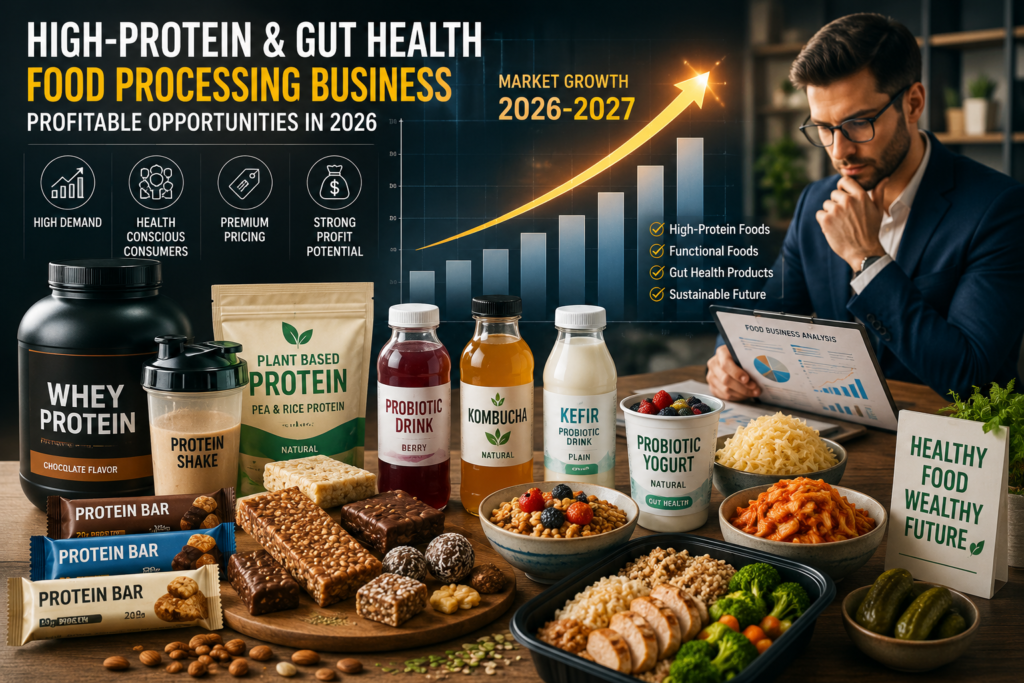
Several powerful trends are fueling demand for High-Protein Foods and Gut Health Products:
Growing Health Awareness
Consumers are paying closer attention to ingredient labels and nutritional content.
They want foods that offer:
- Better nutrition
- Higher protein content
- Improved digestion
- Enhanced immunity
- Natural ingredients
Rise of Functional Foods
Functional Foods provide benefits beyond basic nutrition.
Examples include:
- Probiotic yogurt
- Fermented beverages
- Protein-enriched snacks
- Fiber-rich cereals
- Functional beverages
Consumers increasingly view food as part of a preventive healthcare strategy.
Demand for Convenient Nutrition
Modern lifestyles have created strong demand for:
- Ready-to-eat meals
- Portable snacks
- Protein bars
- Meal replacement products
Convenience and health now go hand in hand.
Growth of Sports Nutrition
Fitness culture continues expanding globally.
This drives demand for:
- Protein powders
- High-protein snacks
- Recovery foods
- Protein drinks
Food Processing Business Opportunities Comparison Table
| Opportunity | Startup Cost | Profit Margin Potential | Market Demand | Growth Outlook |
|---|---|---|---|---|
| Protein Snack Manufacturing | Medium | High | Very High | Excellent |
| Functional Beverage Production | Medium-High | High | Very High | Excellent |
| Probiotic Food Manufacturing | Medium | High | High | Excellent |
| Fermented Food Processing | Low-Medium | Medium-High | High | Strong |
| Protein-Enriched Ready Meals | High | Very High | Very High | Excellent |
Food Processing Business: 5 Powerful and Profitable High-Protein Foods & Gut Health Products Opportunities You’ll Be Glad You Discovered in 2026
Opportunity #1: Food Processing Business in High-Protein Snack Manufacturing
Among all High-Protein Foods categories, protein snacks represent one of the fastest-growing opportunities.
Consumers want convenient ways to increase protein intake without preparing elaborate meals.
This demand has fueled explosive growth in:
- Protein bars
- Protein cookies
- Protein chips
- Protein granola
- Protein bites
- Protein crackers
Why High-Protein Snack Production Business Opportunities in 2026 and 2027 Are Booming
Several factors contribute to this growth:
Fitness Industry Expansion
Millions of consumers now prioritize fitness and active lifestyles.
Protein snacks help them:
- Build muscle
- Support recovery
- Control hunger
- Maintain energy
Weight Management Trends
Protein is known for increasing satiety.
Consumers seeking healthier eating habits often choose protein snacks over traditional snack foods.
Convenience Factor
Portable protein products fit perfectly into busy schedules.
Whether commuting, working, or traveling, consumers appreciate nutritious options that require no preparation.
Potential Product Ideas
A Food Processing Business can manufacture:
- Whey protein bars
- Plant-based protein bars
- Protein cookies
- High-protein breakfast bites
- Protein trail mixes
- Protein cereal clusters
Profit Potential
Many protein snacks command premium pricing.
Brands often achieve:
- Strong margins
- Repeat purchases
- Subscription sales opportunities
- Retail expansion potential
This makes protein snack production one of the most profitable high-protein food processing business opportunities in 2026.
Opportunity #2: Food Processing Business in Functional Beverage Manufacturing
The beverage industry is rapidly evolving beyond traditional soft drinks.
Consumers now seek beverages that deliver measurable health benefits.
This trend has made Functional Foods and beverages one of the most exciting areas of the Food Processing Business landscape.
What Are Functional Beverages?
Functional beverages contain ingredients designed to support specific health outcomes.
Examples include:
- Probiotic drinks
- Protein shakes
- Kombucha
- Prebiotic beverages
- Digestive wellness drinks
- Adaptogenic beverages
Why Functional Foods Are Dominating Consumer Spending
Today’s consumers want more than refreshment.
They want products that support:
- Digestive health
- Energy levels
- Immune function
- Mental performance
- Athletic recovery
Functional beverages satisfy these needs while fitting seamlessly into daily routines.
Popular Product Categories
Protein Shakes
Ready-to-drink protein shakes continue growing rapidly.
Consumers use them for:
- Meal replacement
- Fitness recovery
- Weight management
- Healthy snacking
Probiotic Beverages
Digestive wellness remains a major consumer priority.
Products containing beneficial bacteria are becoming mainstream purchases.
Kombucha
Fermented beverages continue attracting health-conscious consumers seeking natural digestive support.
Revenue Opportunities
Functional beverages offer:
- Premium pricing
- Brand differentiation
- Strong retail demand
- E-commerce scalability
Entrepreneurs who successfully establish trusted brands can build highly profitable businesses.
Opportunity #3: Food Processing Business in Probiotic Food Manufacturing
When discussing Functional Foods and Gut Health Products, probiotic foods are impossible to ignore.
Over the past decade, consumer awareness of gut health has expanded dramatically. People increasingly understand that digestive health affects much more than digestion alone. Research continues to highlight links between gut health and:
- Immune system performance
- Mental well-being
- Energy levels
- Nutrient absorption
- Overall wellness
As a result, probiotic foods have moved from niche health stores into mainstream supermarkets.
For entrepreneurs seeking the Best gut health food products business ideas for entrepreneurs, probiotic food manufacturing represents a compelling opportunity.
Why Gut Health Products Are Becoming Everyday Essentials
Modern lifestyles have contributed to digestive health concerns worldwide.
Factors such as:
- Processed diets
- High sugar consumption
- Chronic stress
- Poor sleep habits
- Frequent antibiotic use
can disrupt the gut microbiome.
Consumers are actively seeking solutions that help restore digestive balance.
This has fueled demand for Gut Health Products such as:
- Probiotic yogurt
- Kefir
- Fermented milk products
- Probiotic snack foods
- Functional dairy products
- Gut-friendly nutritional supplements
Product Categories Worth Exploring
Probiotic Yogurt
Yogurt remains one of the most recognized probiotic products globally.
Manufacturers can differentiate products through:
- Added protein
- Organic ingredients
- Reduced sugar formulas
- Plant-based alternatives
Kefir
Kefir is often considered a “supercharged” probiotic beverage due to its diverse microbial content.
Its popularity continues rising among health-conscious consumers.
Probiotic Snack Foods
Innovation in the snack category is creating exciting opportunities.
Examples include:
- Probiotic granola
- Gut-friendly snack bars
- Fermented fruit snacks
- Functional cereal products
Profit Potential of Probiotic Food Manufacturing
The appeal of probiotic foods lies in their premium positioning.
Consumers are often willing to pay more for products that support wellness.
Benefits for manufacturers include:
- Higher average selling prices
- Strong repeat-purchase behavior
- Growing retail demand
- Excellent brand loyalty
For many entrepreneurs, probiotic foods represent one of the most attractive segments within the Food Processing Business industry.

Opportunity #4: Food Processing Business in Fermented Food Processing
Fermented foods are among the oldest food preservation methods known to humanity.
Ironically, one of the oldest food technologies is now becoming one of the newest business opportunities.
Consumers increasingly view fermented products as natural Functional Foods that support gut health and overall wellness.
Why Fermented Foods Are Trending in 2026
Several factors are driving consumer interest:
Natural Health Solutions
Consumers prefer foods with recognizable ingredients.
Fermented products often fit perfectly into clean-label trends.
Digestive Wellness
Many fermented foods naturally contain beneficial microorganisms.
This aligns with growing consumer interest in Gut Health Products.
Culinary Exploration
Global cuisines have introduced consumers to exciting fermented foods from around the world.
As a result, demand continues growing.
Popular Fermented Food Processing Products
Sauerkraut
This fermented cabbage product has evolved from a traditional food into a modern health product.
Kimchi
Kimchi has experienced explosive global growth due to its flavor profile and health associations.
Fermented Vegetables
Consumers increasingly seek naturally fermented vegetable products as healthy side dishes and snacks.
Fermented Condiments
Products such as fermented hot sauces and fermented salad dressings are emerging niches with strong growth potential.
Advantages of Entering the Fermented Food Market
Compared to some manufacturing categories, fermented foods often offer:
- Lower startup costs
- Smaller facility requirements
- Strong premium pricing opportunities
- Growing consumer awareness
For entrepreneurs with limited capital, fermented foods can provide an accessible entry point into the Food Processing Business sector.
Opportunity #5: Food Processing Business in Protein-Enriched Ready Meals
Perhaps the most exciting opportunity within High-Protein Foods is the protein-enriched ready meal category.
Consumers increasingly demand convenience without sacrificing nutrition.
This creates significant opportunities for businesses capable of producing healthy, protein-rich meals that require minimal preparation.
Why Protein-Enriched Meals Are Growing So Quickly
Several trends are converging simultaneously.
Busy Lifestyles
Consumers have less time to cook than ever before.
Ready meals provide convenience while supporting healthy eating goals.
Fitness-Oriented Consumers
Many consumers actively monitor protein intake.
Protein-rich meals simplify nutrition planning.
Weight Management
Protein-rich meals help promote satiety and support healthier eating habits.
Product Ideas for Ready Meal Businesses
Examples include:
- High-protein breakfast bowls
- Protein-rich lunch meals
- Fitness meal prep products
- Plant-based protein meals
- Protein-packed frozen dinners
- Meal replacement products
Revenue Potential
Protein-enriched meals often command premium pricing due to:
- Convenience
- Nutritional value
- Specialized formulations
- Targeted consumer benefits
Businesses that establish strong distribution channels can scale rapidly.
How to Start a Functional Food Manufacturing Business
After exploring these opportunities, many entrepreneurs naturally ask:
How to start a functional food manufacturing business?
The process involves much more than producing a healthy product.
Successful businesses combine product innovation, quality control, regulatory compliance, branding, and effective marketing.
Step 1: Identify a Profitable Niche
Avoid trying to serve everyone.
Instead, focus on a specific audience.
Examples include:
- Fitness enthusiasts
- Busy professionals
- Health-conscious parents
- Seniors
- Athletes
- Weight-management consumers
The narrower the target market initially, the easier it becomes to establish a strong brand.
Step 2: Validate Market Demand
Before investing heavily, test consumer interest.
Methods include:
- Online surveys
- Focus groups
- Social media research
- Competitor analysis
- Pilot product launches
Validation reduces risk and helps refine product development.
Step 3: Develop a Unique Product
Consumers have many choices.
Your product must offer something distinctive.
Potential differentiators include:
- Higher protein content
- Unique ingredients
- Better taste
- Clean-label formulations
- Organic certification
- Sustainable sourcing
Step 4: Establish Manufacturing Processes
Manufacturing systems should prioritize:
- Consistency
- Food safety
- Efficiency
- Scalability
A reliable production process is essential for long-term growth.
Step 5: Build a Strong Brand
The food industry is highly competitive.
A compelling brand can create enormous advantages.
Focus on:
- Packaging design
- Brand storytelling
- Consumer trust
- Product positioning
- Clear value propositions
Consumers increasingly buy brands they believe in, not just products.
Equipment Needed for a Food Processing Business
Equipment requirements vary by product category.
However, most operations require some combination of:
| Equipment | Purpose |
|---|---|
| Mixers | Ingredient blending |
| Processing Tanks | Product preparation |
| Fermentation Units | Fermented product production |
| Filling Machines | Packaging liquids and foods |
| Labeling Machines | Product identification |
| Refrigeration Systems | Product preservation |
| Quality Testing Equipment | Food safety verification |
| Packaging Equipment | Final product preparation |
Investment levels vary significantly depending on production scale.
Food Safety and Regulatory Considerations
Food manufacturing is highly regulated.
Entrepreneurs must prioritize compliance from the beginning.
Key considerations include:
- Product labeling requirements
- Ingredient approvals
- Food safety management systems
- Manufacturing permits
- Facility inspections
- Traceability systems
Failing to address regulatory requirements can create significant operational risks.
Why Timing Matters More Than Ever
The biggest mistake many entrepreneurs make is waiting too long.
The markets for High-Protein Foods, Functional Foods, and Gut Health Products are expanding rapidly.
As consumer awareness grows, competition will inevitably increase.
Businesses that establish brands early can benefit from:
- Stronger market positioning
- Greater customer loyalty
- Better distribution opportunities
- Long-term competitive advantages
The next few years may represent one of the most attractive windows for entering these categories.
Food Processing Business Funding Options: How to Finance High-Protein Foods and Gut Health Products Startups
One of the biggest challenges facing entrepreneurs entering the Food Processing Business industry is securing sufficient funding. While the growing demand for High-Protein Foods, Functional Foods, and Gut Health Products creates exciting opportunities, turning a business idea into a profitable operation often requires significant capital. From product development and equipment purchases to packaging, marketing, and regulatory compliance, startup costs can add up quickly.
Fortunately, there are several financing options available for entrepreneurs looking to launch a food processing venture in 2026 and beyond.
Self-Funding and Personal Savings
Many successful food businesses begin with self-funding. Using personal savings allows entrepreneurs to maintain complete control over their business without giving away equity or taking on debt. This approach is especially suitable for smaller operations, such as fermented food production or small-batch protein snack manufacturing.
However, relying solely on personal savings can limit growth potential. Entrepreneurs should carefully assess their financial situation and avoid investing funds they cannot afford to lose.
Small Business Loans
Traditional business loans remain one of the most common funding sources for a Food Processing Business. Banks and financial institutions often provide financing for equipment purchases, facility upgrades, inventory acquisition, and working capital.U.S. Small Business Administration (SBA) Business Planning Center
To improve approval chances, entrepreneurs should prepare:
- A detailed business plan
- Market research data
- Revenue projections
- Cost analysis
- Credit history documentation
A well-prepared business plan demonstrates professionalism and reassures lenders that the venture has a realistic path to profitability.
Government Grants and Agricultural Programs
Many governments support food manufacturing, agricultural innovation, and value-added food production through grants and incentive programs. These funding opportunities are particularly attractive because they often do not require repayment.
Programs may focus on:
- Food innovation
- Sustainable production
- Rural economic development
- Agricultural processing
- Export expansion
Entrepreneurs should regularly monitor government websites and industry associations for new funding opportunities that align with their business goals.
Angel Investors and Venture Capital
For startups with ambitious growth plans, angel investors and venture capital firms can provide substantial funding. Investors are increasingly interested in Functional Foods and Gut Health Products because these sectors continue to experience strong market growth.
Investors typically look for businesses with:
- Innovative products
- Scalable operations
- Strong management teams
- Clear market demand
- Competitive advantages
While external investment can accelerate growth, entrepreneurs should be prepared to share ownership and participate in investor oversight.
Crowdfunding and Community Support
Crowdfunding platforms have become valuable funding tools for food startups. These platforms allow entrepreneurs to raise capital directly from consumers who believe in their products and mission.
Crowdfunding offers several benefits:
- Early market validation
- Brand awareness
- Customer engagement
- Reduced reliance on traditional lenders
A successful campaign can generate both funding and a loyal customer base before production even begins.
Building a Strong Financial Foundation
Regardless of the funding source, entrepreneurs should prioritize financial planning. Accurate budgeting, realistic revenue projections, and careful cash flow management are critical to long-term success. Many promising startups fail not because their products lack demand, but because they underestimate operating expenses or run out of working capital.
The growing popularity of High-Protein Foods, Functional Foods, and Gut Health Products means investors, lenders, and consumers are paying close attention to this sector. By selecting the right funding strategy and maintaining financial discipline, entrepreneurs can position their Food Processing Business for sustainable growth and profitability through 2027 and beyond.Food and Agriculture Organization (FAO) Food Processing Resources

Conclusion: Why Now May Be the Best Time to Start a Food Processing Business
Opportunities in the Food Processing Business industry have rarely been more compelling.
The convergence of health awareness, convenience-driven lifestyles, fitness culture, digestive wellness trends, and food technology innovation has created an environment where entrepreneurs can build highly profitable businesses around High-Protein Foods, Functional Foods, and Gut Health Products.
Among the opportunities explored, protein snacks, functional beverages, probiotic foods, fermented foods, and protein-enriched ready meals stand out as some of the most promising categories for both new entrepreneurs and experienced investors.
The businesses that thrive through 2027 will not simply manufacture products. They will build trusted brands, educate consumers, embrace innovation, and consistently deliver value.
For entrepreneurs willing to combine market research, product quality, smart marketing, and operational excellence, these trends represent far more than a passing opportunity. They represent the foundation of the next generation of successful food brands.
The window of opportunity is open today. Those who act strategically and build for the future may find themselves participating in one of the most exciting growth stories in the modern food industry.
About The Author