Maize storage methods
Unfortunately, a considerable amount of harvested maize is damaged after leaving the farm because of poor drying practices, insect infestation, moisture penetration, rodents, and improper storage conditions. Farmers who spend months preparing their land, purchasing seeds, applying fertiliser, controlling weeds, and protecting their crops from field pests can lose a substantial portion of their harvest within a few weeks or months simply because they do not have suitable storage facilities.
Imagine harvesting several bags of healthy maize after a successful farming season, only to discover that weevils have destroyed a significant portion of the grain before you can sell it. In another situation, a farmer may store freshly harvested maize without drying it properly. Within a short period, the grains may develop mould, unpleasant smells, and discolouration, making them unsuitable for consumption or commercial sale.
These situations are not unusual, particularly among small-scale farmers who depend on traditional grain storage methods and may not have access to expensive storage equipment.
The good news is that maize spoilage is largely preventable when farmers understand the conditions that cause grain deterioration and adopt appropriate preservation techniques. Modern agricultural practices now offer several affordable solutions, including hermetic storage bags, airtight containers, improved granaries, metal silos, solar drying systems, and better grain-handling procedures.
Understanding the different maize storage methods is therefore essential for anyone who wants to protect harvested maize, reduce post-harvest losses, maintain grain quality, and increase farm profitability.
Whether you operate a small family farm, manage a commercial maize plantation, or purchase maize in large quantities for agricultural trading, choosing the right storage approach can make a considerable difference to your results.
In this comprehensive guide, we will explore nine practical and proven maize storage methods that farmers can use to preserve their harvest for several months. We will also discuss the importance of proper grain drying, how to prevent weevils in stored maize naturally, the benefits of hermetic storage bags, common storage mistakes, and how to choose the most suitable grain preservation system for your farming operation.
By the end of this article, you will understand how to protect maize from insects, moisture, mould, and other storage problems while keeping your grain in good condition for future consumption or sale.
Understanding Maize Storage Methods and Why Proper Grain Preservation Matters
Before choosing a storage facility or purchasing preservation equipment, it is important to understand what happens to maize after harvesting.
Many farmers assume that maize becomes safe once it has been harvested and shelled. However, maize is a biological material that continues to respond to its surrounding environment even after harvest. Its moisture content, temperature, exposure to oxygen, and storage conditions influence how long it can remain in good condition.
Poor storage environments encourage insect activity, fungal development, and deterioration. High moisture levels are particularly dangerous because they create favourable conditions for mould growth and certain harmful mycotoxins, including aflatoxins.
This explains why successful maize preservation begins before the grain enters a storage facility.
Maize storage methods refer to the different techniques, structures, containers, and management practices used to protect harvested maize against physical damage, moisture, insects, rodents, mould, and other factors that reduce grain quality.
Some methods rely on traditional agricultural knowledge, while others use modern storage technologies designed to reduce the exchange of air and moisture between stored grain and the surrounding environment.
The most appropriate approach depends on several factors, including:
-
The quantity of maize harvested.
-
The moisture content of the grain.
-
How long the farmer intends to store the maize.
-
The prevailing temperature and humidity.
-
The availability of storage equipment.
-
The farmer’s budget.
-
Whether the maize is intended for household consumption, animal feed, processing, or commercial sale.
For example, a smallholder farmer storing five bags of maize for household consumption may not need an expensive commercial grain silo. Properly dried maize stored in suitable hermetic bags could provide a more affordable alternative.
On the other hand, a commercial farmer handling several tonnes of maize may benefit from a larger storage structure with moisture monitoring, aeration, and proper grain-handling equipment.
The objective is not necessarily to purchase the most expensive storage system. It is to select a method that provides reliable protection while remaining affordable and practical.

Why Maize Preservation Is Important for Small-Scale and Commercial Farmers
Proper maize preservation offers benefits that extend beyond simply keeping harvested grain in a storage facility.
It helps farmers protect the financial investment made throughout the growing season while creating more opportunities to sell their produce when market conditions are favourable.
Here are some of the major reasons maize preservation should be a priority.
1. Reduces post-harvest losses
Post-harvest losses occur when agricultural produce is damaged, contaminated, or becomes unsuitable for consumption or sale after harvesting.
In maize production, these losses may result from weevils, larger grain borers, rodents, mould, moisture, and poor handling.
Using appropriate maize storage methods helps reduce these problems and allows farmers to retain more of the grain they have worked hard to produce.
2. Protects grain quality and nutritional value
Maize stored under unsuitable conditions may develop discolouration, unpleasant odours, insect damage, and fungal contamination.
Proper preservation helps maintain the physical quality of the kernels and reduces the likelihood of deterioration during storage.
3. Improves farm profitability
Farmers are not always required to sell their maize immediately after harvesting.
When grain is properly preserved, farmers may have greater flexibility to choose when to sell, depending on their storage costs, market conditions, and available buyers.
However, storing maize purely in anticipation of higher prices should always involve considering the cost of storage, possible quality deterioration, and market uncertainty.
4. Supports household food security
Many rural households depend on stored maize as an important source of food throughout the year.
Proper preservation ensures that grain harvested during the farming season remains available during periods when fresh supplies are limited.
5. Reduces dependence on frequent grain purchases
Households and livestock farmers that preserve their maize properly can reduce the need to purchase replacement grain frequently.
This can be particularly helpful when market prices increase during periods of limited supply.
6. Protects against insect infestation and fungal contamination
The right combination of drying, cleaning, storage equipment, and monitoring helps control common storage problems.
An important distinction is that preventing visible insect damage does not automatically guarantee that maize is free from fungal toxins. Good storage practices must therefore address both insects and moisture-related contamination.
Important Factors to Consider Before Choosing Maize Storage Methods
Not every storage technique is suitable for every farming situation. A method that works well for a farmer storing a small quantity of dried maize may not provide adequate protection for someone managing several tonnes of grain.
Before selecting a storage system, farmers should understand the conditions that determine whether maize will remain safe for months.
1. Moisture Content of Maize
Moisture content is one of the most important factors influencing the safety and storage life of maize.
Freshly harvested maize naturally contains moisture. If the grain is stored while it is still too wet, the moisture encourages respiration, heating, mould development, and deterioration.
In warm and humid environments, these problems can develop quickly.
For long-term storage in typical warm conditions, farmers should generally aim for a maize moisture content of approximately 12–13%, while recognising that the precise safe limit depends on storage duration, grain condition, temperature, and the storage system.
Some storage guidance allows higher moisture levels for shorter storage periods, but maize intended to remain in storage through hot and humid months requires more careful drying.
A moisture meter is the most reliable way to determine whether maize is sufficiently dry.
Farmers who cannot afford a digital moisture meter should seek access to one through an agricultural extension officer, cooperative, grain buyer, or agricultural service provider. Traditional dryness tests can provide preliminary indications but should not replace reliable moisture measurement when grain is being prepared for long-term storage.
2. Temperature and Humidity
Temperature and humidity influence the speed at which stored maize deteriorates.
Warm conditions can encourage insect activity, while high humidity makes it easier for stored grain to absorb moisture from the surrounding environment.
This is particularly important in tropical countries such as Nigeria, where farmers may experience high temperatures, seasonal rainfall, and considerable humidity.
A storage facility should therefore be protected from direct rainfall, roof leaks, standing water, and unnecessary moisture exposure.
Where suitable equipment is available, aeration can help control grain temperature. However, aeration should be managed carefully because introducing humid air can increase grain moisture rather than reduce it.
3. Storage Duration
The length of time maize will remain in storage determines how much protection is required.
Grain intended for consumption within a few weeks may require a different storage arrangement from grain that must remain safe for six months or longer.
Longer storage periods increase the importance of:
-
Proper drying before storage.
-
Reliable protection against insects.
-
Moisture-resistant storage structures.
-
Regular inspection.
-
Protection against rodents.
-
Maintaining the integrity of airtight containers or hermetic bags.
4. Quantity of Maize Harvested
Storage capacity should match the amount of grain being preserved.
Small-scale farmers may find hermetic bags, airtight drums, or smaller metal containers practical.
Medium-sized farming operations may benefit from improved granaries and larger storage structures, while commercial farms may require engineered grain bins or silos.
Choosing a storage system that is too small may result in overcrowding and poor grain handling.
5. Initial Quality of the Grain
Maize that is already mouldy, heavily damaged, or contaminated should not simply be placed inside an airtight container and expected to become safe.
Hermetic storage does not reverse existing fungal contamination or remove aflatoxins.
Farmers should inspect harvested maize carefully and separate damaged or suspicious grain before storage.
The 9 Best Maize Storage Methods to Keep Grain Fresh and Safe for Months
There are several ways to preserve harvested maize, but the effectiveness of each method depends on preparation, storage conditions, and proper management.
The following nine maize storage methods offer practical options for farmers operating at different agricultural scales.
1. Proper Sun Drying: One of the Most Affordable Maize Storage Methods
Proper drying is the foundation of almost every successful maize preservation system. Even when farmers have access to modern hermetic bags, metal silos, and improved grain stores, these facilities cannot compensate for maize that enters storage with excessive moisture.
Sun drying is one of the oldest and most affordable maize storage methods, particularly among small-scale farmers who may not have access to mechanical drying equipment.
The technique involves exposing harvested maize to sunlight and allowing moisture to evaporate gradually until the grain reaches a suitable moisture level for storage.
Although the process appears simple, proper sun drying requires attention to timing, cleanliness, weather conditions, and grain handling.
How to dry maize properly using sunlight
Farmers can follow these steps:
-
Harvest mature maize at the appropriate stage rather than leaving it unnecessarily long in the field.
-
Remove damaged cobs, visibly mouldy grains, and foreign materials.
-
If drying maize on the cob, remove the husks where appropriate to improve airflow.
-
Shell the maize when the cobs are sufficiently dry for safe handling, or use an appropriate drying arrangement for whole cobs.
-
Spread the kernels in a thin, even layer on a clean tarpaulin, raised drying platform, or suitable drying mat.
-
Turn the maize regularly to ensure that moisture escapes evenly.
-
Protect the grain from rainfall, morning dew, animals, birds, and dust.
-
Continue drying until the required moisture level is achieved.
-
Measure the moisture content before transferring the grain into long-term storage.
Why should farmers avoid drying maize directly on bare ground?
Drying maize directly on bare soil exposes the kernels to dirt, stones, animal droppings, insects, and microorganisms.
When farmers spread maize on roads or unclean floors, the grain may become contaminated during the drying process. This can reduce its quality and create additional cleaning challenges before storage.
A clean tarpaulin is a relatively inexpensive alternative. Farmers can also construct raised drying platforms using locally available materials.
Advantages of sun drying
-
It requires little financial investment.
-
It does not depend on electricity or fuel.
-
It is suitable for small and medium-sized maize harvests.
-
It reduces the moisture that encourages mould development.
-
It can be combined with traditional storage systems.
-
It helps farmers prepare grain for hermetic storage.
Limitations of sun drying
Despite its advantages, sun drying has some limitations.
Rainfall, cloud cover, high humidity, and poor weather conditions can slow the process. In addition, farmers who spread maize in thick layers may discover that the upper kernels dry faster than those underneath.
This creates uneven moisture levels, which can become a serious problem during long-term storage.
For farmers operating in humid tropical environments, drying should therefore be monitored rather than determined by the number of hours maize has spent under sunlight.
Best suited for: Small-scale farmers, household maize production, and farms with limited access to mechanical drying facilities.
2. Mechanical and Solar Dryers: Modern Grain Storage Methods for Faster Drying
While sun drying is affordable, it is not always reliable. Farmers who harvest large quantities of maize may struggle to dry their produce quickly, particularly during rainy seasons.
This is where mechanical and solar dryers become useful.
These systems are designed to remove moisture from harvested maize using controlled airflow, heated air, or solar energy.
Unlike ordinary sun drying, mechanical drying allows farmers to process larger quantities of grain under more controlled conditions.
How mechanical maize dryers work
A mechanical maize dryer generally uses a fan to move air through a layer of grain. Depending on the equipment, the air may be heated using electricity, gas, biomass, or another energy source.
As the warm air passes through the maize, it carries moisture away from the kernels.
Different dryer designs are available, including:
-
Batch dryers.
-
Continuous-flow dryers.
-
Flat-bed dryers.
-
Recirculating dryers.
-
Mobile grain dryers.
-
Solar-assisted grain dryers.
Smallholder farmers may find batch dryers more practical because they can dry a specific quantity of maize before loading another batch.
Commercial farmers may prefer larger systems capable of processing several tonnes of grain.
Benefits of solar maize dryers
Solar drying systems use energy from sunlight to support the drying process.
Some systems use direct solar heating, while others use solar collectors to warm air before it passes through the maize.
Solar dryers can offer several benefits:
-
They reduce dependence on grid electricity.
-
They can improve drying consistency compared with uncontrolled open-air drying.
-
They help protect maize from rainfall, birds, and dust.
-
They can shorten drying time when properly designed.
-
They are useful in locations with reliable sunshine.
-
They can support community-based grain processing services.
However, solar dryers are not completely independent of weather conditions. Their performance depends on sunlight, airflow, design, and the amount of moisture that must be removed.
Important considerations when using mechanical dryers
Drying too slowly can allow mould to develop, while excessive heat can damage kernels, reduce seed viability, or affect processing quality.
Farmers should follow the equipment manufacturer’s instructions and use appropriate drying temperatures for the intended use of the maize.
Seed maize requires particular attention because excessive drying temperatures can reduce germination.
For grain intended for food or feed, the objective is to remove moisture efficiently without causing unnecessary physical or nutritional damage.
Best suited for: Commercial maize farmers, cooperatives, grain aggregators, and smallholder farmers who can access shared drying facilities.
3. Hermetic Storage Bags: One of the Best Maize Storage Methods for Preventing Weevils
Among modern maize storage methods, hermetic storage bags have become an important option for smallholder farmers because they provide protection against many common storage insects without requiring routine chemical insecticide treatment of the stored grain.
Hermetic storage is based on airtight storage technology.
Instead of allowing continuous air exchange between the grain and the surrounding environment, hermetic containers are sealed to create a modified atmosphere inside the storage unit.
Grain and insects naturally respire, consuming oxygen and releasing carbon dioxide. In a properly sealed container, oxygen levels gradually decline while carbon dioxide levels increase.
These conditions restrict the survival and development of many storage insects.
One widely recognised example is the Purdue Improved Crop Storage (PICS) bag, which uses a triple-layer design.
It generally consists of:
-
Two inner plastic liners that provide the airtight barrier.
-
One outer woven polypropylene sack that provides physical protection.
The outer layer protects the inner liners from handling damage, while the inner liners help prevent air exchange when properly sealed.
Research on hermetic storage has demonstrated its usefulness in reducing insect infestation and maintaining maize quality when the grain is properly dried before storage.
PubMed Central (PMC)+2
How to use hermetic storage bags correctly
Purchasing a hermetic bag is only the first step. Farmers must understand how to fill, seal, and maintain it properly.
Follow these procedures:
-
Purchase genuine hermetic storage bags from a reliable agricultural equipment supplier.
-
Separate the inner liners and inspect them carefully for holes, tears, or manufacturing defects.
-
Ensure the maize is properly dried and cleaned.
-
Place the liners correctly inside the outer woven bag.
-
Fill the bag with clean maize without introducing stones, sharp objects, or unnecessary debris.
-
Avoid overfilling because this can make proper sealing difficult.
-
Gather and twist the first inner liner tightly.
-
Fold and tie it securely according to the manufacturer’s instructions.
-
Repeat the sealing process for the second liner.
-
Secure the outer woven sack.
-
Place the sealed bag in a cool, dry storage area away from direct sunlight and sharp objects.
A hermetic bag should remain sealed during storage.
Repeatedly opening it allows oxygen to enter, potentially reducing its effectiveness. If maize must be removed regularly for household consumption, smaller bags or separate storage portions may be more practical.
Advantages of hermetic storage bags
-
They help control weevils and other storage insects.
-
They reduce dependence on chemical grain protectants.
-
They are relatively easy to transport.
-
They require less space than many traditional storage structures.
-
They can be suitable for smallholder farmers.
-
They can help preserve grain quality when properly used.
-
They are available in different capacities.
Important warning about hermetic storage
Hermetic storage does not mean that wet maize becomes safe simply because it is sealed.
Storing maize with excessive moisture in an airtight bag can encourage fungal growth and create conditions that compromise grain quality.
A study examining hermetic bag storage found that repeated opening and storage of maize at excessive moisture levels could increase fungal growth and aflatoxin risks.
ScienceDirect
Therefore, farmers must dry maize adequately before sealing it.
Best suited for: Smallholder farmers, maize traders, farming cooperatives, and households that want to preserve dried maize for several months.
4. Airtight Plastic or Food-Grade Metal Drums: Practical Maize Preservation for Small Quantities
Farmers who do not have access to hermetic storage bags can consider airtight drums and suitable sealed containers.
These containers are particularly useful when preserving smaller quantities of maize for household consumption, animal feed, or seed purposes.
Unlike ordinary woven sacks, airtight drums can reduce the movement of air and moisture when their lids and seals are properly designed.
Some farmers use food-grade plastic barrels, while others prefer metal containers with tightly fitting lids.
However, not every plastic drum is suitable for grain storage. Containers previously used for fuel, pesticides, industrial chemicals, or other hazardous substances should never be reused for food or feed maize.
How to store maize in airtight drums
The process is relatively straightforward.
First, ensure the maize has reached a safe moisture level. Clean the kernels and remove stones, broken grains, and foreign materials.
Next, inspect the drum to ensure that it is clean, dry, and free from cracks.
Fill it with maize, leaving enough space to close the lid properly. Secure the lid and check that the sealing mechanism is functioning correctly.
Place the container in a dry, shaded location where it will not be exposed to rain, excessive heat, or standing water.
Advantages of airtight drums
-
They provide physical protection against rodents.
-
They reduce insect access when properly sealed.
-
They can be reused for several storage seasons if maintained.
-
They are suitable for relatively small quantities.
-
They are easy to clean.
-
They can be moved when necessary.
Limitations
Large drums can become expensive when farmers need to store several tonnes of maize.
Furthermore, containers without reliable seals may allow air and moisture to enter, reducing their effectiveness.
Farmers should also avoid placing sealed containers in direct sunlight because excessive heat can affect storage conditions and container durability.
Best suited for: Household farmers, small livestock producers, and farmers preserving limited quantities of maize.
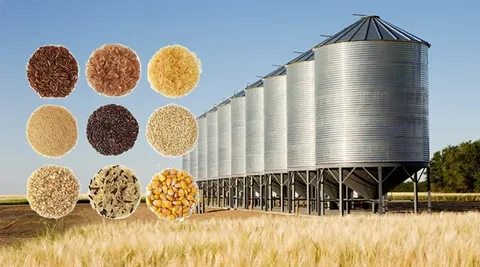
5. Metal Silos: Reliable Grain Storage Methods for Long-Term Maize Preservation
Metal silos are among the more durable storage solutions available to farmers who want to preserve larger quantities of dried maize.
They are commonly constructed from galvanised metal sheets or other suitable corrosion-resistant materials.
A properly designed metal silo provides a strong physical barrier against rodents, insects, and external moisture when its openings and joints are properly sealed.
Unlike ordinary woven bags, metal silos can protect grain from many external storage threats while offering a convenient way to store substantial quantities in one structure.
Small-scale metal silos are particularly useful in agricultural communities where farmers want to preserve their harvest without constructing expensive commercial warehouses.
How metal silos preserve maize
Metal silos are designed to provide a secure enclosure for dried grain.
When properly sealed, they restrict the entry of insects and rodents and can limit air exchange.
Some metal silo designs operate as airtight storage systems, while others include ventilation or aeration features.
Farmers should understand the specific design before using one because an airtight silo and an aerated grain bin require different management practices.
Important features of a good metal maize silo
A reliable grain silo should have:
-
Strong metal construction.
-
A properly fitted lid.
-
Secure loading and discharge openings.
-
Reliable joints and seals.
-
Protection against rainwater.
-
A stable foundation.
-
Suitable corrosion protection.
-
Convenient access for inspection and cleaning.
Advantages of metal silos
-
They can store relatively large quantities of maize.
-
They offer strong protection against rodents.
-
They can reduce insect access when properly sealed.
-
They are durable when maintained correctly.
-
They can be used for several harvest seasons.
-
They reduce the need to handle numerous individual sacks.
Challenges associated with metal silos
The initial purchase or construction cost may be higher than that of ordinary storage bags.
Metal silos can also become excessively hot when exposed to direct sunlight. Their location and design should therefore be considered carefully.
Grain must be dried properly before loading, and the silo should be inspected for leaks, corrosion, and damage.
Best suited for: Medium-scale farmers, commercial maize producers, agricultural cooperatives, and grain traders.
6. Improved Traditional Granaries: Affordable Maize Storage Methods Using Local Materials
Traditional granaries remain important in many agricultural communities, especially where farmers depend on locally available construction materials.
Although modern storage technology has introduced several alternatives, improved traditional granaries can still provide useful protection when properly designed and maintained.
These structures may be constructed using timber, bamboo, woven plant materials, mud, clay, or other locally available resources.
Their main advantage is affordability.
Farmers who cannot afford metal silos or large commercial storage facilities can improve existing granaries with relatively simple modifications.
However, the design must match the condition of the maize being stored. Ventilated maize cribs are particularly useful for drying and holding maize on the cob, while shelled grain requires an appropriate dry, protected storage arrangement.
How to improve a traditional maize granary
An effective improved granary should incorporate the following features.
1. Raise the structure above ground level
A raised platform reduces direct contact between stored maize and ground moisture.
It also makes it more difficult for some rodents and crawling insects to reach the stored grain.
2. Install rat guards
Rat guards are barriers fitted to supporting posts to prevent rodents from climbing into the structure.
They can be made from suitable sheet metal or other materials that create an effective climbing barrier.
3. Provide adequate ventilation
Ventilation helps remove moisture from maize stored on the cob during the drying process.
However, ventilation alone cannot guarantee safe long-term storage of shelled grain. Moisture levels must still be checked before the grain is placed in long-term storage.
4. Construct a waterproof roof
Rainwater entering a granary can quickly damage stored maize.
A suitable roof should protect the structure against rainfall and provide adequate overhang to prevent water from entering through the sides.
5. Maintain the structure regularly
Farmers should inspect the granary for damaged walls, termite activity, leaking roofs, rodent entry points, and other structural problems.
Advantages of improved traditional granaries
-
They can be constructed using local materials.
-
They require relatively low initial investment.
-
They can be adapted to local farming conditions.
-
They support natural ventilation when properly designed.
-
They are useful for storing maize on the cob.
-
They can reduce rodent damage when raised and fitted with guards.
Limitations
Traditional granaries may provide less protection against insects than properly sealed hermetic storage systems.
Their performance also depends on construction quality, maintenance, and the local climate.
Farmers should not assume that a traditional granary is automatically suitable for storing wet or inadequately dried shelled maize for several months.
Best suited for: Rural smallholder farmers, households with limited storage budgets, and communities with access to suitable local construction materials.
7. Raised and Well-Ventilated Grain Storage Bins: Better Protection Against Moisture
A raised and well-ventilated storage bin can provide an effective solution for farmers who need to store dried maize while managing temperature and moisture conditions.
These structures are different from airtight hermetic containers.
Ventilated grain bins are designed to allow controlled airflow, while hermetic storage systems aim to prevent air exchange.
Both can be effective, but they operate differently.
For farmers storing maize in conventional bulk bins, proper airflow can help remove excess heat and maintain more uniform storage conditions.
In warm climates, ventilation must be managed carefully. Air that is too humid may introduce additional moisture into the grain.
Important features of ventilated grain storage bins
-
A strong and stable structure.
-
A raised floor or suitable foundation.
-
Proper ventilation openings.
-
Protection against rainfall.
-
Rodent-proof construction.
-
Suitable aeration equipment where required.
-
Access for inspection and cleaning.
Why is aeration important?
Grain can develop temperature differences within a storage structure.
These differences may encourage moisture migration and create localised areas where mould and insects become more active.
Aeration moves air through stored grain to help equalise temperature and maintain suitable storage conditions.
However, farmers should not operate fans without considering outside temperature and humidity.
The wrong aeration conditions can introduce moisture rather than remove it.
Advantages of ventilated grain bins
-
They can accommodate larger quantities of grain.
-
They help manage heat when properly designed.
-
They allow easier inspection of bulk grain.
-
They can be integrated with mechanical drying equipment.
-
They are useful for commercial grain storage.
Limitations
The construction and installation costs may be significant.
In addition, ventilated storage requires appropriate monitoring and management. Simply constructing openings in a storage building does not guarantee sufficient airflow through a large quantity of grain.
Best suited for: Commercial farms, agricultural processing businesses, and farmers storing bulk quantities of properly dried maize.
8. Properly Managed Conventional Grain Bags: An Affordable Option for Farmers
Ordinary woven polypropylene and jute sacks remain among the most widely used maize storage methods in many farming communities.
They are relatively affordable, readily available, and easy to transport.
For farmers who sell maize to local markets, grain merchants, and food processors, conventional sacks provide a convenient way to package and move harvested grain.
However, ordinary sacks do not provide the same insect protection as hermetic bags.
Weevils and other storage insects can enter through openings in the woven material. Moisture can also penetrate the bags, especially when they are placed directly on damp floors or exposed to leaking roofs.
This means conventional sacks require careful storage management.
How to store maize safely in conventional bags
Farmers should follow these practices:
-
Dry maize to the appropriate moisture level before bagging.
-
Clean the grain to remove dust, broken kernels, and foreign materials.
-
Use clean, dry sacks that have not previously contained chemicals or hazardous substances.
-
Inspect sacks for holes and damaged stitching.
-
Fill and tie the sacks properly.
-
Place them on clean wooden pallets rather than directly on the floor.
-
Leave sufficient space between stacks and walls for inspection and air circulation.
-
Keep the store free from standing water and leaking roofs.
-
Inspect the bags regularly for insects, moisture, and rodent damage.
Why should maize sacks be placed on pallets?
Pallets separate the bags from the floor, reducing direct exposure to damp surfaces and making it easier to inspect the storage area.
They also improve housekeeping by allowing farmers to clean beneath and around the grain stacks.
Advantages of conventional grain bags
-
They are relatively inexpensive.
-
They are widely available.
-
They are easy to transport.
-
They can be purchased in different sizes.
-
They are suitable for short-term storage and grain marketing.
-
They do not require specialised equipment.
Limitations
Conventional sacks provide limited protection against insects and external moisture.
Farmers intending to preserve maize for several months should consider hermetic bags or other more protective storage arrangements, especially where insect infestation is common.
Best suited for: Farmers who need affordable packaging, short-term storage, and convenient transportation to markets.
9. Integrated Grain Storage Management: Combining Different Maize Preservation Techniques
The ninth method is not a particular storage container. Instead, it involves combining several preservation practices to create a reliable storage system.
Even the best hermetic bag or metal silo can fail when farmers ignore proper drying, cleanliness, inspection, and maintenance.
This is why integrated grain storage management is important.
It involves using different methods together to address the major causes of maize deterioration.
For example, a farmer may dry maize using sunlight, clean and sort the kernels, place them in hermetic bags, and store the bags on raised pallets inside a dry building.
Another farmer may use mechanical drying equipment, a metal silo, and regular moisture monitoring.
Both approaches combine several practices to improve grain protection.
Essential practices for effective integrated maize storage management
-
Dry maize properly before storage.
-
Remove broken and damaged kernels.
-
Clean storage facilities before introducing a new harvest.
-
Use appropriate insect protection.
-
Prevent rodents from entering the storage area.
-
Protect stored maize from rainfall and damp conditions.
-
Inspect the grain regularly.
-
Repair damaged containers immediately.
-
Keep records of storage dates and grain condition.
-
Use older stored grain before newer batches where appropriate.
Why is integrated storage management effective?
Different storage problems require different solutions.
Hermetic bags may control insects effectively, but they cannot correct excessive moisture in grain.
Mechanical drying can reduce moisture, but it cannot prevent rodent attacks inside an unsecured warehouse.
A metal silo can provide physical protection, but poor cleaning and inadequate maintenance may compromise its performance.
Combining appropriate practices creates a stronger preservation system than relying on one technique alone.
Best suited for: All categories of farmers, including smallholder producers, commercial farmers, grain traders, and agricultural cooperatives.

Comparison of the 9 Best Maize Storage Methods for Farmers
Choosing between different maize storage methods becomes easier when farmers understand the advantages, limitations, and practical applications of each system.
The following table provides a general comparison.
| Storage method | Main advantage | Main limitation | Best suited for |
|---|---|---|---|
| Sun drying | Affordable moisture reduction | Weather-dependent | Small-scale farmers |
| Mechanical and solar dryers | Faster, more controlled drying | Equipment cost | Medium and commercial farms |
| Hermetic storage bags | Strong insect protection | Requires properly dried grain and intact liners | Smallholder farmers |
| Airtight drums | Secure storage for small quantities | Limited capacity | Households |
| Metal silos | Durable physical protection | Higher initial investment | Medium-scale farms |
| Improved traditional granaries | Uses local materials | Requires regular maintenance | Rural farmers |
| Ventilated grain bins | Supports controlled aeration | Requires proper design and management | Commercial farms |
| Conventional grain bags | Affordable and easy to transport | Limited insect protection | Short-term storage |
| Integrated storage management | Combines several protective practices | Requires consistent monitoring | All farmers |
Which maize storage method is the best?
There is no single method that is best for every farmer.
For small-scale farmers who want to preserve dried maize for several months, hermetic storage bags are often a practical option because they provide strong protection against storage insects without requiring expensive infrastructure.
For farmers handling larger quantities, metal silos and properly managed grain bins may offer better long-term capacity.
For farmers with limited resources, a combination of sun drying, clean conventional sacks, pallets, and a well-maintained storage building can provide a useful starting point.
The most important consideration is that the maize must be sufficiently dry before entering long-term storage.
How to Store Maize for Months Without Spoilage: A Practical Step-by-Step Guide
Understanding different storage technologies is useful, but farmers also need a practical procedure they can follow immediately after harvesting.
If your objective is to learn how to store maize for months without spoilage, the following steps provide a straightforward approach.
Step 1: Harvest Maize at the Appropriate Time
Good storage begins in the field.
Farmers should harvest maize when it reaches physiological maturity and is suitable for harvesting.
Delaying harvest unnecessarily can expose maize to field insects, rainfall, fungal infection, and other sources of damage.
However, harvesting too early can result in excessive grain moisture and increase drying requirements.
The appropriate harvesting time depends on the maize variety, growing conditions, and intended use.
Step 2: Sort the Harvested Maize
After harvesting, inspect the cobs and remove those showing obvious signs of mould, severe insect damage, or deterioration.
Sorting is important because damaged kernels may contribute to poor storage quality.
Do not mix visibly mouldy maize with healthy grain.
Step 3: Dry the Maize Thoroughly
This is one of the most important steps.
Spread maize on a clean surface and dry it until it reaches the recommended moisture level for the intended storage period.
For long-term storage in warm conditions, approximately 12–13% moisture is a useful target.
Where possible, use a calibrated moisture meter to check the grain before storage.
Do not rely only on the appearance or sound of the kernels.
Step 4: Shell and Clean the Maize
After adequate drying, shell the maize using suitable equipment or manual methods.
Remove:
-
Broken kernels.
-
Stones.
-
Dust.
-
Cob fragments.
-
Insect-damaged grains.
-
Other foreign materials.
Cleaning improves grain quality and makes storage easier.
Step 5: Choose an Appropriate Storage System
Select a storage facility based on the quantity of maize, available funds, and intended storage period.
For example:
-
Hermetic bags for small and medium quantities.
-
Metal drums for household storage.
-
Metal silos for larger quantities.
-
Improved granaries for suitable traditional storage arrangements.
-
Commercial grain bins for bulk storage.
Step 6: Clean and Prepare the Storage Area
Before introducing new maize, remove old grain residues, dust, insects, and debris.
Inspect the floor, walls, roof, doors, and ventilation openings.
Repair leaks and close possible entry points for rodents.
A clean storage area reduces the risk of contamination and helps prevent pests from surviving between storage seasons.
Step 7: Store the Maize Correctly
Follow the manufacturer’s instructions when using hermetic bags or airtight containers.
If using conventional sacks, place them on pallets and arrange them neatly.
Avoid storing maize directly against damp walls or on wet floors.
Ensure that the storage structure remains protected from rainfall and excessive humidity.
Step 8: Inspect the Stored Grain Regularly
Storage is not a process that ends once maize enters the warehouse.
Farmers should inspect their grain at regular intervals.
Check for:
-
Unusual smells.
-
Visible insects.
-
Moisture accumulation.
-
Damaged bags.
-
Rodent activity.
-
Changes in grain colour.
-
Signs of mould.
-
Unusual heating.
For hermetic bags, inspect the outer packaging and seals without unnecessarily opening the inner liners.
Step 9: Maintain Proper Storage Records
Record the date maize was harvested, dried, and placed in storage.
Also record the storage system used, moisture measurements, inspection dates, and any problems observed.
These records help farmers understand which preservation techniques work best under their local conditions.
They are particularly valuable for commercial farms and cooperatives handling multiple grain batches.
How to Prevent Weevils in Stored Maize Naturally
Weevils are among the most troublesome pests affecting stored maize. These small insects can cause considerable damage to grain, especially when farmers store their harvest in ordinary woven sacks or poorly maintained granaries.
The maize weevil, scientifically known as Sitophilus zeamais, attacks stored maize by feeding on the kernels and laying eggs inside them. The developing larvae feed within the grain, making infestations difficult to detect during their early stages.
As the infestation increases, farmers may notice small holes in the kernels, powdery grain residues, adult insects, and a reduction in grain weight and quality.
A serious infestation can make maize less attractive to buyers and unsuitable for certain food and feed applications.
Fortunately, farmers can reduce weevil infestation through proper drying, sanitation, physical protection, and suitable storage technologies.
1. Dry Maize Properly Before Storage
Weevils and other storage insects are influenced by environmental conditions.
Proper drying is essential for preventing mould and reducing the risk of grain deterioration. It should be combined with other insect-control measures rather than treated as a complete solution for eliminating weevils.
2. Use Hermetic Storage Bags
Hermetic bags are among the most practical ways to control weevils without routinely applying chemical insecticides to stored grain.
Their airtight design gradually reduces oxygen availability and creates an atmosphere that is unfavourable to many storage insects.
However, farmers should only store adequately dried maize in these bags.
3. Clean the Storage Facility Before Introducing New Maize
Old grain residues, dust, and broken kernels can provide food and shelter for storage insects.
Before a new harvest enters the store:
-
Remove leftover maize from previous seasons.
-
Sweep the floor and corners.
-
Clean storage containers.
-
Inspect cracks and hidden spaces.
-
Remove discarded sacks.
-
Dispose of heavily infested residues appropriately.
This helps reduce the number of insects that may attack newly stored maize.
4. Use Airtight Containers for Smaller Quantities
Food-grade plastic drums and properly sealed metal containers can help prevent insects from entering stored maize.
They are particularly useful for household grain storage and small farming operations.
5. Separate New Harvests from Old Grain
Mixing newly harvested maize with old, potentially infested grain can introduce insects into an otherwise clean batch.
Store different harvests separately and label them with their storage dates.
This makes inspection and stock management easier.
6. Use Botanical Protectants Carefully
Some traditional agricultural practices involve using plant materials such as neem leaves or other locally available botanicals to discourage storage pests.
However, their effectiveness varies according to plant species, preparation, concentration, storage conditions, and the particular insect involved.
Farmers should not assume that placing leaves in a maize container provides reliable protection against a serious infestation.
There is also a difference between a traditional repellent and a scientifically validated grain protectant.
For maize intended for human consumption or animal feed, only use treatments that are approved for the intended commodity and follow their label instructions.
7. Inspect Stored Maize Regularly
Early detection makes storage pest management easier.
Farmers should inspect ordinary grain sacks and storage facilities for:
-
Live adult weevils.
-
Small holes in kernels.
-
Fine grain powder.
-
Unusual movement among the kernels.
-
Damaged packaging.
-
Signs of rodents.
For sealed hermetic bags, avoid opening the bags simply to inspect their contents. Check the exterior and maintain the seal.
Can Weevil-Infested Maize Be Saved?
The answer depends on the extent of infestation and whether the grain has developed additional problems.
Light insect infestation may be managed through appropriate cleaning, separation, and professionally recommended treatment.
However, maize with extensive mould growth, musty smells, visible fungal contamination, or suspected aflatoxin contamination should not be assumed safe after simply removing the insects.
Aflatoxins are dangerous fungal toxins that cannot be reliably detected by appearance, smell, or ordinary cleaning.
Where contamination is suspected, appropriate testing is necessary. Heavily mouldy or contaminated maize should not be consumed or fed to livestock.
Best Hermetic Bags for Long-Term Maize Storage: What Farmers Should Know
The demand for reliable grain preservation has increased interest in hermetic storage technologies.
For farmers who want to preserve maize for several months, selecting a suitable hermetic bag can make a significant difference.
However, not every airtight-looking sack is a genuine hermetic storage bag.
Farmers should understand the differences between the available designs before spending money.
1. PICS Triple-Layer Storage Bags
PICS bags are among the best-known hermetic grain storage technologies.
They use two inner plastic liners and an outer woven sack.
The inner liners provide the airtight barrier, while the outer layer protects them from handling damage.
They are designed for storing different dry agricultural commodities, including maize, beans, and other grains.
2. Other Commercial Hermetic Storage Bags
Several agricultural suppliers offer hermetic bags with different designs, capacities, and material specifications.
Some use multiple inner liners, while others use specially engineered barrier materials.
Farmers should compare product quality, sealing instructions, capacity, durability, and availability of replacement bags.
Important Features to Consider When Buying Hermetic Bags
Before purchasing, check the following:
Material quality: The inner liners should be strong enough to withstand ordinary filling and handling without tearing.
Airtight sealing: The bag must have a reliable closing mechanism or design that prevents unnecessary air exchange.
Capacity: Select a bag size that matches the quantity of maize you intend to store.
Durability: The outer sack should protect the inner liners against abrasion and physical damage.
Availability: Purchase from a reputable agricultural supplier that can provide instructions and information about the product.
Authenticity: Avoid counterfeit products that imitate recognised hermetic storage brands.
How Long Can Maize Stay in Hermetic Storage Bags?
The storage period depends on the moisture content of the maize, the integrity of the bag, the surrounding environment, and how well the bag remains sealed.
Properly dried maize can remain in suitable hermetic storage for several months, and some systems are designed for storage periods exceeding a year.
However, farmers should not interpret the advertised maximum storage period as a guarantee that every bag of maize will remain safe for that length of time.
Initial grain quality and moisture management remain essential.
Research from African on-farm storage trials has demonstrated the importance of adequate drying when using hermetic bags to protect maize from fungal deterioration and aflatoxin accumulation
Maize Moisture Content for Safe Storage: What Percentage Should Farmers Target?
One of the most important questions farmers ask is how dry maize should be before it enters storage.
The answer depends on how long the grain will remain in storage and the prevailing environmental conditions.
For maize intended for long-term storage in warm climates, a moisture content around 12–13% is a useful general target.
The following table provides practical guidance.
| Storage situation | General moisture guidance |
|---|---|
| Short-term storage under suitable conditions | Around 14–15% may be acceptable depending on temperature and storage system |
| Storage for approximately 6 months | Aim for about 13–14% or lower in warm conditions |
| Long-term storage through hot months | Approximately 12–13% |
| Hermetic storage | Preferably 12–13% or lower, following product-specific guidance |
| Seed maize | Follow seed-specific drying and storage recommendations |
These figures are practical guidance, not universal guarantees. Temperature, grain condition, storage duration, and local humidity can change the safe storage limit.
Purdue University Extension provides useful guidance on safe grain moisture levels and the relationship between storage duration and moisture management in its grain storage recommendations.
Why Is Moisture Content So Important?
Moisture affects several processes inside stored maize.
When grain contains excessive moisture:
-
Fungal growth becomes more likely.
-
Grain respiration increases.
-
Heat may accumulate.
-
Insect activity may increase.
-
Grain quality can deteriorate.
-
Aflatoxin contamination may become more likely under favourable conditions.
The Food and Agriculture Organization also explains the importance of prompt drying and maintaining a suitably low moisture level to prevent fungal growth and mycotoxin production.
Farmers can consult the FAO’s technical resource on prevention and control of mycotoxins in stored grains.

What Is Aflatoxin and Why Should Maize Farmers Be Concerned?
Aflatoxin is a toxic substance produced by certain species of fungi, particularly Aspergillus flavus and related fungi.
These organisms can contaminate maize during production, harvesting, drying, and storage.
Aflatoxin contamination is a serious food safety concern because exposure can cause harmful health effects.
The problem is particularly concerning because contaminated maize may not always display obvious visual signs.
A farmer may have grain that appears reasonably clean but still contains unacceptable levels of aflatoxins.
This is why good storage practices must be supported by appropriate food safety measures.
To reduce the risk of aflatoxin contamination:
-
Harvest maize at the appropriate time.
-
Avoid leaving mature cobs exposed unnecessarily to rainfall.
-
Dry harvested maize promptly.
-
Remove visibly damaged and mouldy kernels.
-
Avoid storing wet maize.
-
Maintain clean storage facilities.
-
Prevent water leaks and moisture penetration.
-
Monitor stored grain regularly.
-
Use suitable testing where contamination is suspected.
An important point to remember is that drying and proper storage can prevent further fungal growth, but they do not reliably remove toxins that have already formed.
Common Mistakes Farmers Should Avoid When Using Maize Storage Methods
Even farmers who understand the importance of grain preservation can make mistakes that reduce the effectiveness of their storage systems.
Some of these mistakes may appear minor, but they can result in substantial losses over time.
1. Storing Maize Before It Is Properly Dried
This is one of the most serious storage mistakes.
Some farmers rush to store their harvest because they want to protect it from rain or free up space in the drying area.
Unfortunately, placing wet maize in bags or sealed containers can encourage mould development.
The solution is simple: measure moisture content and dry maize to an appropriate level before long-term storage.
2. Using Damaged Hermetic Bags
A small hole in an inner liner can compromise the airtight protection of a hermetic bag.
Farmers should inspect bags before use and avoid using liners with visible tears.
They should also protect filled bags from sharp objects, rough surfaces, and unnecessary handling.
3. Storing Grain Directly on the Floor
Damp floors can expose grain bags to moisture.
Always use pallets or suitable raised platforms when storing conventional sacks.
The storage room should also be protected against roof leaks and water entering through doors or windows.
4. Mixing Old and New Maize
Old grain may contain insects or mould that can affect a fresh harvest.
Store different batches separately and clean the facility before introducing new grain.
5. Ignoring Rodent Control
Rats and mice can damage sacks, consume maize, and contaminate grain with urine and droppings.
Farmers should close entry points, remove rubbish, keep the surroundings clean, and use appropriate rodent-control measures.
6. Opening Hermetic Bags Too Frequently
Opening an airtight bag allows oxygen to enter and can undermine the modified atmosphere inside it.
Farmers should divide their maize into suitable portions if they expect to use it regularly.
7. Ignoring Storage Inspections
Some farmers only inspect their maize when they are ready to sell it.
This is a mistake because storage problems can develop long before the planned selling date.
Regular inspections help identify damaged packaging, leaking roofs, rodents, and other problems early.
8. Using Unapproved Chemicals
Some farmers apply pesticides or other chemicals to stored maize without checking whether they are approved for the intended crop and storage use.
This can expose consumers and livestock to harmful chemical residues.
Only use registered products specifically approved for stored maize, following the label instructions and any required waiting periods.
Never mix pesticides with grain using unverified traditional measurements.
9. Ignoring the Condition of the Storage Building
A storage building may appear secure while still having cracks, damp walls, leaking roofs, and openings that allow pests to enter.
Inspect the entire facility before each storage season.
How to Choose the Best Maize Storage Methods for Small-Scale Farmers
Small-scale farmers often face a difficult decision when choosing storage equipment.
They want reliable protection, but expensive storage facilities may not be financially realistic.
The best approach is to select a preservation system based on the quantity of maize, available resources, and expected storage period.
Here are some practical recommendations.
If You Harvest Only a Few Bags of Maize
Hermetic bags or suitable airtight food-grade containers may be sufficient.
They are easier to manage than large storage structures and can protect small quantities when properly used.
If You Harvest Several Tonnes of Maize
Consider larger hermetic storage systems, metal silos, or properly managed grain bins.
The choice should depend on the quantity of grain, available capital, and whether you intend to sell the maize commercially.
If You Have a Limited Budget
Start with the most important practices:
-
Dry maize properly.
-
Clean and sort the kernels.
-
Purchase suitable storage bags.
-
Use wooden pallets.
-
Keep the store dry.
-
Inspect maize regularly.
These practices can significantly improve storage management without requiring a large financial investment.
If You Live in a Humid Agricultural Region
Pay particular attention to moisture management.
Rainfall and high relative humidity can make drying and storage more challenging.
Use raised drying platforms, protect grain from rainfall, and avoid leaving dried maize exposed to humid conditions unnecessarily.
Hermetic bags can help protect properly dried grain from external moisture, provided the liners remain intact and properly sealed.
If You Want to Store Maize for More Than Six Months
Longer storage requires greater attention to initial grain quality and moisture.
Hermetic bags and properly designed metal silos are worth considering.
Farmers should also maintain storage records and inspect their grain regularly.
How Proper Maize Storage Can Increase Farm Profitability
Maize storage is not just about preventing spoilage. It is also an important farm management decision that can influence the financial performance of an agricultural business.
Farmers often concentrate on increasing production but overlook the importance of preserving what they have already harvested.
Imagine two farmers who each harvest 100 bags of maize.
The first farmer sells immediately after harvesting because there is no suitable storage facility.
The second farmer dries the grain properly and stores it in a secure facility.
The second farmer may have more flexibility when deciding when to sell, although the actual financial benefit will depend on market prices, storage costs, and grain quality.
1. Reduced Financial Losses
When farmers prevent insect damage and moisture-related deterioration, they retain more of their harvest.
This reduces the financial losses associated with damaged or rejected grain.
2. Better Market Opportunities
Maize prices can change throughout the year depending on supply, demand, transportation costs, and other market conditions.
Proper storage gives farmers the opportunity to evaluate market conditions rather than being forced to sell immediately.
However, storage is not a guarantee of higher prices.
3. Improved Buyer Confidence
Grain buyers generally prefer clean, properly dried maize with minimal insect damage and no visible mould.
Maintaining consistent quality can help farmers build stronger relationships with processors, feed manufacturers, traders, and other buyers.
4. Reduced Pressure During Harvest Season
When farmers have sufficient storage capacity, they can organise their harvesting and marketing activities more effectively.
They do not have to rush every bag of maize to the market immediately after harvest.
5. Better Agricultural Business Planning
Farmers who maintain accurate storage records can calculate the cost of drying, packaging, storage, and transportation.
This information helps them determine whether their storage strategy is financially worthwhile.
Frequently Asked Questions About Maize Storage Methods
1. What Is the Best Way to Store Maize for Months Without Spoilage?
The best approach is to dry maize to a suitable moisture level, clean it thoroughly, and store it in a protective storage system.
For many smallholder farmers, hermetic storage bags provide a practical solution because they help prevent insect infestation.
Commercial farmers may prefer metal silos or properly managed grain bins.
2. How Long Can Maize Be Stored Without Spoiling?
The storage period depends on grain moisture, temperature, initial quality, and storage conditions.
Properly dried maize can remain in suitable storage for several months. Some hermetic systems can support storage beyond a year when all recommended conditions are maintained.
There is no universal guarantee of a particular storage duration.
3. Can Maize Be Stored for One Year?
Yes, maize can be stored for approximately one year under suitable conditions.
Farmers should ensure that the grain is properly dried, protected against moisture, and placed in a suitable storage facility.
Hermetic bags and properly maintained metal silos are potential options.
4. What Moisture Content Is Best for Long-Term Maize Storage?
A moisture content of approximately 12–13% is a useful target for long-term maize storage in warm environments.
The exact requirement depends on the storage period, temperature, grain condition, and type of storage system.
5. Do Hermetic Bags Prevent Weevils in Maize?
Yes. Properly sealed hermetic bags can control many common storage insects by gradually reducing oxygen availability inside the bag.
However, they must be filled with adequately dried maize and protected against punctures.
6. Can I Store Freshly Harvested Maize in Hermetic Bags?
No. Freshly harvested maize should not be placed directly into long-term hermetic storage while it still contains excessive moisture.
Dry it properly and check its moisture content before sealing the bag.
7. Are PICS Bags Better Than Ordinary Grain Bags?
For controlling storage insects, genuine PICS bags generally provide better protection than ordinary woven sacks because of their airtight inner liners.
Ordinary sacks are easier to use for transportation and short-term storage but do not provide equivalent insect protection.
8. How Can I Prevent Weevils in Stored Maize Naturally?
Start with proper drying and cleaning. Use hermetic storage bags, keep the storage facility clean, and separate old grain from new harvests.
These methods reduce the need for chemical insecticide treatment.
9. Can I Store Maize in Plastic Containers?
Yes, provided the containers are food-grade, clean, dry, and suitable for storing grain.
Containers should have secure lids and should be kept away from direct sunlight and excessive heat.
Never reuse containers that previously held pesticides, fuel, or industrial chemicals.
10. Is Sun Drying Enough to Preserve Maize?
Sun drying can remove moisture effectively when performed under suitable weather conditions.
However, it does not protect maize from insects during subsequent storage.
Farmers should combine proper drying with an appropriate storage system.
11. Can Mouldy Maize Be Made Safe by Drying It Again?
No. Drying may prevent further fungal development, but it does not reliably remove mycotoxins that have already formed.
Heavily mouldy or suspicious maize should not be assumed safe for human consumption or animal feed.
12. Should Maize Be Stored With or Without Husks?
Both approaches are used in traditional farming systems.
Maize cobs with husks can be dried and stored in suitable ventilated cribs or granaries.
Shelled maize is often more convenient for hermetic bags, airtight containers, and bulk grain storage.
The appropriate approach depends on the storage structure and moisture conditions.
13. How Often Should Stored Maize Be Inspected?
Conventional sacks and storage buildings should be inspected regularly, preferably every few weeks, with more frequent checks when conditions are humid or insect activity is suspected.
Hermetic bags should be checked externally for damage and seal problems without unnecessary opening.
14. What Causes Maize to Develop a Bad Smell During Storage?
A bad smell may indicate moisture accumulation, mould development, fermentation, or other forms of grain deterioration.
Investigate the affected batch immediately and avoid consuming grain that appears mouldy or suspicious.
15. Which Maize Storage Method Is Most Affordable?
Sun drying combined with clean conventional sacks and proper pallets is one of the least expensive approaches.
However, farmers who want stronger protection against insects may find hermetic bags a worthwhile investment.
Conclusion: Choosing the Right Maize Storage Methods for a Better and More Profitable Harvest
Harvesting maize successfully is an important achievement, but protecting the grain after harvest is equally essential.
Farmers who fail to adopt proper preservation practices risk losing part of their harvest to weevils, moisture, mould, rodents, and other storage problems.
The good news is that there are several practical solutions available, even for farmers operating with limited financial resources.
As discussed throughout this guide, the nine maize storage methods include proper sun drying, mechanical and solar drying, hermetic storage bags, airtight drums, metal silos, improved traditional granaries, ventilated grain bins, conventional grain sacks, and integrated storage management.
Each method offers different advantages depending on the quantity of maize, storage duration, available equipment, and environmental conditions.
For small-scale farmers, combining proper drying with hermetic storage bags can provide a particularly practical approach to protecting maize against insects.
For commercial farmers, metal silos and properly managed grain storage facilities may offer better capacity and more organised grain management.
However, one principle remains important regardless of the storage system: maize must be adequately dried before long-term storage.
No storage technology can compensate for poor grain preparation, and even the most expensive storage facility requires regular inspection and maintenance.
Farmers should also remember that protecting maize against weevils is only one part of successful preservation. Preventing moisture accumulation and fungal contamination is equally important for maintaining food safety.
As agricultural production expands and the demand for quality grain continues, investing in appropriate storage practices can help farmers reduce avoidable losses, protect their income, and strengthen food security.
The best storage decision is not necessarily the most expensive one. It is the one that protects your harvest reliably, fits your budget, and supports your farming goals.
If you are a maize farmer, start by improving your drying practices, choosing a suitable storage facility, and inspecting your grain regularly. These simple but important decisions can help you preserve more of your harvest and make better use of the hard work invested throughout the farming season.
The article incorporates technical guidance and research from:
About The Author