Climate-smart agriculture
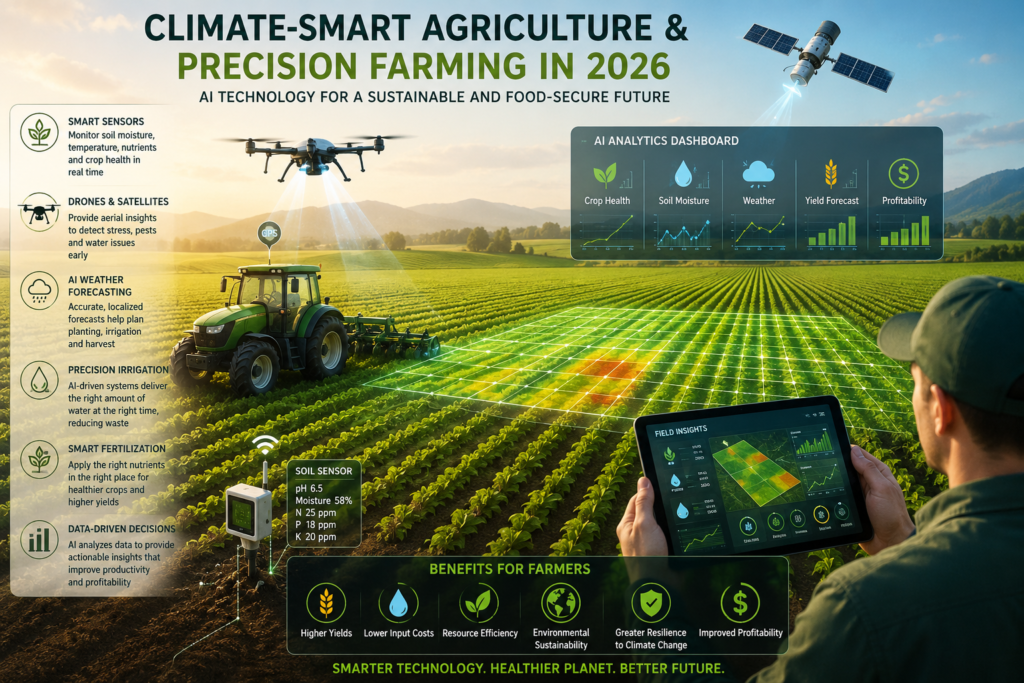
Agriculture is entering one of the most transformative periods in its history. Across the globe, farmers are facing challenges that previous generations rarely encountered at the same scale. Rising temperatures, unpredictable rainfall patterns, soil degradation, increasing production costs, labor shortages, and growing food demand are forcing the agricultural sector to rethink traditional farming methods.
At the same time, a new wave of innovation is creating unprecedented opportunities. Artificial intelligence, machine learning, satellite imagery, drones, robotics, predictive analytics, and advanced sensors are revolutionizing how food is produced. These technologies are helping farmers grow more food using fewer resources while protecting the environment.
This shift is giving rise to Climate-Smart Agriculture, a farming approach designed to increase productivity, improve resilience to climate change, and reduce environmental impact. What once seemed futuristic is rapidly becoming a practical necessity for farms of all sizes.
In 2026, Climate-Smart Agriculture is no longer a niche concept reserved for large agribusinesses. Smallholder farmers, commercial farms, agricultural cooperatives, and food producers worldwide are embracing intelligent farming technologies to stay competitive and profitable.
This article explores the 10 most powerful and profitable AI farming trends shaping agriculture in 2026 and examines how Precision Farming, Regenerative Agriculture, and Carbon Farming are transforming sustainable food production for generations to come.

Why Climate-Smart Agriculture Matters More Than Ever in 2026
Climate-Smart Agriculture represents a strategic response to some of the biggest challenges facing global food systems today.
The world’s population continues to grow, increasing demand for food production. However, available farmland is not expanding at the same pace. Farmers must therefore produce more food on existing land while preserving soil health, conserving water, and minimizing greenhouse gas emissions.
Climate-Smart Agriculture focuses on three primary goals:
- Increasing agricultural productivity
- Building climate resilience
- Reducing environmental impact
The combination of AI technologies and sustainable farming practices allows farmers to achieve all three objectives simultaneously.
Some key benefits include:
- Higher crop yields
- Reduced input costs
- Better water management
- Improved soil fertility
- Lower carbon emissions
- Enhanced weather preparedness
- Greater farm profitability
The integration of smart technologies is Food and Agriculture Organization (FAO) transforming agriculture from a reactive industry into a predictive one.
The Relationship Between Climate-Smart Agriculture, Precision Farming, Regenerative Agriculture, and Carbon Farming
Before exploring AI trends, it is important to understand how these concepts work together.
| Farming Approach | Primary Goal | Key Benefits |
|---|---|---|
| Climate-Smart Agriculture | Productivity and resilience | Sustainable food production |
| Precision Farming | Data-driven decision making | Reduced waste and higher efficiency |
| Regenerative Agriculture | Soil restoration | Improved soil health and biodiversity |
| Carbon Farming | Carbon sequestration | Additional farm income and climate benefits |
| AI Farming | Intelligent automation | Increased productivity and profitability |
These approaches complement each other rather than compete with one another.
The future farm will likely combine all of these systems into a unified farming strategy.
Trend #1: Precision Farming Becomes the Foundation of Climate-Smart Agriculture
Precision Farming has evolved dramatically over the last decade.
Rather than treating an entire field as one unit, farmers can now manage individual sections based on specific conditions.
Using:
- GPS technology
- Field sensors
- Satellite imagery
- AI-powered analytics
- Variable-rate equipment
Farmers can identify exactly where resources are needed.
Benefits of Precision Farming
- Reduced fertilizer waste
- Lower pesticide usage
- Better crop performance
- Increased profitability
- Improved environmental sustainability
Among the best precision farming technologies for sustainable food production in 2026 are:
- Variable Rate Technology (VRT)
- Smart irrigation systems
- Drone monitoring platforms
- Yield mapping software
- AI crop analytics systems
These tools help farmers make decisions based on real-time field data rather than assumptions.
Trend #2: Smart Crop Monitoring Through AI and Satellite Technology
One of the biggest challenges farmers face is identifying crop stress before visible symptoms appear.
AI-powered satellite systems now analyze fields continuously and detect:
- Water stress
- Nutrient deficiencies
- Pest infestations
- Disease outbreaks
This early warning capability allows farmers to intervene before problems spread.
Instead of discovering issues weeks later, farmers can respond immediately, reducing losses and protecting yields.
Modern satellite intelligence is becoming one of the most important pillars of Climate-Smart Agriculture because it provides actionable insights at scale.
AI Farming Trend #3: Predictive Weather Intelligence for Climate-Resilient Farming
Weather uncertainty remains one of agriculture’s greatest risks.
Artificial intelligence is dramatically improving forecasting accuracy by analyzing:
- Historical weather patterns
- Satellite observations
- Climate models
- Local environmental data
Farmers can now make informed decisions about:World Bank Agriculture Overview
- Planting schedules
- Irrigation timing
- Fertilizer application
- Harvest planning
Climate-resilient farming practices for food security in 2026 and beyond increasingly depend on predictive weather intelligence.
Rather than reacting to extreme weather events, farmers can prepare for them.
This proactive approach reduces losses while improving overall productivity.
Trend #4: Autonomous Agricultural Machinery
The rise of autonomous machinery is addressing one of agriculture’s biggest challenges: labor shortages.
Modern AI-powered tractors and farm equipment can:
- Navigate fields independently
- Plant crops accurately
- Apply inputs precisely
- Monitor field conditions
- Operate for extended periods
Benefits include:
- Lower labor costs
- Improved efficiency
- Reduced human error
- Increased operational consistency
Autonomous machinery is expected to become increasingly common throughout 2026 and beyond.
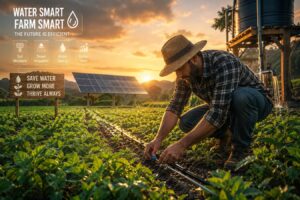
Trend #5: Smart Irrigation Systems Improve Water Efficiency
Water scarcity continues to threaten agricultural productivity worldwide.
AI-powered irrigation systems monitor:
- Soil moisture
- Weather forecasts
- Crop growth stages
- Evaporation rates
The result is highly optimized water usage.
Instead of watering fields on fixed schedules, farmers irrigate only when crops truly need water.
Benefits include:
- Water conservation
- Lower energy costs
- Better crop health
- Increased drought resilience
Smart irrigation is becoming one of the most valuable investments for Climate-Smart Agriculture operations.
Trend #6: Regenerative Agriculture Powered by Artificial Intelligence
Regenerative Agriculture focuses on restoring natural ecosystems while maintaining productivity.
Key practices include:
- Cover cropping
- Reduced tillage
- Crop rotation
- Compost application
- Biodiversity enhancement
Artificial intelligence helps farmers measure and improve the effectiveness of these practices.
AI systems can analyze:
- Soil organic matter
- Biological activity
- Nutrient cycling
- Carbon storage levels
The combination of AI and Regenerative Agriculture is creating measurable improvements in soil health and long-term productivity.
Trend #7: Carbon Farming Creates New Revenue Opportunities
Carbon Farming is rapidly becoming a major opportunity for farmers.
Through sustainable land management practices, farms can capture and store carbon within soil and vegetation.
Examples include:
- Agroforestry
- Cover crops
- Conservation tillage
- Rotational grazing
The regenerative agriculture and carbon farming benefits for farmers include:
- Additional income streams
- Improved soil fertility
- Enhanced water retention
- Greater climate resilience
Many carbon markets now compensate farmers for verified carbon sequestration efforts.
As carbon credit programs expand, Carbon Farming could become a significant source of farm revenue.
Trend #8: Digital Twins for Agricultural Optimization
A digital twin is a virtual replica of a farm.
Using real-time data, farmers can simulate different scenarios before implementing changes.
Examples include:
- Testing irrigation strategies
- Evaluating fertilizer plans
- Predicting disease spread
- Modeling weather impacts
Digital twins reduce risk and improve decision-making.
They represent one of the most exciting developments in Climate-Smart Agriculture for 2026.
Trend #9: AI-Powered Pest and Disease Detection
Traditional scouting methods often detect problems after damage has occurred.
AI-powered imaging systems identify:
- Leaf diseases
- Pest infestations
- Nutrient deficiencies
often within hours of emergence.
Benefits include:
- Reduced pesticide use
- Lower crop losses
- Faster interventions
- Improved sustainability
This technology aligns perfectly with both Precision Farming and Climate-Smart Agriculture goals.
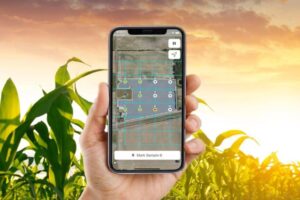
Trend #10: Farm Management Platforms Become Centralized Intelligence Hubs
Modern farms generate enormous amounts of data.
AI-powered management platforms bring everything together into one dashboard.
Farmers can monitor:
- Equipment performance
- Crop conditions
- Weather forecasts
- Financial performance
- Carbon metrics
The result is a more connected and intelligent farming operation.
Farm management software is rapidly becoming the command center of Climate-Smart Agriculture systems worldwide.
Climate-Smart Agriculture and Precision Farming: How AI Is Transforming Sustainable Food Production in 2026
Agriculture is undergoing a remarkable transformation. For centuries, farming decisions were largely based on experience, observation, and seasonal patterns passed down through generations. While those traditional methods still play an important role, modern farmers are now operating in a much more complex environment. Rising temperatures, changing rainfall patterns, increasing production costs, labor shortages, and growing food demand are forcing the agricultural sector to adapt faster than ever before.
Fortunately, technological innovation is providing solutions to many of these challenges. Artificial intelligence (AI), advanced sensors, drones, satellite imagery, and data analytics are helping farmers make better decisions with greater accuracy. These tools are not replacing farmers; rather, they are enhancing their ability to manage resources efficiently and respond to changing conditions.
As a result, farms are becoming more productive, sustainable, and resilient. This shift is helping agricultural producers meet today’s demands while preparing for the challenges of tomorrow.
The Evolution of Modern Farming
In the past, many farming practices followed a one-size-fits-all approach. Water, fertilizer, and crop protection products were often applied uniformly across entire fields. While this method was simple, it did not account for variations in soil quality, moisture levels, or crop health.
Today, technology makes it possible to understand what is happening in different parts of a field with incredible detail. Farmers can identify areas that require more attention and areas that require less. This targeted approach improves efficiency and helps reduce unnecessary spending.
The move toward data-driven farming is changing how agricultural operations are managed. Instead of relying solely on assumptions, producers can now base important decisions on accurate information collected in real time.
Why Artificial Intelligence Is Becoming Essential in Agriculture
Artificial intelligence has emerged as one of the most influential tools in modern farming. Its ability to process large amounts of information quickly allows farmers to gain insights that would otherwise take days or even weeks to uncover.
AI systems can analyze information from multiple sources, including:
- Soil sensors
- Weather stations
- Satellite imagery
- Farm equipment
- Historical yield records
- Crop monitoring systems
After processing this information, the technology can provide recommendations that help improve productivity and reduce waste.
For example, an AI platform may identify signs of crop stress before visible symptoms appear. Early detection enables farmers to act quickly, preventing potential yield losses and minimizing costs.
This predictive capability is becoming increasingly valuable as environmental conditions become less predictable.
Making Better Decisions Through Data
One of the biggest advantages of digital farming technologies is their ability to support informed decision-making.
Every farm generates large amounts of information throughout the growing season. Traditionally, much of this data went unused because collecting and analyzing it manually was difficult and time-consuming.
Modern software platforms can now gather information automatically and present it in an easy-to-understand format. Farmers gain access to valuable insights that help them determine:
- The best planting times
- Optimal irrigation schedules
- Fertilizer requirements
- Potential disease risks
- Harvest timing
Having access to accurate information reduces uncertainty and helps producers manage their operations more effectively.
The Growing Importance of Smart Sensors
Smart sensors have become one of the most practical innovations in agriculture. These devices continuously collect information about field conditions and provide a detailed picture of what crops need to thrive.
Common sensor applications include monitoring:
- Soil moisture
- Temperature
- Humidity
- Nutrient levels
- Crop growth conditions
Instead of applying resources according to fixed schedules, farmers can respond to actual field conditions. This improves efficiency while reducing waste.
For example, if moisture levels remain adequate after rainfall, irrigation can be delayed. Likewise, nutrient applications can be adjusted based on real-time measurements rather than estimates.
This precision helps improve crop performance while conserving valuable resources.
Drones and Satellite Imagery Are Changing Field Management
Monitoring large agricultural areas has always been challenging. Walking through fields can provide useful information, but it is time-consuming and may not reveal problems affecting distant sections of a farm.
Drones and satellite technologies solve this problem by providing detailed aerial views of crops. High-resolution images allow farmers to identify issues quickly and accurately.
These technologies can help detect:
- Uneven crop growth
- Water stress
- Nutrient deficiencies
- Pest activity
- Disease outbreaks
Early detection is often the difference between a minor issue and a major financial loss.
Rather than treating entire fields, producers can focus attention on specific areas where intervention is needed. This targeted approach saves money and reduces environmental impact.
Improving Water Management Through Technology
Water is one of agriculture’s most important resources, yet it is becoming increasingly scarce in many parts of the world.
Efficient water management is therefore critical for long-term agricultural success. Advanced irrigation systems are helping farmers use water more effectively by combining environmental data with automated controls.
These systems consider factors such as:
- Soil moisture levels
- Weather forecasts
- Crop growth stages
- Evaporation rates
The result is a more precise approach to irrigation that delivers water only when necessary.
Benefits include:
- Reduced water consumption
- Lower energy costs
- Improved crop health
- Increased drought resilience
As pressure on water resources continues to grow, efficient irrigation practices will play an increasingly important role in maintaining productivity.
Enhancing Resilience Through Better Weather Forecasting
Weather remains one of the most unpredictable aspects of farming. Unexpected storms, heat waves, droughts, and flooding can significantly affect crop performance.
Recent advances in forecasting technology are helping producers prepare for these challenges more effectively.
Modern forecasting systems use advanced analytics to process information from multiple sources and generate highly localized predictions. These forecasts provide valuable guidance for day-to-day operations and long-term planning.
Farmers can use this information to:
- Schedule planting activities
- Protect crops from extreme conditions
- Adjust irrigation plans
- Optimize harvest timing
Being able to anticipate weather-related risks helps reduce uncertainty and improves overall farm resilience.
Automation Is Addressing Labor Challenges
Finding skilled agricultural workers has become increasingly difficult in many regions. Labor shortages can delay critical tasks and increase operational costs.
Automation offers a practical solution by allowing certain activities to be completed more efficiently.
Examples include:
- Self-guided tractors
- Automated planting equipment
- Robotic harvesters
- Intelligent spraying systems
These technologies improve accuracy while reducing the need for repetitive manual labor.
Rather than replacing workers entirely, automation often enables existing teams to focus on higher-value tasks that require human expertise and judgment.

Environmental Sustainability and Farm Profitability Can Work Together
There was a time when sustainability and profitability were often viewed as competing priorities. Today, many farmers are discovering that environmentally responsible practices can also improve financial performance.
Reducing unnecessary inputs lowers production costs. Conserving water improves resource efficiency. Healthier soils support stronger crop growth over the long term.
Additional benefits may include:
- Improved soil quality
- Reduced erosion
- Better nutrient retention
- Enhanced biodiversity
- Increased resilience to extreme weather
Consumers and food companies are also placing greater value on sustainably produced products, creating new market opportunities for agricultural producers.
Climate variability continues to present significant challenges for agricultural producers worldwide. Droughts, floods, heat waves, and extreme weather events are becoming more frequent in many regions.
Conclusion
Climate-Smart Agriculture is no longer a future vision—it is today’s reality.
The integration of artificial intelligence, Precision Farming, Regenerative Agriculture, and Carbon Farming is reshaping how food is produced around the world. Farmers who embrace these technologies are positioning themselves for greater productivity, stronger resilience, improved sustainability, and higher profitability.
The farms that thrive in 2026 and beyond will not necessarily be the largest. They will be the farms that use data intelligently, protect their natural resources, adapt to changing conditions, and continuously innovate.
As climate pressures intensify and food demand grows, Climate-Smart Agriculture offers a practical roadmap toward a more sustainable, resilient, and profitable agricultural future.
About The Author