Greenhouse Farming
Agriculture has always been a profession of resilience. Farmers have spent generations adapting to changing seasons, unpredictable weather, pest outbreaks, and shifting market demands. Yet in recent years, those challenges have intensified. Rising temperatures, prolonged droughts, irregular rainfall, soil degradation, and increasing production costs have forced growers to rethink traditional farming methods. Simply relying on favorable weather is no longer enough to guarantee healthy harvests or profitable farming.
This changing reality has accelerated interest in greenhouse farming, one of the fastest-growing innovations in modern agriculture. What was once viewed as a specialized production system for commercial horticulture has become a practical solution for farmers of all sizes. From small family-owned farms to multinational food producers, greenhouses are helping growers produce healthier crops, conserve valuable resources, and remain productive despite increasingly unpredictable climates.
Unlike conventional open-field farming, greenhouse farming provides a protected environment where temperature, humidity, ventilation, sunlight, irrigation, and even carbon dioxide levels can be managed to create ideal growing conditions. This approach is part of the broader concept known as Controlled Environment Agriculture (CEA)—a farming system designed to maximize efficiency while reducing dependence on external environmental conditions. CEA includes greenhouses, hydroponics, vertical farming, and other protected cultivation systems that enable consistent production throughout the year. (MDPI)
One of the biggest reasons greenhouse farming has gained global attention is its remarkable ability to address multiple agricultural challenges simultaneously. Instead of solving one problem at a time, it offers an integrated solution that improves productivity while promoting environmental sustainability.
For example, greenhouse growers often experience:
- Higher crop yields
- Better crop quality
- Reduced water consumption
- Lower pest pressure
- More efficient fertilizer use
- Longer growing seasons
- Reduced climate-related crop losses
- Increased profitability
These advantages explain why governments, agricultural organizations, research institutions, and private investors continue to invest heavily in greenhouse technology as part of future food security strategies. Organizations such as the Food and Agriculture Organization (FAO) recognize protected cultivation as an important tool for improving productivity, reducing losses, and supporting sustainable horticulture. (FAOHome)
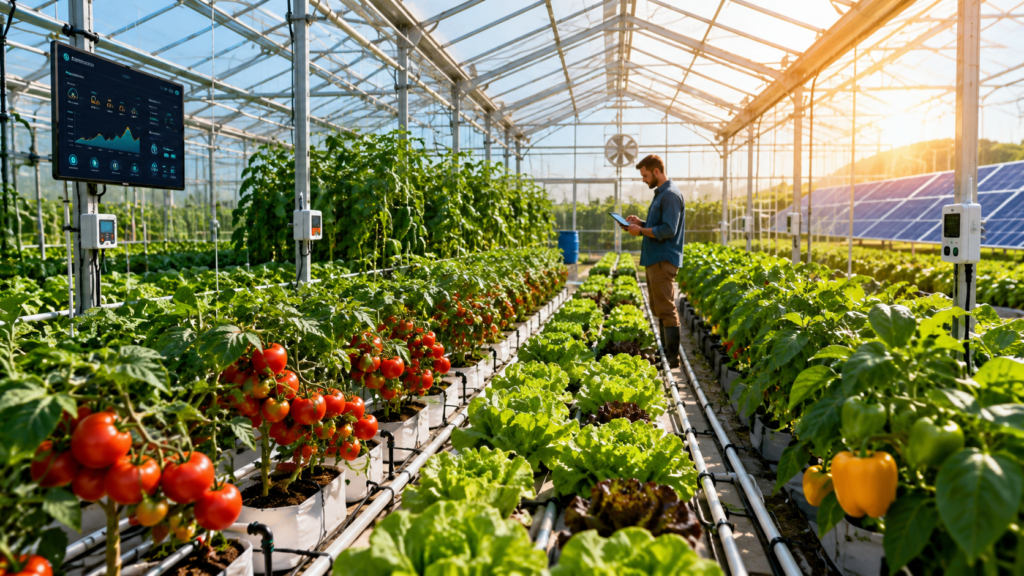
However, greenhouse farming is not simply about placing plants inside a glass or plastic structure. Successful greenhouse production combines scientific knowledge with practical farming experience. Farmers carefully monitor growing conditions, optimize irrigation schedules, manage nutrients more precisely, and use modern technologies ranging from automated climate controls to smart sensors that provide real-time data.
These innovations have transformed greenhouse farming from a niche practice into one of agriculture’s most promising long-term solutions.
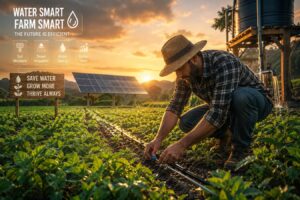
Another factor driving adoption is the growing concern over water scarcity. Agriculture accounts for the majority of global freshwater use, making water conservation increasingly important. Greenhouse systems equipped with drip irrigation, moisture sensors, and water recycling technologies significantly reduce water waste while maintaining optimal plant growth. Closed-loop systems used in many controlled environment operations further improve resource efficiency. (MDPI)
Climate resilience is another major advantage.
Every year, farmers lose billions of dollars because of:
- Heat waves
- Floods
- Heavy rainfall
- Strong winds
- Unexpected frosts
- Extended droughts
- Pest outbreaks
Greenhouses act as protective barriers against many of these threats. Instead of allowing crops to remain exposed to extreme weather, controlled structures create a stable environment where plants can continue growing with minimal interruption.
This reliability has become especially valuable as climate variability continues to increase across many agricultural regions.
Consumer expectations are also changing.
Today’s buyers increasingly demand:
- Fresh produce year-round
- Consistent quality
- Reduced pesticide use
- Locally grown food
- Environmentally responsible production
Greenhouse farming allows producers to meet these expectations more consistently than conventional farming alone. By carefully managing environmental conditions, growers can produce vegetables, fruits, herbs, flowers, and specialty crops with improved appearance, longer shelf life, and more predictable harvest schedules.
Technological advances have made greenhouse farming more accessible than ever before.
Modern systems now include:
- Automated irrigation
- Climate monitoring sensors
- Smart ventilation
- Artificial intelligence-assisted crop management
- Internet of Things (IoT) monitoring
- Energy-efficient LED lighting
- Precision nutrient delivery
These technologies continue reducing operational costs while improving production efficiency, making greenhouse investments increasingly attractive for commercial producers and smallholder farmers alike. (arXiv)
The expansion of greenhouse farming is particularly noticeable in regions experiencing rapid urbanization and limited arable land. Urban agriculture projects increasingly rely on controlled environment systems to produce fresh food closer to consumers, reducing transportation costs and minimizing food waste.
As population growth places greater pressure on global food supplies, controlled agriculture is expected to become an even more important component of sustainable food production.
In this comprehensive guide, you’ll discover:
- What greenhouse farming really is
- How controlled environment agriculture works
- Why greenhouse farming increases crop yield
- How greenhouse farming saves water and reduces climate risks
- Five proven benefits that are transforming modern agriculture
- Why more farmers are investing in greenhouse systems in 2026
- What the future holds for greenhouse technology
Whether you’re an experienced farmer, an aspiring agricultural entrepreneur, a student of agricultural sciences, or simply curious about the future of food production, understanding greenhouse farming provides valuable insight into one of the most important innovations shaping global agriculture today.

Greenhouse Farming: What It Is and Why It Matters
At its core, greenhouse farming is the practice of growing crops inside specially designed structures that create a controlled growing environment. These structures—typically made from glass or durable plastic materials—allow sunlight to enter while trapping heat and protecting crops from unfavorable external conditions.
Unlike open-field farming, where plants are exposed to fluctuating temperatures, excessive rainfall, drought, pests, and wind, greenhouse farming gives growers much greater control over the factors that influence plant growth.
These environmental factors include:
- Temperature
- Humidity
- Air circulation
- Light intensity
- Irrigation
- Nutrient delivery
- Carbon dioxide concentration
Maintaining these variables within optimal ranges enables plants to grow faster, healthier, and more consistently than they often would outdoors.
Greenhouse farming is considered one of the most practical forms of Controlled Environment Agriculture (CEA). While advanced CEA systems may include hydroponics, aeroponics, aquaponics, and indoor vertical farms, greenhouses remain the most widely adopted protected cultivation technology worldwide because they balance productivity with relatively manageable investment costs. (MDPI)
One common misconception is that greenhouse farming completely eliminates natural growing conditions.
In reality, greenhouses work by improving nature rather than replacing it.
Sunlight remains the primary energy source in most greenhouse systems. The greenhouse simply creates an environment where crops are less affected by harmful external factors, allowing plants to focus more of their energy on growth and fruit production instead of surviving environmental stress.
This improved growing environment directly contributes to:
- Increased crop yield
- Better fruit quality
- Faster plant development
- More efficient resource use
- Reduced production risks
- Greater consistency throughout the growing season
These advantages explain why greenhouse farming has become an increasingly important pillar of modern sustainable agriculture.
Greenhouse Farming and Controlled Environment Agriculture: Why Farmers Are Switching in 2026
The agricultural industry is experiencing one of its biggest transformations in decades.
Farmers are no longer evaluating production methods solely on the basis of land availability or seasonal weather. Instead, they are increasingly asking a different question:
“How can I produce more food using fewer resources while reducing production risks?”
That question lies at the heart of Controlled Environment Agriculture (CEA).
CEA combines scientific research, engineering, digital technology, and agricultural expertise to create growing conditions that maximize productivity while minimizing waste.
Instead of relying entirely on unpredictable weather patterns, growers actively manage the growing environment throughout the crop’s life cycle.
Several global trends explain why farmers are switching to controlled environment agriculture in 2026:
- Climate change increasing weather uncertainty
- Water scarcity becoming a global concern
- Rising food demand
- Urban population growth
- Increasing labor costs
- Greater consumer demand for premium-quality produce
- Advances in smart farming technologies
- Improved affordability of greenhouse systems
The Food and Agriculture Organization (FAO) highlights protected cultivation as a way to improve productivity, reduce food loss, and support safer, more sustainable farming practices. (FAOHome)
Meanwhile, recent research on controlled environment agriculture in Africa notes that greenhouse systems, hydroponics, and related technologies can improve yields while using water and nutrients more efficiently, making them especially valuable in regions facing climate and resource challenges. (MDPI)
The shift toward greenhouse farming is therefore not just a passing trend—it reflects a broader transition toward more resilient, resource-efficient agriculture that is likely to shape food production for years to come.
Greenhouse Farming: 5 Proven Benefits That Help Farmers Increase Crop Yield, Save Water, and Build a More Sustainable Future
Modern agriculture has entered an era where success depends not only on hard work but also on smart decision-making. Farmers today are expected to produce more food for a growing global population while dealing with fewer natural resources, increasingly unpredictable weather, rising production costs, and stricter environmental expectations. These challenges have encouraged many growers to move away from relying solely on traditional open-field farming and embrace more innovative production systems.
Among these innovations, Greenhouse Farming has emerged as one of the most effective and sustainable approaches to crop production. By creating a protected and carefully managed environment, greenhouse systems allow farmers to overcome many of the limitations that have historically reduced agricultural productivity.
One of the main reasons greenhouse farming has gained widespread popularity is that its benefits are interconnected. Higher crop yields often result from better water management, healthier plants, improved pest control, and reduced climate-related damage. Instead of solving one problem at a time, greenhouse farming provides a comprehensive solution that strengthens nearly every aspect of crop production.
Let’s explore the first three proven benefits in detail.
Benefit #1: Greenhouse Farming Significantly Increases Crop Yield Through Controlled Environment Agriculture
One of the biggest reasons growers invest in Greenhouse Farming is its remarkable ability to increase crop yield. For most farmers, productivity determines profitability. Every additional kilogram of quality produce harvested from the same piece of land improves returns while making better use of available resources.
Traditional farming places crop production largely in the hands of nature. Farmers prepare the land, plant seeds, apply fertilizers, and hope favorable weather conditions continue throughout the season. Unfortunately, farming rarely follows a perfect pattern.
Outdoor crops face numerous challenges, including:
- Heavy rainfall
- Heat stress
- Unexpected cold temperatures
- Strong winds
- Hailstorms
- Pest infestations
- Diseases
- Nutrient leaching
- Soil moisture fluctuations
Each of these factors can reduce yields long before harvest.
Greenhouse farming changes this equation by minimizing environmental stress.
Instead of allowing weather conditions to dictate plant growth, greenhouse growers actively control the production environment. Temperature, humidity, ventilation, irrigation, and nutrient availability can all be adjusted to meet the exact needs of the crop.
This controlled environment creates ideal growing conditions from planting through harvest.
How Greenhouse Farming Increases Crop Yield
The reason greenhouse farming increases crop yield is surprisingly simple.
Healthy plants spend less energy surviving stressful conditions and more energy producing leaves, flowers, fruits, and vegetables.
Inside a greenhouse:
- Temperatures remain within optimal ranges.
- Moisture levels are more stable.
- Plants experience less physical damage.
- Root systems develop more efficiently.
- Nutrients are delivered more consistently.
- Photosynthesis becomes more effective.
- Flowering and fruit development improve.
Because plants experience fewer interruptions during their growth cycle, they mature more uniformly and produce higher-quality harvests.
In many greenhouse operations, growers can also extend growing seasons or produce crops continuously throughout the year.
Instead of harvesting only once or twice annually, some greenhouse farmers enjoy multiple harvest cycles, dramatically increasing annual production.
Precision Farming Improves Productivity
Modern greenhouse farming increasingly incorporates precision agriculture technologies.
Examples include:
- Smart irrigation controllers
- Climate monitoring sensors
- Automated ventilation
- Digital nutrient management
- AI-powered crop monitoring
- Carbon dioxide management systems
These technologies continuously monitor growing conditions and make adjustments whenever necessary.
Rather than relying on guesswork, farmers make decisions based on real-time data.
For example:
If humidity becomes too high, ventilation systems activate automatically.
If soil moisture drops below ideal levels, drip irrigation delivers exactly the amount of water plants require.
If temperatures rise excessively, cooling systems prevent heat stress.
Every adjustment helps maintain ideal growing conditions that maximize productivity.
Improved Plant Health Means Higher Production
Crop yield is not simply about producing more plants.
It also depends on producing healthier plants.
Greenhouse farming encourages stronger plant development because crops are protected from many external stress factors.
Healthier plants often demonstrate:
- Larger leaves
- Stronger stems
- Better root systems
- Earlier flowering
- Increased fruit production
- Improved fruit size
- Better color
- Higher nutritional quality
These improvements directly influence market value and customer satisfaction.
Consumers consistently prefer produce that looks fresh, uniform, and free from damage.
Greenhouse-grown vegetables frequently meet these expectations better than conventionally grown crops.
Benefit #2: Greenhouse Farming Saves Water While Supporting Sustainable Agriculture
Water has become one of agriculture’s most valuable resources.
Across many farming regions, unpredictable rainfall and prolonged droughts are creating serious challenges for food production.
Agriculture already accounts for the largest share of freshwater use worldwide. As populations continue growing, conserving water has become essential not only for farmers but also for global food security.
This is where Greenhouse Farming demonstrates one of its greatest strengths.
Among the many benefits of greenhouse farming for sustainable agriculture, efficient water management ranks near the top.
Unlike traditional irrigation methods, greenhouse systems are designed to deliver water precisely where plants need it.
How Greenhouse Farming Saves Water
One of the primary reasons greenhouse systems require less water is that the growing environment is enclosed.
Outdoor farming loses significant amounts of water through:
- Evaporation
- Surface runoff
- Wind drift
- Soil erosion
- Deep drainage beyond plant roots
Inside a greenhouse, many of these losses are dramatically reduced.
Because environmental conditions remain more controlled:
- Water evaporates more slowly.
- Irrigation reaches plant roots directly.
- Wind cannot carry moisture away.
- Rainfall does not wash nutrients from the soil.
- Moisture remains available for longer periods.
The result is greater water efficiency without sacrificing plant growth.
Drip Irrigation Maximizes Every Drop
Most commercial greenhouse operations rely on drip irrigation.
Unlike overhead sprinklers, drip irrigation applies water slowly and directly to plant roots.
This offers several advantages:
- Minimal evaporation
- Less weed growth
- Reduced disease spread
- Lower water consumption
- Improved fertilizer efficiency
Every drop contributes to plant growth instead of being wasted.
Water Recycling Makes Greenhouses Even More Efficient
Advanced greenhouse operations often recycle irrigation water.
Instead of allowing excess water to leave the production system, growers collect, filter, disinfect, and reuse it.
This practice reduces:
- Freshwater consumption
- Fertilizer waste
- Environmental pollution
- Operating costs
Recycling water also minimizes nutrient runoff into nearby rivers and lakes, helping protect surrounding ecosystems.
Supporting Sustainable Agriculture
Sustainable Agriculture focuses on producing food while protecting natural resources for future generations.
Greenhouse farming supports this goal in several important ways.
It promotes:
- Responsible water use
- Reduced fertilizer waste
- Lower pesticide dependence
- Efficient land use
- Better soil conservation
- Reduced food losses
- Improved resource management
Rather than exhausting natural resources, greenhouse farming encourages farmers to produce more food using fewer inputs.
This balance between productivity and conservation represents one of the defining principles of sustainable agriculture.
Economic Benefits of Water Conservation
Saving water also improves farm profitability.
Lower water use often means:
- Reduced irrigation costs
- Lower pumping expenses
- Smaller energy bills
- Reduced fertilizer purchases
- Higher production efficiency
These financial savings become increasingly valuable as water costs continue rising in many agricultural regions.
Farmers quickly discover that conserving water is not simply environmentally responsible—it also makes excellent business sense.
Benefit #3: Greenhouse Farming Reduces Climate Risks and Creates More Reliable Harvests
Climate change has introduced a level of uncertainty that many farmers have never experienced before.
Growing seasons have become increasingly unpredictable.
Weather extremes now occur more frequently than in previous decades.
Farmers may experience:
- Heat waves
- Flash floods
- Strong storms
- Hail damage
- Unexpected frost
- Extended drought
- High winds
- Excessive humidity
Even one severe weather event can destroy months of hard work.
This growing uncertainty explains why farmers are switching to Controlled Environment Agriculture in 2026.
Greenhouse farming offers protection that traditional farming simply cannot provide.
How Greenhouse Farming Saves Water and Reduces Climate Risks
A greenhouse acts as a protective shield between crops and the external environment.
Instead of being exposed directly to damaging weather conditions, plants grow within a stable environment.
This protection significantly reduces crop losses caused by:
- Heavy rain
- Wind damage
- Temperature fluctuations
- Frost
- Excessive sunlight
- Dust storms
- Hail
As a result, farmers experience more consistent production from season to season.
Stable Temperatures Promote Continuous Growth
Plants thrive within specific temperature ranges.
Outdoor conditions often fluctuate dramatically between day and night.
Inside greenhouses, temperatures remain much more stable.
This consistency allows crops to:
- Grow continuously
- Flower earlier
- Produce fruit more reliably
- Develop stronger root systems
- Reach harvest sooner
Reducing environmental stress also improves overall crop quality.
Protection Against Emerging Climate Challenges
Climate change has altered pest and disease patterns across many agricultural regions.
Changing weather conditions allow certain insects and pathogens to survive longer and spread more rapidly.
Greenhouses reduce exposure by creating physical barriers that limit pest entry.
Many growers further strengthen protection through:
- Insect screening
- Biological pest control
- Sticky monitoring traps
- Sanitation protocols
- Integrated Pest Management (IPM)
These methods reduce dependence on chemical pesticides while maintaining healthy crops.
Greater Predictability Supports Better Business Planning
Perhaps one of the most overlooked benefits of greenhouse farming is predictability.
Reliable harvest schedules help farmers:
- Meet market demand
- Fulfill supply contracts
- Plan labor requirements
- Reduce financial uncertainty
- Improve inventory management
- Increase customer confidence
Rather than hoping favorable weather continues, greenhouse growers can plan production with far greater confidence.
Comparison Table: Open-Field Farming vs. Greenhouse Farming
| Feature | Traditional Open-Field Farming | Greenhouse Farming |
|---|---|---|
| Crop Yield | Depends heavily on weather | Higher and more consistent due to controlled conditions |
| Water Usage | High water loss through evaporation and runoff | Efficient water use with drip irrigation and recycling |
| Climate Protection | Fully exposed to weather extremes | Protected from rain, wind, frost, hail, and heat stress |
| Growing Season | Seasonal production | Year-round or extended growing seasons |
| Pest Management | Higher exposure to insects and diseases | Reduced pest pressure with controlled access and IPM |
| Fertilizer Efficiency | Nutrient losses through leaching | Precise nutrient delivery with minimal waste |
| Crop Quality | Variable | Uniform size, color, and quality |
| Resource Efficiency | Moderate | High efficiency in land, water, and nutrient use |
| Profit Potential | Weather-dependent | More stable income through reliable production |
| Sustainability | Greater environmental variability | Supports sustainable agriculture through efficient resource management |
The first three benefits of Greenhouse Farming demonstrated how controlled growing environments increase crop yield, conserve water, and protect crops from the growing threats of climate change. These advantages alone have convinced thousands of farmers worldwide to adopt Controlled Environment Agriculture (CEA). However, the benefits extend even further.
Today’s consumers expect more than abundant harvests—they demand fresh, safe, visually appealing, and sustainably produced food. At the same time, farmers need production systems that remain profitable despite increasing costs for labor, water, fertilizers, and crop protection products.
This is where the final two benefits of greenhouse farming become especially valuable. They focus not only on producing healthier crops but also on creating stronger, more resilient farming businesses capable of thriving in an increasingly competitive agricultural landscape.
Higher Food Safety Standards
Food safety has become increasingly important for consumers and retailers alike.
Greenhouse farming helps reduce contamination risks by limiting crop exposure to:
- Soil-borne diseases
- Floodwater contamination
- Animal intrusion
- Dust
- Airborne pollutants
Because growing conditions are carefully monitored, greenhouse operations often maintain better traceability and hygiene throughout production.
Many commercial greenhouse businesses also follow internationally recognized food safety certifications, giving buyers additional confidence in product quality.
Practical Examples of Greenhouse Farming Success
The benefits of greenhouse farming are not just theoretical—they are being demonstrated every day across different climates and farming systems.
Vegetable Production
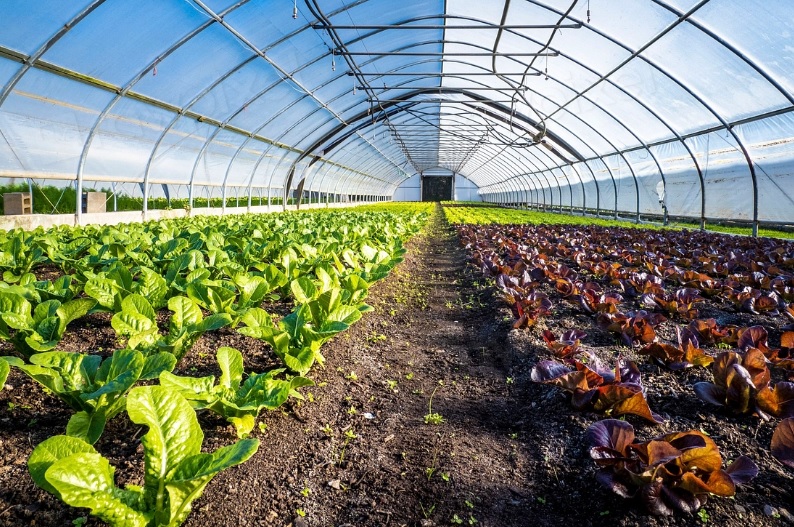
Tomatoes, cucumbers, peppers, and leafy greens are among the most common greenhouse crops.
Growers often achieve:
- Multiple harvests each year
- Higher-quality fruits
- Better disease control
- Improved water efficiency
Herb Cultivation
Fresh herbs such as basil, parsley, mint, and cilantro thrive inside controlled environments.
Benefits include:
- Faster growth
- Uniform quality
- Continuous harvesting
- Reduced pest damage
Berry Production
Many berry growers now use greenhouse or tunnel systems to protect delicate fruits from excessive rain, hail, and extreme temperatures.
This leads to:
- Better fruit quality
- Reduced spoilage
- Longer marketing seasons
- Higher selling prices
Flower Production
The ornamental horticulture industry relies heavily on greenhouse technology.
Flowers grown in controlled environments typically exhibit:
- Longer stems
- Brighter colors
- Improved uniformity
- Extended vase life
These qualities make greenhouse flowers highly desirable for domestic and international markets.
Why Greenhouse Farming Is Becoming the Future of Agriculture
The rapid growth of Controlled Environment Agriculture is not simply a technological trend—it reflects a fundamental shift in how food is produced.
Several factors continue to accelerate greenhouse adoption worldwide:
- Growing global population
- Climate uncertainty
- Water scarcity
- Rising food demand
- Urban agriculture expansion
- Advances in automation
- Artificial intelligence integration
- Precision agriculture technologies
- Increased focus on sustainability
As these trends continue, greenhouse farming is expected to play an increasingly important role in ensuring global food security while protecting natural resources.

Conclusion
Agriculture has always adapted to meet society’s changing needs. Today, however, those needs are more demanding than ever. Farmers must feed a growing global population while facing climate uncertainty, limited freshwater supplies, shrinking arable land, and rising production costs. In this environment, innovation is no longer optional—it is essential.
Greenhouse Farming has emerged as one of the most practical and forward-looking solutions to these challenges. By creating a controlled environment where crops can thrive regardless of external weather conditions, greenhouse systems help farmers achieve higher crop yields, use water more efficiently, and reduce the risks associated with extreme climate events. These improvements not only strengthen farm productivity but also contribute to broader goals of Sustainable Agriculture by conserving natural resources and reducing environmental impacts.
The five proven benefits explored throughout this guide demonstrate why Controlled Environment Agriculture is becoming an integral part of modern food production. From improving crop quality and reducing pest pressure to extending growing seasons and increasing profitability, greenhouse farming offers advantages that traditional methods often struggle to provide consistently.
As technologies such as artificial intelligence, precision agriculture, robotics, renewable energy, and advanced water recycling continue to evolve, greenhouse farming is expected to become even more efficient, accessible, and economically attractive. Farmers who embrace these innovations today will be better positioned to meet tomorrow’s food demands while building resilient and sustainable agricultural businesses.
Whether you are an experienced producer, a new agricultural entrepreneur, or simply interested in the future of food production, greenhouse farming represents more than a modern cultivation method—it is a strategic investment in productivity, sustainability, and long-term food security.
About The Author