High-Fiber Foods
High-Fiber Foods have become one of the biggest nutrition trends of 2026—and for good reason. More people are discovering that adding fiber-rich foods to their diets is one of the simplest ways to lose weight naturally, improve gut health, reduce cravings, and support long-term wellness.
Unlike restrictive diets that often fail over time, eating High-Fiber Foods helps you stay fuller for longer while nourishing the beneficial bacteria in your digestive system. A healthy gut doesn’t just improve digestion—it also supports immunity, heart health, blood sugar control, mental well-being, and even healthy aging.
Whether you’re trying to shed stubborn belly fat, improve digestion, prevent constipation, or simply feel more energetic every day, increasing your fiber intake is a science-backed strategy that delivers real results.
In this comprehensive guide, you’ll discover 17 of the best High-Fiber Foods, learn how they work inside your body, and find practical ways to include them in your daily meals.

Why High-Fiber Foods Matter More Than Ever
Modern diets often contain excessive amounts of processed foods while lacking adequate dietary fiber. This imbalance contributes to obesity, digestive disorders, type 2 diabetes, cardiovascular disease, and chronic inflammation.
High-Fiber Foods help correct that imbalance by providing nutrients that your digestive system and gut microbiome rely on every day.
Benefits of eating more High-Fiber Foods include:
- Supports healthy weight loss
- Keeps you full longer
- Reduces unhealthy snacking
- Improves gut microbiome diversity
- Promotes regular bowel movements
- Supports healthy cholesterol levels
- Stabilizes blood sugar
- Reduces inflammation
- Improves heart health
- Enhances digestive function
How Fiber Supports Weight Loss
One reason nutrition experts recommend High-Fiber Foods is their ability to naturally reduce calorie intake.
Fiber absorbs water and expands in your stomach, creating a lasting feeling of fullness. Since most fiber isn’t fully digested, it also contributes fewer calories than refined carbohydrates.
People who consume more fiber often:
- Eat fewer calories naturally
- Experience fewer hunger cravings
- Maintain healthier body weight
- Lose belly fat more effectively
- Avoid blood sugar spikes that trigger overeating
How High-Fiber Foods Improve Gut Health
Your digestive tract contains trillions of beneficial bacteria known as the gut microbiome.
These microorganisms depend on dietary fiber as their primary food source.
When fiber reaches your colon, beneficial bacteria ferment it into compounds called short-chain fatty acids, which:
- Protect your intestinal lining
- Reduce inflammation
- Improve digestion
- Strengthen immunity
- Support metabolism
Simply put, feeding your gut bacteria with High-Fiber Foods helps your entire body function better.
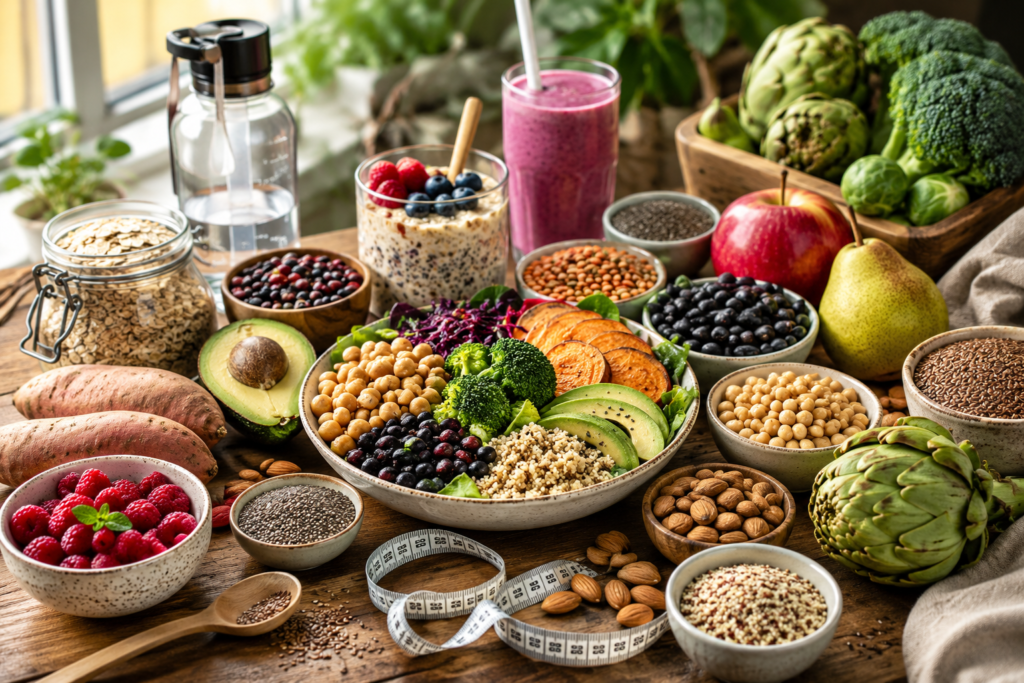
17 Powerful High-Fiber Foods You Should Eat More Often
1. Chia Seeds
Chia seeds contain one of the highest fiber contents of any food.
Benefits
- Promotes fullness
- Supports digestion
- Rich in omega-3 fats
- Helps regulate blood sugar
Easy tip: Add to smoothies, yogurt, oatmeal, or overnight oats.
2. Lentils
Lentils provide an impressive combination of fiber and plant protein.
Benefits
- Excellent for weight loss
- Supports healthy digestion
- Keeps you satisfied longer
Perfect for soups, curries, salads, and grain bowls.
3. Oats
Oats contain beta-glucan, a soluble fiber linked to improved heart health and cholesterol management.
Benefits
- Improves satiety
- Supports gut bacteria
- Stabilizes blood sugar
4. Apples
The saying “an apple a day” still holds value.
Apples contain pectin, a prebiotic fiber that nourishes beneficial gut bacteria.
Eat them with the skin for maximum fiber.
5. Pears
Pears are naturally sweet and among the highest-fiber fruits.
Benefits include:
- Better digestion
- Reduced constipation
- Improved fullness
6. Avocados
Besides healthy fats, avocados contain significant dietary fiber.
They help:
- Improve digestion
- Support heart health
- Increase meal satisfaction
7. Black Beans
Black beans combine plant protein with abundant fiber.
Ideal for:
- Burrito bowls
- Salads
- Chili
- Soups
8. Chickpeas
Chickpeas are versatile, affordable, and filling.
Try them:
- Roasted
- In hummus
- In salads
- In curries
9. Broccoli
Broccoli provides fiber alongside vitamins C and K.
It also contains antioxidants that help fight inflammation.
10. Sweet Potatoes
Sweet potatoes are rich in fiber, vitamins, and slow-digesting carbohydrates.
Perfect for sustained energy.
11. Raspberries
These delicious berries contain remarkably high fiber.
They also provide antioxidants that support healthy aging.
12. Brussels Sprouts
Rich in fiber and antioxidants, Brussels sprouts support digestive health while promoting fullness.
13. Flaxseeds
Ground flaxseed improves digestion while supplying healthy fats.
Add to:
- Smoothies
- Oatmeal
- Yogurt
- Baking recipes
14. Quinoa
Quinoa is a complete protein and excellent source of fiber.
It makes an ideal substitute for refined grains.
15. Almonds
Almonds provide healthy fats, protein, and dietary fiber.
Enjoy them in moderation as a satisfying snack.
16. Green Peas
Green peas provide both protein and fiber.
Excellent in soups, rice dishes, or salads.
17. Artichokes
Artichokes rank among the world’s richest vegetables in dietary fiber.
They support:
- Gut bacteria
- Healthy digestion
- Weight management

Soluble vs. Insoluble Fiber
Understanding the two main types of fiber can help you build a more balanced diet.
Soluble Fiber
Soluble fiber dissolves in water and forms a gel-like substance.
It helps:
- Lower cholesterol
- Regulate blood sugar
- Increase fullness
- Feed healthy gut bacteria
Sources include:
- Oats
- Apples
- Beans
- Chia seeds
Insoluble Fiber
Insoluble fiber adds bulk to stool and supports regular bowel movements.
Sources include:
- Whole grains
- Nuts
- Vegetables
- Seeds
A healthy eating pattern includes both types.
Daily Fiber Recommendations
General daily targets are:
- Women: 25–28 grams
- Men: 30–38 grams
Most adults consume far less, making fiber one of the most underconsumed nutrients worldwide.
Practical Ways to Eat More High-Fiber Foods
Small changes can make a big difference.
Start your morning with oats.
Snack on fruit instead of chips.
Replace white rice with quinoa.
Add beans to soups and salads.
Eat vegetables with every meal.
Sprinkle chia or flaxseed over yogurt.
Choose whole grains over refined grains.
Drink enough water when increasing fiber intake.
Common Mistakes to Avoid
Increasing fiber too quickly
A sudden increase can cause bloating. Gradually add fiber over several weeks.
Forgetting to drink water
Fiber works best when paired with adequate hydration.
Depending on supplements alone
Whole foods provide vitamins, minerals, antioxidants, and plant compounds that supplements often lack.
Eating mostly processed “high-fiber” snacks
Many packaged products are high in added sugars despite their fiber claims. Prioritize whole foods whenever possible.
17 Best High-Fiber Foods That Support Healthy Weight Loss and Gut Health Naturally
Adding more High-Fiber Foods to your diet is one of the most effective and sustainable ways to improve your overall health. Unlike trendy diets that often focus on cutting out entire food groups, a fiber-rich eating pattern helps you feel satisfied, supports your digestive system, and provides your body with essential nutrients. Research consistently shows that people who eat more fiber tend to have healthier body weights, better blood sugar control, improved heart health, and a more diverse gut microbiome. Fiber also feeds beneficial gut bacteria, which produce compounds that help maintain a healthy digestive tract and reduce inflammation. (National Institutes of Health)
Below are 17 of the best High-Fiber Foods that can help you stay full longer, promote healthy digestion, and support natural weight management.
1. Chia Seeds
Chia seeds are among the richest natural sources of dietary fiber. Just a small serving contains a significant amount of soluble fiber that absorbs water and forms a gel-like texture in your stomach. This slows digestion, reduces hunger, and helps prevent overeating.
Key Benefits:
- Keeps you full for longer
- Supports healthy digestion
- Promotes stable blood sugar levels
- Rich in omega-3 fatty acids
Best Ways to Eat:
- Mix into smoothies
- Add to overnight oats
- Stir into yogurt
- Make chia pudding
2. Lentils
Lentils are packed with both fiber and plant-based protein, making them one of the best foods for healthy weight loss. They digest slowly, helping you stay satisfied while supporting a healthy gut.
Key Benefits:
- High in protein and fiber
- Supports healthy bowel movements
- Helps reduce hunger cravings
Best Ways to Eat:
- Lentil soup
- Vegetable curry
- Grain bowls
- Fresh salads
3. Oats
Oats are well known for their soluble fiber called beta-glucan, which supports heart health while promoting fullness. They also act as a prebiotic, feeding beneficial bacteria in your digestive system.
Key Benefits:
- Supports gut microbiome health
- Helps lower cholesterol
- Keeps you full longer
- Supports healthy blood sugar
Best Ways to Eat:
- Oatmeal
- Overnight oats
- Homemade granola
- Smoothies
4. Apples
Apples contain pectin, a soluble fiber that supports healthy digestion and nourishes beneficial gut bacteria.
Key Benefits:
- Promotes digestive health
- Supports healthy gut bacteria
- Naturally low in calories
Pro Tip: Eat apples with the skin on to maximize fiber intake.
5. Pears
Pears are one of the highest-fiber fruits available and provide both soluble and insoluble fiber.
Benefits include:
- Improved digestion
- Better bowel regularity
- Increased fullness between meals
6. Avocados
Avocados combine healthy monounsaturated fats with dietary fiber, making them excellent for appetite control and digestive health.
Best Uses:
- Whole-grain toast
- Salads
- Smoothies
- Sandwiches
7. Black Beans
Black beans are nutrient-dense legumes that deliver an excellent balance of fiber and protein.
Health Benefits:
- Supports weight management
- Improves digestive health
- Helps maintain steady energy levels
8. Chickpeas
Chickpeas are incredibly versatile and provide long-lasting energy thanks to their high fiber content.
Try them:
- Roasted as a snack
- In hummus
- Mixed into salads
- Added to soups
9. Broccoli
Broccoli offers fiber, antioxidants, and essential vitamins that promote digestive and overall health.
It may help:
- Improve digestion
- Support immunity
- Increase feelings of fullness
10. Sweet Potatoes
Sweet potatoes contain fiber and complex carbohydrates that provide sustained energy while supporting digestive health.
They’re delicious:
- Baked
- Roasted
- Mashed
- Air-fried
11. Raspberries
Raspberries are among the highest-fiber berries and are rich in antioxidants that help protect your cells.
12. Brussels Sprouts
These nutrient-rich vegetables provide fiber that supports regular digestion and helps nourish the gut microbiome.
13. Flaxseeds
Ground flaxseeds provide both soluble and insoluble fiber, making them excellent for digestive health.
Add them to:
- Oatmeal
- Yogurt
- Smoothies
- Homemade muffins
14. Quinoa
Quinoa is a fiber-rich whole grain and a complete source of plant protein, making it a smart choice for healthy eating.
15. Almonds
Almonds provide healthy fats, protein, and fiber that work together to increase satiety.
Enjoy them:
- As a snack
- In trail mix
- Sprinkled over salads
16. Green Peas
Green peas are an affordable source of both protein and fiber.
They’re ideal in:
- Soups
- Stir-fries
- Rice dishes
- Salads
17. Artichokes
Artichokes rank among the highest-fiber vegetables and are especially rich in prebiotic fiber that supports beneficial gut bacteria.
Key Benefits:
- Encourages a healthy gut microbiome
- Supports regular digestion
- Helps maintain a healthy weight
Why These High-Fiber Foods Work
Each of these foods contributes to healthy weight management and digestive wellness in different ways. Soluble fiber slows digestion and helps regulate blood sugar, while insoluble fiber adds bulk to stool and promotes regular bowel movements. Eating a variety of fiber-rich fruits, vegetables, legumes, whole grains, nuts, and seeds is the best way to maximize these benefits. Health authorities recommend gradually increasing fiber intake while drinking enough water to minimize bloating or discomfort. (MedlinePlus)
For additional evidence-based information about dietary fiber and recommended daily intake, visit these trusted resources:

How High-Fiber Foods Improve Digestion, Nourish the Gut Microbiome, and Boost Overall Health
High-Fiber Foods do much more than keep your digestive system regular. They play a vital role in supporting the gut microbiome, strengthening the immune system, improving metabolism, and reducing the risk of many chronic diseases. In recent years, scientists have uncovered strong links between dietary fiber and overall health, making fiber one of the most important nutrients for long-term wellness.
If your goal is to lose weight, improve digestion, or simply feel healthier every day, understanding how High-Fiber Foods work inside your body can help you make smarter food choices.
What Is Dietary Fiber?
Dietary fiber is a type of carbohydrate found naturally in plant-based foods such as fruits, vegetables, legumes, whole grains, nuts, and seeds. Unlike other carbohydrates, fiber is not fully broken down or absorbed by the body. Instead, it travels through the digestive tract, where it performs several important functions.
There are two main types of dietary fiber:
Soluble Fiber
Soluble fiber dissolves in water and forms a gel-like substance in the digestive tract. This slows digestion, helps regulate blood sugar levels, and lowers LDL (“bad”) cholesterol.
Common sources include:
- Oats
- Chia seeds
- Flaxseeds
- Apples
- Pears
- Beans
- Lentils
Insoluble Fiber
Insoluble fiber does not dissolve in water. Instead, it adds bulk to stool and helps food move more efficiently through the digestive system, reducing the risk of constipation.
Excellent sources include:
- Broccoli
- Brussels sprouts
- Whole wheat
- Brown rice
- Almonds
- Green peas
- Artichokes
Both types of fiber are essential, and eating a variety of High-Fiber Foods ensures you receive the benefits of each.
How High-Fiber Foods Improve Digestion
A healthy digestive system depends on regular movement of food through the intestines. Fiber helps by increasing stool bulk, softening waste, and supporting regular bowel movements.
When you consume enough High-Fiber Foods, you may experience:
- Improved digestive regularity
- Reduced constipation
- Less bloating over time
- Better nutrient absorption
- Healthier bowel function
Unlike highly processed foods that move quickly through the digestive tract, fiber slows digestion just enough to allow your body to absorb essential vitamins, minerals, and nutrients more effectively.
The Gut Microbiome: Why It Matters
Inside your digestive tract live trillions of microorganisms collectively known as the gut microbiome. These beneficial bacteria help digest food, produce certain vitamins, support immune function, and protect against harmful microbes.
The balance of these bacteria plays a major role in overall health. A diverse and well-nourished microbiome has been associated with:
- Better digestion
- Stronger immunity
- Healthier metabolism
- Reduced inflammation
- Improved mental well-being
- Lower risk of chronic diseases
One of the best ways to nourish these beneficial bacteria is by eating a wide variety of High-Fiber Foods every day.
Fiber Acts as Food for Good Gut Bacteria
Many types of fiber function as prebiotics, meaning they serve as food for beneficial bacteria in the large intestine.
As these bacteria ferment fiber, they produce short-chain fatty acids (SCFAs) such as acetate, propionate, and butyrate. These compounds provide several important health benefits:
- Nourish the cells lining the colon
- Help maintain a strong intestinal barrier
- Support immune system function
- Reduce inflammation in the digestive tract
- Promote a balanced gut environment
This process highlights why regularly eating fiber-rich foods is so important for maintaining a healthy digestive system.
High-Fiber Foods and Healthy Weight Loss
One of the biggest advantages of High-Fiber Foods is their ability to support healthy and sustainable weight loss.
Fiber naturally helps you eat fewer calories by increasing feelings of fullness after meals. Because many fiber-rich foods require more chewing and take longer to digest, they help reduce hunger and delay the return of appetite.
Benefits include:
- Longer-lasting fullness
- Reduced cravings between meals
- Better portion control
- More stable energy levels
- Easier calorie management
Instead of relying on restrictive diets, building meals around High-Fiber Foods can make healthy eating more satisfying and easier to maintain over time.
Fiber Supports Healthy Blood Sugar Levels
Foods rich in soluble fiber slow the absorption of glucose into the bloodstream. This helps prevent rapid spikes and crashes in blood sugar that can lead to hunger and overeating.
For people looking to maintain steady energy throughout the day, pairing fiber with lean protein and healthy fats creates balanced meals that promote lasting satisfaction.
Heart Health Benefits of High-Fiber Foods
The advantages of High-Fiber Foods extend beyond digestion. Research shows that adequate fiber intake can also support cardiovascular health.
Fiber may help:
- Lower LDL (“bad”) cholesterol
- Support healthy blood pressure
- Improve blood vessel function
- Reduce the risk of heart disease
- Promote healthy circulation
Foods such as oats, beans, lentils, apples, and flaxseeds are especially beneficial for heart health because they contain soluble fiber.
Strengthening the Immune System Through Gut Health
Nearly 70% of the body’s immune cells are associated with the digestive tract. Because the gut microbiome plays a key role in immune regulation, maintaining a healthy gut can positively influence the body’s natural defenses.
A diet rich in High-Fiber Foods helps maintain a balanced gut environment, supporting the beneficial bacteria that contribute to healthy immune function.
How to Increase Fiber Intake Safely
If your current diet is low in fiber, it’s important to increase your intake gradually.
Follow these simple tips:
- Add one fiber-rich food at a time.
- Drink plenty of water throughout the day.
- Replace refined grains with whole grains.
- Include vegetables in every meal.
- Choose fresh fruit instead of sugary snacks.
- Add beans or lentils to soups and salads.
- Sprinkle chia or flaxseeds over oatmeal or yogurt.
Making gradual changes allows your digestive system to adjust comfortably while maximizing the health benefits.
Key Takeaway
High-Fiber Foods are among the most powerful tools for improving digestion, nourishing the gut microbiome, supporting healthy weight loss, and promoting long-term wellness. By eating a diverse range of fruits, vegetables, legumes, whole grains, nuts, and seeds every day, you can naturally improve digestive health, stay fuller for longer, and provide your body with the nutrients it needs to thrive.
The best results come from consistency. Small daily choices—such as replacing refined foods with fiber-rich alternatives—can have a lasting impact on your gut health, energy levels, and overall quality of life.
Frequently Asked Questions
Which High-Fiber Foods are best for weight loss?
Chia seeds, lentils, oats, beans, apples, pears, broccoli, and avocados are among the best because they promote fullness while providing essential nutrients.
Can High-Fiber Foods reduce belly fat?
No food specifically targets belly fat, but a fiber-rich diet can support overall fat loss by improving satiety, helping control calorie intake, and supporting metabolic health.
How long does it take to improve gut health?
Many people notice improvements in digestion within a few weeks of consistently eating more fiber, though lasting changes to the gut microbiome develop over time with healthy eating habits.
Are High-Fiber Foods safe for everyone?
Most people benefit from increasing fiber gradually. Individuals with certain digestive conditions should follow personalized advice from a healthcare professional.
Final Thoughts
Making High-Fiber Foods a regular part of your diet is one of the smartest investments you can make in your long-term health. From supporting healthy weight loss and improving digestion to nourishing your gut microbiome and promoting heart health, fiber delivers benefits that extend far beyond the digestive system.
The key is consistency. Rather than relying on quick fixes or restrictive diets, focus on building meals around whole grains, legumes, fruits, vegetables, nuts, and seeds. Over time, these simple choices can help you feel fuller, maintain a healthy weight, improve your digestive comfort, and support overall wellness.
Conclusion
Healthy living doesn’t require complicated diets—it starts with simple, sustainable habits. By adding more High-Fiber Foods to your meals each day, you can support natural weight management, strengthen your gut health, improve digestion, and reduce your risk of chronic disease.
Start with one or two fiber-rich foods this week, experiment with new recipes, and gradually build a balanced eating pattern that works for you. Your gut—and the rest of your body—will thank you.
Call to Action: If you found this guide helpful, share it with your friends and family, bookmark it for future reference, and explore more nutrition and wellness articles to continue your journey toward a healthier lifestyle.
About The Author