Rodent Proofing
Few household problems are as frustrating as discovering that mice or rats have quietly moved into your home. At first, it may seem like a minor inconvenience—a scratching sound in the attic, tiny droppings beneath the sink, or food packaging that appears to have been chewed overnight. Unfortunately, these seemingly harmless signs often indicate a much larger issue.
Rodents are among the most destructive household pests. They reproduce rapidly, contaminate food, spread bacteria, damage insulation, chew electrical wiring, and create nesting sites inside walls, ceilings, crawl spaces, and garages. Left untreated, a single pair of mice can grow into dozens within a matter of months, turning a small nuisance into a costly infestation.
This is precisely why rodent proofing has become one of the most recommended preventative home maintenance strategies in 2026. Instead of waiting until rodents invade your property, homeowners are increasingly choosing to stop them before they ever gain access.
Unlike traditional rodent control, which focuses on eliminating existing pests through traps or bait, rodent proofing concentrates on preventing infestations altogether. The philosophy is simple: if rodents cannot enter your home, they cannot establish nests, contaminate your living spaces, or damage your property.
Whether you live in a suburban neighborhood, a rural farmhouse, or a busy urban apartment, learning how to seal rodent entry points in your home is one of the smartest investments you can make for your property’s long-term protection.
In this comprehensive guide, you’ll discover:
- Why rodent infestations are increasing in 2026
- The most common places mice and rats enter homes
- Seven powerful rodent proofing methods professionals recommend
- DIY rodent-proofing tips for homeowners in 2026
- Mistakes that accidentally invite rodents inside
- Long-term maintenance strategies that keep rodents away permanently
By the end of this guide, you’ll understand not only how to keep mice and rats out of your house permanently, but also why prevention consistently costs far less than extermination.Why Rodent Proofing Matters More Than Ever in 2026
Many homeowners assume rodents only become a problem during winter. While colder temperatures certainly encourage mice and rats to seek shelter indoors, modern pest control research shows rodent activity now occurs year-round.
Several factors contribute to this trend.

Climate Changes Are Altering Rodent Behavior
Warmer winters in many regions allow rodent populations to survive longer and reproduce more frequently. Instead of seasonal infestations, homeowners increasingly face continuous pressure from expanding rodent colonies.
This means waiting until autumn to inspect your property is no longer enough.
Urban Expansion Creates New Rodent Habitats
As cities continue expanding, construction projects disturb natural rodent habitats.
Displaced rats and mice search for new shelter, often choosing nearby residential neighborhoods because they provide everything rodents need:
- Food
- Water
- Warmth
- Hidden nesting areas
Homes become particularly attractive because tiny structural gaps provide easy access.
Food Delivery and Outdoor Dining Increase Attraction
Outdoor kitchens, compost bins, pet food stations, and overflowing garbage containers have become more common than ever.
Unfortunately, rodents see these as free restaurants.
Without effective mouse prevention strategies, even a clean home can become vulnerable if food sources remain accessible outdoors.
Home Energy Efficiency Can Accidentally Help Rodents
Modern homes are designed to retain heat.
Ironically, this creates warm, insulated cavities inside walls and attics that rodents love.
Once they enter through a small opening, they often remain hidden for months before homeowners realize they have an infestation.
Rodent Proofing vs Rodent Control: What’s the Difference?
Many people use these terms interchangeably.
However, understanding the distinction can save thousands of dollars in repair costs.
| Rodent Proofing | Rodent Control |
|---|---|
| Prevents infestations before they begin | Removes rodents after infestation |
| Focuses on sealing entry points | Uses traps, bait, and extermination |
| Long-term investment | Often short-term solution |
| Reduces future pest costs | Treats current problem |
| Improves home efficiency | Eliminates existing rodents |
| Recommended annually | Needed only during infestations |
The best pest management strategy combines both approaches.
If rodents already exist, effective rat control removes them first.
Afterward, comprehensive rodent proofing prevents future invasions.
Common Signs Your Home Needs Rodent Proofing Immediately
Many infestations go unnoticed because rodents are primarily nocturnal.
Fortunately, they leave behind clues.
Watch for these warning signs.
Small Black Droppings
Fresh droppings often appear:
- Behind appliances
- Inside cabinets
- Under sinks
- Near food storage
- Along walls
The more droppings you find, the more active the infestation.
Gnaw Marks
Rodents constantly chew because their teeth never stop growing.
Common damage includes:
- Wooden trim
- Plastic containers
- Food packaging
- Electrical wires
- Furniture legs
- Drywall
Fresh bite marks usually appear lighter than older damage.
Scratching Sounds
If you hear movement after dark inside:
- Ceilings
- Walls
- Attics
- Crawl spaces
there is a strong chance rodents are exploring or nesting nearby.
Grease Marks Along Walls
Mice and rats follow familiar travel routes.
Their oily fur leaves dark streaks along:
- Baseboards
- Pipes
- Wall edges
- Crawl spaces
These marks often reveal hidden pathways.
Strange Odors
Established infestations usually produce a persistent musty smell.
This odor becomes stronger inside enclosed areas such as:
- Basements
- Utility rooms
- Garages
- Attics
Rodent Proofing Way #1: Find Every Possible Entry Point Before Sealing Anything
One of the biggest mistakes homeowners make is sealing only the obvious holes.
Professional pest inspectors know rodents rarely use just one entrance.
A mouse can squeeze through an opening as small as a dime.
A rat can fit through a gap only slightly larger than a quarter.
This means even tiny cracks deserve attention.
Where to Inspect First
Walk around your home’s exterior slowly.
Pay close attention to:
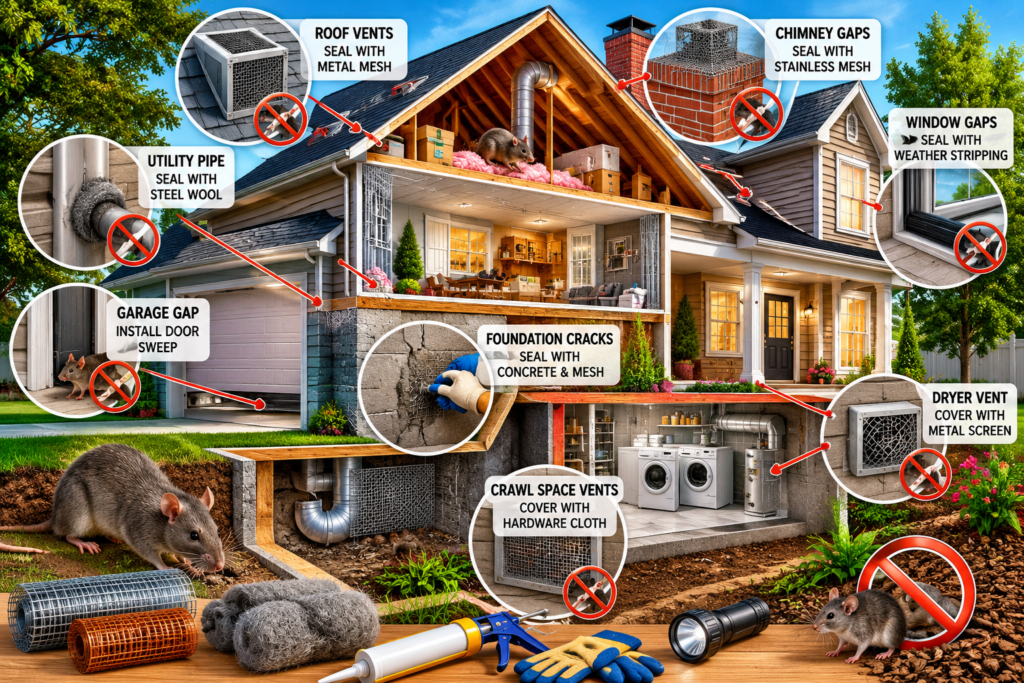
- Foundation cracks
- Utility pipe openings
- Air conditioning lines
- Roof vents
- Garage door corners
- Window frames
- Door thresholds
- Dryer vents
- Crawl-space vents
- Chimneys
- Roof intersections
Inside your home, inspect:
- Under sinks
- Laundry rooms
- Water heater connections
- Furnace rooms
- Basement walls
- Behind kitchen appliances
- Attics
Use a flashlight to identify hidden gaps.
Many professionals also recommend inspecting your home at night with exterior lights turned on.
If daylight shines through a crack from inside, rodents can likely enter through it.
Why This Step Matters
Every successful rodent proofing project begins with a complete inspection.
Skipping this stage usually means rodents simply relocate to another opening after you seal the first one.
Think of your home as a fortress.
Finding every vulnerable point before making repairs creates a much stronger defense than fixing problems one at a time.
Rodent Proofing Way #2: Seal Rodent Entry Points Using the Right Materials
Once you’ve identified potential access points, the next step is learning how to seal rodent entry points in your home correctly.
This is where many DIY projects fail.
Standard caulk alone isn’t enough.
Rodents can chew through:
- Plastic
- Rubber
- Expanding foam
- Soft wood
- Vinyl
Instead, durable materials should be used.
Best Materials for Sealing Rodent Entry Points
- Steel wool (combined with sealant)
- Copper mesh
- Metal flashing
- Galvanized hardware cloth
- Cement mortar
- Concrete patch
- Sheet metal
- Heavy-duty silicone sealant (used over metal barriers)
These materials create barriers that rodents cannot easily gnaw through.
Areas That Require Immediate Sealing
Prioritize repairing:
- Pipe penetrations
- Cable entry holes
- Utility openings
- Foundation gaps
- Garage wall joints
- Exterior vent gaps
- Roof flashing damage
- Door frame cracks
Remember that rodents don’t need large openings.
If you can insert the tip of your little finger into a gap, it’s worth sealing.
Why Professional Materials Save Money
Cheap repair products often fail within months.
High-quality exclusion materials may cost slightly more initially, but they dramatically reduce the likelihood of repeat infestations.
In the long run, investing in durable repairs is significantly less expensive than repeatedly paying for rodent removal and home repairs.
As you continue reading, you’ll discover additional DIY rodent-proofing tips for homeowners in 2026, including landscaping strategies, food storage practices, and seasonal maintenance routines that make your home far less attractive to mice and rats.
Rodent Proofing Way #3: Eliminate Outdoor Conditions That Attract Rodents
One of the best ways to rodent-proofing your home from mice and rats is to think beyond the walls of your house. Many homeowners focus only on sealing holes and setting traps, but they overlook the outdoor environment that attracts rodents in the first place.
Imagine spending hours sealing every tiny crack around your home, only to leave piles of firewood, overflowing trash bins, and bird seed scattered around the yard. To a mouse or rat, your property still looks like the perfect place to live.
Rodent proofing starts outside.
The less attractive your yard is, the less likely rodents are to investigate your home.
Why Outdoor Rodent Proofing Is So Important
Rodents don’t magically appear inside your house. They typically begin by nesting outdoors in areas where they feel safe. Once they discover a nearby food source and a warm shelter, they’ll start looking for ways to move indoors.
Common outdoor nesting locations include:
- Thick shrubs
- Wood piles
- Compost heaps
- Tall grass
- Storage sheds
- Dense ground cover
- Rock gardens
- Abandoned equipment
By removing these hiding spots, you’re interrupting the rodent life cycle before it reaches your home.
Keep Vegetation Away from Your Home
Trees and shrubs touching your home create natural bridges for rodents.
Roof rats, in particular, are excellent climbers and often use tree branches to access roofs and attics.
Maintain a clearance of at least:
- 18–24 inches between shrubs and exterior walls
- 6–8 feet between tree branches and your roof whenever possible
Regular trimming also improves visibility, making it easier to spot new rodent activity.
Store Firewood Correctly
Firewood stacks are one of the most overlooked rodent shelters.
A neatly stacked pile of logs provides:
- Warmth
- Protection from predators
- Dry nesting material
Store firewood:
- At least 20 feet from your home
- Raised several inches above the ground
- Covered on top but open on the sides for airflow
Never store firewood inside your garage unless you intend to use it immediately.
Secure Outdoor Garbage
Garbage bins provide rodents with a reliable food supply.
Even small food scraps attract mice and rats.
Use trash containers that have:
- Tight-fitting lids
- Durable plastic or metal construction
- No cracks or broken hinges
Wash garbage bins periodically to remove food residue and odors.
Feed Pets Responsibly
Outdoor pet food is another common attractant.
Avoid:
- Leaving bowls outside overnight
- Scattering bird seed on the ground
- Storing pet food in thin plastic bags
Instead:
- Feed pets indoors when possible.
- Store pet food in sealed metal or heavy-duty plastic containers.
- Clean feeding areas immediately after meals.
Maintain a Clean Yard
A tidy yard naturally discourages rodents.
Regularly:
- Remove fallen fruit
- Pick up nuts beneath trees
- Clean outdoor grills
- Eliminate standing water
- Dispose of yard debris
- Organize outdoor storage
Small maintenance tasks performed consistently are far more effective than major cleanups once an infestation has already begun.

Rodent Proofing Way #4: Protect Your Food Sources to Improve Mouse Prevention
No matter how well you seal your home, rodents will continue trying to enter if they believe food is available inside.
Food is the single greatest motivator for rodents.
An adult mouse only needs a tiny amount of food each day to survive.
That means even a few forgotten crumbs behind the toaster can become an invitation.
Successful mouse prevention depends on making food nearly impossible to access.
Store Pantry Items Properly
Many homeowners mistakenly assume unopened food packages are safe.
Unfortunately, rodents can easily chew through:
- Cardboard
- Thin plastic
- Paper bags
- Cereal boxes
Instead, transfer pantry foods into:
- Glass jars
- Airtight plastic containers
- Metal storage bins
Ideal foods to secure include:
- Rice
- Pasta
- Flour
- Sugar
- Cereal
- Pet treats
- Baking ingredients
- Nuts
- Dried fruit
Keep Kitchen Surfaces Clean
Rodents have an exceptional sense of smell.
Even invisible food residue can attract them.
Develop simple daily habits:
- Wipe countertops after cooking.
- Sweep floors every evening.
- Vacuum under appliances regularly.
- Empty crumb trays from toasters.
- Clean beneath refrigerators and ovens.
Consistency matters more than perfection.
Don’t Forget Hidden Food Sources
Many infestations continue because homeowners overlook less obvious food supplies.
Examples include:
- Pet food
- Bird seed
- Grass seed
- Compost bins
- Emergency food storage
- Pantry overflow shelves
Inspect these areas regularly.
Proper Waste Management
Kitchen trash should never remain uncovered overnight.
Use garbage cans with:
- Self-closing lids
- Foot pedals
- Tight seals
Take household garbage outside frequently rather than allowing food waste to accumulate indoors.
Rodent Proofing Way #5: Close Off Indoor Hiding Places Before Rodents Nest
Many homeowners concentrate solely on stopping rodents from entering.
However, once inside, rodents still need safe places to hide.
The fewer hiding locations available, the less likely they are to establish permanent nests.
This step is often overlooked but plays a significant role in long-term rodent proofing.
Declutter Storage Areas
Rodents love clutter because it provides protection from predators and human activity.
Pay particular attention to:
- Basements
- Garages
- Attics
- Storage closets
- Utility rooms
Organize belongings using shelving rather than stacking boxes directly on the floor.
Replace Cardboard Storage
Cardboard boxes absorb moisture and are easy for rodents to chew.
Instead, use:
- Heavy-duty plastic storage containers
- Metal shelving
- Airtight bins
Plastic containers also make droppings and nesting materials easier to spot during inspections.
Inspect Seasonal Decorations
Holiday decorations often remain untouched for months.
Rodents frequently build nests inside:
- Christmas decorations
- Halloween storage
- Camping equipment
- Spare blankets
Inspect storage containers before bringing them indoors each season.
Monitor Attics and Crawl Spaces
These areas are among the most common rodent nesting locations.
Check periodically for:
- Chewed insulation
- Shredded paper
- Droppings
- Gnaw marks
- Nesting material
Early detection prevents small problems from becoming expensive infestations.
Common Rodent Proofing Mistakes Homeowners Make
Even homeowners with good intentions sometimes undermine their own efforts.
Avoid these common mistakes.
Using Expanding Foam Alone
Expanding foam fills gaps beautifully.
Unfortunately, rodents often chew through it with little difficulty.
Always reinforce foam with:
- Steel wool
- Copper mesh
- Metal flashing
Ignoring Small Openings
Many people only repair large holes.
Remember:
A mouse only needs an opening approximately the size of a dime.
Never underestimate tiny cracks.
Focusing Only on the Interior
If outdoor conditions continue attracting rodents, indoor repairs may only provide temporary relief.
Always combine indoor sealing with outdoor maintenance.
Forgetting Garage Doors
Garage doors often leave small gaps along the bottom corners.
Install quality weather stripping and inspect it every few months for wear.
Leaving Pet Food Overnight
Many homeowners unknowingly feed neighborhood rodents every night.
Remove uneaten pet food before bedtime.
Waiting Until Winter
Rodent proofing should be viewed as year-round home maintenance.
The best time to prevent infestations is before rodents begin searching for indoor shelter.
DIY Rodent-Proofing Tips for Homeowners in 2026
If you’re wondering how to keep mice and rats out of your house permanently, consistency is the real secret.
Professional pest management companies often recommend adopting simple monthly habits rather than relying on one-time treatments.
Here are some practical DIY rodent-proofing tips for homeowners in 2026.
Every Month
- Walk around your home’s exterior looking for new cracks.
- Inspect garage weather stripping.
- Check attic insulation for signs of activity.
- Examine utility pipe openings.
- Clean behind large kitchen appliances.
Every Season
- Trim shrubs and tree branches.
- Inspect roof vents.
- Clean gutters.
- Remove yard debris.
- Organize garage storage.
Every Year
- Conduct a complete exterior inspection.
- Replace damaged door sweeps.
- Repair foundation cracks.
- Upgrade worn vent screens.
- Evaluate crawl-space ventilation.
These simple maintenance routines dramatically reduce the chances of future infestations while protecting your home from other pests as well.
Rodent Proofing Way #6: Strengthen Every Door, Window, and Vent Against Rodent Entry
By now, you’ve learned that even the smallest gap can become an open invitation for mice and rats. While foundation cracks and utility penetrations often receive the most attention, doors, windows, and vents are just as vulnerable.
Many homeowners are surprised to learn that rodents rarely need to chew their way inside. More often than not, they simply exploit existing gaps that have developed over time due to weather, normal wear, or poor installation.
If your goal is how to keep mice and rats out of your house permanently, securing these openings should become part of your annual home maintenance routine.
Install High-Quality Door Sweeps
The gap beneath exterior doors is one of the easiest access points for mice.
Inspect every exterior door, including:
- Front doors
- Back doors
- Garage entry doors
- Basement doors
- Side entrances
If light is visible beneath the door, rodents may also be able to enter.
Choose durable door sweeps made from:
- Heavy-duty rubber
- Reinforced vinyl
- Brush-style weather seals with metal backing
Replace worn or damaged sweeps immediately.
Upgrade Weather Stripping
Weather stripping not only improves energy efficiency but also helps with rodent proofing.
Inspect weather stripping around:
- Windows
- Exterior doors
- Garage doors
Replace cracked, brittle, or compressed seals before they create openings large enough for rodents.
Protect Roof and Foundation Vents
Vents allow your home to breathe, but they also provide easy access if left unprotected.
Install corrosion-resistant metal mesh over:
- Crawl-space vents
- Roof vents
- Gable vents
- Foundation vents
Avoid plastic screens, which determined rodents can chew through over time.
Inspect Garage Doors Carefully
Garage doors often develop uneven gaps as they age.
Check:
- Bottom seals
- Side weather stripping
- Corner joints
- Automatic closing alignment
Since garages frequently contain pet food, stored belongings, and clutter, preventing rodent access here is especially important.
Rodent Proofing Way #7: Schedule Routine Inspections Before Small Problems Become Major Infestations
Perhaps the most overlooked aspect of rodent proofing is ongoing maintenance.
Rodent proofing isn’t a one-time project—it’s a habit.
Weather, settling foundations, landscaping changes, and everyday wear can create new entry points over time.
Professional pest management companies recommend inspecting your property at least twice a year, with additional checks after severe storms or major renovations.
Create a Home Inspection Checklist
Walk around your property and inspect:
- Foundation walls
- Exterior siding
- Roof flashing
- Utility penetrations
- Chimneys
- Gutters
- Downspouts
- Attic insulation
- Basement walls
- Crawl spaces
Taking photos during each inspection can help you compare changes over time and identify new vulnerabilities before rodents find them.
Monitor for Early Warning Signs
Even if you’ve sealed every visible gap, continue watching for:
- Fresh droppings
- Gnaw marks
- Scratching sounds
- New grease marks
- Nesting materials
- Unusual pet behavior
Catching activity early makes treatment much easier and less expensive.
Know When to Call a Professional
DIY methods work well for prevention and minor issues, but some situations require professional assistance.
Consider contacting a licensed pest management company if:
- Rodents continue appearing despite sealing entry points.
- You suspect a large infestation inside walls or ceilings.
- Electrical wiring has been damaged.
- You notice foul odors indicating inaccessible nests.
- Droppings continue increasing after your prevention efforts.
Professionals have specialized equipment to locate hidden entry points and evaluate the full extent of an infestation.

Final Thoughts: Prevention Is the Smartest Investment You Can Make
Rodents are persistent, adaptable, and surprisingly resourceful. Once they find reliable food, water, and shelter, they rarely leave on their own. That’s why waiting until you hear scratching in the walls or discover droppings in the pantry is often the most expensive way to deal with the problem.
The good news is that prevention is both practical and highly effective.
By learning how to seal rodent entry points in your home, maintaining a clean and organized property, reducing outdoor attractants, and performing regular inspections, you create an environment where mice and rats struggle to survive—let alone establish a nest.
Remember the seven key strategies from this guide:
- Inspect your home thoroughly for every possible entry point.
- Seal gaps using durable, rodent-resistant materials.
- Eliminate outdoor conditions that attract rodents.
- Protect food sources with proper storage and sanitation.
- Remove indoor clutter and potential nesting sites.
- Secure doors, windows, and vents.
- Schedule regular inspections and maintenance throughout the year.
When these steps become part of your routine, rodent proofing evolves from a one-time project into a long-term investment in your home’s safety, cleanliness, and value.
Whether you’re tackling mouse prevention, strengthening rat control, or searching for the best ways to rodent-proof your home from mice and rats, consistency will always outperform quick fixes.
Protect your home today, and you’ll spend far less time—and money—dealing with unwanted visitors tomorrow.
To learn more about integrated pest management and rodent exclusion best practices, visit:
These resources provide science-based guidance on rodent prevention, exclusion techniques, and responsible pest management.
About The Author