Cassava mosaic disease
Cassava is more than an ordinary crop in Nigeria and many other African countries. It is a source of food, household income, animal feed, industrial raw materials, and employment for millions of people. Farmers grow cassava to produce garri, fufu, cassava flour, starch, and other products that support households and businesses throughout the year.
For many small-scale farmers, cassava is especially valuable because it can tolerate periods of limited rainfall better than some other staple crops. It can also remain in the ground until the farmer is ready to harvest, providing a measure of flexibility when market prices or household needs change.
However, the ability of cassava to survive difficult growing conditions does not make it immune to disease. One of its most important viral threats is cassava mosaic disease, a condition that can weaken plants, distort leaves, reduce root development, and cause substantial harvest losses when infection is severe.
Imagine spending money on land preparation, purchasing cassava stems, clearing weeds, and maintaining a farm for several months. Your cassava plants begin to grow, but the leaves gradually develop yellow patches, become smaller than normal, and twist in different directions. The plants no longer look as vigorous as they did during the first weeks after planting.
When these symptoms are caused by cassava mosaic disease, the problem is more serious than an unattractive appearance. The plant’s ability to produce food through photosynthesis may be reduced, affecting its growth and the development of the storage roots that farmers eventually harvest.
The frustrating part is that the disease can enter a field before a farmer realizes what is happening. Infected cassava stem cuttings may carry the virus into a new farm, while tiny whiteflies can spread infection between plants. A farmer who unknowingly plants infected stems may therefore begin the season with a problem that becomes increasingly difficult to manage.
The good news is that farmers can take practical steps to reduce this risk. Choosing healthy planting materials, growing suitable disease-resistant varieties, inspecting fields regularly, removing infected plants early, and managing the farm environment can make a meaningful difference.
This guide explains the symptoms and causes of cassava mosaic disease, how it spreads, how it differs from other cassava leaf diseases, and six practical ways to control it. It also explains what farmers should know about resistant varieties, chemical treatments, and preventive measures before investing money in their next planting season.
Whether you cultivate cassava on a small family plot or manage a larger commercial farm, understanding these principles can help you make better decisions and protect the value of your harvest.

What Is Cassava Mosaic Disease?
Cassava mosaic disease is a viral disease that affects cassava plants. It is associated with several related viruses belonging to the genus Begomovirus, including African cassava mosaic virus and East African cassava mosaic viruses.
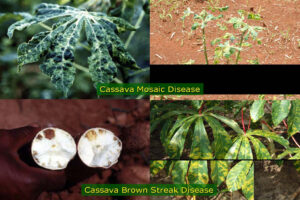
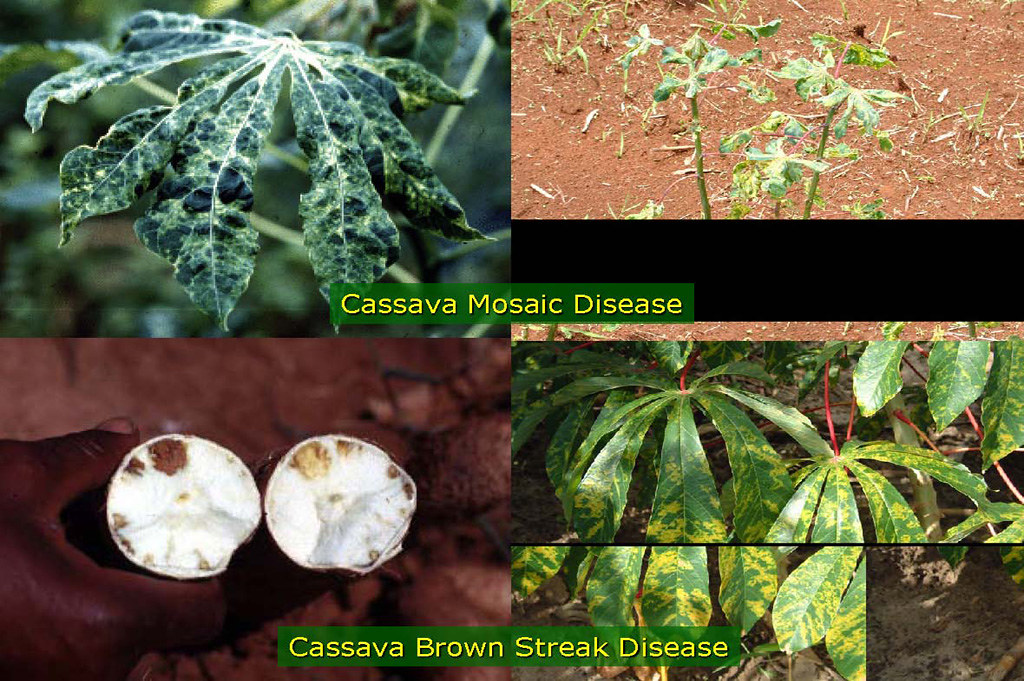
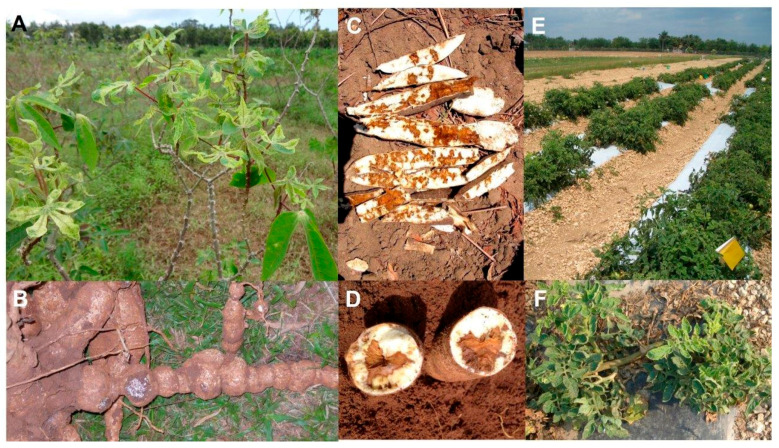
These viruses interfere with normal plant growth and development. One of the most recognizable effects is the appearance of irregular yellow and green patches on cassava leaves. Infected leaves may also become distorted, reduced in size, or twisted.
The name “mosaic” describes the patchwork appearance that develops when areas of a leaf differ in colour. Instead of maintaining a relatively uniform green colour, the leaf displays contrasting green and yellow sections.
However, the appearance of yellow patches alone does not confirm cassava mosaic disease. Nutrient deficiencies, other plant diseases, herbicide injury, and environmental stress can produce symptoms that look similar. Farmers should therefore consider the complete pattern of symptoms and seek agricultural extension advice when the diagnosis is uncertain.
Cassava mosaic disease is particularly important in sub-Saharan Africa, where cassava is a major food and income crop. The disease can reduce the quantity and quality of roots harvested, especially when susceptible varieties become infected early in their growth.
According to the International Institute of Tropical Agriculture, disease-resistant cassava varieties are an important part of the long-term response to viral diseases because they can reduce infection rates and associated yield losses.
How Cassava Mosaic Disease Affects Cassava Plants
Healthy cassava leaves capture sunlight and use it to produce sugars through photosynthesis. These sugars support the growth of stems, leaves, roots, and other plant tissues.
When a cassava mosaic virus infects a plant, normal leaf development and function can be disrupted. The result may include uneven leaf colour, leaf distortion, reduced leaf area, and slower overall growth.
The effect on harvest depends on several factors, including the cassava variety, the stage at which infection occurs, the severity of symptoms, growing conditions, and the level of resistance or tolerance present in the plant.
A severely affected plant that becomes infected early may produce substantially fewer storage roots than a healthy plant of the same variety. A resistant plant, on the other hand, may experience limited symptoms and maintain more productive growth.
This is why prevention is so important. Protecting a crop from infection early in its life can be more effective than waiting until obvious damage has spread throughout the farm.
Symptoms and Causes of Cassava Mosaic Disease
Recognizing the symptoms of cassava mosaic disease is the first step toward controlling its spread. Farmers who understand what to look for can identify suspicious plants early, examine neighbouring crops, and avoid using potentially infected stems for future planting.
The symptoms do not always appear with the same intensity. Some plants develop conspicuous yellow patches and severely distorted leaves, while others show relatively mild symptoms. Certain resistant or tolerant varieties may also display less obvious signs of infection.
For this reason, farmers should not rely on a single symptom or assume that a plant is virus-free simply because it looks reasonably healthy.
Six Major Symptoms of Cassava Mosaic Disease
1. Yellow and Green Mosaic Patterns on Cassava Leaves
The most recognizable symptom of cassava mosaic disease is the development of irregular yellow and green patches on the leaves.
A healthy cassava leaf is generally green, although normal colour can vary with the variety and growing conditions. An infected leaf may display pale yellow areas scattered across the green surface, creating a mottled or patchwork appearance.
The patches may differ in size and distribution. Some leaves have relatively small yellow areas, while others show extensive discolouration that affects much of the leaf surface.
Farmers should pay particular attention when these patterns occur repeatedly on newly developing leaves or appear alongside leaf distortion and reduced plant growth.
What farmers should do: Mark suspicious plants, inspect nearby cassava plants, and seek confirmation if the symptoms are unfamiliar. Do not select stems from suspicious plants for the next planting season.
2. Twisted, Curled, or Distorted Leaves
Cassava mosaic disease can interfere with normal leaf formation. As a result, leaves may become twisted, curled, puckered, or irregularly shaped.
Instead of spreading out normally, the affected leaves may appear folded or uneven. The edges may curl, and the leaf surface may look distorted compared with leaves on healthy plants.
This symptom is particularly concerning when the distortion occurs together with the yellow-and-green mosaic pattern.
However, leaf curling does not automatically mean that a plant has cassava mosaic disease. Water stress, chemical injury, insect damage, and other plant disorders can also affect leaf shape.
What farmers should do: Examine the entire plant rather than focusing only on one leaf. Look for mosaic patterns, abnormal new growth, and differences between affected plants and healthy plants of the same variety.
3. Smaller Than Normal Leaves
Infected cassava plants may produce leaves that are smaller than expected for their variety and stage of growth.
This reduction in leaf size can limit the amount of sunlight captured by the plant. When the plant produces less healthy leaf tissue, its ability to support vigorous growth may decline.
Small leaves are not a unique sign of cassava mosaic disease. Poor soil fertility, drought, root damage, and other stresses can also restrict leaf development.
The symptom becomes more suspicious when smaller leaves appear alongside yellow-and-green patches and distortion.
What farmers should do: Compare plants growing under similar conditions. If several leaves on the same plant are abnormally small and display mosaic patterns, investigate the possibility of a viral disease.
4. Stunted Plant Growth
Another important symptom is stunted growth. Infected cassava plants may remain shorter than healthy plants planted at approximately the same time.
Their stems may develop more slowly, their canopies may remain smaller, and the plants may fail to establish the vigorous growth expected during the growing season.
Stunting can occur because the disease interferes with normal plant development and reduces the effectiveness of healthy leaf tissue.
Nevertheless, not every stunted cassava plant has a viral infection. Compacted soil, inadequate nutrients, waterlogging, drought, poor-quality cuttings, and weed competition can also limit growth.
What farmers should do: Check whether stunting occurs alongside characteristic leaf symptoms. If only a few plants are affected, compare their soil conditions and planting materials with those of nearby healthy plants.
5. Reduced Root Development and Lower Harvests
Cassava is grown primarily for its storage roots. Consequently, one of the most economically important effects of cassava mosaic disease is its potential to reduce root yield.
When infection weakens a plant, the plant may not develop the same root mass as a healthy plant of the same variety. The extent of the reduction varies according to disease severity, plant age at infection, variety, and environmental conditions.
A farmer may discover the damage only at harvest, when the roots are smaller or less abundant than expected.
This delayed discovery is one reason why observing the crop throughout the growing season is important. A field may appear to have enough surviving plants while still producing less than the farmer anticipated.
What farmers should do: Do not wait until harvest to investigate persistent leaf symptoms. Early diagnosis and prevention in subsequent plantings are more useful than discovering the problem only after root production has already been affected.
6. Uneven Canopy Development and Weak Plant Vigor
A cassava field affected by mosaic disease may develop an uneven appearance. Some plants remain relatively vigorous, while others have sparse foliage, distorted leaves, or noticeably slower growth.
When the disease occurs in scattered plants, the affected areas may appear as patches of weak growth throughout the field. If infected planting material was distributed widely, symptoms may occur across a larger proportion of the crop.
Uneven growth can also result from differences in soil fertility, drainage, planting depth, stem quality, and access to sunlight. Therefore, the pattern of symptoms must be considered alongside the field’s management history.
What farmers should do: Walk through the farm regularly and note where suspicious plants occur. Record whether the symptoms are isolated, concentrated around the field edges, or widespread. These observations can help an extension officer assess possible causes and advise on the next steps.
Symptoms of Cassava Mosaic Disease at a Glance
| Symptom | What the farmer may observe | Why it matters |
|---|---|---|
| Yellow-and-green mosaic | Irregular pale patches on leaves | A characteristic warning sign of viral infection |
| Leaf distortion | Twisted, curled, or misshapen leaves | Indicates abnormal leaf development |
| Small leaves | Reduced leaf size compared with healthy plants | Can reduce the effective leaf area |
| Stunted growth | Plants remain smaller or develop slowly | May indicate serious disease or other growing problems |
| Reduced root development | Fewer or smaller storage roots at harvest | Can lower the economic value of the crop |
| Uneven plant vigor | A mixture of healthy-looking and weak plants | Helps identify areas requiring closer inspection |
These symptoms are useful warning signs, but they are not a substitute for professional diagnosis. If the cause is uncertain, contact an agricultural extension officer or plant health specialist before making expensive treatment decisions.
What Causes Cassava Mosaic Disease?
Understanding the causes of cassava mosaic disease helps farmers choose appropriate control methods. The disease is caused by viruses, but the viruses reach new plants through particular pathways.
The two most important pathways are infected cassava planting materials and whiteflies that transmit the virus while feeding on plants.
Infected Cassava Stem Cuttings
Cassava is commonly propagated using stem cuttings rather than seeds. This makes the quality of planting material especially important.
If a farmer selects stems from an infected cassava plant, the cuttings may carry the virus into a new field. Plants growing from those cuttings can then develop symptoms, creating a source of infection within the new crop.
The danger is that infected stems do not always look obviously diseased. Symptoms can be mild, absent from the portion of the plant selected, or difficult to recognize without close inspection.
A farmer may therefore unknowingly distribute infected stems to relatives, neighbours, customers, or other farms.
The practical lesson: Buy or obtain planting material from a reputable source, use varieties suitable for the area, and avoid selecting stems from plants that display suspicious symptoms.
Whiteflies That Spread Cassava Mosaic Virus
Whiteflies are tiny insects that feed on plant sap. Some whitefly populations can acquire cassava mosaic viruses while feeding on infected plants and transmit them to healthy cassava plants.
The insects are small and can be overlooked during ordinary field inspections. They may move between plants while searching for suitable feeding sites.
However, the presence of whiteflies alone does not prove that cassava mosaic disease is present. Whiteflies may occur without the relevant virus, and the risk of disease transmission depends on whether the insects are carrying a virus capable of infecting cassava.
Controlling whiteflies can be part of an integrated management plan, but eliminating visible insects is not the same as curing plants that are already infected.
The practical lesson: Monitor whitefly activity, use resistant planting materials where available, maintain field hygiene, and follow locally appropriate integrated pest management advice.
Planting Susceptible Cassava Varieties
Some cassava varieties are more susceptible to cassava mosaic disease than others. When a susceptible variety is planted using infected cuttings or exposed to virus-carrying whiteflies, the crop may experience significant disease pressure.
A farmer may prefer a familiar local variety because of its taste, processing qualities, maturity period, or market demand. Those considerations are important, but they should be balanced against disease risk.
Resistant or tolerant varieties can reduce the likelihood or severity of disease, although their performance varies with local conditions and the particular virus involved.
The practical lesson: Ask local agricultural extension services or reputable planting-material suppliers which cassava varieties have demonstrated resistance or tolerance to cassava mosaic disease in your area.
Poor Field Hygiene and Repeated Use of Infected Stems
Repeatedly recycling planting materials from a diseased crop can carry the virus from one season to another.
If farmers leave infected stems mixed with healthy planting materials, or share cuttings without checking their source, the disease can be introduced into additional fields.
Poor field hygiene may also make it harder to identify disease patterns and maintain clean planting-material sources.
The practical lesson: Keep planting stems from healthy, identified sources separate from suspicious material. Do not distribute cuttings from plants that show signs of viral disease.
How to Control Cassava Mosaic Disease in 2026: Six Proven Methods
There is no dependable spray that cures a cassava plant once it is systemically infected with cassava mosaic virus. Effective cassava disease control therefore focuses on preventing infection, reducing opportunities for spread, and choosing planting materials that can withstand disease pressure.
The following six methods provide a practical framework for farmers. They are most effective when combined rather than used as isolated measures.
Method 1: Use Healthy and Disease-Free Cassava Planting Materials
Using healthy planting materials is one of the most important steps in preventing cassava mosaic disease.
Because cassava is propagated through stem cuttings, the health of the original plant influences the health of the next crop. Infected cuttings can introduce the virus into a field from the very beginning of the growing season.
Before planting, farmers should examine the source of their stems and avoid materials collected from plants with mosaic symptoms, distorted leaves, or unexplained stunting.
Where possible, obtain planting materials from reputable suppliers, agricultural programmes, certified multiplication schemes, or other trusted sources that follow appropriate plant health procedures.
A farmer who produces planting stems on their own farm should establish a separate area for maintaining healthy mother plants. These plants should be inspected regularly, and suspicious plants should not be used as sources of cuttings.
Practical steps for selecting healthier cassava stems:
- Choose planting materials from a field with a good record of plant health.
- Avoid stems from plants displaying yellow mosaic patterns, leaf distortion, or unexplained stunting.
- Do not assume that a stem is healthy simply because it has been cut from a thick or vigorous-looking plant.
- Keep planting materials from different sources separate when their health status is uncertain.
- Inspect the mother plants during the growing season instead of checking them only when stems are needed.
- Seek reliable planting material from recognized agricultural suppliers when disease pressure is high.
It is important to understand that visual inspection cannot guarantee that every cutting is free of infection. Where available, planting materials produced through appropriate health-screening programmes offer additional assurance.
Why this method works: Healthy planting materials reduce the chance of introducing the virus directly into a new field. They also give young plants a better opportunity to establish themselves before facing other stresses.
Method 2: Plant Cassava Varieties Resistant to Mosaic Disease
Selecting an appropriate cassava variety is another powerful control strategy.
Plant resistance refers to the plant’s inherited ability to limit infection, virus multiplication, symptom development, or disease damage. Resistance is not identical across all varieties, and a variety that performs well in one location may not perform equally well everywhere.
Some improved cassava varieties have been developed to withstand cassava mosaic disease while also offering useful characteristics such as good root production, suitable maturity periods, or desirable processing qualities.
For farmers, the challenge is not simply to find a variety described as improved. It is to identify a variety that is suitable for the local environment, available through a reliable source, acceptable to buyers or processors, and known to perform well against the disease concerned.
In Nigeria, farmers should seek guidance from agricultural extension officers, relevant state agricultural development programmes, research institutions, and reputable planting-material suppliers. Recommendations should reflect local trials and the variety’s suitability for the farmer’s location.
How to choose a suitable resistant variety:
- Confirm that the variety has documented resistance or tolerance to cassava mosaic disease.
- Check whether it is recommended for the local agroecological zone.
- Consider the variety’s yield potential under local farming conditions.
- Check maturity period and suitability for the intended harvest schedule.
- Consider taste, texture, starch content, and other processing characteristics relevant to the market.
- Confirm that the planting stems come from a trustworthy source.
- Ask whether the variety is also suitable for other important local disease risks.
Farmers should not rely on a variety name alone or assume that every improved variety is resistant to every cassava disease. Ask for the specific variety recommendation and its evidence of performance.
It is also wise to preserve diversity. Relying entirely on a single variety across a large area can create other production risks if a new disease, pest, or environmental stress emerges. Where practical and locally recommended, farmers can maintain a suitable range of varieties with different useful characteristics.
Why this method works: Resistant varieties can reduce disease severity and help protect yield, making them an important part of both immediate farm management and long-term cassava production.
Method 3: Inspect the Farm Regularly and Remove Confirmed or Strongly Suspected Infected Plants
Early field inspection helps farmers identify suspicious plants before infected material is used for propagation or the disease becomes widespread.
Walk through the farm at regular intervals, especially during the early stages of crop establishment and whenever disease symptoms have been reported in the area.
Look for the characteristic combination of mosaic patterns, distorted leaves, smaller leaves, and abnormal growth. Compare suspicious plants with healthy plants of the same variety growing under similar conditions.
When cassava mosaic disease is confirmed or strongly suspected, removing infected plants from the field may help reduce local sources of virus. This practice is often called roguing.
However, removal should be carried out thoughtfully. Symptoms can resemble those of other disorders, and uprooting plants without understanding the cause may result in unnecessary crop loss. Seek advice if the diagnosis is uncertain, particularly when many plants are affected.
A practical field-inspection routine:
- Walk through the field along consistent routes so that different sections are inspected.
- Examine both the upper and lower parts of the canopy.
- Look for repeated mosaic patterns and distorted new leaves.
- Mark suspicious plants so they can be monitored or examined more closely.
- Seek confirmation from an extension officer when symptoms are unclear.
- Remove confirmed or strongly suspected infected plants when recommended by local guidance.
- Keep removed diseased material out of planting-material collections.
- Record affected areas and monitor whether additional plants develop similar symptoms.
Do not simply cut the visibly affected leaves and leave the plant in the field as though the virus has been removed. A systemic viral infection is not confined to the leaves that show the most obvious symptoms.
The correct disposal method depends on local agricultural and environmental guidance. Do not leave infected stems where they may be collected and reused as planting material.
Why this method works: Early removal can reduce sources of infection within the crop. It is particularly useful when combined with healthy planting materials and resistant varieties, rather than used as the only control measure.
Method 4: Monitor Whiteflies and Use Integrated Pest Management
Whiteflies can transmit cassava mosaic viruses between plants. Monitoring their activity is therefore relevant to disease prevention.
Integrated pest management, commonly called IPM, combines several approaches to reduce pest risks while avoiding unnecessary pesticide use.
The goal is not to spray the farm automatically whenever insects are seen. Instead, the farmer considers the pest population, crop condition, local recommendations, and the benefits and risks of available control measures.
Practical whitefly-management steps include:
- Inspect cassava plants regularly for small white insects on the undersides of leaves.
- Observe whether whitefly numbers appear to be increasing.
- Maintain appropriate field hygiene and manage weeds according to local recommendations.
- Use cassava varieties with suitable disease resistance.
- Avoid carrying potentially infected planting materials from one field to another.
- Seek extension advice before selecting any pesticide or insect-management product.
- Follow product labels, approved uses, protective-equipment instructions, and local regulations if pesticide treatment is recommended.
Whitefly management should be viewed as one part of the disease-control plan. A reduction in the number of visible whiteflies does not guarantee that all virus transmission will stop, and insecticides do not cure plants that are already infected.
Excessive or poorly targeted pesticide use can increase production costs, harm beneficial insects, expose workers to unnecessary risk, and contribute to pesticide resistance.
For that reason, farmers should avoid using pesticides simply because a cassava plant has yellow leaves. First determine whether the problem is likely to involve a virus, a nutrient deficiency, another disease, or an insect pest.
Why this method works: Managing whiteflies as part of an integrated plan can reduce opportunities for virus transmission while supporting safer and more economical crop management.
Method 5: Maintain Good Field Hygiene and Manage Planting Practices Carefully
Field hygiene helps prevent infected plant material from being carried into new plantings and makes crop monitoring more effective.
Farmers should establish clear procedures for selecting, transporting, storing, and planting cassava stems. Planting materials from healthy sources should not be mixed carelessly with stems from fields where viral symptoms have been observed.
When planning a new cassava field, consider the health history of nearby crops and the source of the planting stems. Where practical, avoid placing a new susceptible crop immediately beside heavily affected cassava fields, especially when local extension guidance identifies a significant risk of whitefly-mediated spread.
Weed management is also important for general crop health. Weeds can compete with cassava for nutrients, water, light, and space. Some plants may also support insect populations. However, farmers should not assume that every weed is a host of cassava mosaic viruses or remove vegetation indiscriminately without local guidance.
Good field-hygiene practices include:
- Keep healthy planting stems clearly separated from suspicious material.
- Clean tools and handling areas when moving between different planting-material lots.
- Remove volunteer cassava plants where they interfere with planned crop hygiene.
- Avoid using infected stems as livestock feed or planting material without understanding the relevant plant health guidance.
- Manage weeds early enough to prevent serious competition.
- Plan new plantings using local advice about disease pressure and field location.
- Keep simple records of the origin of stems and the condition of the previous crop.
Field hygiene is not a substitute for resistant varieties. In areas where whiteflies and virus sources are common, sanitation alone may not prevent all infections. It works best alongside other control measures.
Why this method works: Good hygiene reduces the accidental movement of infected plant material and helps farmers maintain a cleaner, more manageable production system.
Method 6: Monitor Crop Health Throughout the Season and Plan Future Plantings Strategically
Cassava mosaic disease management should not end after the first few weeks of growth. Continuous observation helps farmers understand how the crop is developing and whether additional problems are emerging.
During the growing season, inspect leaves, stems, and overall plant vigor. Note whether suspicious symptoms are becoming more common, whether certain sections of the field are more affected, and whether plants are developing normally for their variety and age.
Keep records of planting dates, variety names, sources of planting material, observed symptoms, and actions taken. These records can help explain why one crop performed better than another and guide decisions in the next season.
At harvest, assess the roots produced by affected and healthy sections of the field where practical. Do not assume that the percentage of visibly symptomatic plants translates directly into the same percentage of yield loss. Disease severity and yield effects vary by variety, infection timing, and growing conditions.
After harvesting, select future planting materials only from suitable, healthy sources. Do not keep stems from symptomatic plants simply because they produced large roots or survived until harvest.
A practical monitoring and planning routine:
- Inspect the crop at regular intervals from establishment through harvest.
- Record the first appearance of suspicious symptoms.
- Map areas with repeated disease problems.
- Ask an extension officer to help identify unfamiliar symptoms.
- Compare the performance of different recommended varieties where practical.
- Review the source and health history of planting materials before the next planting.
- Plan to replace susceptible varieties when suitable resistant alternatives are available and economically appropriate.
This method also encourages farmers to think beyond one harvest. A successful cassava farm depends not only on producing roots today but also on protecting the quality of planting materials and the productivity of future crops.
Why this method works: Continuous monitoring helps farmers detect problems earlier, avoid repeating preventable mistakes, and improve decisions from one growing season to the next.
Best Methods to Prevent Cassava Mosaic Virus in Cassava Plants
The most effective prevention plan combines several measures. No single action provides complete protection under every field condition, particularly where infected planting materials and virus-carrying whiteflies are common.
For most farmers, the practical priority is to prevent the virus from entering the field through planting stems, choose varieties with appropriate resistance, and monitor the crop for suspicious symptoms.
The following checklist can help farmers turn those principles into a routine.
Before Planting Cassava
Before the rainy season or planned planting period:
- Identify a suitable cassava variety for the location.
- Purchase stems from a reputable source.
- Ask whether the planting materials have been inspected or otherwise quality-assured.
- Avoid stems from plants with suspicious mosaic patterns or distorted leaves.
- Review the previous crop’s disease history.
- Prepare a field layout that supports effective inspection and normal crop management.
- Plan how suspicious plants will be reported, investigated, and managed.
These preparations may require additional effort, but they can prevent avoidable costs later in the season.
During Cassava Growth
After planting:
- Inspect the crop regularly for abnormal leaf colour and shape.
- Look for whiteflies and other important pests.
- Keep the crop free from excessive weed competition.
- Investigate stunted or unusually weak plants.
- Seek advice when symptoms are unclear.
- Avoid collecting cuttings from suspicious plants.
- Follow locally recommended disease-management procedures.
Do not wait until most of the field is visibly affected before seeking help. Earlier investigation gives farmers more opportunities to limit the spread of infected material.
After Cassava Harvest
Once the crop is harvested:
- Review the yield and condition of the roots.
- Record any disease symptoms observed during the season.
- Keep suspicious stems out of planting-material collections.
- Identify a trusted source of healthy cuttings for the next planting.
- Consider whether a suitable resistant variety would reduce future disease risk.
- Share observations with extension workers or other qualified agricultural advisers when appropriate.
A well-managed harvest can provide more than food or income. It can also give farmers useful information for improving the next production cycle.
Disease-Resistant Cassava Varieties for African Farmers
Resistant varieties are an important tool for reducing losses associated with cassava mosaic disease. However, farmers should choose them according to local recommendations rather than assuming that a variety suitable for one country or region will perform equally well in every location.
Cassava varieties differ in disease response, maturity, root yield, taste, texture, starch content, drought response, and suitability for different soil and rainfall conditions.
A variety that produces attractive roots but is poorly suited to the local market may not be the best commercial choice. Likewise, a high-yielding variety that is susceptible to a major local disease may create unacceptable production risks.
When comparing varieties, ask local agricultural extension services, research institutions, and trusted planting-material suppliers for evidence of performance in the relevant area.
What Farmers Should Consider When Selecting Resistant Varieties
1. Documented disease resistance
Confirm that the variety has demonstrated resistance or tolerance to cassava mosaic disease. Do not assume that all improved varieties are resistant to the same viruses.
2. Local adaptation
A suitable variety should be able to grow under the local rainfall, temperature, soil, and farming conditions. Results from another agroecological zone may not translate directly to your farm.
3. Root yield and maturity
Consider the expected harvest period and the variety’s performance under realistic local management. Early maturity may be useful where farmers need to shorten the production cycle, but it should be weighed against yield and market requirements.
4. Consumer and processing preferences
Garri producers, fufu processors, starch manufacturers, and household consumers may prefer particular root characteristics. A disease-resistant variety should ideally meet the needs of the intended market.
5. Planting-material availability
A variety is only useful if farmers can obtain reliable planting stems in sufficient quantities. Confirm that the source is reputable and that the materials are appropriate for the next planting.
6. Other disease and pest risks
Cassava can be affected by more than one disease. Cassava brown streak disease, cassava bacterial blight, anthracnose, and other problems may be relevant depending on the location. Resistance to cassava mosaic disease does not automatically mean resistance to every other threat.
Are There Resistant Cassava Varieties in Nigeria?
Yes. Improved cassava varieties with resistance or tolerance to cassava mosaic disease have been developed and released in several African countries, including Nigeria. However, availability, disease response, and suitability vary among varieties and locations.
Rather than relying on an unverified list of variety names, farmers should ask their local agricultural development programme, agricultural extension officer, or reputable planting-material supplier which varieties are currently recommended for their area.
This is especially important when choosing planting material for commercial production. A variety should be assessed for disease response alongside root yield, maturity, processing quality, and market demand.
The International Institute of Tropical Agriculture supports cassava breeding programmes that develop improved varieties for disease resistance, productivity, and local needs. Farmers can learn more about its work through the institute’s public information and consult local agricultural services for recommendations that apply to their farms.

Cassava Mosaic Disease vs. Other Cassava Leaf Diseases
Cassava mosaic disease is not the only problem that can cause abnormal leaves. Several cassava diseases, insect pests, and environmental stresses can produce yellowing, curling, spots, or reduced growth.
Correct identification matters because different problems require different responses. A virus cannot be cured with a fungicide intended for fungal disease, and a nutrient deficiency will not be solved by removing every plant with yellow leaves.
The table below summarizes some common differences. These are general clues rather than a diagnostic test.
| Problem | Common warning signs | Important distinction | Appropriate next step |
|---|---|---|---|
| Cassava mosaic disease | Yellow-and-green mosaic patterns, distorted leaves, stunted growth | Often combines mosaic colouring with leaf distortion | Check planting-material history and seek disease confirmation |
| Cassava brown streak disease | Leaf yellowing or vein-associated symptoms; root necrosis may occur | Root symptoms can be particularly important in affected regions | Seek local diagnosis and use regionally recommended planting material |
| Cassava bacterial blight | Leaf spots, wilting, shoot dieback, or stem lesions may occur | Symptoms can include damaged shoots and stems, not just mosaic patterns | Consult an extension officer about bacterial disease management |
| Nutrient deficiency | Yellowing, poor growth, or uneven leaf colour | May follow soil patterns or nutrient availability rather than a typical mosaic pattern | Assess soil fertility and seek appropriate nutrient advice |
| Water stress | Wilting, leaf loss, or poor growth | Symptoms relate to drought, waterlogging, or root stress | Review drainage, rainfall, and soil moisture conditions |
| Insect damage | Feeding marks, damaged leaves, or visible insects | Physical damage or pests may be present | Identify the pest before selecting a control method |
Farmers should be particularly careful not to confuse cassava mosaic disease with cassava brown streak disease. Both are viral diseases, but they are not the same condition, and the best management recommendations may differ by region.
Cassava brown streak disease is especially important in parts of eastern and central Africa. Farmers in areas where it is present should ask for varieties and planting materials that address the specific disease risks in their location.
When a field displays unusual symptoms that do not fit a familiar pattern, an agricultural extension officer or plant health specialist can help determine whether laboratory testing or further investigation is necessary.
Can Chemical Sprays Cure Cassava Mosaic Disease?
No reliable chemical spray can cure a cassava plant that is already systemically infected with cassava mosaic virus.
This is one of the most important facts farmers should understand before spending money on treatments advertised as cassava disease cures.
Fungicides are designed for particular fungal diseases. Cassava mosaic disease is viral, so applying a fungicide will not eliminate the virus from an infected plant.
Insecticides may reduce certain whitefly populations when used appropriately, but they do not remove a virus that is already established inside a cassava plant. Their effectiveness in reducing disease spread depends on several factors, including timing, pest behaviour, local conditions, and the presence of other sources of infection.
Farmers should therefore be cautious when a seller claims that a particular chemical will restore infected cassava leaves to normal or completely cure mosaic disease.
What About Neem Oil or Other Homemade Sprays?
Some farmers use homemade mixtures or botanical products to manage insects. Their effectiveness depends on the product, preparation, pest species, application, and field conditions.
A product that affects whiteflies does not necessarily control cassava mosaic disease itself. It is important to distinguish between managing an insect that may transmit a virus and curing a plant that is already infected.
Do not rely on an untested homemade mixture as the main response to suspected cassava mosaic disease. Seek locally appropriate advice before applying any product, and avoid mixtures that may damage leaves, expose workers to harmful substances, or contaminate the environment.
Should Infected Cassava Plants Be Sprayed?
The answer depends on what is causing the symptoms and whether there are other pests or diseases present.
If cassava mosaic disease is confirmed, the priorities are to stop using suspicious plants as sources of planting material, reduce sources of infection where appropriate, and strengthen prevention through healthy stems and resistant varieties.
If whiteflies or another pest are also present, integrated pest management may be recommended. Any pesticide used should be approved for the intended purpose, applied according to its label, and selected with professional guidance where necessary.
The main lesson: Do not confuse pest control with virus treatment. Identifying the problem correctly is the first step toward spending money wisely.
Common Mistakes Farmers Make When Managing Cassava Mosaic Disease
Even farmers who recognize the symptoms can make decisions that allow the disease to persist. Avoiding these common mistakes can improve the effectiveness of a disease-control programme.
Mistake 1: Reusing Stems From Infected Plants
A farmer may keep stems from a crop because the plants produced some roots despite showing symptoms. Those stems can carry the virus into the next field.
The better approach is to select planting materials from a suitable, healthy source and keep suspicious stems out of propagation collections.
Mistake 2: Assuming Yellow Leaves Always Mean Viral Disease
Yellowing may result from several causes, including nutrient deficiencies, drought, waterlogging, insect injury, and other diseases.
Before taking expensive action, examine the complete pattern of symptoms and seek advice when the diagnosis is uncertain.
Mistake 3: Depending Only on Insecticides
Whiteflies can transmit cassava mosaic viruses, but spraying alone does not address every source of infection. Infected stem cuttings can introduce the disease even when whitefly numbers are low.
Use an integrated plan that includes healthy planting material, resistant varieties, field inspection, and appropriate pest management.
Mistake 4: Waiting Until Harvest to Assess Disease Problems
If farmers notice symptoms only when harvesting roots, they lose the opportunity to investigate the problem earlier in the growing season.
Regular monitoring helps identify suspicious plants and improves decisions about future planting materials.
Mistake 5: Choosing Varieties Without Checking Local Suitability
A variety may be described as high-yielding or disease-resistant but still be poorly suited to a particular location or market.
Check its disease response, maturity, root characteristics, and local performance before investing in large quantities of planting stems.
Mistake 6: Ignoring the Quality of Planting Materials
Large, thick stems are not necessarily free of infection. The health history and source of the planting material matter more than appearance alone.
Use reputable sources and avoid selecting stems from plants with suspicious symptoms.
A Practical Cassava Mosaic Disease Management Plan for Smallholder Farmers
Farmers do not always have access to laboratories, expensive equipment, or specialist services. Fortunately, several important preventive practices can be incorporated into ordinary farm management.
The following plan provides a starting point that can be adapted to local agricultural recommendations.
Before Establishing the Field
Begin by identifying a suitable variety and obtaining planting stems from a trusted source. Review the health of the previous crop and consider whether disease was a recurring problem in the area.
Prepare the land and plan the field layout so that plants can be inspected easily. Consider the availability of water, soil fertility, drainage, labour, and the expected market for the harvested roots.
During the First Stages of Growth
Inspect the young plants frequently enough to recognize unusual leaf patterns or poor establishment. Compare suspicious plants with others of the same variety.
Record the source of the planting materials and the location of plants showing symptoms. Where possible, ask an extension officer to investigate early rather than waiting until the problem becomes widespread.
During Crop Maintenance
Continue monitoring for disease symptoms, whiteflies, weed competition, and other problems that affect growth. Apply fertilizer and manage water according to the needs of the crop and the local soil conditions.
Do not use fertilizer as a supposed cure for viral disease. Good nutrition can support plant growth, but it cannot eliminate a systemic virus.
Before Harvest
Review the distribution and severity of symptoms across the field. Identify the areas that performed poorly and consider the possible causes.
Where practical, compare root production from different sections while recognizing that soil, water, and other management factors may also affect yield.
After Harvest
Avoid recycling stems from plants that showed signs of viral disease. Review whether the variety and planting-material source were suitable and plan improvements for the next season.
A simple notebook containing planting dates, variety names, stem sources, symptoms, management actions, and harvest observations can help a farmer make better decisions over time.
Frequently Asked Questions About Cassava Mosaic Disease
What Is the Main Cause of Cassava Mosaic Disease?
Cassava mosaic disease is caused by plant viruses in the genus Begomovirus. The disease spreads mainly through infected cassava stem cuttings and whiteflies that transmit the virus between plants.
What Are the First Symptoms of Cassava Mosaic Disease?
Early warning signs may include irregular yellow-and-green mosaic patterns, distorted leaves, and abnormal new growth. The symptoms vary by variety and infection conditions, so unusual leaf colour alone does not confirm the disease.
How Can I Control Cassava Mosaic Disease on My Farm?
Use healthy planting materials, choose locally recommended resistant varieties, inspect the crop regularly, remove confirmed or strongly suspected infected plants when advised, manage whiteflies through integrated pest management, and prevent infected stems from entering future plantings.
Can Cassava Mosaic Disease Be Cured With Chemicals?
There is no dependable chemical treatment that cures a cassava plant already infected with cassava mosaic virus. Insecticides may help manage certain insect pests, but they do not remove the virus from infected plant tissue.
Can I Eat Cassava Roots From an Infected Plant?
Cassava mosaic disease primarily affects plant health and crop production; it is not the same as a foodborne infection in humans. However, food safety still depends on correct cassava processing and preparation, because cassava naturally contains cyanogenic compounds that must be reduced through appropriate processing. Follow established food preparation guidance and seek agricultural advice about the affected crop.
Does Cassava Mosaic Disease Spread Through Soil?
Cassava mosaic viruses are primarily spread through infected planting material and whitefly vectors, rather than behaving like ordinary soilborne fungal diseases. Nevertheless, the overall health of the field, weed management, and the movement of planting materials remain important parts of prevention.
Are All Cassava Varieties Resistant to Mosaic Disease?
No. Varieties differ in their response to cassava mosaic disease. Farmers should confirm that a recommended variety has documented resistance or tolerance and is suitable for their location.
Can Whitefly Control Prevent Every Cassava Mosaic Infection?
No. Whitefly management may reduce some opportunities for transmission, but it cannot guarantee that infection will not occur. Infected cuttings can introduce the virus directly into the field, which is why healthy planting materials and resistant varieties are essential.
Why Are My Cassava Leaves Yellow Even Though I Cannot See Whiteflies?
Yellow leaves can have several causes. Whiteflies may be difficult to observe, and the absence of visible insects does not rule out viral disease. Nutrient deficiencies, water stress, other diseases, and environmental damage can also cause yellowing. Examine the full symptom pattern and seek advice if the cause is unclear.
Can I Use Stems From a Plant That Looks Healthy but Was Near an Infected Plant?
A healthy appearance does not guarantee that a plant is virus-free. Plants may have mild or difficult-to-recognize symptoms, and exposure to whiteflies may create additional risk. For important planting-material supplies, use reputable sources with appropriate health safeguards rather than relying on appearance alone.
Conclusion: Protecting Your Cassava Harvest Starts Before Planting
Cassava mosaic disease is a serious challenge because it can reduce plant vigor, distort leaves, and lower the production of storage roots. The disease can also persist from one planting season to another when infected stem cuttings are reused.
However, farmers do not have to wait for an outbreak before taking action.
The strongest approach combines six practical measures: selecting healthy planting materials, choosing suitable resistant varieties, inspecting fields regularly, managing whiteflies through integrated pest management, maintaining good field hygiene, and monitoring crop health throughout the growing season.
These measures work together. Resistant varieties can reduce disease damage, clean planting materials help prevent the virus from entering the field, and regular inspection helps farmers identify suspicious plants before they become sources of future planting material.
Just as importantly, farmers should avoid wasting money on products advertised as cures for a viral infection. Correct diagnosis and reliable agricultural advice are more useful than repeated applications of chemicals that cannot eliminate the virus.
For cassava farmers in Nigeria and other African countries, protecting the harvest begins with informed decisions about the variety, the source of planting stems, and the way the crop is monitored and managed.
A healthy cassava field is not simply the result of good luck. It is the result of careful planning, consistent observation, and practical disease prevention.
By making cassava mosaic disease management part of everyday farm practice, farmers can reduce avoidable risks, make better use of their resources, and improve the prospects for future harvests.
For additional information about cassava disease management, resistant varieties, and agricultural research, consult these two authoritative resources:
- International Institute of Tropical Agriculture (IITA): Learn about disease-resistant cassava varieties and their role in reducing losses from viral diseases.
- Food and Agriculture Organization of the United Nations (FAO): Explore cassava diseases in Africa for background on disease threats and broader approaches to cassava crop protection.
About The Author