Nutrient-Dense Farming
Nutrient-Dense Farming is rapidly becoming one of the most important trends in agriculture and public health. As more people seek healthier diets, researchers, farmers, and consumers are beginning to understand that the nutritional quality of food starts long before it reaches the dinner table—it begins with the soil.
Modern agriculture has achieved remarkable gains in food production, but many farming systems have prioritized quantity over nutritional quality. This has contributed to declining soil fertility, biodiversity loss, and concerns about the nutrient content of some crops. In response, regenerative agriculture, soil health management, and sustainable farming practices are gaining global attention as practical ways to produce food that is both environmentally sustainable and rich in essential nutrients.
From improving soil microorganisms to reducing synthetic chemical dependence, Nutrient-Dense Farming offers a holistic approach that benefits farmers, consumers, and the planet alike. Whether you’re a farmer, home gardener, nutrition enthusiast, or simply someone who wants healthier food, understanding this farming movement could change the way you think about agriculture.
In this guide, you’ll discover 13 science-backed reasons why Nutrient-Dense Farming is transforming human health through regenerative agriculture in 2026 and why experts believe its impact will continue growing well into 2027 and beyond.

What Is Nutrient-Dense Farming?
Nutrient-Dense Farming is an agricultural approach focused on producing crops with higher concentrations of essential vitamins, minerals, antioxidants, and beneficial plant compounds. Instead of measuring success only by crop yield, nutrient-dense farming prioritizes the nutritional value of food while improving soil health and ecosystem resilience.
Unlike conventional farming systems that often rely heavily on synthetic fertilizers and intensive tillage, nutrient-dense farming works with nature by restoring soil biology, increasing biodiversity, and supporting natural nutrient cycles.
Its core principles include:
- Building healthy soil
- Encouraging beneficial microbes
- Increasing biodiversity
- Reducing excessive chemical inputs
- Using regenerative farming techniques
- Growing healthier crops naturally
When soil thrives, crops often become healthier, more resilient, and capable of providing improved nutritional value.
Why Soil Health Is the Foundation of Human Health
Healthy Soil Produces Healthier Food
Soil is much more than dirt.
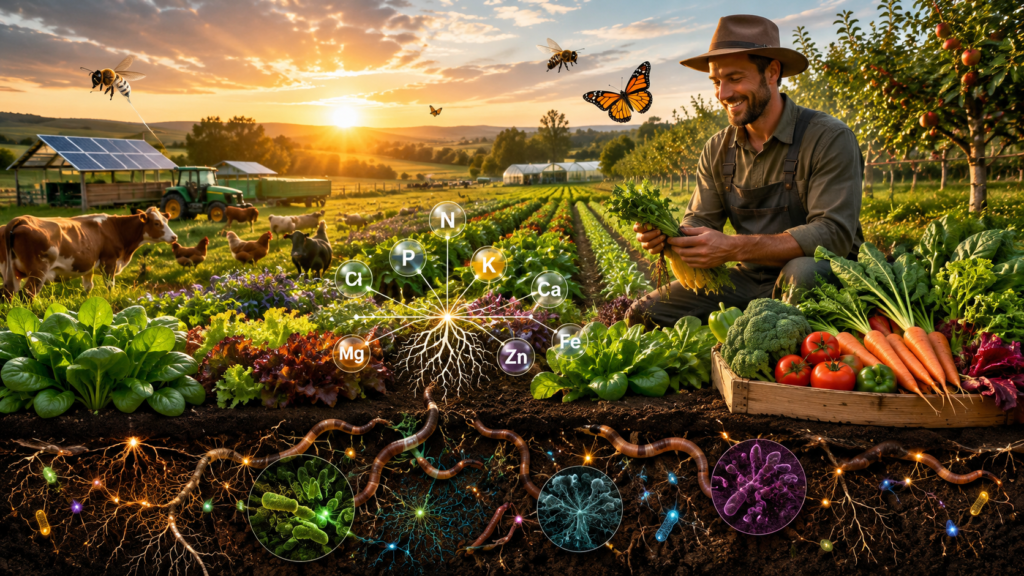
Healthy soil contains billions of bacteria, fungi, earthworms, and beneficial microorganisms that recycle nutrients, improve water retention, and help plants absorb minerals efficiently.
When soil loses its biological diversity through erosion, over-tillage, or excessive chemical use, plants may become less efficient at taking up nutrients.
Healthy soils support:
- Better mineral availability
- Stronger plant immunity
- Improved root development
- Greater crop resilience
- Higher-quality harvests
This is why experts increasingly describe soil as the foundation of the food system.
13 Powerful and Proven Reasons Nutrient-Dense Farming Is Transforming Human Health
1. Improves the Nutritional Quality of Food
The biggest advantage of Nutrient-Dense Farming is producing crops rich in essential nutrients.
Healthy soils help plants access naturally occurring minerals such as:
- Iron
- Magnesium
- Zinc
- Calcium
- Potassium
Many fruits and vegetables also develop higher levels of beneficial phytochemicals that support overall wellness.
2. Supports Better Gut Health
Healthy soil supports healthy plants, and healthy plants contribute valuable dietary fibre and plant compounds that nourish beneficial gut bacteria.
Foods grown in regenerative systems are often part of dietary patterns that encourage a more diverse and balanced gut microbiome, which plays an important role in digestion, immunity, and overall health.
3. Encourages Greater Biodiversity
Regenerative agriculture promotes:
- Cover crops
- Crop rotation
- Mixed farming systems
- Agroforestry
- Pollinator habitats
Greater biodiversity creates healthier ecosystems that naturally reduce pests and strengthen food production.
4. Reduces Reliance on Synthetic Chemicals
One major goal of Sustainable Farming is minimizing unnecessary chemical inputs.
Instead of depending solely on pesticides and synthetic fertilizers, regenerative farmers often use:
- Compost
- Green manure
- Natural pest management
- Biological fertilizers
- Beneficial insects
This creates healthier farming environments while supporting long-term soil fertility.
5. Improves Soil Health Naturally
How Regenerative Agriculture Improves Soil Health Naturally
Healthy soil acts like a living ecosystem.
Practices such as reduced tillage, compost application, mulching, and continuous ground cover increase organic matter while feeding beneficial microorganisms.
Improved soil health results in:
- Better nutrient cycling
- Improved soil structure
- Reduced erosion
- Increased water retention
- Greater resilience during drought
These benefits support both farm productivity and environmental sustainability.
6. Produces More Nutrient-Rich Crops
Best Regenerative Farming Practices for Nutrient-Rich Crops
Leading regenerative farms often combine several proven practices:
- Crop rotation
- Compost enrichment
- Cover cropping
- Livestock integration
- Reduced tillage
- Agroforestry systems
- Precision irrigation
Together, these methods improve soil function and help crops access nutrients more effectively.
7. Strengthens Immune-Supporting Diets
A varied diet rich in fruits, vegetables, legumes, whole grains, nuts, and seeds provides vitamins, minerals, fibre, and antioxidants that help support normal immune function.
Nutrient-dense farming contributes by producing foods that fit naturally into these healthy eating patterns.
8. Improves Environmental Sustainability
Regenerative agriculture benefits the environment by:
- Increasing soil organic matter
- Reducing erosion
- Conserving water
- Supporting pollinators
- Protecting wildlife habitats
Healthier ecosystems create healthier food systems for future generations.
9. Helps Farmers Build Long-Term Soil Fertility
Healthy soil becomes more productive over time.
Instead of continually replacing lost nutrients through synthetic inputs, regenerative farming rebuilds soil naturally through biological processes.
This can improve farm resilience and reduce long-term production costs.
10. Supports Climate Resilience
Climate change brings droughts, floods, and unpredictable weather.
Healthy soils with higher organic matter absorb more rainfall, reduce runoff, and retain moisture during dry periods.
This makes farms more resilient to changing climate conditions.
11. Encourages Cleaner Water Systems
Healthy soils filter rainwater more effectively.
Reduced chemical runoff helps protect:
- Rivers
- Lakes
- Wetlands
- Groundwater
Cleaner water benefits communities, wildlife, and agriculture alike.
12. Supports Local Food Systems
Many regenerative farms supply local communities through:
- Farmers’ markets
- Community-supported agriculture (CSA)
- Local grocery stores
- Farm shops
Shorter supply chains can improve freshness while supporting local economies.
13. Creates a Healthier Future for Everyone
Perhaps the greatest strength of Nutrient-Dense Farming is its holistic approach.
It supports:
- Human nutrition
- Soil restoration
- Environmental conservation
- Farmer livelihoods
- Food security
- Future generations
Rather than focusing on one outcome, regenerative agriculture connects human health with ecosystem health.
Practical Examples of Nutrient-Dense Farming in Action
Organic Vegetable Farms
Many organic farms use compost, crop rotation, and natural soil amendments to improve soil fertility and produce nutritious vegetables.
Mixed Crop and Livestock Systems
Livestock grazing can recycle nutrients back into the soil when managed responsibly, improving pasture health and reducing the need for synthetic fertilizers.
Cover Crop Farming
Farmers plant crops such as clover, rye, or legumes between harvests to protect soil, reduce erosion, and naturally replenish nutrients.
Actionable Tips for Supporting Nutrient-Dense Farming
For Consumers
- Buy seasonal produce whenever possible.
- Support regenerative and local farmers.
- Eat a diverse range of fruits and vegetables.
- Reduce food waste.
- Learn where your food comes from.
For Farmers
- Prioritise soil testing.
- Add compost regularly.
- Reduce unnecessary tillage.
- Rotate crops each season.
- Plant cover crops.
- Encourage biodiversity on the farm.

The Science Behind Nutrient-Dense Farming and Why Soil Health Matters
Nutrient-Dense Farming begins beneath our feet. While many people associate healthy food with fresh fruits and vegetables, the real foundation of nutritious crops is healthy, living soil. Soil is far more than a medium that holds plant roots in place—it is a complex ecosystem teeming with billions of bacteria, fungi, earthworms, insects, and other microorganisms that work together to support plant growth. The healthier this underground ecosystem is, the better plants can access the nutrients they need to grow into nutrient-rich foods.
Research has shown that soil health plays a significant role in crop productivity, resilience, and long-term sustainability. Healthy soils contain abundant organic matter, balanced nutrients, and active microbial communities that break down organic materials into forms plants can absorb. These microorganisms form beneficial relationships with plant roots, helping crops take up essential minerals such as calcium, magnesium, zinc, iron, phosphorus, and potassium more efficiently.
Healthy Soil Is the Foundation of Nutrient-Dense Farming
One of the defining goals of Nutrient-Dense Farming is to improve the nutritional quality of crops by restoring soil health naturally. Unlike conventional farming systems that often rely heavily on synthetic fertilisers and repeated tillage, nutrient-dense farming focuses on creating biologically active soils that continually replenish themselves.
Healthy soil provides numerous benefits, including:
- Improved nutrient availability for crops
- Better water retention during drought
- Increased organic matter
- Enhanced microbial diversity
- Stronger root development
- Reduced soil erosion
- Greater resilience to climate stress
When these factors work together, crops are better equipped to produce the vitamins, minerals, antioxidants, and beneficial plant compounds that support healthy diets.
The Role of Soil Microorganisms
A single teaspoon of healthy soil contains billions of microorganisms representing thousands of different species. These microscopic organisms are essential partners in Regenerative Agriculture because they perform functions that synthetic fertilisers alone cannot achieve.
Beneficial soil microbes help to:
- Convert organic matter into plant-available nutrients
- Improve soil structure
- Increase nutrient cycling
- Suppress certain soil-borne diseases
- Strengthen plant immunity
- Enhance water infiltration and retention
One particularly important group is mycorrhizal fungi, which form symbiotic relationships with plant roots. Their thread-like structures extend far beyond the root system, allowing plants to absorb water and minerals from a much larger area of soil than roots could reach on their own.
Organic Matter Makes the Difference
Organic matter acts as the engine of healthy soil. Materials such as compost, crop residues, cover crops, and decomposed plant material provide food for beneficial microorganisms while improving soil structure.
Higher levels of organic matter help soils:
- Store more moisture
- Reduce erosion
- Increase nutrient-holding capacity
- Improve aeration
- Support beneficial insects and earthworms
- Build long-term fertility
For farmers practising Sustainable Farming, increasing soil organic matter is one of the most effective ways to improve productivity while reducing dependence on synthetic inputs.
Soil Health and Human Health Are Closely Connected
The connection between healthy soil and healthy people is becoming an increasingly important area of research. Although many factors influence the nutrient composition of food—including crop variety, climate, weather, and harvest timing—healthy, biologically active soils support productive farming systems capable of growing diverse, high-quality crops.
A varied diet based on fruits, vegetables, legumes, whole grains, nuts, and seeds grown in well-managed soils contributes essential nutrients that support overall health.
This growing understanding is encouraging more farmers to adopt Regenerative Agriculture and Nutrient-Dense Farming practices that restore ecosystems while producing healthier food for future generations.
Practical Ways Farmers Can Improve Soil Health
Farmers interested in nutrient-dense food production can strengthen soil health by adopting regenerative practices such as:
- Planting cover crops throughout the year
- Rotating crops to improve biodiversity
- Applying compost and organic amendments
- Reducing intensive tillage
- Integrating livestock where appropriate
- Protecting soil with permanent ground cover
- Encouraging beneficial insects and pollinators
- Regularly testing soil to guide nutrient management
These approaches improve the biological activity of the soil, enhance nutrient cycling, and contribute to more resilient farming systems.
Learn More from Trusted Sources
For additional evidence-based information on soil health and regenerative farming, explore these trusted resources:
- United States Department of Agriculture (USDA) – Soil Health: https://www.nrcs.usda.gov/conservation-basics/natural-resource-concerns/soils
- Food and Agriculture Organization (FAO) – Soils Portal: https://www.fao.org/soils-portal
- Soil Health Institute: https://soilhealthinstitute.org
As global interest in healthier food and sustainable agriculture continues to grow, Nutrient-Dense Farming is emerging as a practical solution that connects healthy soils, resilient farms, and improved human nutrition. By investing in soil health today, farmers can help build food systems that nourish both people and the planet for generations to come.
How Regenerative Agriculture Improves Soil Health and Produces More Nutritious Food
As interest in sustainable food systems continues to grow, regenerative agriculture is gaining recognition as a practical way to restore farmland while supporting long-term food production. Rather than focusing solely on increasing yields, this approach works with natural ecosystems to rebuild soil, conserve water, encourage biodiversity, and create healthier growing conditions for crops.
Healthy soil is one of agriculture’s most valuable resources. It provides plants with water, nutrients, oxygen, and a thriving community of microorganisms that help crops develop strong root systems. Over time, intensive farming practices such as excessive tillage, monocropping, and overuse of synthetic inputs can reduce soil quality, making it harder for crops to thrive naturally.
Regenerative farming seeks to reverse these problems by restoring the biological, physical, and chemical health of the soil. As soil becomes healthier, crops are often better equipped to absorb nutrients, withstand environmental stress, and grow more vigorously.
What Is Regenerative Agriculture?
Regenerative agriculture is a farming system designed to improve the condition of the land while maintaining productive harvests. Instead of simply sustaining existing resources, it aims to regenerate them by rebuilding soil organic matter, increasing biodiversity, and improving ecosystem functions.
Common regenerative practices include:
- Crop rotation
- Cover cropping
- Reduced or no-till farming
- Compost application
- Agroforestry
- Integrated livestock grazing
- Mulching
- Diverse planting systems
Each of these methods contributes to healthier soils in different ways, helping farms become more resilient over time.
Why Healthy Soil Matters for Crop Nutrition
Plants obtain essential nutrients from the soil through their roots. When soil contains abundant organic matter and active microbial communities, nutrients become more available for plant uptake.
Healthy soils also provide:
- Better water infiltration
- Improved moisture retention
- Enhanced root growth
- Reduced nutrient loss through erosion
- Greater resistance to drought
These conditions allow crops to grow under less stress, supporting consistent yields and better overall plant quality.
It’s important to note that the nutrient content of crops depends on several factors, including crop variety, weather conditions, genetics, and farm management. However, maintaining healthy soils creates favourable conditions for producing nutritious food.
Key Regenerative Practices That Improve Soil Health
1. Cover Cropping
Cover crops such as clover, rye, oats, and legumes are planted between main growing seasons.
These plants help to:
- Protect soil from erosion
- Reduce nutrient runoff
- Suppress weeds naturally
- Increase soil organic matter
- Feed beneficial microorganisms
When cover crops decompose, they return valuable nutrients to the soil while improving its structure.
2. Crop Rotation
Growing the same crop repeatedly can deplete specific nutrients and encourage pest populations.
Rotating different crops helps to:
- Break pest and disease cycles
- Improve soil fertility
- Increase microbial diversity
- Balance nutrient use
- Reduce dependence on chemical treatments
Legumes, for example, naturally fix nitrogen in the soil, benefiting future crops.
3. Compost and Organic Amendments
Adding compost introduces organic matter along with beneficial microorganisms.
Compost can improve:
- Soil structure
- Water-holding capacity
- Nutrient availability
- Earthworm activity
- Long-term fertility
Unlike quick-release synthetic fertilisers, compost gradually releases nutrients as organic materials break down.
4. Reduced Tillage
Frequent ploughing can disturb soil organisms, increase erosion, and accelerate the loss of organic matter.
Reducing tillage helps:
- Preserve soil structure
- Protect fungal networks
- Reduce moisture loss
- Lower fuel consumption
- Improve carbon storage
Many regenerative farms combine reduced tillage with cover crops to maximise these benefits.
5. Agroforestry
Agroforestry integrates trees and shrubs into farming landscapes.
This practice provides several advantages, including:
- Reduced wind erosion
- Improved biodiversity
- Better water management
- Natural shade for livestock
- Increased habitat for pollinators
Tree roots also help stabilise the soil and recycle nutrients from deeper layers.
Environmental Benefits Beyond the Farm
The positive effects of regenerative agriculture extend well beyond crop production.
Healthier farming systems can contribute to:
- Improved water quality through reduced runoff
- Increased populations of pollinators and beneficial insects
- Greater carbon storage in soils
- Reduced erosion during heavy rainfall
- Enhanced resilience to changing weather patterns
These outcomes benefit surrounding ecosystems while helping farmers adapt to environmental challenges.
Real-World Examples
Across the world, farmers are successfully adopting regenerative methods to improve soil quality.
For example:
- Vegetable growers use cover crops to reduce erosion during the off-season.
- Grain farmers rotate cereals with legumes to naturally replenish nitrogen.
- Orchard owners apply compost and mulch to improve moisture retention and reduce weed growth.
- Mixed farms integrate carefully managed livestock grazing to recycle nutrients back into the soil.
Although each farm uses different techniques depending on climate and local conditions, the shared goal is healthier, more resilient land.
Practical Tips for Farmers
If you’re considering regenerative practices, start with manageable changes rather than transforming the entire farm at once.
Consider these steps:
- Conduct regular soil testing to understand nutrient levels.
- Introduce cover crops between harvests.
- Diversify crop rotations.
- Reduce unnecessary tillage where practical.
- Apply compost to increase organic matter.
- Protect fields from erosion with permanent ground cover.
- Monitor soil health over time and adjust management accordingly.
Gradual improvements can deliver long-term benefits for soil quality, farm productivity, and environmental sustainability.
Looking Ahead
As consumers become increasingly interested in where their food comes from, farming methods that prioritise healthy soils are likely to remain an important part of agriculture’s future. While no single practice guarantees more nutritious crops, combining regenerative techniques with sound farm management creates favourable conditions for resilient food production, healthier ecosystems, and sustainable agriculture.
By investing in soil today, farmers are laying the groundwork for productive harvests, stronger rural communities, and food systems capable of meeting future challenges.

Frequently Asked Questions
Is nutrient-dense farming the same as organic farming?
Not always. Organic farming follows specific certification standards, while nutrient-dense farming focuses primarily on improving the nutritional quality of crops through healthy soil and regenerative practices. Many farms incorporate elements of both approaches.
Does regenerative agriculture improve crop nutrition?
Research suggests that regenerative practices can improve soil health and may enhance the nutrient profile of some crops. Results vary depending on soil type, climate, crop species, and farm management.
Why is soil health so important?
Healthy soil supports nutrient cycling, water retention, root development, and beneficial microorganisms, all of which contribute to productive farming systems and resilient crops.
Final Thoughts
Nutrient-Dense Farming is more than a farming trend—it represents a long-term shift toward producing healthier food while restoring the ecosystems that make agriculture possible. By embracing regenerative agriculture, improving soil health, and adopting sustainable farming practices, farmers can build resilient food systems that benefit people and the environment alike.
As consumers become more aware of the connection between soil and nutrition, demand for nutrient-rich, responsibly grown food is likely to continue rising through 2027 and beyond. Supporting farms that prioritise soil health, biodiversity, and sustainable production is a meaningful way to invest in both personal well-being and the future of our food system.
Call to Action
The future of healthy food starts with healthy soil. If you found this guide helpful, share it with friends, family, and fellow growers who care about nutrition and sustainability. Subscribe to our blog for more evidence-based insights on regenerative agriculture, nutrient-dense foods, soil health, and the innovations shaping the future of farming.
About The Author