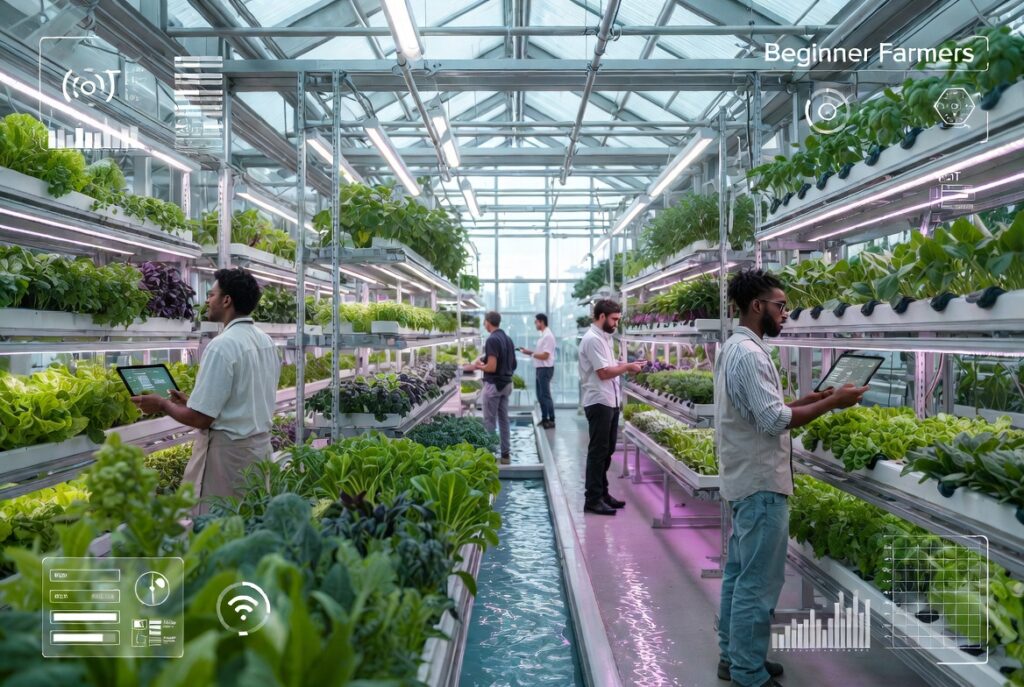
Hydroponics farming
Hydroponics farming is no longer just a futuristic idea—it has become one of the fastest-growing innovations in agriculture. In 2026, the combination of AI, IoT, and automated indoor systems is transforming how people grow food at home, in cities, and even in commercial farms.
Unlike traditional farming, hydroponic farming removes soil completely and replaces it with a nutrient-rich water solution. This means plants grow faster, healthier, and with fewer resources.
Today, beginners are increasingly searching for:
- Smart hydroponics systems
- Automated indoor farming setups
- AI-powered plant monitoring kits
- IoT controlled hydroponic systems
This guide breaks down everything into a simple, practical, and human-friendly explanation.
Understanding Smart Hydroponics Systems in 2026
Smart hydroponics refers to the integration of technology into traditional hydroponic systems. Instead of manually checking water, nutrients, and lighting, everything is monitored and adjusted automatically.

Key components of Smart Hydroponics farming systems
- AI sensors for plant health detection
- IoT devices for real-time monitoring
- Automated water pumps
- LED grow lights with smart scheduling
- Mobile app control systems
Smart hydroponics allows even beginners to grow vegetables without technical farming experience.
How Smart Systems Improve Growth
Smart systems optimize:
- Nutrient delivery timing
- Water pH balance
- Temperature control
- Light exposure cycles
This leads to:
- Faster plant growth
- Higher yields
- Less water waste
- Minimal human error
9 Powerful Smart Hydroponics Secrets for Beginners 2026
Here are the 9 secrets that most beginners overlook when starting hydroponic systems.
Secret 1: Start with Simple Systems First
Beginners should avoid complex setups. Start with:
- Kratky method
- Deep Water Culture (DWC)
- Small NFT systems
This helps you understand plant behavior before scaling.
Secret 2: Use IoT Controlled Hydroponics Farming Kits
Modern kits come with sensors that track:
- Water levels
- Temperature
- Humidity
- Nutrient concentration
These systems reduce guesswork and improve accuracy.
Secret 3: Choose Fast-Growing Vegetables
Best crops for beginners:
- Lettuce
- Spinach
- Basil
- Kale
- Mint
They grow quickly and require fewer adjustments.
Secret 4: Master Nutrient Balance Early
Plants depend entirely on nutrient solutions. Poor balance = poor growth.
Ideal nutrient elements:
- Nitrogen (leaf growth)
- Phosphorus (root development)
- Potassium (overall health)
Secret 5: Use AI Monitoring Tools
AI hydroponics systems analyze plant conditions and suggest improvements.
Benefits:
- Early disease detection
- Growth prediction
- Automated corrections
Secret 6: Control Light Like a Farmer Scientist
Indoor farming relies heavily on light control:
- 16 hours light / 8 hours dark cycle
- Full-spectrum LED grow lights
- Smart timers
Secret 7: Maintain Clean Water Systems
Dirty water leads to:
- Root rot
- Algae growth
- Plant death
Always:
- Change water weekly
- Clean tanks regularly
Secret 8: Automate Gradually
Do not automate everything at once. Start small:
- First automate watering
- Then lighting
- Then nutrient delivery
Secret 9: Track Growth Data Consistently
Keep records of:
- Growth speed
- Nutrient levels
- Harvest times
This helps you improve future cycles.
Step-by-Step Beginner Guide to Indoor Farming Setup
Step 1: Choose Your Hydroponic System
Popular systems include:
- NFT (Nutrient Film Technique)
- DWC (Deep Water Culture)
- Drip systems
Step 2: Set Up Indoor Farming Environment
Ensure:
- Proper ventilation
- Controlled temperature
- Stable lighting system
Step 3: Prepare Nutrient Solution
Mix water with hydroponic nutrients based on crop needs.
Step 4: Install IoT Monitoring Devices
This helps track:
- pH levels
- Electrical conductivity (EC)
- Water temperature
Step 5: Plant Your Seeds or Seedlings
Place them into:
- Rockwool
- Coco coir
- Clay pellets
Step 6: Monitor Growth Daily
Check:
- Leaf color
- Root development
- Water levels
Step 7: Harvest and Replant Cycle
Hydroponics allows continuous farming cycles every few weeks.
Comparison Table of Hydroponic Systems 2026
| System Type | Difficulty Level | Cost | Yield Efficiency | Best For |
|---|---|---|---|---|
| Kratky Method | Easy | Low | Medium | Beginners |
| DWC System | Easy | Low-Medium | High | Leafy greens |
| NFT System | Medium | Medium | Very High | Commercial farming |
| Drip System | Medium | High | Very High | Advanced growers |
| Aeroponics | Hard | Very High | Maximum | Research & tech farms |
Best AI Hydroponics System for Beginners 2026 Setup Guide
Modern AI hydroponics systems combine:
- Machine learning algorithms
- Smart nutrient control
- Automated climate regulation
These systems are ideal for beginners who want:
- Less manual work
- Higher success rates
- Faster harvest cycles
Learn more about hydroponic innovation here:
FAO – Urban Agriculture & Hydroponics Farming Guide
FAO Urban Agriculture (Hydroponics farming reference)
How to Start Smart Hydroponics Farming at Home Without Soil Step by Step
Starting at home is easier than ever:
- Pick a small indoor space
- Install LED grow lights
- Set up a basic hydroponic kit
- Add nutrient solution
- Plant leafy greens
- Monitor using IoT sensors
With consistency, you can harvest fresh vegetables in 3–5 weeks.
Automated Indoor Hydroponics System for High Yield Vegetable Production
Automation is the future of farming.
Benefits include:
- Reduced labor
- Higher productivity
- Year-round farming
- Climate independence
Automated systems are especially useful in urban areas where land is limited.
IoT Controlled Hydroponics Farming Kit for Beginners 2026 Guide
IoT kits are the most beginner-friendly solution in 2026.
They include:
- Mobile app dashboard
- Sensor-based alerts
- Auto nutrient adjustment
Explore smart agriculture technology here:
Key Benefits of Indoor Smart Hydroponics
- Uses 90% less water
- No soil required
- Faster plant growth
- Year-round production
- Minimal pest issues
Challenges Beginners Should Expect
Even smart systems have challenges:
- Initial setup cost
- Learning nutrient balance
- Equipment maintenance
- Power dependency
However, AI automation reduces most of these issues.
Future of Smart Hydroponics 2026–2027
The future includes:
- Fully autonomous farming systems
- AI crop prediction models
- Drone-assisted indoor farming
- Blockchain food tracking
Indoor farming is becoming a major part of global food security.

Cost Breakdown and Budget Planning for Smart Hydroponics Systems in 2026
One of the biggest questions beginners ask before starting hydroponics farming is simple: “How much will it cost me to set this up?” And in 2026, the answer is more flexible than ever. Thanks to advances in smart hydroponics, AI monitoring, and IoT automation, you can now start small at home or build a fully automated indoor farming system, depending on your budget.
The truth is, hydroponic farming is no longer only for commercial farmers. It has become accessible to students, urban gardeners, and beginners who simply want fresh vegetables at home. However, understanding the cost structure is essential so you don’t overspend or underinvest.
Entry-Level Budget Planning for Beginners (Low-Cost Setup)
If you are just starting out, you don’t need expensive automation. A basic hydroponic setup can still produce healthy vegetables.
Estimated cost range: $30 – $150 (₦45,000 – ₦225,000 approx.)
What you typically get in this range:
- Simple DIY container or bucket system (Kratky or DWC method)
- Basic nutrient solution
- Seeds or seedlings
- Manual water monitoring tools
- Low-cost LED grow lights (optional)
Best for:
- Absolute beginners
- Small kitchen gardens
- Experimentation and learning stage
At this level, you are not yet using AI or IoT systems. Instead, you are focusing on understanding plant behavior, water nutrients, and growth cycles.
NASA – Controlled Environment Agriculture Research
NASA Hydroponics farming research and indoor agriculture systems
Mid-Level Smart Hydroponics Systems with Partial Automation
This is where smart hydroponics farming begins to take shape. You start introducing basic automation and monitoring tools.
Estimated cost range: $200 – $800 (₦300,000 – ₦1,200,000 approx.)
Includes:
- NFT or advanced DWC system
- Full-spectrum LED grow lights
- pH and EC monitoring tools
- Timed water pumps
- Basic IoT sensors for monitoring temperature and humidity
Key advantage:
- More stable plant growth
- Reduced manual effort
- Better yield consistency
At this stage, many beginners begin searching for IoT controlled hydroponics farming kits for beginners 2026 guide, because the system becomes semi-automated and easier to manage.
Advanced AI and IoT Controlled Hydroponic Systems (Smart Farming Level)
This is the modern face of hydroponics farming in 2026—fully connected systems powered by data, sensors, and automation.
Estimated cost range: $1,000 – $5,000+ (₦1.5M – ₦7.5M+)
Includes:
- AI-powered nutrient balancing systems
- IoT sensors for real-time monitoring
- Automated irrigation and nutrient dosing
- Smart LED lighting systems with adaptive schedules
- Mobile app control dashboards
- Climate control (humidity, airflow, temperature systems)
At this level, you are running a fully automated indoor farming ecosystem.
Cost Comparison Table (Beginner to Advanced Systems)
| System Level | Cost Range | Automation Level | Yield Output | Ideal User |
|---|---|---|---|---|
| Basic DIY Setup | Low | None | Small | Beginners |
| Mid-Level Smart System | Medium | Partial | Medium–High | Hobbyists |
| AI & IoT Automated System | High | Full Automation | Very High | Commercial Growers |
What Affects the Total Cost?
Several factors determine how much you will spend:
1. Hydroponic System Type
- Kratky = cheapest
- NFT = moderate
- Aeroponics = expensive
2. Technology Integration
Adding AI hydroponics farming tools and IoT sensors increases cost but improves efficiency.
3. Lighting System
LED grow lights are one of the biggest expenses in indoor farming.
4. Scale of Production
More plants = more pipes, tanks, nutrients, and sensors.
Smart Budget Tips for Beginners
If you want to avoid wasting money, follow these practical tips:
- Start small before scaling
- Use DIY setups before buying smart kits
- Focus on leafy greens (fast ROI crops)
- Buy modular systems that can expand later
- Avoid over-automation in the beginning
Real-World Insight on ROI (Return on Investment)
Hydroponics is not just a hobby—it can become a source of income.
For example:
- Lettuce can grow in 3–5 weeks
- Herbs can be harvested multiple times
- Indoor systems allow year-round production
According to the Food and Agriculture Organization (FAO), urban farming systems like hydroponics are becoming critical for sustainable food production in cities worldwide.
Reference:
Additionally, NASA research on controlled environment agriculture highlights how automated systems can improve plant growth efficiency under artificial conditions.
Reference:
Thoughts on Budget Planning
Understanding cost is the first step toward success in smart hydroponics farming. Whether you start small with a simple DIY setup or invest in a fully automated AI systemhydroponic, the key is progression.
Start where you are, learn the basics, and scale gradually. In 2026 and beyond, hydroponics farming is not just about growing plants—it is about building a smart, sustainable food system that fits your lifestyle and budget.
Best Vegetables and Fruits to Grow in Indoor Hydroponic Systems (Beginner-Friendly Guide)
Choosing what to grow is one of the most important steps when starting out with indoor plant growing systems. Many beginners get excited about technology and setups, but the real success comes from selecting crops that naturally grow well in controlled environments.
Some plants adapt quickly, while others need more care, space, and experience. Starting with the right crops makes the entire learning process easier and more enjoyable.
Easy Leafy Greens for Beginners
Leafy greens are the best starting point because they grow quickly and don’t require complicated care.
Recommended options:
- Lettuce varieties
- Spinach
- Kale
- Arugula
- Swiss chard
Why they are ideal:
- Fast harvest cycles
- Low maintenance requirements
- Adapt well to indoor conditions
- Reliable growth even in simple systems
These plants help beginners understand how indoor growing environments work without too much difficulty.
Herbs That Grow Well Indoors
Herbs are another great choice because they are small, useful, and grow continuously when harvested correctly.
Best herbs to try:
- Basil
- Mint
- Parsley
- Coriander
- Thyme
Benefits of growing herbs:
- Can be harvested multiple times
- Grow well in small spaces
- High demand in kitchens and markets
- Require only basic care once established
Herbs are especially good for beginners who want quick and visible results.
Fruiting Plants for More Experienced Growers
Once you are comfortable with basic crops, you can move on to fruiting plants. These require more attention but offer higher rewards.
Suitable options:
- Tomatoes
- Peppers
- Strawberries
- Cucumbers
Things to know:
- Longer growing cycles
- Need stronger lighting and stable conditions
- Require more careful nutrient management
These crops are better suited for growers who already understand the basics of indoor systems.
Simple Crop Comparison Table
| Crop Type | Difficulty | Growth Speed | Maintenance Level | Best For |
|---|---|---|---|---|
| Lettuce & Spinach | Easy | Fast | Low | Beginners |
| Herbs | Easy | Fast | Low–Medium | Home use & small farms |
| Tomatoes & Peppers | Medium | Moderate | Medium–High | Experienced growers |
| Strawberries | Hard | Slow | High | Advanced setups |
Key Insight on Crop Selection
The success of any indoor growing setup depends heavily on starting with the right plants. Beginners often perform better when they focus on simple, fast-growing crops before experimenting with more demanding varieties.
Once the basics are understood, it becomes much easier to expand into more advanced and profitable plant options.

Common Mistakes Beginners Make in Smart Hydroponics Systems and How to Avoid Them (Simplified Guide)
Starting out with hydroponics farming can feel exciting, especially with all the new smart hydroponics systems, AI tools, and automated indoor setups available in 2026. But many beginners struggle not because the technology is difficult, but because they overlook a few basic principles that are essential for healthy plant growth.
This section simplifies the most common mistakes and explains how to avoid them in a practical, easy-to-follow way.
Mistake 1 – Ignoring Water Balance and Nutrients
One of the first challenges beginners face is getting the water conditions right.
Plants depend entirely on nutrient-rich water, so even small mistakes can affect growth.
What usually goes wrong:
- Nutrient mix is too strong or too weak
- pH levels are not checked regularly
- Plants start looking weak or discolored
Simple solution:
- Test water regularly
- Follow nutrient instructions carefully
- Use basic monitoring tools or sensors if available
Even simple adjustments can make a big difference in plant health.
Mistake 2 – Poor Lighting Setup
Indoor plants need consistent and proper lighting to grow well.
Common issues:
- Lights placed too far from plants
- Inconsistent lighting schedule
- Using weak or unsuitable bulbs
Better approach:
- Use full-spectrum LED grow lights
- Keep a consistent light cycle (around 14–16 hours daily)
- Position lights at the correct height
Good lighting often determines whether plants thrive or struggle.
Mistake 3 – Rushing into Complex Automation
Many beginners get excited and try advanced systems too early.
What this looks like:
- Installing too many devices at once
- Not understanding basic plant needs
- Relying fully on automation without learning fundamentals
Smarter approach:
- Start with a simple system
- Learn how plants respond first
- Add automation gradually over time
Technology helps, but understanding the basics is still important.
Mistake 4 – Neglecting Clean Water Systems
Clean water is essential for healthy plant roots.
Problems caused by poor maintenance:
- Algae growth
- Root rot
- Slow plant development
How to prevent it:
- Change water regularly
- Clean tanks and pipes
- Avoid exposing water to direct sunlight
A clean system keeps plants strong and stable.
Mistake 5 – Choosing Difficult Crops Too Early
Not all plants are beginner-friendly.
Avoid starting with:
- Large fruiting plants
- Slow-growing crops
Better choices:
- Lettuce
- Spinach
- Basil
- Mint
These crops grow faster and are easier to manage, making them ideal for learning.
Mistake 6 – Ignoring Temperature and Air Conditions
Plants grow best in stable environments.
Ideal indoor conditions:
- Moderate temperature
- Balanced humidity
- Good airflow
What happens when ignored:
- Slow growth
- Mold issues
- Weak plant structure
Even small environmental changes can affect results.
Simple Comparison of Beginner Mistakes and Fixes
| Mistake | Problem Effect | Simple Fix |
|---|---|---|
| Poor nutrients | Weak plant growth | Regular testing |
| Bad lighting | Slow development | Proper LED setup |
| Over-automation | Confusion | Start simple |
| Dirty water | Root issues | Clean regularly |
| Wrong crops | Early failure | Choose easy plants |
| Poor environment | Stunted growth | Control conditions |
Insight
Most beginners think failure comes from complex systems, but in reality, it comes from skipping the basics. Once you understand water balance, lighting, and crop selection, even simple setups can produce excellent results.
With time, you can gradually introduce smarter tools and automation, but the foundation of success in indoor farming always starts with consistency and simplicity.
Thoughts on Avoiding Beginner Mistakes
Mistakes are part of learning hydroponics farming, but most failures happen because beginners rush the process or ignore basic principles. The key is to start simple, observe closely, and scale gradually.
With the support of smart hydroponics, AI tools, and IoT monitoring, beginners in 2026 have more advantages than ever before. If you avoid these common mistakes, your indoor farm can quickly become stable, productive, and highly rewarding all year round.
Conclusion
Hydroponics farming in 2026 is more than just agriculture—it is a blend of science, technology, and sustainability. With smart hydroponics systems, AI monitoring tools, and IoT automation, even beginners can achieve professional-level results.
If you are just starting out, focus on simplicity, consistency, and gradual automation. Over time, your indoor farming setup can evolve into a highly productive food system capable of producing fresh vegetables year-round.
The future of farming is no longer in soil—it is in smart systems, data, and innovation.
About The Author