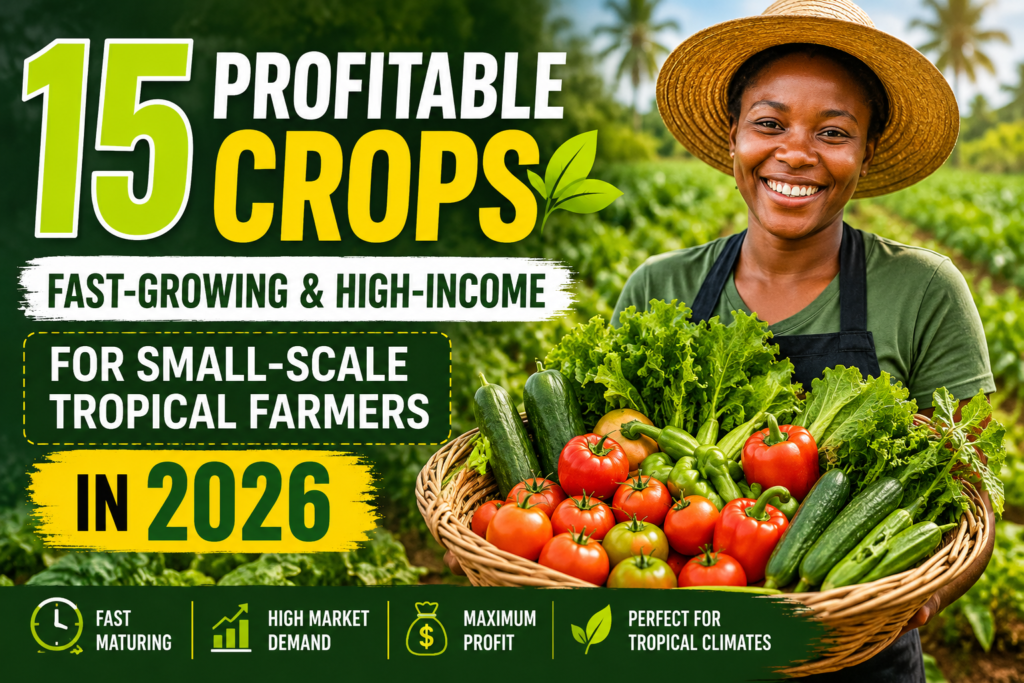
Profitable Crops
Agriculture has always been one of the most reliable ways to build wealth, create food security, and generate sustainable income. However, for many small-scale farmers across Africa, Asia, the Caribbean, and other tropical regions, success often depends on one critical decision: choosing the right crop.
Not every crop is worth planting. Some require years before producing income, while others mature quickly and generate profits within a few months. In 2026, changing consumer preferences, rising food demand, climate adaptation efforts, and expanding local markets are creating exciting opportunities for farmers who choose wisely.
The good news is that tropical climates offer a natural advantage. Warm temperatures, abundant sunlight, and long growing seasons enable the cultivation of a wide range of profitable crops year-round.
This guide explores the most profitable fast-growing crops for small-scale farmers in tropical climates. These crops have been selected based on growth rate, market demand, adaptability, ease of cultivation, and income potential.
Whether you are starting your first farm or looking to diversify your existing operation, these crops could help you increase productivity and maximize profits in 2026 and beyond.

Why Profitable Crops Matter in Tropical Farming
Tropical farming presents tremendous opportunities, but profitability depends heavily on crop selection.
The ideal crop should:
- Mature quickly
- Require manageable investment
- Have consistent market demand
- Offer good profit margins
- Thrive in tropical conditions
- Resist common pests and diseases
Fast-growing crops allow farmers to recover their investments sooner and reinvest profits into expanding their operations.
In an era where food prices continue to fluctuate, choosing high-demand cash crops can mean the difference between a struggling farm and a thriving agricultural business.
Fast-Growing Crops Comparison Table for Tropical Farming
| Crop | Maturity Period | Profit Potential | Market Demand | Suitable for Small Farms |
|---|---|---|---|---|
| Okra | 45-60 Days | High | High | Excellent |
| Lettuce | 30-45 Days | High | High | Excellent |
| Spinach | 30-40 Days | High | High | Excellent |
| Cucumber | 50-70 Days | High | High | Excellent |
| Pepper | 70-90 Days | Very High | Very High | Excellent |
| Tomatoes | 70-100 Days | Very High | Very High | Excellent |
| Watermelon | 80-100 Days | High | High | Excellent |
| Green Beans | 50-60 Days | High | High | Excellent |
| Sweet Corn | 70-90 Days | Moderate-High | High | Good |
| Eggplant | 80-100 Days | High | High | Excellent |
| Cassava | 6-12 Months | Very High | Very High | Excellent |
| Sweet Potato | 3-5 Months | High | High | Excellent |
| Ginger | 8-10 Months | Very High | High | Excellent |
| Turmeric | 8-10 Months | High | Growing | Excellent |
| Amaranth | 25-35 Days | High | High | Excellent |
Profitable Crops #1: Okra – A Reliable Tropical Farming Cash Crop
Okra remains one of the most profitable crops for tropical farmers.
Why farmers love it:
- Quick maturity
- Continuous harvesting
- Low startup costs
- Strong local demand
Most varieties begin producing within 45 to 60 days after planting. Once harvesting begins, farmers can continue collecting pods for several weeks.
Restaurants, households, and food processors consistently purchase okra, ensuring a steady market.
Profitable Crops #2: Lettuce – One of the Fast-Growing Crops with Quick Returns
Lettuce is among the fastest-growing crops available today.
Benefits include:
- Harvest within 30-45 days
- High urban demand
- Suitable for small spaces
- Excellent for intensive farming
Hotels, restaurants, supermarkets, and health-conscious consumers continue to drive demand for fresh lettuce.
Profitable Crops #3: Spinach – A High-Income Crop for Small Farms
Spinach has become increasingly profitable due to rising interest in healthy eating.
Advantages:
- Fast growth cycle
- Multiple harvest opportunities
- Nutrient-rich product
- Growing demand in urban markets
Farmers can often begin harvesting spinach within one month.
Profitable Crops #4: Cucumbers – Fast-Maturing Crops with High Market Demand in 2026
Cucumbers continue to enjoy strong demand from consumers and food businesses.
Reasons for profitability:
- High yield potential
- Relatively short maturity period
- Fresh market demand
- Processing opportunities
Many farmers harvest cucumbers within 50 to 70 days after planting.
Profitable Crops #5: Hot Pepper – One of the Best Cash Crops to Grow in Tropical Regions for Quick Profit
Pepper farming remains one of the most lucrative agricultural ventures.
Key advantages:
- Strong local demand
- Export opportunities
- Long harvesting period
- Excellent market prices
Hot pepper is widely used across Africa, Asia, and Latin America, ensuring year-round demand.
Profitable Crops #6: Tomatoes – The King of Tropical Cash Crops
Few crops can match the market demand enjoyed by tomatoes.
Tomatoes are essential ingredients in countless dishes and food products.
Benefits include:
- Massive market demand
- Multiple sales channels
- High profit margins
- Value-added opportunities
Despite requiring careful management, tomatoes remain one of the most rewarding crops for small-scale farmers.
Profitable Crops #7: Watermelon – A Seasonal Favorite with Strong Profits
Watermelon production can generate impressive profits during peak seasons.
Why farmers grow watermelon:
- Attractive market prices
- Strong consumer demand
- High yields
- Suitable for tropical climates
Consumers increasingly seek refreshing fruits, particularly during hot weather.
Profitable Crops #8: Green Beans – Fast-Growing Crops for Continuous Income
Green beans are ideal for farmers seeking regular harvests.
Advantages include:
- Rapid growth
- Export potential
- Consistent demand
- Relatively low maintenance
Harvesting often begins within two months.
Profitable Crops #9: Sweet Corn – A Versatile Cash Crop
Sweet corn remains popular among consumers and food vendors.
Key reasons for profitability:
- Strong demand
- Diverse market opportunities
- Quick maturity
- Easy cultivation
Fresh corn, roasted corn, and processed products all create additional income streams.
Profitable Crops #10: Eggplant – A Consistently Profitable Tropical Farming Crop
Eggplant thrives exceptionally well in tropical conditions.
Benefits include:
- Long harvesting season
- Strong local demand
- High yields
- Adaptability to different soils
Many farmers appreciate its ability to provide income over extended periods.
Profitable Crops #11: Cassava – A High-Income Crop for Small Farms in Africa and Tropical Countries
Cassava remains a cornerstone of tropical agriculture.
Why cassava excels:
- Drought tolerance
- Food security value
- Processing opportunities
- Strong market demand
Cassava supports industries producing flour, starch, ethanol, and animal feed.
Profitable Crops #12: Sweet Potato – Fast Returns and Excellent Market Demand
Sweet potatoes continue to gain popularity worldwide.
Reasons for profitability:
- Nutritional benefits
- Growing health-conscious market
- High yields
- Multiple product uses
Farmers can often harvest within three to five months.
Profitable Crops #13: Ginger – A Premium Tropical Cash Crop
Ginger offers some of the highest returns per hectare.
Market drivers include:
- Culinary demand
- Pharmaceutical applications
- Export opportunities
- Processing potential
Global demand for ginger products continues to rise.
Profitable Crops #14: Turmeric – A Growing Star Among Fast-Growing Crops
Turmeric demand has surged due to increased interest in natural health products.
Advantages:
- Expanding international market
- High value per kilogram
- Processing opportunities
- Strong profitability potential
Farmers entering turmeric production today may benefit from growing market demand.
Profitable Crops #15: Amaranth – The Underrated Fast-Maturing Crop
Amaranth deserves far more attention than it receives.
Benefits include:
- Extremely fast growth
- Nutritional value
- High local demand
- Low production costs
Many varieties mature in just 25 to 35 days.
How to Choose the Most Profitable Fast-Growing Crops for Small-Scale Farmers in Tropical Climates
Before planting any crop, evaluate:
Market Demand
Research local markets and identify products buyers consistently purchase.
Climate Suitability
Choose crops adapted to local rainfall patterns and temperatures.
Production Costs
Calculate expenses carefully before investing.
Harvest Frequency
Crops with multiple harvests often provide better cash flow.
Storage Requirements
Consider post-harvest handling and storage needs.
Common Mistakes That Reduce Farm Profits
Many farmers lose money because they:
- Plant without market research
- Ignore soil testing
- Overuse fertilizers
- Neglect pest management
- Depend on a single crop
- Fail to keep financial records
Avoiding these mistakes can significantly improve profitability.
Sustainable Tropical Farming Practices for Higher Yields
Modern successful farmers increasingly embrace sustainable practices.
Examples include:
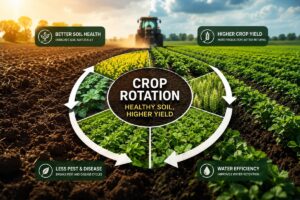
- Crop rotation
- Composting
- Mulching
- Drip irrigation
- Integrated pest management
- Agroforestry
These methods improve soil health and reduce production costs over time.
The Future of Profitable Crops Beyond 2026
Several trends are shaping the future of tropical farming:
- Rising demand for healthy foods
- Growth of organic agriculture
- Expansion of food processing industries
- Climate-smart farming adoption
- Increased export opportunities
Farmers who adapt to these trends will likely enjoy stronger profitability throughout 2027 and beyond.
For further reading on tropical agriculture and crop profitability, visit:
- Food and Agriculture Organization (FAO): https://www.fao.org
- International Institute of Tropical Agriculture (IITA): https://www.iita.org

How to Sell Farm Produce for Better Income in Tropical Agriculture
Growing crops is only part of the journey—selling them effectively is what ultimately determines a farmer’s income. Many small-scale farmers struggle not because they lack good harvests, but because they do not have a clear approach to reaching buyers or getting fair prices.
A good starting point is understanding demand before planting. Farmers who take time to study local markets, talk to buyers, and observe price patterns often make better decisions about what to grow. This simple step helps avoid overproduction of crops that may not sell well at harvest time.
Another important factor is choosing the right selling channels. Instead of relying on a single market, farmers can explore multiple options such as local traders, restaurants, roadside vendors, and direct consumer sales. Each channel has its own advantages depending on the type of produce and timing.
Adding value to raw produce can also make a significant difference. Simple processes like cleaning, packaging, drying, or processing crops into semi-finished goods can increase their market value and reduce post-harvest losses.
Timing is equally important. Prices for agricultural products often fluctuate based on season, weather conditions, and supply levels. Farmers who understand when demand is high can sell at better prices without increasing production costs.
In today’s farming environment, communication and relationships matter just as much as production. Farmers who build trust with regular buyers often secure repeat sales and more stable income over time.
Ultimately, successful farm marketing is about planning ahead, understanding the market, and being flexible enough to adjust when conditions change.
According to the Food and Agriculture Organization (FAO), post-harvest losses can reach up to 30–40% in developing agricultural systems, especially where storage and processing are limited. Improving value chains is therefore essential for maximizing returns.
Reference: https://www.fao.org/food-loss-and-food-waste/en/
Timing the Market for Best Cash Crops to Grow in Tropical Regions for Quick Profit
Timing plays a critical role in maximizing income from Best cash crops to grow in tropical regions for quick profit.
Smart farmers observe:
- Planting seasons of competitors
- Market saturation periods
- Festive seasons (when demand spikes)
- Weather conditions affecting supply
For example:
- Vegetable prices often rise during dry seasons when supply is limited.
- Fruits like watermelon and cucumber may fetch higher prices during hot months.
A well-timed harvest can increase profit margins by 20–60% without changing production costs.
Using Digital Tools to Sell Profitable Crops
Modern Tropical Farming is increasingly influenced by digital platforms. Farmers who embrace technology often gain access to wider and more profitable markets.
Digital tools include:
- WhatsApp groups for local buyers
- Facebook Marketplace for direct sales
- Agricultural e-commerce platforms
- Price tracking apps
According to the World Bank, digital agriculture tools are improving smallholder farmer incomes by connecting them directly to buyers and reducing dependence on middlemen.
Reference: https://www.worldbank.org/en/topic/agriculture
Building Strong Buyer Relationships
Long-term success in selling Profitable Crops depends heavily on trust and consistency.
Farmers should aim to:
- Deliver consistent quality produce
- Maintain reliable supply schedules
- Communicate regularly with buyers
- Avoid sudden price fluctuations for loyal customers
Strong relationships with buyers often lead to:
- Pre-booked harvests
- Better pricing agreements
- Reduced market risk
Key Takeaway
Marketing is not an optional skill in modern Fast-Growing Crops production—it is a core part of profitability. Farmers who understand demand, diversify their sales channels, add value to their crops, and use digital tools are far more likely to succeed in Tropical Farming.
In simple terms:
Growing crops fills the basket, but marketing fills the wallet.
By applying these strategies, small-scale farmers can transform Cash Crops into sustainable and scalable income sources, even on limited land.

Best Crops for Small-Scale Farmers With Limited Land
Many small-scale farmers assume that having less than one acre of land limits their earning potential, but this is far from the truth. With the right crop choices and proper management, even a small piece of land can generate consistent income throughout the year.
Instead of focusing on large-scale staple production, farmers can concentrate on high-value plants that grow quickly and produce frequent harvests. Leafy vegetables such as spinach and amaranth, for example, can be harvested multiple times within a short period, making them ideal for intensive cultivation. Similarly, crops like okra and peppers continue producing over time, offering a steady flow of income rather than a one-time harvest.
Small land farming becomes even more productive when combined with smart techniques such as intercropping, raised beds, and drip irrigation. These methods help maximize space, improve soil health, and reduce water waste while increasing overall yield.
Another important factor is market targeting. Farmers with limited land often benefit more by selling directly to local consumers, restaurants, and small vendors rather than relying on bulk buyers. This helps them earn better margins from smaller harvests.
Ultimately, success in small-scale farming is not determined by land size but by how efficiently the land is used. With careful planning and the right crop selection, even a small farm can become a reliable and profitable source of income.
According to the International Institute of Tropical Agriculture (IITA), vegetable-based farming systems are becoming more important for food security and income generation in tropical regions.
Reference: https://www.iita.org
Insight
Small-scale farmers should not view limited land as a limitation. Instead, it should be seen as an opportunity to focus on precision farming, high-value crops, and efficient production systems.
By choosing the right Cash Crops, applying smart farming techniques, and targeting strong market channels, even less than one acre of land can become a powerful source of income.
In today’s Tropical Farming landscape, success is no longer about land size—it is about strategy, crop selection, and execution.
Conclusion
The most successful small-scale farmers understand that profitability begins with crop selection.
Okra, lettuce, spinach, cucumbers, peppers, tomatoes, watermelon, green beans, sweet corn, eggplant, cassava, sweet potatoes, ginger, turmeric, and amaranth all offer strong opportunities for generating income in tropical regions.
Each crop brings unique advantages, but they share one important characteristic: strong market demand combined with favorable growing conditions in tropical climates.
As food demand continues rising across Africa and other tropical regions, farmers who focus on fast-growing crops, monitor market trends, and adopt modern farming practices will be well-positioned to thrive.
The future of tropical farming is bright, and the right crop choice today could become the foundation of a profitable agricultural enterprise tomorrow.
Conclusion: The Future of Profitable Crops in Tropical Farming
In today’s rapidly changing agricultural landscape, one truth remains constant—farming success is no longer determined by land size alone, but by knowledge, strategy, and adaptability. For small-scale farmers in tropical regions, the opportunity to build a stable and profitable livelihood has never been more achievable than it is today.
The rise of Profitable Crops that grow quickly, adapt well to tropical climates, and meet strong market demand is reshaping the way farming is practiced. Farmers are no longer limited to traditional long-season staples; instead, they now have access to a wide range of Fast-Growing Crops that can generate income within weeks or months. This shift is creating new pathways for financial independence, especially in rural communities where agriculture remains the backbone of survival.
As explored throughout this guide, success in Tropical Farming depends on more than just planting seeds. It requires careful planning, understanding market trends, selecting the right Cash Crops, and adopting modern farming techniques that maximize both yield and efficiency. Farmers who learn to combine production with smart marketing strategies are the ones most likely to thrive in competitive markets.
Another important takeaway is that small-scale farming should never be underestimated. Even less than one acre of land, when properly managed, can become a powerful income-generating system. By focusing on high-demand vegetables, herbs, and root crops, farmers can enjoy continuous harvest cycles and steady cash flow throughout the year. This proves that agricultural success is not reserved for large commercial farms alone—it is equally achievable at the smallholder level.
Looking ahead, the demand for High-income crops for small farms in Africa and tropical countries is expected to continue rising due to population growth, urbanization, and increased awareness of healthy eating. At the same time, climate change is pushing farmers toward more resilient and adaptable crop choices, making fast-maturing and drought-tolerant plants even more valuable.
Ultimately, the path to success lies in making informed decisions. Farmers who stay updated on market trends, invest in soil health, embrace modern farming techniques, and diversify their crops will be better positioned to succeed in the evolving agricultural economy.
The future of farming is bright—but it belongs to those who are willing to learn, adapt, and act strategically. With the right approach, Profitable Crops are not just a farming choice; they become a long-term pathway to financial stability, food security, and sustainable growth for generations to come.
About The Author