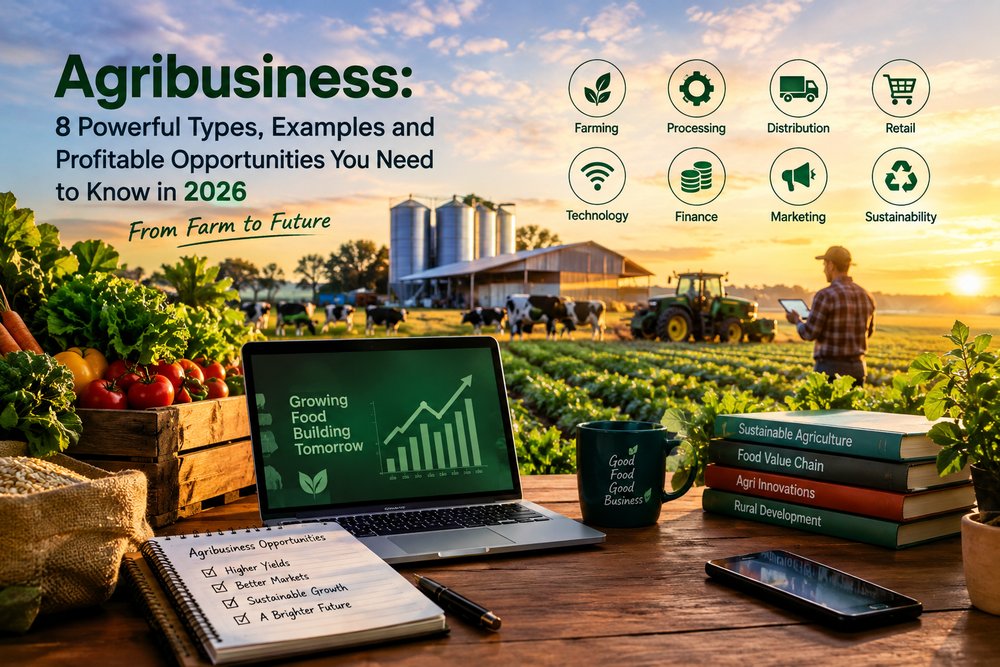
Agribusiness
Agribusiness: What Does It Really Mean in 2026?
When most people hear the word agribusiness, they immediately think about farming. They picture someone planting maize, raising chickens, harvesting vegetables or keeping cattle.
But that picture is only one small part of the story.
Modern agribusiness is much bigger.
It includes the businesses that supply farmers with seeds, fertilizer, machinery, animal feed and technology. It includes farmers who produce crops and livestock. It includes processors that turn cassava into flour, tomatoes into paste, milk into dairy products and cocoa beans into chocolate. It also includes transportation companies, storage providers, wholesalers, retailers, exporters, financial institutions, insurance providers, technology companies and other businesses that help agricultural products move from the farm to the final consumer.
The Food and Agriculture Organization of the United Nations describes agribusiness broadly as covering input suppliers, agro-processors, traders, exporters and retailers, with a strong emphasis on commercialization, value addition and connections across the agricultural sector. (FAOHome)
That wider definition is important because agriculture is no longer simply about producing food.
It is also about creating value.
A farmer who grows cassava creates one kind of value. A processor who turns that cassava into high-quality flour creates another. A logistics company that transports the flour creates another. A supermarket that places the finished product in front of consumers creates another.
All of these activities can form part of the same agricultural business ecosystem.
And that is why understanding what agribusiness is and how it works matters so much in 2026.
The global agricultural economy is entering a period in which productivity, technology, investment, market access, processing and resilient supply chains are becoming increasingly important. The latest OECD–FAO Agricultural Outlook 2026–2035 projects global agricultural and fisheries production to expand by about 13% over the next decade, with much of the growth concentrated in Asia, Sub-Saharan Africa and Latin Americ
For entrepreneurs, farmers, investors, students and anyone interested in agriculture, this creates an important question:
Where exactly are the opportunities?
To answer that, we need to look beyond the farm.

Agribusiness: What Is Agribusiness and How Does It Work?
Agribusiness can be defined as the network of businesses and economic activities involved in producing, supplying, processing, distributing, marketing and selling agricultural products and services.
In simple terms:
Agribusiness is agriculture connected to business.
It brings together everything that happens before, during and after agricultural production.
Think about a loaf of bread.
The process does not begin when the bread reaches a supermarket.
It may begin with:
- A company producing improved wheat seeds.
- A farmer purchasing those seeds.
- A fertilizer company supplying farm inputs.
- A machinery company supplying tractors or harvesting equipment.
- A farmer producing wheat.
- A trader purchasing the harvested wheat.
- A storage company keeping the grain safely.
- A milling company processing wheat into flour.
- A bakery purchasing the flour.
- A logistics company transporting bread.
- A retailer selling the bread.
- A consumer purchasing it.
Every stage represents economic activity.
That is agribusiness.
The important lesson is that you do not necessarily need to own a large farm to participate in agriculture.
Someone can build a successful agricultural business by solving problems at any stage of the value chain.
For example, a person who provides cold storage for vegetables may be operating an agribusiness even though they never plant a single vegetable.
Likewise, a person who develops software for farm management is participating in agribusiness.
This broader understanding opens the door to thousands of possible business models.
Agribusiness: How the Agricultural Value Chain Works
To understand agribusiness properly, it helps to understand the agricultural value chain.
The value chain describes the sequence of activities through which agricultural inputs are transformed into products and eventually reach consumers.
A simplified agricultural value chain looks like this:
Inputs → Production → Aggregation → Processing → Storage → Transportation → Marketing → Retail → Consumer
Each stage creates an opportunity for businesses.
Agribusiness: Inputs
Inputs are the resources farmers need to produce agricultural goods.
Examples include:
- Seeds
- Fertilizers
- Animal feed
- Veterinary products
- Farm equipment
- Irrigation systems
- Pesticides
- Greenhouse materials
- Farm technology
- Packaging materials
Input businesses can be particularly important because farmers cannot produce efficiently without access to appropriate inputs.
Agribusiness: Production
Production is the stage most people associate with farming.
It includes:
- Crop farming
- Livestock farming
- Poultry farming
- Fish farming
- Aquaculture
- Horticulture
- Forestry
- Beekeeping
This is where biological production takes place.
However, successful production is not simply about putting seeds in the soil or raising animals.
A commercial farmer must think about:
- Production costs
- Yield
- Quality
- Market demand
- Timing
- Labor
- Financing
- Risk
- Storage
- Pricing
- Distribution
That is why farming itself can be considered a business rather than merely a production activity.
Agribusiness: Aggregation
Small farmers may produce relatively small quantities individually.
An aggregator purchases or collects products from multiple farmers and combines them into a larger volume.
For example, an agricultural aggregator might collect:
- 10 tonnes of cassava from several farmers.
- 20 tonnes of maize from different producers.
- Hundreds of crates of eggs from poultry farmers.
- Large quantities of tomatoes from vegetable growers.
Aggregation makes it easier to supply processors, wholesalers, exporters and large retailers.
Agribusiness: Processing
Processing is one of the most important ways to add value to agricultural products.
Instead of selling raw products, businesses transform them into products that may have a longer shelf life, higher value or greater convenience.
Examples include:
- Cassava → Garri or flour
- Maize → Flour or animal feed
- Cocoa → Chocolate products
- Milk → Cheese or yogurt
- Tomatoes → Paste
- Groundnuts → Peanut butter or oil
- Soybeans → Soy products or oil
- Fruits → Juice or dried fruit
- Palm fruit → Palm oil
- Rice paddy → Milled rice
Processing can therefore create opportunities beyond primary farming.
Agribusiness: Storage
Agricultural products are often seasonal and perishable.
Storage businesses help reduce losses and make it possible to hold products until the market is ready for them.
Examples include:
- Grain warehouses
- Cold rooms
- Refrigerated storage
- Silos
- Fruit and vegetable storage
- Egg storage
- Meat storage
Good storage can improve farmers’ bargaining power because they may not be forced to sell immediately after harvest simply because they lack somewhere safe to keep their products.
Agribusiness: Transportation
Agricultural products have to move.
That creates opportunities for:
- Trucks
- Refrigerated vehicles
- Delivery services
- Farm-to-market logistics
- Bulk transportation
- Export logistics
- Last-mile delivery
Transportation becomes especially important for products that are perishable or sensitive to temperature and handling.
Agribusiness: Marketing and Retail
The final stages involve connecting agricultural products with consumers.
This may include:
- Supermarkets
- Restaurants
- Food distributors
- Online marketplaces
- Agricultural wholesalers
- Exporters
- Local markets
- Food delivery companies
This demonstrates why agribusiness is much broader than farming.
Agribusiness: 8 Powerful Types With Examples
There are many ways to classify agribusiness, but eight broad categories provide a useful framework for understanding the sector.
1. Agribusiness: Agricultural Input Business
Input businesses provide farmers with the materials and services needed to produce agricultural goods.
Examples include:
- Seed companies
- Fertilizer dealers
- Animal feed businesses
- Farm equipment suppliers
- Irrigation equipment companies
- Agrochemical retailers
- Veterinary supply businesses
A small agricultural input shop can therefore be an agribusiness.
The opportunity comes from solving a basic problem:
Farmers need reliable access to quality inputs.
However, successful input businesses must pay attention to product quality, farmer education, inventory management and seasonal demand.
2. Agribusiness: Crop Production Business
Crop production is one of the most recognizable types of agribusiness.
Farmers grow crops for food, livestock feed, processing or industrial uses.
Examples include:
- Maize farming
- Rice farming
- Cassava farming
- Wheat farming
- Soybean farming
- Tomato farming
- Pepper farming
- Vegetable farming
- Cocoa farming
- Oil palm production
A crop farm becomes a true farm business when production decisions are guided by commercial considerations.
For example, a farmer should know:
- How much it costs to produce one hectare.
- Expected yield.
- Expected selling price.
- Labor requirements.
- Input costs.
- Transportation costs.
- Storage requirements.
- Potential buyers.
- Risks associated with weather and market prices.
The difference between simply farming and running a farm business often comes down to planning.
3. Agribusiness: Livestock and Animal Production
Livestock agribusiness involves raising animals for food, breeding, processing or other commercial purposes.
Examples include:
- Poultry farming
- Cattle farming
- Goat farming
- Sheep farming
- Pig farming
- Dairy farming
- Snail farming
- Rabbit farming
- Beekeeping
Livestock businesses also create secondary opportunities.
A poultry farmer may generate revenue from eggs and meat while another business may provide feed, veterinary services, cages, transportation or processing.
This creates an interconnected ecosystem.
4. Agribusiness: Fisheries and Aquaculture Business
Fish production is another important agricultural business category.
Aquaculture involves raising aquatic organisms under controlled conditions.
Examples include:
- Catfish farming
- Tilapia farming
- Shrimp farming
- Fish hatcheries
- Fish feed production
- Fish processing
- Cold storage
- Fish distribution
The business does not have to stop at fish production.
A fish farmer may also create value through:
- Smoked fish
- Frozen fish
- Filleted fish
- Packaged fish
- Fish delivery
- Fish feed
- Fingerling production
This is a good illustration of how agribusiness opportunities can exist around the same agricultural product.
5. Agribusiness: Agricultural Processing Business
Processing is one of the most powerful areas of agribusiness because it adds value to raw agricultural commodities.
A processing business can turn a low-value or highly perishable product into something that is easier to transport, store, brand and sell.
Examples include:
- Cassava processing
- Rice milling
- Palm oil processing
- Fruit processing
- Tomato processing
- Meat processing
- Grain milling
- Dairy processing
- Cocoa processing
Consider tomatoes.
A farmer may have difficulty selling a large quantity of fresh tomatoes before they spoil.
A processor could transform them into:
- Tomato paste
- Tomato sauce
- Dried tomatoes
- Packaged tomato products
The processor is creating additional value while solving a storage and market problem.
6. Agribusiness: Agricultural Logistics and Distribution
Agriculture depends heavily on movement.
Farm inputs have to reach farmers, while harvested products must reach buyers.
Agricultural logistics businesses can provide:
- Trucking
- Warehousing
- Cold-chain services
- Farm collection
- Distribution
- Packaging
- Export logistics
- Delivery services
This sector can be particularly attractive where poor transportation or storage causes large losses.
A logistics company does not need to own farmland.
Instead, it makes money by helping other agricultural businesses move products more efficiently.
7. Agribusiness: Agricultural Technology Business
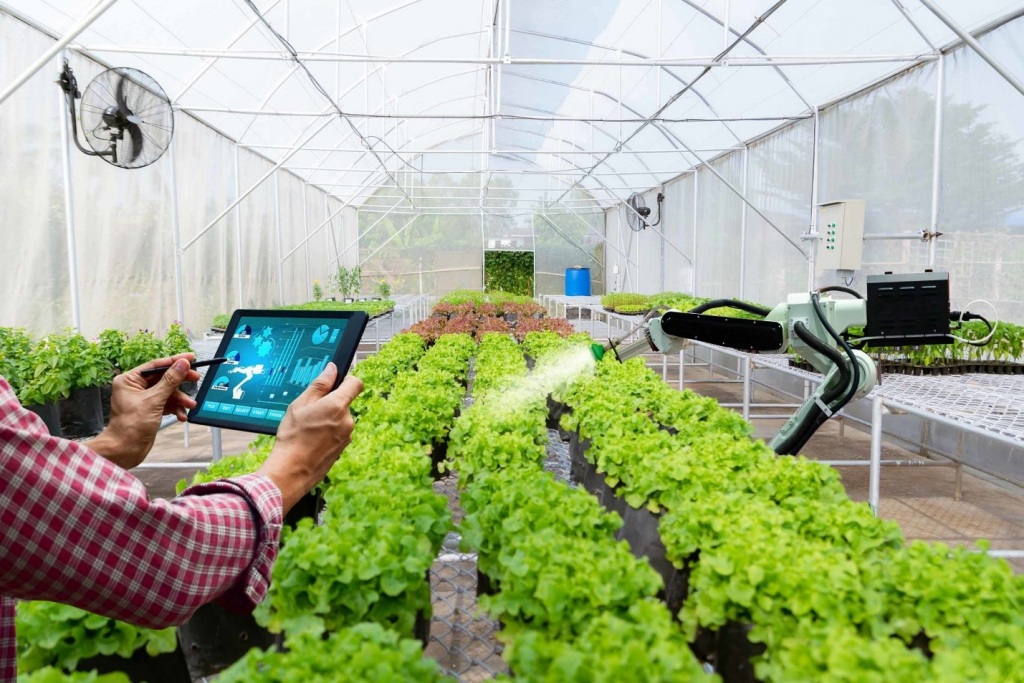
Technology is increasingly becoming part of modern agricultural business.
Agricultural technology, often called AgTech, uses digital tools and technology to improve farming and agricultural value chains.
Examples include:
- Farm management software
- Digital marketplaces
- Precision agriculture
- Weather applications
- Soil monitoring
- Irrigation technology
- Drones
- Satellite imagery
- Smart sensors
- Digital payments
- Agricultural data platforms
Technology can help farmers make better decisions about planting, irrigation, inputs, harvesting and marketing.
It can also connect farmers with buyers and financial services.
The opportunity is particularly interesting because technology can address agricultural problems without requiring entrepreneurs to become farmers themselves.
8. Agribusiness: Agricultural Finance and Services
Agriculture requires money.
Farmers need capital to purchase inputs, hire workers, buy machinery and transport products.
Businesses can therefore provide financial and professional services to agricultural enterprises.
Examples include:
- Agricultural loans
- Crop insurance
- Livestock insurance
- Farm accounting
- Agricultural consulting
- Investment services
- Financial technology
- Farm management services
- Market research
Agricultural finance is particularly important because farmers often face a mismatch between when they spend money and when they receive income.
A farmer may spend money planting a crop months before harvesting and selling it.
Access to appropriate finance can help bridge that gap.
Agribusiness: Types of Agribusiness With Examples at a Glance
| Type of Agribusiness | What It Does | Examples | Potential Customers |
|---|---|---|---|
| Agricultural Inputs | Supplies production materials | Seeds, fertilizer, feed | Farmers |
| Crop Production | Produces crops | Rice, maize, cassava | Traders, processors, consumers |
| Livestock | Produces animal products | Poultry, cattle, goats | Consumers, processors |
| Fisheries | Produces aquatic products | Catfish, tilapia | Consumers, restaurants |
| Processing | Adds value to raw products | Flour, oil, paste | Retailers, consumers |
| Logistics | Moves and stores products | Trucks, warehouses | Farmers, processors |
| AgTech | Uses technology to solve problems | Farm apps, sensors | Farmers, agribusinesses |
| Finance & Services | Provides capital and expertise | Loans, insurance, consulting | Farmers, businesses |
Agribusiness: Why Is Agribusiness Important in Agriculture?
The importance of agribusiness in agriculture goes far beyond making money.
A strong agribusiness ecosystem can influence employment, food security, rural development, industrialization, trade and innovation.
Agribusiness Creates Jobs
Agriculture can create employment directly and indirectly.
A single agricultural value chain may require:
- Farmers
- Farm workers
- Drivers
- Processors
- Engineers
- Veterinarians
- Agronomists
- Accountants
- Marketers
- Retailers
- Software developers
- Financial professionals
This means agricultural development can create employment outside the farm itself.
The World Bank noted in 2026 that agribusiness is among the job-rich sectors capable of attracting private capital in Africa, alongside areas such as energy, infrastructure, health, digital services, finance and trade. (World Bank)
Agribusiness Improves Food Availability
Farmers produce food, but production alone is not enough.
Food must also be:
- Stored
- Processed
- Transported
- Distributed
- Sold
If these systems are weak, food can be lost before reaching consumers.
Strong agribusiness networks can therefore help connect production with consumption.
Agribusiness Adds Value
Selling raw agricultural products can sometimes produce lower margins than selling processed or branded products.
For example:
Fresh cassava → processed flour → packaged branded flour
Each additional stage can potentially create more value.
However, value addition also requires additional capital, skills, equipment and market knowledge.
Agribusiness Supports Rural Economies
Agricultural businesses can create demand for:
- Transportation
- Construction
- Packaging
- Equipment
- Financial services
- Retail
- Communications
This creates economic activity around farming communities.
Agribusiness Encourages Innovation
When agricultural problems become business opportunities, entrepreneurs have stronger incentives to develop solutions.
Examples include:
- Better irrigation
- Improved storage
- Digital marketplaces
- Agricultural insurance
- Efficient machinery
- Better packaging
- Processing equipment
- Farm management technology
Innovation can therefore make agriculture more productive and competitive.
Agribusiness: Why 2026 Is an Important Year for Agricultural Business
The agricultural economy is facing both opportunities and challenges.
The latest OECD–FAO Agricultural Outlook 2026–2035 expects global agricultural and fisheries production to grow by 13% over the next decade, driven primarily by productivity improvements and intensification. The report also expects agricultural labour productivity and average gross agricultural income per worker to rise, although significant risks remain. (OECD)
This matters because agriculture is not operating in isolation.
Businesses are responding to:
- Population growth
- Urbanization
- Changing diets
- Climate pressures
- Higher input costs
- Technology adoption
- Food security concerns
- Supply-chain disruptions
- Consumer demand for convenience
- Growing demand for processed foods
At the same time, agricultural markets remain volatile.
The OECD–FAO outlook estimates a 25% probability that agricultural income per worker in 2035 could be lower than current levels if historical volatility continues. (OECD)
Therefore, the lesson for entrepreneurs is not simply:
“Agriculture is profitable.”
The better lesson is:
“Agriculture contains opportunities, but profitable agribusiness requires good management, market knowledge and risk control.”
Agribusiness: 8 Profitable Opportunities You Need to Know in 2026
Not every agricultural business requires millions in capital.
Some opportunities can begin at a small scale and grow over time.
1. Agribusiness: Agricultural Input Distribution
Farmers need inputs every production season.
An entrepreneur can specialize in distributing:
- Seeds
- Fertilizer
- Animal feed
- Irrigation supplies
- Farm tools
- Poultry equipment
The key is not simply selling products.
A successful input business should build trust by supplying genuine products and helping customers understand how to use them correctly.
2. Agribusiness: Food Processing
Food processing remains an attractive area because it creates value from agricultural commodities.
Potential businesses include:
- Cassava flour
- Garri processing
- Rice milling
- Palm oil processing
- Fruit juice
- Dried vegetables
- Spices
- Groundnut products
- Animal feed
- Packaged agricultural foods
Processing businesses should begin with market research.
Before buying expensive equipment, ask:
Who will buy the finished product?
That question can save an entrepreneur from investing heavily in a product that has little market demand.
3. Agribusiness: Cold Storage
Perishable products can lose value quickly.
Cold storage can support businesses dealing with:
- Fish
- Meat
- Fruits
- Vegetables
- Dairy
- Poultry products
A cold-storage business can generate revenue by charging customers to store products.
The business model becomes especially useful in areas where farmers and traders struggle to preserve products.
4. Agribusiness: Farm-to-Market Logistics
Transportation is an unavoidable part of agriculture.
Entrepreneurs can build businesses around:
- Farm collection
- Truck rental
- Refrigerated transportation
- Produce delivery
- Agricultural distribution
Digital systems can make this even more efficient by connecting farmers with available transportation.
5. Agribusiness: Digital Agricultural Marketplace
Technology creates another route into agriculture.
A digital marketplace could connect:
Farmers → buyers
Instead of farmers searching individually for buyers, a platform could help businesses discover available products.
Possible customers include:
- Restaurants
- Supermarkets
- Food processors
- Wholesalers
- Exporters
- Institutional buyers
The challenge is building trust, verifying product quality and ensuring reliable delivery.
6. Agribusiness: Agricultural Consulting
Farmers and agricultural businesses often need specialized knowledge.
A consultant could provide services in:
- Farm planning
- Crop production
- Livestock management
- Farm accounting
- Marketing
- Business planning
- Agricultural investment
- Digital agriculture
The advantage of consulting is that the business can be knowledge-based rather than equipment-heavy.
7. Agribusiness: Animal Feed Production
Feed is one of the most important operating costs in livestock and poultry production.
Businesses can produce or distribute feed for:
- Poultry
- Fish
- Cattle
- Goats
- Pigs
- Rabbits
The opportunity comes from supplying reliable, appropriately formulated feed.
Quality control is critical because poor feed can reduce animal growth and profitability.
8. Agribusiness: Agricultural Packaging
Packaging is sometimes overlooked when people think about agricultural businesses.
Yet packaging affects:
- Product protection
- Shelf life
- Transportation
- Branding
- Consumer perception
- Retail presentation
Businesses can provide packaging solutions for:
- Grains
- Fruits
- Vegetables
- Processed foods
- Spices
- Meat
- Fish
- Dairy products
This demonstrates an important principle:
You can participate in agriculture by solving a problem around the product, not necessarily by producing the product.
Agribusiness: Agriculture Business vs Agricultural Business vs Farm Business
The terms agriculture business, agricultural business and farm business are often used interchangeably, but there are subtle differences.
Agribusiness
The broadest term.
It can include:
- Inputs
- Farming
- Processing
- Finance
- Transportation
- Marketing
- Retail
- Technology
Agriculture Business
This phrase generally refers to a business connected with agriculture.
It may describe both farming and related activities.
Agricultural Business
This is another broad expression covering commercial activities connected with agricultural production and value chains.
Farm Business
This usually focuses more specifically on the commercial operation of a farm.
For example:
- A maize farm is a farm business.
- A fertilizer distributor is an agribusiness.
- A company processing maize into flour is an agribusiness.
- A company transporting maize is an agribusiness.
So, farm business is part of the wider agribusiness ecosystem.
What Makes an Agricultural Business Profitable?
Starting an agricultural business does not automatically make it profitable.
Profitability depends on how well the entrepreneur manages several factors.
Market Demand
Do customers actually want the product?
This should be one of the first questions asked.
Production Costs
Know the full cost of doing business.
This may include:
- Land
- Labor
- Seeds
- Fertilizer
- Feed
- Electricity
- Fuel
- Transportation
- Packaging
- Equipment
- Rent
- Marketing
- Financing
Selling Price
A product may sell well but still produce little profit if costs are too high.
Product Quality
Customers return to businesses that consistently provide good-quality products.
Market Access
Producing something is not the same as selling it.
An entrepreneur needs reliable routes to market.
Cash Flow
A profitable business can still fail if it runs out of cash.
This is particularly important in agriculture because production cycles can take months.
Risk Management
Agriculture faces risks from:
- Weather
- Disease
- Pests
- Price fluctuations
- Input costs
- Transportation disruptions
- Market changes
- Policy changes
A good agricultural business plans for uncertainty rather than assuming everything will go according to plan.
Agribusiness: The Biggest Mistakes New Entrepreneurs Make
Agricultural entrepreneurship can be rewarding, but beginners often make predictable mistakes.
Mistake 1: Choosing a Business Because It Is Trending
A business can be popular and still be unsuitable for a particular location.
Demand should be investigated before investment.
Mistake 2: Starting Without Knowing the Customer
Many entrepreneurs focus on production first and customers later.
That approach can be dangerous.
A better question is:
Who will buy this product, how much will they buy and at what price?
Mistake 3: Ignoring Transportation Costs
Agricultural products can be bulky.
Transportation can therefore have a major effect on profitability.
Mistake 4: Ignoring Storage
Perishable products can lose value quickly.
Storage should be part of the business plan.
Mistake 5: Mixing Personal and Business Money
A farm or agricultural business should have proper financial records.
The owner should know:
- Revenue
- Expenses
- Profit
- Debts
- Inventory
- Cash flow
Mistake 6: Expanding Too Quickly
Growth is exciting, but uncontrolled expansion can create financial pressure.
It is often better to test a model on a manageable scale before expanding.
Agribusiness: How to Start an Agricultural Business in 2026
Starting an agricultural business does not have to begin with a huge investment.
The process can begin with research.
Step 1: Identify a Problem
Look around your local agricultural ecosystem.
Ask:
- What do farmers struggle to access?
- What products are frequently unavailable?
- Where are agricultural losses occurring?
- What products are expensive?
- What services are unreliable?
- What do consumers want but struggle to find?
Problems can reveal opportunities.
Step 2: Choose a Specific Agribusiness Model
Avoid starting with a vague idea such as:
“I want to do agriculture.”
Instead, define the business.
For example:
“I want to supply poultry feed to small-scale poultry farmers.”
Or:
“I want to process cassava into packaged flour.”
Specificity makes planning easier.
Step 3: Research the Market
Study:
- Customers
- Competitors
- Prices
- Demand
- Suppliers
- Distribution channels
- Seasonal patterns
Talk to potential customers before committing large amounts of money.
Step 4: Calculate the Numbers
Estimate:
- Startup cost
- Operating cost
- Expected revenue
- Gross margin
- Break-even point
- Working capital
- Emergency reserve
Do not rely solely on optimistic projections.
Step 5: Start With a Test
A pilot can reveal problems before they become expensive.
For example, instead of immediately processing 100 tonnes of a product, an entrepreneur might test a smaller production volume and study customer response.
Step 6: Build Relationships
Agribusiness is heavily relationship-driven.
Build relationships with:
- Farmers
- Suppliers
- Buyers
- Processors
- Transporters
- Financial institutions
- Extension professionals
- Retailers
Reliable relationships can become one of the strongest assets of an agricultural business.
Step 7: Track Results
Measure what happens.
Track:
- Sales
- Expenses
- Customer acquisition
- Product losses
- Inventory
- Profit
- Cash flow
Use the information to improve the business.
Why Value Addition Can Be More Important Than Production Alone
Imagine two entrepreneurs.
The first grows cassava and sells it immediately after harvest.
The second purchases cassava, processes it into a packaged food product and sells it to retailers.
Both participate in agriculture.
But the second entrepreneur has introduced additional stages of value creation.
This does not automatically mean the processor will make more money.
Processing introduces new costs and risks.
However, it demonstrates a powerful principle:
Agricultural opportunities exist at multiple points between production and consumption.
This is particularly important for countries seeking to create more jobs and reduce dependence on raw commodity exports.
Agribusiness: The Role of Technology in the Future of Agriculture
Technology is changing how agricultural businesses operate.
A farmer can increasingly use digital tools to access:
- Weather information
- Market information
- Farm records
- Financial services
- Buyers
- Agricultural advice
- Satellite information
- Digital payments
Technology can also help agribusinesses manage inventory, transportation, customer relationships and financial records.
Artificial intelligence and data-driven agriculture may further improve decision-making by helping businesses analyze large amounts of information.
But technology should not be adopted simply because it is fashionable.
The right question is:
What agricultural problem does the technology solve?
A sophisticated tool that does not solve a real business problem has little value.
A simple digital system that reduces losses, improves records or connects farmers with buyers may have enormous value.
Agribusiness: The Growing Opportunity in Africa
Africa’s agricultural sector has enormous potential, but that potential is not simply about producing more crops.
It is also about building stronger agricultural value chains.
The World Bank’s 2026 work in Africa places significant emphasis on attracting private capital into agribusiness and other job-rich sectors. It estimates that Africa’s working-age population could grow by hundreds of millions over coming decades, creating both employment pressure and opportunities for investment.
Nigeria provides a particularly relevant example.
In March 2026, the World Bank approved a $500 million project aimed at strengthening Nigeria’s agricultural value chains, improving smallholder productivity and creating jobs. The project is expected to mobilize additional private agribusiness investment and support the transition from subsistence production toward commercially oriented agriculture. (World Bank)
This reflects a broader shift.
The future of agriculture is increasingly about connecting:
Farmers + markets + finance + technology + processing + infrastructure + consumers.
That is the environment in which modern agribusiness operates.
Agribusiness: Challenges You Should Understand Before Investing
Despite its opportunities, agribusiness is not risk-free.
Climate Risk
Changes in rainfall, temperature and extreme weather can affect agricultural production.
Price Volatility
Commodity prices can rise and fall rapidly.
Input Costs
Seeds, fertilizer, feed, fuel and machinery can become more expensive.
Infrastructure
Poor roads, unreliable electricity and inadequate storage can increase costs.
Access to Finance
Many agricultural businesses need working capital but may struggle to obtain affordable financing.
Market Risk
A business can produce an excellent product and still struggle if demand is weak.
Operational Risk
Equipment failure, disease outbreaks, poor management and labor shortages can affect profitability.
This is why diversification and risk management are important.
The latest OECD–FAO outlook emphasizes that agricultural markets remain exposed to shocks and that productivity gains must be accompanied by resilience strategies. (OECD)
Agribusiness: How to Choose the Right Opportunity for You
There is no single best agribusiness for everyone.
The right opportunity depends on several factors.
Consider Your Capital
If capital is limited, consider businesses such as:
- Agricultural brokerage
- Produce aggregation
- Consulting
- Digital agricultural services
- Small-scale input distribution
- Packaging
- Farm management services
Larger capital requirements may apply to:
- Processing factories
- Large farms
- Cold-chain facilities
- Warehouses
- Large-scale livestock operations
Consider Your Skills
Someone with technology skills might explore AgTech.
Someone with financial experience might consider agricultural finance.
Someone with mechanical skills might provide equipment repair.
Someone with marketing skills might build an agricultural distribution brand.
Your existing skills can reduce the learning curve.
Consider Your Location
Location affects:
- Product availability
- Consumer demand
- Transportation
- Labor
- Infrastructure
- Climate
- Market access
A profitable opportunity in one location may not work equally well somewhere else.
Consider the Supply Chain
Ask:
Where does the product come from, and where does it go?
The answer can reveal gaps.
A supply-chain gap can become a business opportunity.

Agribusiness: What Will Define Successful Agricultural Businesses Beyond 2026?
Agribusiness will continue to evolve.
Several characteristics are likely to become increasingly important.
Efficiency
Businesses will need to produce more value while controlling costs.
Technology
Digital tools will increasingly support decision-making and operations.
Value Addition
Businesses that can transform raw products into higher-value goods may find opportunities in processing and branding.
Market Connectivity
Connecting producers with reliable buyers will remain important.
Sustainability
Agricultural businesses will increasingly need to consider resource efficiency, environmental pressures and long-term resilience.
Resilience
Businesses must prepare for unexpected disruptions.
Professional Management
Agriculture is becoming increasingly commercial.
Successful operators will need skills in:
- Accounting
- Marketing
- Operations
- Negotiation
- Technology
- Risk management
- Strategic planning
The future farmer may therefore need to think like an entrepreneur, while the future agribusiness entrepreneur may need to understand farming.
Agribusiness: Key Differences Between Farming and Agribusiness
It is useful to remember that farming and agribusiness are connected but not identical.
Farming primarily focuses on agricultural production.
Agribusiness encompasses the larger commercial ecosystem surrounding agriculture.
For example:
A farmer growing tomatoes is farming.
A company supplying tomato seeds is agribusiness.
A company transporting tomatoes is agribusiness.
A company processing tomatoes into paste is agribusiness.
A supermarket selling the tomato paste is part of the agricultural value chain.
A financial institution financing the tomato business is providing an agribusiness-related service.
Together, these activities form a system.
Agribusiness: 10 Questions to Ask Before Starting
Before investing money, ask yourself:
- Who is my customer?
- What problem am I solving?
- How large is the market?
- Who are my competitors?
- What will it cost to start?
- What will it cost to operate?
- Where will I source my products or inputs?
- How will I reach customers?
- What could cause the business to lose money?
- How can I start small and test the idea?
These questions may appear simple, but they can prevent expensive mistakes.
Frequently Asked Questions
What is agribusiness?
Agribusiness is the broad commercial sector surrounding agriculture. It includes agricultural inputs, farming, processing, storage, transportation, marketing, retail, technology, finance and other services connected to agricultural production and distribution.
What are the main types of agribusiness?
Major types include agricultural input businesses, crop production, livestock, fisheries and aquaculture, processing, logistics and distribution, agricultural technology, and agricultural finance and services.
Is farming an agribusiness?
Yes. Commercial farming can be considered part of agribusiness. However, agribusiness is broader than farming because it also includes the businesses and services operating before and after production.
What are examples of agribusiness?
Examples include seed distribution, fertilizer sales, poultry farming, rice production, fish farming, food processing, agricultural transportation, cold storage, farm technology, agricultural consulting and agricultural finance.
What is an agricultural business?
An agricultural business is a commercial enterprise connected to agriculture. It may involve farming, processing, distribution, agricultural services, technology, input supply or other activities in the agricultural value chain.
What are profitable agribusiness opportunities?
Potential opportunities include food processing, agricultural input distribution, logistics, cold storage, animal feed production, agricultural technology, produce aggregation and specialized agricultural services. Profitability depends on location, demand, costs, management and execution.
Is agribusiness profitable?
Agribusiness can be profitable, but profitability is never guaranteed. Successful businesses generally understand their customers, control costs, manage risks, maintain product quality and build reliable supply chains.
Why is agribusiness important?
Agribusiness helps connect agricultural production with markets. It can support food availability, value addition, employment, rural development, investment, processing, trade and innovation.
Can I start agribusiness without owning farmland?
Yes. You can operate businesses involving agricultural inputs, transportation, processing, storage, packaging, consulting, technology, finance, marketing or distribution without owning a farm.
What is the future of agribusiness?
The future of agribusiness is likely to involve greater technology adoption, productivity improvements, value addition, stronger supply chains, improved market access and greater attention to resilience and sustainability.
Final Thoughts on the Future of Agricultural Business
Agriculture is often described as the business of growing food.
That description is too narrow.
Agriculture is also the business of supplying inputs, moving products, creating value, solving problems, developing technology, financing production, processing commodities and connecting producers with consumers.
That is the real power of agribusiness.
The opportunity is not necessarily to become the biggest farmer.
It may be to become the person who solves an important problem around farming.
Perhaps farmers need better inputs.
Perhaps a community needs cold storage.
Perhaps processors need reliable supplies of raw materials.
Perhaps consumers need better packaged agricultural products.
Perhaps farmers need a reliable buyer.
Perhaps an agricultural business needs better digital tools.
Every problem represents a potential opportunity—but only if there is a real market willing to pay for the solution.
The 2026 agricultural outlook reinforces this broader perspective. Global production is expected to grow over the coming decade, while productivity improvements, market connectivity, technology, infrastructure and investment will remain central to the evolution of agriculture. At the same time, volatility means entrepreneurs must approach the sector with realistic financial planning and risk management. (OECD)
For Africa, the opportunity is particularly significant. Investment in agricultural value chains can potentially connect millions of producers to larger markets while creating employment and supporting food security. Nigeria’s 2026 agricultural value-chain initiatives are one example of the growing emphasis on commercializing smallholder agriculture and mobilizing private investment. (World Bank)
Ultimately, agribusiness is not simply about farming.
It is about understanding the journey from farm to market and market to consumer—and identifying where value can be created along the way.
For anyone considering an agriculture business in 2026, that may be the most important lesson of all:
Don’t only ask what you can produce. Ask what problem you can solve, who will pay you to solve it, and how you can create lasting value across the agricultural value chain.
That mindset can turn agriculture from a production activity into a sustainable business opportunity.
For more insights on what Agribusiness is all about,visit:
FAO Agribusiness Definition and Terminology
World Bank: Nigeria Agricultural Value Chains and Jobs
About The Author