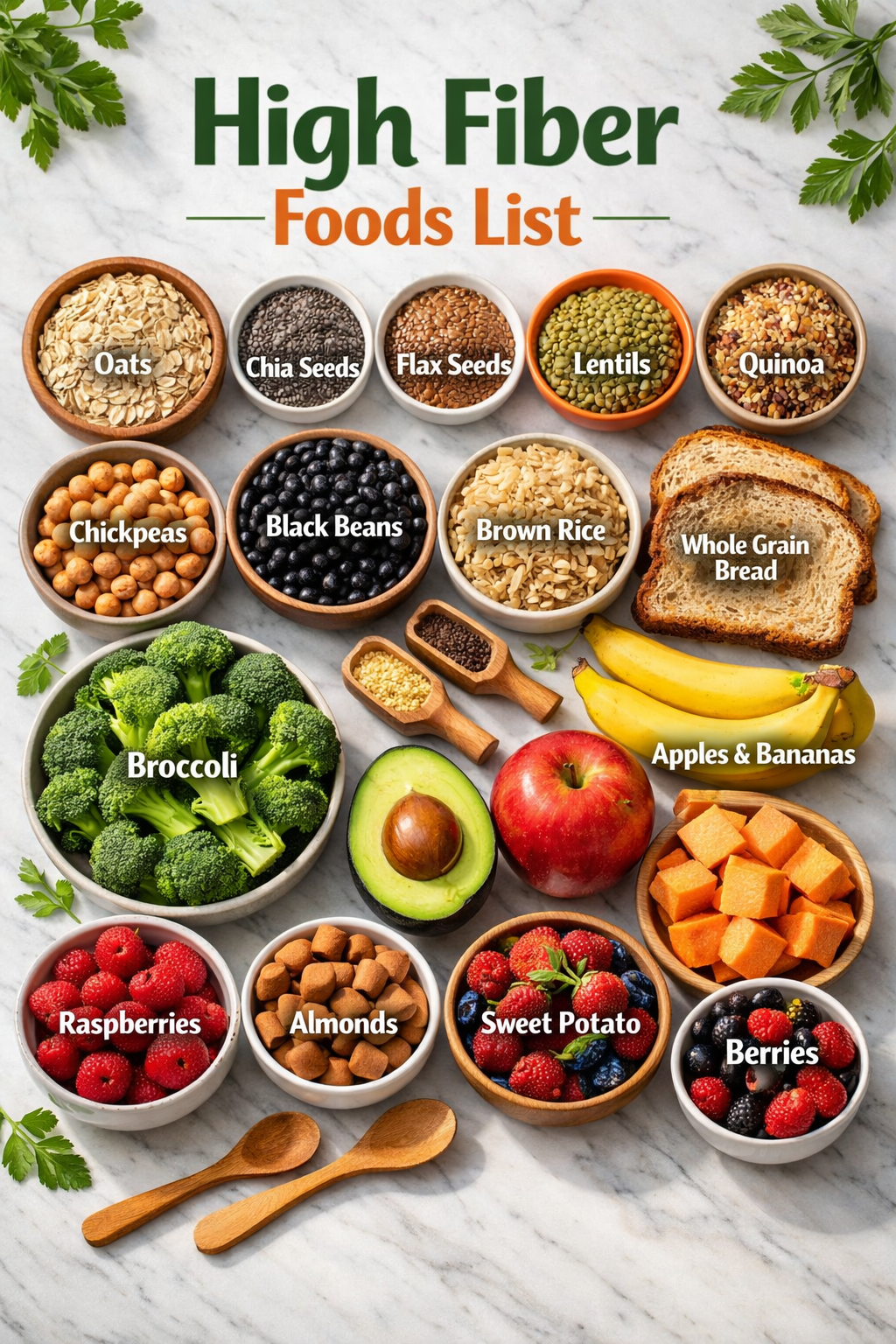
High fiber foods
The good news is that you do not need expensive supplements or imported health foods to improve your diet. Some of the best sources of dietary fiber grow in ordinary gardens, farms, and orchards. Beans, oats, guava, pears, carrots, leafy vegetables, sweet potatoes, and other familiar foods can help you build a balanced diet while supporting better digestion.
In this guide, we explore nine powerful high fiber foods that can support gut health in 2026 and beyond. You will learn how each food benefits your digestive system, how to prepare it, how much fiber it may provide, and how to include it in everyday meals.
Whether you are trying to relieve occasional constipation, improve your eating habits, or discover more nutritious ways to use fresh farm produce, this guide will help you make informed choices.
Disclaimer: This article provides general nutrition information and is not a substitute for individualized medical advice.
What Are High Fiber Foods, and Why Does Gut Health Matter?
High fiber foods are plant-based foods that supply dietary fiber, a type of carbohydrate that the human body cannot fully digest. Unlike sugars and many starches, fiber passes through the digestive system largely intact, although certain types are fermented by bacteria in the large intestine.
Dietary fiber is commonly divided into two broad categories: soluble and insoluble fiber. Most plant foods contain a mixture of both, although their proportions differ.
Understanding Soluble Fiber and Insoluble Fiber
Soluble fiber dissolves in water and forms a gel-like substance in the digestive tract. Depending on the type, it can help soften stool, support regular bowel movements, slow the absorption of nutrients, and help maintain healthy cholesterol and blood glucose levels.
Sources include:
-
Oats and barley.
-
Beans, peas, and lentils.
-
Apples and pears.
-
Some root vegetables.
-
Certain seeds.
Insoluble fiber does not dissolve in water. It adds bulk to stool and helps food waste move through the digestive tract.
Common sources include:
-
Whole grains.
-
Vegetable skins.
-
Leafy vegetables.
-
Nuts and seeds.
-
Many fruits and vegetables.
These categories overlap in practice, so you do not need to calculate every type of fiber you eat. The more useful approach is to include a variety of vegetables, fruits, legumes, and whole grains in your regular meals.
How High Fiber Foods Support Better Gut Health
Your gut contains trillions of microorganisms, including bacteria that help break down certain components of food. Some dietary fibers act as prebiotics, meaning they can be used by beneficial microorganisms in the gut.
When these bacteria ferment suitable fibers, they produce substances called short-chain fatty acids. These compounds help nourish cells lining the colon and are involved in maintaining the gut environment.
Eating enough fiber can also help:
-
Promote regular bowel movements.
-
Reduce the likelihood of constipation.
-
Support a diverse gut microbiome.
-
Improve feelings of fullness after meals.
-
Contribute to healthier cholesterol levels.
-
Help regulate post-meal blood sugar, depending on the food and overall meal.
However, fiber is not a cure-all. Digestive health also depends on hydration, physical activity, overall diet quality, sleep, medications, and underlying health conditions.
9 Best High Fiber Foods for Better Gut Health in 2026
The best farm-fresh foods for gut health are not necessarily the most expensive or unusual. Many everyday foods provide fiber alongside vitamins, minerals, and other beneficial plant compounds.
The nine foods below offer a practical mix of legumes, whole grains, fruits, and vegetables. Some are especially useful for increasing your total fiber intake, while others help you add variety to your meals.

1. Beans: Powerful High Fiber Foods for a Healthier Gut
Beans are among the most practical high fiber foods because they provide substantial dietary fiber as well as plant-based protein. Black-eyed peas, kidney beans, black beans, and other varieties can help you increase your fiber intake without relying on expensive specialty products.
How beans support gut health
-
Supply fiber that helps maintain regular bowel movements.
-
Provide fermentable carbohydrates that gut bacteria can use.
-
Help you feel satisfied after meals.
-
Supply protein, folate, iron, and other nutrients.
How to eat them: Add thoroughly cooked beans to soups, stews, salads, rice dishes, or vegetable sauces. In Nigeria, beans porridge served with vegetables can be a convenient fiber-rich meal.
Practical tip: If beans cause gas, start with a smaller serving, rinse canned beans, and cook dried beans thoroughly. Increase portions gradually as your digestive system adjusts.

2. Oats: Soluble Fiber Foods for Better Digestion
Oats are an excellent choice for people who want to improve their daily fiber intake. They contain beta-glucan, a type of soluble fiber that forms a viscous mixture when combined with water.
Why oats deserve a place in your diet
-
Beta-glucan can help support healthy cholesterol levels.
-
Their soluble fiber contributes to overall digestive health.
-
Oats make a filling breakfast and pair well with fruit.
-
They can be prepared as porridge, overnight oats, or added to suitable homemade recipes.
How to eat them: Cook oats with water or milk, then add sliced pear, banana, or other fruit. Choose plain oats when possible and limit excessive added sugar.
Farm-to-table connection: Oats may not be grown locally in every region, but they are widely available in many markets and complement locally produced fruits and vegetables.

3. Guava: Fiber-Rich Fruits for Healthy Digestion
Guava is a valuable tropical fruit to include when exploring fiber-rich fruits. Its edible seeds and flesh contribute dietary fiber, while the fruit also provides vitamin C and other plant compounds.
Potential benefits for gut health
-
Adds fiber to snacks and meals.
-
Helps diversify the types of plant foods in your diet.
-
Supplies vitamin C, which supports normal immune function.
-
Offers a convenient alternative to sugary packaged snacks.
How to eat it: Wash guava thoroughly and enjoy it whole, including the edible skin, if suitable for you. You can also slice it into a fruit salad or serve it alongside a balanced breakfast.
Guava is particularly practical in tropical regions where fresh fruit is available seasonally. Choose ripe fruit that is fresh and free from visible spoilage.
Important: People who are sensitive to seeds or have been advised to follow a modified-fiber diet may need to adjust how they eat guava.

4. Pears: Natural High Fiber Foods for Gut Health in 2026
Pears are useful for increasing fiber intake because they contain fiber in both their flesh and skin. They also contain water, making them a refreshing snack.
What makes pears useful?
-
Their fiber contributes to bowel regularity.
-
They provide a naturally sweet alternative to many highly processed snacks.
-
Their water content contributes to overall fluid intake.
-
They pair well with oats, plain yogurt, and other fruits.
How to eat them: Wash a pear and eat it with the skin when practical. Slice it over oatmeal or combine it with other fruits for a simple snack.
Pears also contain fermentable carbohydrates, including sorbitol, that may cause gas or discomfort in some people with irritable bowel syndrome (IBS). If pears consistently trigger symptoms, choose a better-tolerated fruit instead.

5. Sweet Potatoes: Filling High Fiber Foods for Everyday Meals
Sweet potatoes are versatile root vegetables that provide fiber, carbohydrates, and useful micronutrients. Orange-fleshed varieties are also rich in beta-carotene, which the body can convert into vitamin A.
How sweet potatoes support a balanced diet
-
Contribute dietary fiber, particularly when the edible skin is retained.
-
Supply energy for daily activities.
-
Provide potassium and other nutrients.
-
Can replace some refined or heavily processed side dishes.
How to prepare them: Boil, bake, or roast sweet potatoes until tender. Wash the skin thoroughly before cooking and eat it if you enjoy it and tolerate it well.
In many African households, sweet potatoes can be served with beans, eggs, fish, or leafy vegetables. Combining them with protein and other plant foods helps create a more balanced meal.
Deep-frying sweet potatoes adds oil and calories, so boiling, baking, and roasting are useful alternatives when you want a lighter preparation.

6. Okra: Fiber-Rich Vegetables for Digestive Wellness
Okra is a familiar vegetable in many tropical cuisines. Its characteristic slippery texture comes partly from mucilage, a mixture of substances that includes soluble polysaccharides.
Okra contributes dietary fiber, although its exact fiber content depends on the serving size and preparation.
Why include okra in your diet?
-
Adds variety to your vegetable intake.
-
Provides fiber alongside vitamins and minerals.
-
Works well in soups, stews, and mixed vegetable dishes.
-
Can help make a meal more substantial without relying on highly processed ingredients.
How to eat it: Add fresh okra to vegetable soup, prepare a lightly cooked okra stew, or combine it with other vegetables and a source of protein.
Okra does not need to be eaten raw to be nutritious. Cooking it in a way that suits your taste can make it easier to include regularly.
A useful reminder: No single vegetable can guarantee better gut health. The greatest benefit comes from eating a varied diet that supplies different types of fiber.

7. Carrots: Everyday High Fiber Foods for Healthy Digestion
Carrots are easy to find, versatile, and useful in both raw and cooked meals. They contain dietary fiber and beta-carotene, which the body converts into vitamin A.
Benefits of including carrots
-
Contribute to your daily fiber intake.
-
Supply nutrients that support normal vision and immune function.
-
Add color, flavor, and variety to meals.
-
Work well in soups, salads, stews, and vegetable dishes.
How to eat them: Wash carrots well and enjoy them raw as sticks, grate them into salads, or add sliced carrots to soups and stews. Light cooking can make them softer and easier for some people to chew.
Keeping the edible skin on, when properly cleaned and appropriate for your preference, can help preserve fiber that might otherwise be removed during peeling.
Carrots are especially convenient because they can be combined with beans, whole grains, and leafy vegetables to build a fiber-rich meal.

8. Leafy Green Vegetables: Farm-Fresh Foods for Gut Health
Leafy greens such as spinach, amaranth leaves, and other edible local greens contribute fiber, folate, and a range of vitamins and minerals. Their nutritional composition varies by variety and preparation.
Why leafy greens are worth eating regularly
-
Supply fiber as part of a varied plant-based diet.
-
Add essential micronutrients to everyday meals.
-
Help increase the volume and variety of vegetables on your plate.
-
Work well in soups, sauces, stews, and mixed dishes.
How to prepare them: Wash leaves carefully under clean running water and cook them in soups or stews, or serve them as a vegetable side dish. Avoid excessive cooking if it makes the vegetables unappealing or causes you to use less of them.
For readers in Nigeria and other parts of Africa, familiar greens can be an affordable alternative to imported salad vegetables. The best choice is often a fresh, safe, locally available vegetable that your household enjoys eating consistently.
Remember that leafy greens are part of the solution, not the whole solution. Include fruits, legumes, and whole grains as well.

9. Avocados: Nutrient-Rich Foods for a Balanced Gut-Friendly Diet
Avocados contain dietary fiber as well as predominantly unsaturated fats. Their creamy texture makes them easy to add to meals, and they can help make a meal more satisfying.
How avocados fit into a gut-friendly diet
-
Contribute fiber to your daily intake.
-
Supply unsaturated fats.
-
Provide potassium and other nutrients.
-
Pair well with vegetables, whole-grain bread, eggs, and beans.
How to eat them: Mash ripe avocado onto whole-grain toast, add slices to a salad, or serve it with eggs and vegetables. You can also combine a small portion with beans or other fiber-rich foods.
Avocados are energy-dense compared with many vegetables, so portion size can be guided by your overall nutritional needs.
If avocados are expensive or difficult to find, do not worry. Beans, oats, guava, sweet potatoes, and local vegetables can still help you build a nutritious, fiber-rich diet.
High Fiber Fruits and Vegetables to Eat Daily: A Practical Comparison
Different foods contribute different amounts of fiber. The figures below are approximate examples for common portions, not laboratory measurements of every variety sold in every market.
| Food | Typical portion | Approximate fiber |
|---|---|---|
| Cooked beans | ½ cup | 6–8 g |
| Cooked oats | 1 cup | 4 g |
| Guava | 1 cup of fruit | 8–9 g |
| Pear with skin | 1 medium | 5–6 g |
| Sweet potato with skin | 1 medium | 3–4 g |
| Cooked okra | ½ cup | 2–3 g |
| Carrots | 1 cup raw | 3–4 g |
| Cooked leafy greens | ½ cup | 2–4 g |
| Avocado | ½ medium | 4–5 g |
Values are estimates and can vary with the variety, size, edible portion, and cooking method. Use food-specific nutrition data or product labels when an exact figure matters.
The comparison highlights an important point: beans, guava, pears, and avocados can make meaningful contributions to daily fiber intake, while vegetables and oats help round out the diet with a broader mix of nutrients.
You do not need to eat all nine foods every day. Instead, rotate them throughout the week and combine different categories in your meals.
How Much Fiber Do You Need for Better Gut Health?
Knowing which high fiber foods to eat is only half the picture. You also need a reasonable daily target and a practical way to reach it.
Fiber requirements vary by age, sex, energy needs, and national dietary guidelines. For adults, commonly cited recommendations include approximately 25 grams per day for women and 38 grams per day for men aged 19–50 under US dietary reference values. UK guidance recommends 30 grams per day for adults.
These figures are useful reference points, but they are not identical requirements for every individual. Your personal needs may differ.
How to Reach Your Daily Fiber Target
Instead of trying to get all your fiber from one food, spread it across meals and snacks.
Here is an example of how a day might look:
| Meal | Example food combination | Approximate fiber |
|---|---|---|
| Breakfast | Oatmeal with sliced pear | 7–10 g |
| Lunch | Beans with vegetables and a whole-grain side | 9–13 g |
| Afternoon snack | Fresh guava | 4–8 g |
| Dinner | Sweet potato with cooked leafy greens | 4–7 g |
| Estimated daily total | Varied, fiber-rich meals | 24–38 g |
These figures are illustrative, not a prescribed meal plan. Actual amounts depend on portion sizes, ingredients, and preparation.
For more detailed guidance on fiber recommendations and food sources, read the US National Library of Medicine’s dietary fiber guide.
Why Variety Matters More Than Eating One Food Repeatedly
It can be tempting to focus on a single food after hearing about its health benefits. However, eating only beans or relying entirely on fruit will not provide the same dietary variety as combining legumes, vegetables, whole grains, and fruits.
Different plants contain different fiber structures and other beneficial compounds. A varied diet gives your gut microorganisms access to a wider range of fermentable materials while also helping you obtain different vitamins and minerals.
A simple rule is to include at least one fruit or vegetable with meals, eat legumes regularly if you tolerate them, and choose whole-grain foods where practical.
Best Farm-Fresh Foods for Gut Health: How to Choose Fresh Produce
Buying fresh produce can help you establish a healthy eating routine, but freshness alone does not determine fiber content. A ripe fruit, a properly stored vegetable, and a whole grain can all contribute to a balanced diet in different ways.
1. Choose Seasonal Produce When Practical
Seasonal fruits and vegetables may be easier to find and more affordable when supplies are plentiful. In many communities, local markets offer a rotating selection of produce throughout the year.
When shopping, consider:
-
Which fruits and vegetables are in season.
-
What your household can realistically consume before the food spoils.
-
Whether the produce is fresh, undamaged, and properly handled.
-
Which foods fit your budget and usual meals.
Do not feel that you must buy expensive imported produce to eat healthily. Familiar local foods can make an important contribution to your fiber intake.
2. Preserve Edible Skins When Appropriate
The skin of certain fruits and vegetables contributes fiber. Pears and potatoes are common examples.
Wash produce thoroughly under clean running water before eating or preparing it. Keep the skin when it is edible, safe, and suitable for your preferences.
However, not every skin needs to be eaten. Remove damaged or inedible portions, and follow food-safety guidance for produce that may have been contaminated.
3. Avoid Turning Every Fruit Into Juice
Whole fruit generally provides more fiber than juice because juicing removes much of the pulp and may separate out the edible material containing fiber.
For example, eating a whole guava or pear gives you the fruit’s edible structure as well as its naturally occurring sugars. Drinking strained juice may provide some vitamins but considerably less fiber.
Smoothies that retain the edible pulp can preserve more fiber than strained juice, although ingredients and portion sizes still matter.
When gut health is your goal, whole fruit is often the more practical everyday choice.
4. Use Frozen and Properly Stored Produce When Necessary
Fresh is not the only acceptable option. Frozen vegetables and fruit can be nutritious alternatives when fresh supplies are expensive, seasonal, or difficult to store.
Choose products without unnecessary added sugar or heavy sauces when possible. For dried beans and grains, store them in clean, dry, pest-free containers.
The objective is to make fiber-rich foods available consistently, rather than allowing produce to spoil because you purchased more than your household could use.
How to Increase Fiber Without Causing Excessive Bloating
One of the most common reasons people give up on high fiber foods is discomfort. After years of eating a relatively low-fiber diet, a sudden increase in beans, vegetables, whole grains, and fruit can cause gas, bloating, or abdominal cramps.
This does not automatically mean that fiber is bad for you. Your digestive system may simply need time to adjust, although persistent symptoms can have other causes.
Increase Fiber Gradually
Do not suddenly double your fiber intake overnight. Start by adding a modest serving of one or two fiber-rich foods to your usual meals.
For example:
-
Add a small portion of beans to lunch.
-
Eat one piece of whole fruit as a snack.
-
Replace some refined grains with whole-grain alternatives.
-
Add a serving of cooked vegetables to dinner.
As you become comfortable with these changes, gradually increase the portions and variety.
Drink Enough Fluids
Many forms of fiber absorb water, which helps support stool consistency and movement through the digestive tract. If you increase fiber but do not consume enough fluid, constipation may become worse rather than better.
Drink water regularly throughout the day, adjusting your intake to your climate, activity level, and individual needs. People who have been advised to restrict fluids because of a medical condition should follow their clinician’s guidance.
Prepare Beans and Other Legumes Properly
Beans are excellent high fiber foods, but they can also cause gas, particularly when you are not accustomed to eating them.
To make them easier to incorporate:
-
Sort and rinse dried beans.
-
Soak them when appropriate for the variety and cooking method.
-
Discard soaking water if your chosen preparation method calls for it.
-
Cook them thoroughly until tender.
-
Begin with smaller portions and increase them as tolerated.
Never rely on undercooked beans as a shortcut. Some varieties, particularly kidney beans, require proper boiling and cooking to reduce naturally occurring toxins.
Pay Attention to Your Individual Tolerance
Not every high fiber food suits every digestive system. Some people with irritable bowel syndrome, food intolerances, or other digestive conditions may find that particular fruits, legumes, or vegetables trigger symptoms.
For instance, pears can be troublesome for some people sensitive to certain fermentable carbohydrates. Beans may produce gas, while some raw vegetables may feel uncomfortable during a flare-up of digestive symptoms.
Rather than eliminating all fiber, identify which foods you tolerate and seek professional advice if symptoms persist. A clinician or registered dietitian can help you develop a suitable eating plan.
The NHS provides additional practical advice in its guide to increasing fiber in your diet.
Simple Ways to Add High Fiber Foods to Your Everyday Meals
You do not need a complicated meal plan to eat more fiber. A few small adjustments to familiar dishes can make a meaningful difference over time.
Breakfast Ideas
Breakfast is a convenient place to start because you can combine several fiber sources without preparing an elaborate meal.
Try these ideas:
-
Oatmeal with fruit: Prepare oats and top them with sliced pear or another fruit you enjoy.
-
Whole-grain toast with avocado: Add an egg or another protein source if desired.
-
Fruit and plain yogurt: Serve whole fruit alongside yogurt, choosing an unsweetened variety where possible.
-
Beans with a balanced breakfast: Include a modest serving of beans with vegetables and other foods you normally eat.
If you prefer traditional local breakfasts, look for opportunities to include fruit, legumes, or less-refined grains rather than replacing your entire routine.
Lunch Ideas
Lunch is an opportunity to combine fiber with protein and other nutrients.
Consider:
-
Beans served with vegetables.
-
Rice accompanied by beans and a generous vegetable side.
-
Whole-grain bread filled with vegetables and a protein source.
-
Vegetable soup containing okra and leafy greens.
-
A salad made with suitable vegetables, beans, and avocado.
A balanced lunch should satisfy your appetite and provide enough energy for the rest of your day. Fiber is important, but it should not crowd out protein, healthy fats, or other essential nutrients.
Dinner Ideas
Dinner can be a good time to use root vegetables, legumes, and cooked greens.
For example, serve boiled sweet potatoes with beans and leafy vegetables, or prepare a vegetable-rich stew with a whole-grain side.
When making soups, add a variety of vegetables rather than depending on a single ingredient. You can also increase the proportion of beans or other legumes in suitable dishes.
The best meal is one that provides balanced nutrition, suits your budget, and is enjoyable enough to become part of your normal routine.
Snack Ideas
Choose snacks that contribute nutrients rather than simply adding calories.
Practical options include:
-
A whole pear or guava.
-
Fresh carrot sticks.
-
A small serving of unsalted nuts, if suitable.
-
Fruit paired with plain yogurt.
-
Whole-grain crackers with a suitable bean-based dip.
Portion sizes matter, especially for calorie-dense foods such as nuts and avocados. You can enjoy these foods without needing to eat large amounts.
Common Mistakes to Avoid When Eating High Fiber Foods
Even nutritious foods can be less helpful when they are eaten in an unbalanced way or introduced without considering individual needs.
Mistake 1: Increasing Fiber Too Quickly
Adding large amounts of beans, bran, and raw vegetables all at once can lead to discomfort. Build up your intake gradually instead.
Mistake 2: Forgetting to Drink Water
Fiber works best as part of a diet with adequate fluids. Increase fluids appropriately as you increase fiber, unless your healthcare professional has given you a restriction.
Mistake 3: Relying Only on Fruit
Fruit is nutritious, but a varied diet should also include vegetables, legumes, and whole grains. These foods supply different combinations of fiber and nutrients.
Mistake 4: Assuming Every Packaged Food Is High in Fiber
Words such as natural, wholegrain, and multigrain do not automatically mean a product is high in fiber. Check the nutrition label where available.
For packaged foods, compare the fiber content per 100 grams or per serving. Preparation and serving size can make a substantial difference to the amount you actually eat.
Mistake 5: Treating Fiber as a Cure for Every Digestive Problem
Fiber can support normal bowel function, but persistent constipation, diarrhea, abdominal pain, and bloating may need medical assessment.
Seek prompt medical care for warning signs such as blood in the stool, severe or persistent abdominal pain, unexplained weight loss, or a sustained change in bowel habits. Do not attempt to manage serious symptoms through dietary changes alone.
Frequently Asked Questions About High Fiber Foods and Gut Health
1. What are the best high fiber foods for gut health?
Some excellent options include beans, oats, guava, pears, sweet potatoes, okra, carrots, leafy green vegetables, and avocados. Each contributes a different combination of fiber and nutrients. Eating a variety of these foods is generally more useful than relying on just one.
2. Which fruits are highest in fiber?
Guava, pears, raspberries, blackberries, and some other berries are useful fiber-rich fruits. The exact amount varies by fruit variety and serving size. Whenever practical, eat whole fruit rather than strained juice to retain more of its natural fiber.
3. Can high fiber foods help relieve constipation?
Yes. Adequate dietary fiber can help prevent or relieve some cases of constipation by increasing stool bulk or helping retain water in stool. However, the response varies between individuals, and adequate fluid intake is important. Persistent constipation may require medical evaluation.
4. How long does it take for fiber to improve digestion?
There is no single timeline. Some people notice changes in bowel regularity within a few days, while others need longer to adjust their diet. The response depends on the amount and type of fiber, hydration, activity, medications, and underlying health conditions.
Increase fiber gradually and seek medical advice if symptoms persist or worsen.
5. Are cooked vegetables as healthy as raw vegetables?
Yes. Both raw and cooked vegetables can contribute to a healthy diet. Cooking softens plant tissues and can make certain vegetables easier to chew and digest. The exact nutrient content depends on the vegetable and cooking method.
Choose preparation methods you enjoy and can sustain, such as steaming, boiling, or cooking vegetables in soups and stews.
6. Can I eat high fiber foods every day?
Most healthy adults can benefit from eating a variety of fiber-containing foods every day. The important factors are meeting your individual needs, maintaining a balanced diet, and increasing intake gradually if you currently eat little fiber.
People with certain gastrointestinal conditions or specific medical dietary restrictions may need individualized advice.
7. Do I need fiber supplements if I eat these foods?
Not necessarily. Many people can obtain sufficient fiber from a balanced diet containing fruits, vegetables, legumes, and whole grains. Supplements may be useful in certain situations, but they are not essential for everyone and can sometimes cause bloating or gas.
Ask a healthcare professional whether a supplement is appropriate for your circumstances.
8. What are affordable natural high fiber foods in Nigeria?
Beans, okra, carrots, sweet potatoes, guava, leafy vegetables, and other locally available produce are practical options. Prices and availability vary by location and season, so choose foods that fit your budget.
You do not need to purchase every food on this list. Combining a few affordable staples with seasonal produce is a sensible starting point.
9. Can too much fiber be harmful?
A sudden increase in fiber can cause gas, bloating, and cramps. Very high intakes may be unsuitable for some people, particularly those with certain intestinal conditions or medically prescribed dietary restrictions.
Gradual increases, adequate fluids, and attention to your individual tolerance can help you find a comfortable intake.
Conclusion: Build Better Gut Health With High Fiber Foods
Improving gut health does not have to begin with expensive supplements, complicated meal plans, or unfamiliar ingredients. It can start with ordinary foods that you can buy at a local market, grow in a garden, or prepare in your own kitchen.
Beans, oats, guava, pears, sweet potatoes, okra, carrots, leafy greens, and avocados each offer useful ways to increase your fiber intake. Together with other fruits, vegetables, legumes, and whole grains, they can help you develop a more varied and nutritious eating pattern.
The most important lesson is consistency. Choose foods you enjoy, prepare them safely, increase fiber gradually, drink enough fluids, and pay attention to how your body responds. You do not have to eat all nine foods every day to make progress.
Start with one practical change this week. Add beans to lunch, choose whole fruit instead of strained juice, or include another vegetable with dinner. Small, sustainable changes can help you build healthier eating habits that last well beyond 2026.
About The Author