AI in Agriculture
For generations, farming has depended on a delicate balance between nature and human effort. Farmers have always faced challenges such as droughts, soil degradation, unpredictable weather patterns, pests, and increasing pressure to produce more food for a growing population.
Today, those challenges are becoming even more complex.
Climate change is affecting rainfall patterns. Water resources are becoming scarcer in many agricultural regions. Soil fertility is declining due to decades of intensive farming practices. At the same time, global food demand continues to rise.
The question facing modern agriculture is no longer simply how to grow more food.
The real question is:
How can farmers produce more food while using fewer resources and protecting the environment?
The answer increasingly lies in AI in Agriculture.
Artificial Intelligence, combined with Precision Farming, Regenerative Agriculture, and Smart Farming Technology, is transforming agriculture in ways that would have seemed impossible only a decade ago.
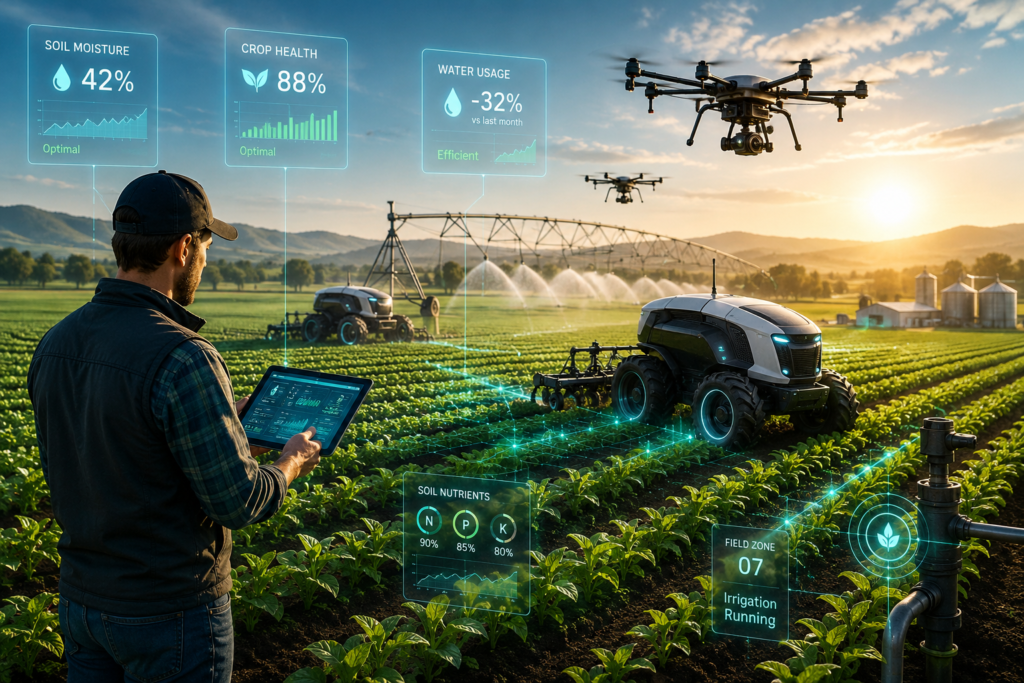
Instead of applying water, fertilizers, and pesticides uniformly across entire fields, farmers can now use AI-powered systems to understand exactly what each section of their farmland needs.
This targeted approach helps farmers:
- Save water
- Reduce waste
- Improve soil health
- Increase crop yields
- Lower production costs
- Protect natural ecosystems
- Enhance long-term farm sustainability
Perhaps most importantly, these technologies are helping farmers transition toward more environmentally responsible farming practices without sacrificing profitability.
In this article, we’ll explore ten powerful ways AI-powered precision farming is helping save water, restore soil health, and reshape the future of agriculture in 2026.
AI in Agriculture and Precision Farming at a Glance
| Technology | Primary Purpose | Benefit to Farmers | Environmental Impact |
|---|---|---|---|
| AI Analytics | Data-driven decisions | Higher yields | Reduced waste |
| Smart Irrigation | Precise water application | Lower water bills | Water conservation |
| Soil Sensors | Real-time soil monitoring | Better crop health | Improved soil preservation |
| Drones | Field monitoring | Early issue detection | Reduced chemical use |
| Satellite Imaging | Crop analysis | Improved planning | Resource efficiency |
| Predictive Analytics | Forecasting risks | Better management | Sustainable farming |
| Autonomous Equipment | Precision operations | Labor savings | Reduced emissions |
| Variable Rate Technology | Targeted input application | Lower costs | Reduced runoff |
| Regenerative Farming Tools | Soil restoration | Long-term productivity | Carbon sequestration |
| Farm Management Platforms | Centralized data management | Better decisions | Efficient resource use |
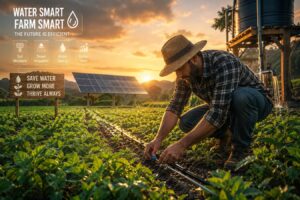
1. AI in Agriculture Uses Smart Irrigation to Save Water
Water is one of agriculture’s most valuable resources.
Yet traditional irrigation methods often result in significant water waste.
Many farms still rely on scheduled watering systems that deliver the same amount of water regardless of changing weather conditions, soil moisture levels, or crop needs.
This is where AI-powered precision farming creates a major breakthrough.
Modern AI irrigation systems continuously collect data from:
- Soil moisture sensors
- Weather stations
- Satellite imagery
- Crop growth monitoring systems
- Historical farming records
The AI analyzes these data points and determines:
- When irrigation should occur
- How much water is needed
- Which sections of the field require watering
- Which areas already have sufficient moisture
As a result, farmers can reduce water usage dramatically while maintaining healthy crop growth.
How AI-Powered Precision Farming Helps Farmers Save Water in 2026
In 2026, many smart irrigation systems can automatically adjust watering schedules in real time.
For example:
If rain is forecasted tomorrow, the system may delay irrigation.
If one section of a field retains moisture better than another, irrigation levels are adjusted accordingly.
The result is highly efficient water management that minimizes waste while maximizing productivity.
Benefits include:
- Lower water consumption
- Reduced energy costs
- Improved crop health
- Better drought resilience
- Enhanced environmental sustainability
This represents one of the clearest examples of how AI in Agriculture is helping farmers protect natural resources.
2. Precision Farming Improves Soil Health Through Data-Driven Decisions
Healthy soil is the foundation of successful agriculture.
Unfortunately, decades of intensive farming have depleted nutrients in many agricultural regions.
Traditional soil testing often provides only limited snapshots of field conditions.
Modern precision farming takes a completely different approach.
Using advanced technologies, farmers can continuously monitor soil conditions throughout the growing season.
These systems track:
- Soil moisture
- Nutrient levels
- Organic matter content
- Temperature
- pH balance
- Microbial activity
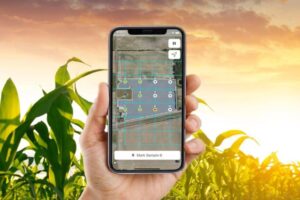
AI systems process this information and generate actionable recommendations.
Instead of guessing what the soil needs, farmers receive highly accurate guidance.
How Regenerative Agriculture Improves Soil Health and Crop Yields
One of the key goals of regenerative agriculture is rebuilding soil health rather than merely maintaining it.
AI supports this effort by helping farmers:
- Reduce excessive tillage
- Increase organic matter
- Improve nutrient cycling
- Enhance biodiversity
- Promote healthier soil ecosystems
Healthier soils lead to:
- Better water retention
- Improved root development
- Stronger crops
- Reduced erosion
- Greater carbon storage
Over time, regenerative agriculture practices combined with AI-powered monitoring can transform degraded land into productive, resilient farmland.
3. Smart Farming Technology Detects Problems Before They Become Expensive
One of farming’s biggest challenges is timing.
A pest infestation, disease outbreak, or nutrient deficiency can spread rapidly if not identified early.
Traditional field scouting is time-consuming and often reactive.
Today, smart farming technology enables proactive management.
Using AI-powered drones, sensors, and imaging systems, farmers can monitor crops continuously.
These technologies identify subtle changes that may be invisible to the human eye.
Examples include:
- Early disease symptoms
- Water stress
- Nutrient deficiencies
- Pest damage
- Growth abnormalities
Instead of discovering problems after significant damage has occurred, farmers receive alerts while issues are still manageable.
Why Early Detection Matters
Early intervention can:
- Protect yields
- Reduce chemical use
- Lower treatment costs
- Improve crop quality
- Minimize environmental impact
This targeted approach supports sustainable farming while increasing profitability.
4. AI and Precision Agriculture Tools for Water Management and Sustainable Farming
Water management is becoming one of agriculture’s most critical priorities.
Population growth and climate variability are increasing pressure on freshwater resources worldwide.
Fortunately, AI and precision agriculture tools are helping farmers use every drop more efficiently.
Modern water management platforms integrate:
- Weather forecasting
- Soil monitoring
- Satellite data
- Irrigation controls
- Crop growth analytics
The AI evaluates these inputs simultaneously and recommends optimal water strategies.
Farmers can see:
- Water usage patterns
- High-risk drought zones
- Irrigation efficiency scores
- Future water needs
This level of visibility allows for smarter planning and better resource conservation.
Key Benefits
- Reduced water waste
- Increased irrigation efficiency
- Improved sustainability
- Enhanced crop performance
- Greater climate resilience
As water scarcity becomes a growing concern globally, these technologies will play an increasingly important role in agriculture.
5. Best Smart Farming Technologies for Sustainable Agriculture and Resource Conservation
The rise of smart farming technology is creating entirely new opportunities for sustainable agriculture.
Today’s farms generate enormous amounts of data.
The challenge is turning that data into useful decisions.
AI-powered tools help bridge that gap.
Some of the most influential technologies in 2026 include:
AI-Powered Drones
Drones can quickly survey large fields and collect detailed information about crop health.
Benefits include:
- Faster inspections
- Reduced labor requirements
- Early problem detection
- Better resource allocation
Satellite Monitoring
Satellite imagery provides valuable insights into:
- Vegetation health
- Soil moisture
- Crop stress
- Field variability
Farmers can make informed decisions without physically inspecting every acre.

Variable Rate Technology (VRT)
VRT allows equipment to apply inputs precisely where needed.
This includes:
- Fertilizers
- Seeds
- Water
- Crop protection products
Benefits include:
- Lower costs
- Reduced waste
- Better yields
- Improved environmental protection
Smart Soil Sensors
Real-time monitoring helps farmers understand changing soil conditions instantly.
This allows for:
- Better irrigation decisions
- Improved nutrient management
- Enhanced soil conservation
Integrated Farm Management Platforms
These platforms combine multiple technologies into a single dashboard.
Farmers gain a comprehensive view of operations, enabling better planning and more informed decisions.
Why These Technologies Matter
The future of agriculture will depend heavily on efficiency.
Farmers must produce more food while protecting finite natural resources.
The best smart farming technologies for sustainable agriculture and resource conservation are making this possible by enabling precision, reducing waste, and improving environmental stewardship.
By combining AI, data analytics, sensors, drones, and regenerative farming principles, agriculture is entering a new era of sustainability and productivity.
Below is Part 2 of your SEO-optimized blog post, continuing from Part 1.
6. AI in Agriculture Uses Predictive Analytics to Reduce Risk and Improve Farm Planning
One of the most significant advantages of AI in Agriculture is its ability to predict future outcomes with remarkable accuracy.
For centuries, farming decisions were largely based on experience, intuition, and historical weather patterns. While experience remains valuable, modern agriculture now has access to an unprecedented amount of data that can help farmers make smarter decisions.
Predictive analytics uses artificial intelligence to analyze massive datasets, including:
- Historical weather records
- Soil conditions
- Crop performance data
- Pest activity trends
- Market demand forecasts
- Satellite imagery
- Regional climate patterns
Instead of reacting to problems after they occur, farmers can anticipate challenges before they become costly.
How Predictive Analytics Supports Precision Farming
Imagine knowing weeks in advance that a specific field may experience moisture stress or a disease outbreak.
AI systems can identify warning signs early and provide recommendations such as:
- Adjusting irrigation schedules
- Applying preventive treatments
- Changing planting dates
- Selecting drought-resistant crop varieties
- Optimizing fertilizer applications
This proactive approach reduces waste and improves overall farm efficiency.
Benefits of Predictive Agriculture
- Better crop planning
- Reduced financial risk
- Improved resource management
- Increased yields
- Lower production costs
- Greater climate resilience
As climate uncertainty continues to challenge agriculture worldwide, predictive analytics is becoming one of the most valuable tools available to modern farmers.
7. Regenerative Agriculture and AI Are Helping Farmers Capture Carbon Naturally
One of the most exciting developments in sustainable farming is the growing connection between Regenerative Agriculture and carbon sequestration.
Many people are surprised to learn that healthy soil can act as a powerful carbon storage system.
When regenerative practices are implemented correctly, soil absorbs and stores atmospheric carbon dioxide, helping reduce greenhouse gas concentrations.
AI is accelerating this process by helping farmers monitor and improve soil health more effectively.
How Regenerative Agriculture Improves Soil Health and Crop Yields Through Carbon Farming
Carbon farming involves agricultural practices designed to increase carbon storage in soil.
These practices include:
- Cover cropping
- Reduced tillage
- Crop rotation
- Compost application
- Agroforestry
- Managed grazing
AI systems help farmers determine:
- Which fields need improvement
- Which regenerative practices are most effective
- How soil carbon levels are changing
- Where adjustments should be made
The Long-Term Benefits of Carbon-Rich Soil
Healthy soils that contain higher organic matter levels often provide:
- Better water retention
- Increased nutrient availability
- Stronger root development
- Reduced erosion
- Improved biodiversity
- Greater drought tolerance
In many cases, regenerative agriculture creates a win-win scenario.
Farmers improve profitability while simultaneously contributing to environmental sustainability.
8. Smart Farming Technology Is Reducing Chemical Overuse
For decades, many farms applied fertilizers and pesticides uniformly across entire fields.
While effective in some situations, this approach often leads to overapplication.
The consequences include:
- Increased costs
- Nutrient runoff
- Water pollution
- Soil degradation
- Harm to beneficial insects
Today’s Smart Farming Technology is changing that.
Using advanced sensors, drones, GPS mapping, and AI analytics, farmers can identify exactly where treatments are needed.
This precision-based approach ensures that resources are used only where they provide value.
How Precision Farming Minimizes Waste
Modern precision farming systems can generate highly detailed field maps that reveal variations across a farm.
These maps identify:
- Nutrient deficiencies
- Pest hotspots
- Disease-prone areas
- Moisture variations
Instead of treating an entire field, farmers can target only the affected zones.
Environmental Benefits
Reducing chemical overuse helps:
- Protect groundwater
- Preserve aquatic ecosystems
- Improve soil microbial health
- Reduce input costs
- Support regenerative agriculture goals
This targeted strategy demonstrates how technology can increase agricultural productivity while reducing environmental impact.
9. AI and Precision Agriculture Tools for Water Management and Sustainable Farming Improve Climate Resilience
Climate change is creating new challenges for farmers around the world.
Many agricultural regions are experiencing:
- Longer droughts
- More intense rainfall
- Heat waves
- Unpredictable growing seasons
- Increased pest pressure
These changes make traditional farming methods increasingly difficult.
Fortunately, AI and precision agriculture tools for water management and sustainable farming are helping farmers adapt.
Building Climate-Smart Farms
Climate-smart agriculture focuses on creating farming systems that can withstand environmental stress while maintaining productivity.
AI contributes by helping farmers:
- Monitor changing conditions
- Optimize irrigation
- Predict weather events
- Improve soil management
- Reduce resource waste
For example, AI-powered weather forecasting tools can provide highly localized predictions that help farmers prepare for extreme conditions.
Examples of Climate Resilience Technologies
- Smart irrigation systems
- Weather forecasting platforms
- Soil moisture sensors
- Crop health monitoring tools
- Automated field management systems
Together, these technologies help farmers remain productive even in challenging conditions.
Why Climate Resilience Matters
Climate resilience is no longer optional.
It has become essential for:
- Food security
- Farm profitability
- Natural resource conservation
- Long-term sustainability
The farms that successfully adopt AI-driven solutions today are likely to be better positioned for the future.
10. AI in Agriculture Is Creating a More Sustainable Future for Generations to Come
The final and perhaps most inspiring benefit of AI-powered precision farming is its potential to transform agriculture for future generations.
Agriculture has always been about stewardship.
Farmers do more than grow food.
They manage land, water, soil, and ecosystems that support entire communities.
The technologies emerging in 2026 are helping farmers fulfill that responsibility more effectively than ever before.
The Bigger Picture
When people hear about artificial intelligence, they often focus on efficiency and productivity.
While those benefits are important, the broader impact is even more significant.
AI helps create agricultural systems that are:
- More sustainable
- More resilient
- More profitable
- More environmentally responsible
This means future generations may inherit healthier farmland rather than depleted resources.
How AI Supports Long-Term Sustainability
AI enables better decisions across nearly every aspect of farming.
Examples include:
Water Conservation
Smart irrigation systems reduce waste while ensuring crops receive adequate moisture.
Soil Restoration
Regenerative agriculture practices improve organic matter and enhance soil fertility.
Biodiversity Protection
Targeted resource management reduces environmental disruption.
Resource Efficiency
Precision farming minimizes unnecessary inputs and waste.
Climate Adaptation
Advanced forecasting helps farmers respond effectively to changing conditions.
The Human Side of Agricultural Innovation
Technology does not replace farmers.
Instead, it empowers them.
Farmers still make critical decisions based on experience, local knowledge, and practical understanding of their land.
AI simply provides better information to support those decisions.
The result is a partnership between human expertise and technological innovation.
Final Thoughts: Why AI in Agriculture Represents One of the Most Important Agricultural Revolutions of Our Time
Agriculture is undergoing one of the most significant transformations in its history.
The convergence of Artificial Intelligence, Precision Farming, Regenerative Agriculture, and Smart Farming Technology is changing how food is produced around the world.
What makes this transformation particularly remarkable is that it addresses two critical challenges simultaneously:
- Increasing food production.
- Protecting natural resources.
For decades, many believed these goals were in conflict.
Today, AI-powered farming is proving otherwise.
Farmers can now:
- Save water.
- Restore soil health.
- Reduce waste.
- Improve crop yields.
- Protect biodiversity.
- Strengthen climate resilience.
- Enhance profitability.
The future of agriculture will not be defined solely by bigger machines or larger farms.
Instead, it will be shaped by smarter decisions, better resource management, and sustainable innovation.
As we move toward 2027 and beyond, the farms that embrace technology while respecting natural systems are likely to lead the next generation of agricultural success.
The message is clear:
AI in Agriculture is not simply a technological trend.
It is a powerful tool helping farmers build a more productive, sustainable, and resilient future for everyone.
For readers who want to explore agricultural innovation and sustainable farming practices further:
- Food and Agriculture Organization (FAO): https://www.fao.org
- United States Department of Agriculture (USDA): https://www.usda.gov
About The Author