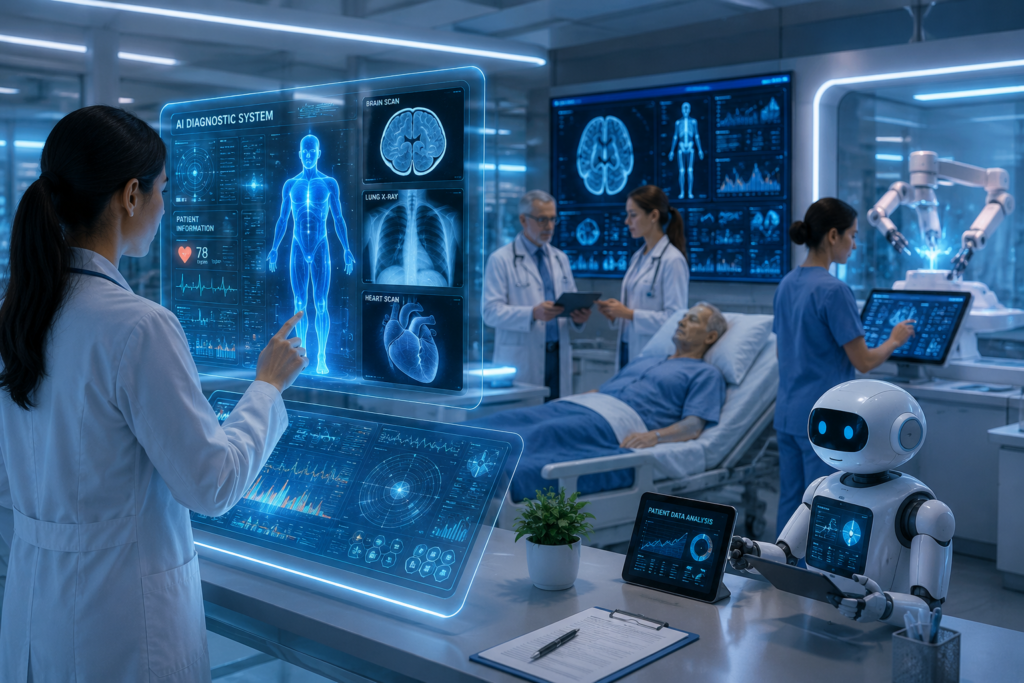
Generative AI in Healthcare
Generative AI is no longer just a buzzword reserved for tech enthusiasts—it has become one of the most transformative innovations reshaping modern healthcare. From helping doctors detect diseases earlier to accelerating drug discovery and reducing administrative burdens, Generative AI is redefining how healthcare professionals deliver care and how patients experience treatment.
Imagine a world where a physician receives AI-generated recommendations based on millions of medical records within seconds, where radiologists identify tiny abnormalities with greater confidence, or where researchers develop life-saving medicines in months instead of years. In 2026, this is no longer a futuristic vision—it’s becoming reality.
Healthcare systems around the world face enormous challenges, including growing patient populations, physician shortages, rising medical costs, and increasing demand for personalized care. Traditional methods alone are struggling to keep pace. Fortunately, Generative AI offers a powerful solution by combining advanced machine learning, natural language processing, and predictive analytics to assist healthcare professionals without replacing their expertise.
Unlike conventional AI, which primarily analyzes existing information, Generative AI can create new content, generate clinical documentation, summarize patient histories, produce medical images, suggest treatment pathways, and even help researchers design potential drug molecules. These capabilities are helping hospitals improve efficiency while giving clinicians more time to focus on what matters most—caring for patients.
Whether you’re a healthcare professional, student, researcher, hospital administrator, investor, or simply curious about the future of medicine, understanding the impact of Generative AI has never been more important. World Health Organization (WHO) – Digital Health https://www.who.int/health-topics/digital-health
In this comprehensive guide, you’ll discover 15 powerful and inspiring ways Generative AI is revolutionizing patient care, medical research, and disease diagnosis in 2026, along with real-world examples, emerging trends, benefits, challenges, and practical insights into what lies ahead.
What Is Generative AI in Healthcare?
Generative AI refers to artificial intelligence systems capable of creating entirely new content based on enormous amounts of medical data. Instead of simply identifying patterns, these models generate meaningful outputs such as:
- Clinical summaries
- Medical reports
- Treatment recommendations
- Patient education materials
- Diagnostic insights
- Drug candidates
- Research summaries
- Medical imaging enhancements
These AI systems are trained on vast datasets including medical literature, electronic health records, laboratory findings, imaging scans, and clinical guidelines. They help healthcare professionals make informed decisions faster while reducing repetitive administrative work.
Some common applications include:
- AI-powered medical assistants
- Clinical documentation tools
- Medical chatbots
- Drug discovery platforms
- Radiology support systems
- Predictive healthcare software
- Personalized treatment planning
Rather than replacing physicians, Generative AI acts as an intelligent assistant that enhances productivity, accuracy, and efficiency.
Why Generative AI Matters More Than Ever
Healthcare has entered an era where data is growing faster than humans can process it.
Every day hospitals generate:
- Millions of patient records
- Thousands of medical images
- Clinical notes
- Laboratory reports
- Research publications
- Prescription histories
No healthcare professional can manually review every relevant piece of information in real time.
Generative AI helps bridge this gap by analyzing enormous datasets in seconds and presenting actionable insights that support clinical decision-making.
Its biggest advantages include:
- Earlier disease detection
- Reduced physician burnout
- Improved patient outcomes
- Faster research discoveries
- Lower healthcare costs
- Better workflow efficiency
- More personalized medicine
This explains why governments, hospitals, research institutions, and technology companies continue investing billions into healthcare AI.
15 Powerful Ways Generative AI Is Revolutionizing Healthcare
1. AI-Powered Early Disease Detection
Perhaps the greatest impact of Generative AI is its ability to identify diseases much earlier than traditional methods.
Early diagnosis dramatically increases survival rates for many conditions, including:
- Breast cancer
- Lung cancer
- Colon cancer
- Heart disease
- Stroke
- Alzheimer’s disease
- Diabetic complications
Generative AI analyzes enormous collections of patient information simultaneously, including:
- Medical history
- Imaging scans
- Laboratory tests
- Genetic information
- Lifestyle factors
- Family history
Instead of evaluating each source separately, AI combines them to identify subtle warning signs that may otherwise be overlooked.
Practical Example
Consider a patient whose chest CT scan appears normal to the naked eye.
A Generative AI system compares the scan with millions of similar cases and detects tiny abnormalities associated with early-stage lung cancer.
The physician receives an alert recommending additional testing, potentially identifying the disease months earlier than conventional diagnosis.
Earlier diagnosis often means:
- Less invasive treatment
- Lower medical costs
- Faster recovery
- Higher survival rates
Why It Matters
Hospitals increasingly use AI-assisted diagnostics to support—not replace—medical specialists.
Benefits include:
- Improved diagnostic accuracy
- Reduced human error
- Faster reporting
- Better patient outcomes
- Increased physician confidence
2. Personalized Treatment Plans Based on Individual Patients
Every patient is unique.
Two people with the same disease may respond very differently to identical treatments.
Generative AI helps physicians create individualized treatment strategies by analyzing:
- Genetics
- Medical history
- Current medications
- Allergies
- Lifestyle
- Existing conditions
- Treatment response patterns
Instead of relying solely on standardized protocols, doctors receive AI-generated recommendations tailored to each patient’s needs.
Example
Two patients diagnosed with diabetes may receive completely different care plans because AI identifies differences in:
- Diet
- Kidney function
- Exercise habits
- Medication tolerance
- Blood sugar trends
This personalized approach often improves long-term outcomes while reducing unnecessary complications.
Benefits
- Better treatment success
- Reduced adverse drug reactions
- More precise medication selection
- Higher patient satisfaction
- Lower healthcare costs
3. Revolutionizing Medical Imaging and Radiology
Radiologists examine thousands of X-rays, CT scans, MRIs, and ultrasounds every year.
Fatigue and heavy workloads increase the possibility of missed findings.
Generative AI acts as a second pair of highly trained eyes.
It enhances medical images while highlighting suspicious regions that deserve closer examination.
AI Can Help Detect
- Brain tumors
- Fractures
- Pneumonia
- Internal bleeding
- Liver disease
- Kidney abnormalities
- Breast cancer
- Lung nodules
Rather than replacing radiologists, AI improves confidence by identifying subtle patterns invisible during routine reviews.
Real-World Impact
Hospitals using AI-assisted imaging often report:
- Faster scan interpretation
- Reduced reporting delays
- More consistent diagnoses
- Improved patient prioritization
Patients receive answers sooner, allowing treatment to begin earlier.
4. Automating Clinical Documentation
Healthcare professionals spend a surprising amount of time completing paperwork.
Doctors often dedicate several hours each day to:
- Writing patient notes
- Updating medical records
- Preparing referrals
- Documenting treatments
- Creating discharge summaries
Generative AI dramatically reduces this administrative burden.
During consultations, AI listens securely to doctor-patient conversations and automatically generates structured clinical notes.
The physician simply reviews and approves the documentation.
Example
Instead of typing for 15 minutes after each appointment, a doctor receives a nearly complete clinical summary within seconds.
This saves valuable time that can be redirected toward patient care.
Key Advantages
- Less physician burnout
- More face-to-face patient interaction
- Improved documentation quality
- Faster record completion
- Better workflow efficiency
5. Virtual AI Healthcare Assistants Available 24/7
Modern hospitals increasingly deploy AI-powered virtual assistants capable of supporting patients around the clock.
Unlike traditional chatbots, Generative AI provides far more natural, context-aware conversations.
Patients can ask questions such as:
- What should I do after surgery?
- When should I take my medication?
- Are these symptoms serious?
- How do I prepare for my MRI?
- What foods should I avoid?
The AI assistant provides evidence-based guidance while directing emergencies to qualified medical professionals.
Practical Example
A patient recovering from knee surgery experiences swelling at midnight.
Instead of waiting until morning, they consult an AI healthcare assistant that recommends appropriate self-care steps and advises when urgent medical attention is necessary.
Benefits
- Reduced hospital call volume
- Better patient engagement
- Improved medication adherence
- Continuous support outside clinic hours
- Greater healthcare accessibility
Takeaways
The first five applications of Generative AI demonstrate that this technology is doing far more than automating tasks—it is enhancing the quality, speed, and precision of healthcare delivery. By enabling earlier disease detection, supporting personalized treatment plans, improving medical imaging, reducing documentation burdens, and providing around-the-clock patient assistance, Generative AI is empowering healthcare professionals to focus more on patient care while improving outcomes.
These innovations also lay the foundation for even broader transformations across the healthcare ecosystem.
These advancements reveal how Generative AI is helping shape a faster, smarter, and more patient-centered healthcare system.
6. Accelerating Drug Discovery and Development
Developing a new medicine has traditionally been one of the most expensive and time-consuming processes in healthcare. Bringing a single drug to market can take 10–15 years and cost billions of dollars. Researchers must analyze thousands—or even millions—of chemical compounds before identifying one with the potential to become a safe and effective treatment.
Generative AI is changing this process dramatically.
Instead of relying solely on trial and error, AI models can generate and evaluate potential drug molecules in a fraction of the time. By analyzing massive biomedical datasets, scientific literature, protein structures, and genomic information, Generative AI can identify promising candidates that human researchers might never discover on their own.
How It Works
Generative AI can:
- Design new molecular structures
- Predict how drugs interact with proteins
- Identify potential side effects early
- Recommend compounds for laboratory testing
- Analyze previous clinical trial results
- Suggest drug repurposing opportunities
Practical Example
Imagine researchers working to develop a treatment for a rare neurological disease. Rather than screening millions of compounds manually, an AI model narrows the possibilities to a few hundred high-potential candidates. Scientists can then focus laboratory resources on the most promising options, significantly reducing development time.
Benefits
- Faster drug discovery
- Reduced research costs
- Higher success rates during development
- Better treatments for rare diseases
- Quicker responses to emerging health threats
Actionable Tip
Healthcare organizations investing in pharmaceutical innovation should combine Generative AI with experienced research teams. AI can generate possibilities, but human expertise remains essential for laboratory validation, safety testing, and regulatory approval.
7. Predictive Healthcare and Preventive Medicine
Modern medicine is shifting from treating illnesses after they occur to preventing them before they become serious.
Generative AI plays a major role in this transition by analyzing large volumes of patient data to identify individuals who may be at risk of developing certain conditions.
Rather than waiting for symptoms to appear, healthcare providers can intervene earlier.
AI Can Predict Risks Such As
- Heart disease
- Diabetes complications
- Stroke
- Kidney disease
- Hospital readmissions
- Sepsis
- Certain cancers
The technology evaluates numerous factors simultaneously, including:
- Medical history
- Laboratory results
- Vital signs
- Lifestyle habits
- Family history
- Medication records
- Wearable device data
Practical Example
A patient with high blood pressure, elevated cholesterol, and a family history of heart disease may appear stable during routine checkups.
Generative AI recognizes subtle risk patterns and alerts physicians that the patient has a significantly increased likelihood of experiencing a cardiovascular event within the next few years. The care team can then recommend lifestyle changes, medication adjustments, and regular monitoring before a crisis occurs.
Benefits
- Earlier medical intervention
- Reduced emergency hospitalizations
- Improved long-term health outcomes
- Lower healthcare expenses
- Better preventive care strategies
Actionable Tip
Patients should remember that AI predictions are designed to support—not replace—professional medical advice. Preventive screenings, healthy habits, and regular consultations remain essential.

8. Transforming Remote Patient Monitoring
Healthcare is no longer limited to hospitals and clinics.
Thanks to wearable technology, smart medical devices, and Generative AI, doctors can now monitor patients remotely while they continue their daily lives.
Patients living with chronic illnesses often require continuous observation without frequent hospital visits.
Devices Commonly Used
- Smartwatches
- Blood pressure monitors
- Glucose monitors
- Heart rhythm sensors
- Pulse oximeters
- Sleep tracking devices
Generative AI analyzes information from these devices in real time and identifies concerning trends before they become emergencies.
Practical Example
A patient recovering from heart surgery wears a smartwatch that continuously monitors heart rate and oxygen levels.
Generative AI detects unusual changes that could indicate complications and automatically alerts the healthcare team, allowing doctors to contact the patient before the condition worsens.
Benefits
- Fewer hospital visits
- Earlier identification of health issues
- Improved chronic disease management
- Greater patient independence
- Reduced healthcare costs
Why Remote Monitoring Matters
As populations age and chronic diseases become more common, remote monitoring supported by Generative AI helps healthcare systems deliver high-quality care while reducing pressure on hospitals.
9. Revolutionizing Medical Research
Medical knowledge grows at an extraordinary pace.
Every year, researchers publish hundreds of thousands of scientific papers, making it nearly impossible for healthcare professionals to stay current with every discovery.
Generative AI serves as an intelligent research assistant by quickly analyzing enormous volumes of medical literature and extracting the most relevant information.
Microsoft AI for Healthhttps://www.microsoft.com/en-us/ai/ai-for-health In the section on AI solutions for hospitals, research, or global health initiative
AI Can Help Researchers
- Summarize research papers
- Identify emerging trends
- Compare study results
- Generate research hypotheses
- Discover overlooked relationships
- Organize scientific evidence
Practical Example
A cancer researcher investigating immunotherapy asks an AI platform to review thousands of recent publications.
Within minutes, the system provides:
- A concise literature summary
- Key findings
- Areas of agreement
- Knowledge gaps
- Recommendations for future studies
Tasks that once required weeks of manual review can now be completed much faster.
Benefits
- Faster scientific discovery
- Increased research productivity
- Better collaboration
- More efficient evidence synthesis
- Improved innovation
Actionable Tip
Researchers should always verify AI-generated summaries by consulting the original studies. Human critical thinking remains essential for interpreting scientific evidence accurately.
10. Optimizing Hospital Operations and Administrative Workflows
Hospitals are complex organizations that manage thousands of moving parts every day.
Beyond patient care, administrators must coordinate:
- Staff schedules
- Operating rooms
- Medical supplies
- Bed availability
- Appointment bookings
- Insurance documentation
- Billing processes
Generative AI helps automate and optimize these operational tasks, improving efficiency across the healthcare system.
Examples of AI-Powered Hospital Management
- Predicting emergency department demand
- Scheduling healthcare staff efficiently
- Reducing patient waiting times
- Optimizing operating room usage
- Managing medical inventory
- Improving appointment scheduling
- Automating insurance claims
Practical Example
A hospital expects increased patient admissions during flu season.
Generative AI analyzes historical trends, local disease activity, staffing levels, and weather patterns to recommend scheduling adjustments and resource allocation before patient volumes surge.
Benefits
- Improved patient experience
- Reduced administrative costs
- Better resource utilization
- Shorter waiting times
- Higher staff productivity
How Hospitals Benefit Overall
When administrative processes become more efficient, healthcare professionals spend less time on paperwork and logistics, allowing them to dedicate more attention to patient care.
The result is a healthcare system that is more responsive, organized, and capable of delivering higher-quality services.
Best Practices for Healthcare Organizations Implementing Generative AI
Successfully adopting Generative AI requires more than purchasing new software. Healthcare providers should build a strategy that balances innovation with patient safety and regulatory compliance.
Recommended Best Practices
| Best Practice | Why It Matters |
|---|---|
| Maintain high-quality, accurate data | AI outputs are only as reliable as the data used to train and operate the models. |
| Keep healthcare professionals involved | AI should assist clinical decision-making, not replace human expertise. |
| Protect patient privacy | Strong cybersecurity measures and compliance with healthcare regulations are essential. |
| Train healthcare staff | Doctors, nurses, and administrators need practical training to use AI effectively. |
| Monitor AI performance | Regular audits help identify errors, reduce bias, and maintain reliability. |
| Update AI systems | Continuous updates ensure the technology reflects the latest medical knowledge and clinical guidelines. |
Takeaways
The second set of applications demonstrates that Generative AI is transforming healthcare far beyond the examination room. By accelerating drug discovery, enabling predictive and preventive care, enhancing remote patient monitoring, streamlining medical research, and optimizing hospital operations, AI is helping healthcare systems become more efficient, proactive, and patient-centered.
These innovations are laying the groundwork for a future where technology supports clinicians at every stage of care while improving outcomes for patients around the world.
11. Assisting Surgeons with AI-Powered Surgical Planning
Modern surgeries require exceptional precision, and even small improvements in planning can significantly enhance patient outcomes. Generative AI is becoming a valuable partner for surgeons by helping them prepare for complex procedures before entering the operating room.
Rather than replacing surgeons, AI analyzes medical imaging, patient anatomy, and previous surgical cases to recommend optimal surgical approaches.
How Generative AI Supports Surgery
- Creates detailed 3D anatomical models
- Simulates different surgical techniques
- Identifies high-risk areas before surgery
- Assists robotic surgical systems
- Predicts potential complications
- Recommends personalized surgical plans
Practical Example
Before a complex liver surgery, Generative AI creates a detailed digital model of the patient’s anatomy using CT and MRI scans. The surgeon can virtually explore different approaches, identify nearby blood vessels, and choose the safest route before the operation begins.
Benefits
- Greater surgical precision
- Reduced operating time
- Lower complication rates
- Faster patient recovery
- Improved surgical outcomes
12. Supporting Mental Health Services
Mental health disorders continue to affect millions of people worldwide, while many communities still face shortages of qualified mental health professionals.
Generative AI helps expand access to mental health support by assisting healthcare providers and offering educational and supportive tools for patients.
AI Applications in Mental Health
- Patient education
- Mood and symptom tracking
- Guided wellness exercises
- Appointment reminders
- Therapy session documentation
- Clinical decision support for mental health professionals
Practical Example
A therapist uses Generative AI to summarize session notes, identify recurring themes discussed over multiple visits, and prepare follow-up recommendations, allowing more time for meaningful conversations with patients.
Important Note
Generative AI can support mental healthcare but should not replace licensed mental health professionals, particularly in situations involving crisis intervention or complex diagnoses.
Benefits
- Reduced clinician workload
- Improved patient engagement
- Better continuity of care
- Easier access to educational resources
- Enhanced treatment planning
13. Transforming Medical Education and Professional Training
Healthcare professionals must continuously update their knowledge to keep pace with new treatments, technologies, and clinical guidelines.
Generative AI is becoming an intelligent learning assistant for students, nurses, physicians, and researchers.
AI Can Help Learners By
- Explaining difficult medical concepts
- Creating personalized study materials
- Generating practice examinations
- Simulating patient cases
- Summarizing medical textbooks
- Providing instant access to current research
Practical Example
A medical student preparing for board examinations asks a Generative AI platform to create a customized quiz focused on cardiovascular diseases. The AI generates realistic clinical scenarios, provides explanations, and highlights areas needing improvement.
Benefits
- Personalized learning
- Faster knowledge acquisition
- Better exam preparation
- Continuous professional development
- Increased learning efficiency
14. Advancing Precision Medicine Through Genomics
Every individual has unique genetic characteristics that influence disease risk and treatment response.
Generative AI enables healthcare professionals to analyze complex genomic information much faster than traditional methods, supporting the growth of precision medicine.
AI Supports Precision Medicine By
- Analyzing genetic mutations
- Identifying inherited disease risks
- Matching patients with targeted therapies
- Predicting medication effectiveness
- Supporting cancer treatment selection
- Integrating genomic and clinical data
Practical Example
An oncologist treating a patient with cancer uses Generative AI to analyze genomic sequencing results. The system identifies genetic mutations associated with the tumor and recommends targeted treatment options supported by current clinical evidence.
Benefits
- More personalized care
- Improved treatment effectiveness
- Fewer unnecessary medications
- Better patient outcomes
- Increased survival rates in certain conditions
15. Driving the Future of Smart Healthcare Systems
The final and perhaps most exciting application of Generative AI is its ability to connect multiple healthcare technologies into intelligent, integrated systems.
Future hospitals will increasingly combine:
- Electronic Health Records (EHRs)
- Wearable devices
- Internet of Medical Things (IoMT)
- Robotics
- Medical imaging
- Genomic databases
- Predictive analytics
- Clinical decision support
Generative AI will act as the intelligent layer that connects these technologies, helping healthcare teams make faster and better-informed decisions.
Future Possibilities
- Real-time disease surveillance
- Fully personalized preventive medicine
- AI-assisted emergency response
- Intelligent hospital resource management
- Faster pandemic preparedness
- More accessible healthcare in remote areas
Benefits
- Higher-quality patient care
- Greater healthcare efficiency
- Better population health management
- Improved medical innovation
- More resilient healthcare systems
Challenges and Ethical Considerations
Although Generative AI offers enormous potential, responsible implementation remains essential.
1. Patient Privacy
Healthcare organizations must protect sensitive medical information through robust cybersecurity measures, encryption, and compliance with privacy regulations.
2. AI Bias
AI systems learn from historical data. If the training data is incomplete or biased, recommendations may not be equally accurate across different populations. Diverse, high-quality datasets and regular audits are critical.
3. Human Oversight
Generative AI should support healthcare professionals—not replace them. Clinical decisions require human judgment, empathy, and accountability.
4. Transparency
Healthcare providers should understand how AI-generated recommendations are produced and clearly communicate AI’s role to patients.
5. Regulatory Compliance
Hospitals and technology companies must comply with evolving healthcare regulations and standards to ensure AI systems are safe, reliable, and effective.
Future Trends in Generative AI Through 2027
The pace of innovation suggests that Generative AI will become even more integrated into healthcare over the next few years.
Key Trends to Watch
- Wider adoption of AI-powered clinical decision support
- Greater use of multimodal AI combining text, images, and genomics
- Expansion of personalized medicine
- Faster drug discovery using foundation models
- Improved AI-assisted medical imaging
- Smarter hospital automation
- More sophisticated virtual health assistants
- Increased collaboration between AI developers and healthcare providers
- Stronger governance, transparency, and responsible AI practices
- Greater integration with wearable health technologies
Key Takeaways
| Application | Primary Benefit |
|---|---|
| AI-Powered Disease Detection | Earlier diagnosis and improved outcomes |
| Personalized Treatment Plans | More individualized patient care |
| Medical Imaging Enhancement | Faster and more accurate image interpretation |
| Clinical Documentation | Reduced administrative burden |
| Virtual Healthcare Assistants | 24/7 patient support and engagement |
| Drug Discovery | Faster development of new therapies |
| Predictive Healthcare | Earlier intervention and preventive care |
| Remote Patient Monitoring | Continuous care beyond the hospital |
| Medical Research | Accelerated knowledge discovery |
| Hospital Workflow Optimization | Improved operational efficiency |
| AI-Assisted Surgery | Enhanced surgical planning and precision |
| Mental Health Support | Better clinician support and patient engagement |
| Medical Education | Personalized learning and training |
| Precision Medicine | Genomics-driven treatment decisions |
| Smart Healthcare Systems | Integrated, data-driven healthcare delivery |
Thoughts
The rise of Generative AI marks one of the most significant technological shifts in modern healthcare. What once seemed like science fiction is now helping clinicians diagnose diseases earlier, personalize treatment plans, accelerate medical research, improve hospital operations, and support patients in entirely new ways.
Throughout this guide, we’ve explored 15 powerful and inspiring applications demonstrating that Generative AI is not replacing healthcare professionals—it is enhancing their ability to deliver safer, faster, and more effective care.
As adoption continues to grow, success will depend on balancing innovation with responsibility. Healthcare organizations that invest in high-quality data, strong cybersecurity, ongoing staff training, transparent governance, and ethical AI practices will be best positioned to unlock the full potential of this technology.
For patients, the future promises more personalized, proactive, and accessible care. For clinicians, it offers tools that reduce administrative burdens and support better-informed decisions. And for researchers, it opens new possibilities for accelerating discoveries that could improve countless lives.
The journey is only beginning. As Generative AI evolves through 2027 and beyond, it will continue to reshape healthcare in ways that are both exciting and transformative. Staying informed, embracing responsible innovation, and keeping people at the center of every technological advancement will be essential for building a healthier future.
Conclusion
Generative AI is rapidly transforming healthcare from reactive treatment to proactive, personalized care. Whether you’re a healthcare professional, researcher, student, policymaker, or technology enthusiast, understanding these advancements will help you prepare for the next era of medicine.
If you found this guide helpful, share it with colleagues, friends, or anyone interested in the future of healthcare. Explore more articles on AI, digital health, and emerging medical technologies, and stay informed as this exciting field continues to evolve. The future of healthcare is being shaped today—and Generative AI is at the heart of that transformation.
About The Author