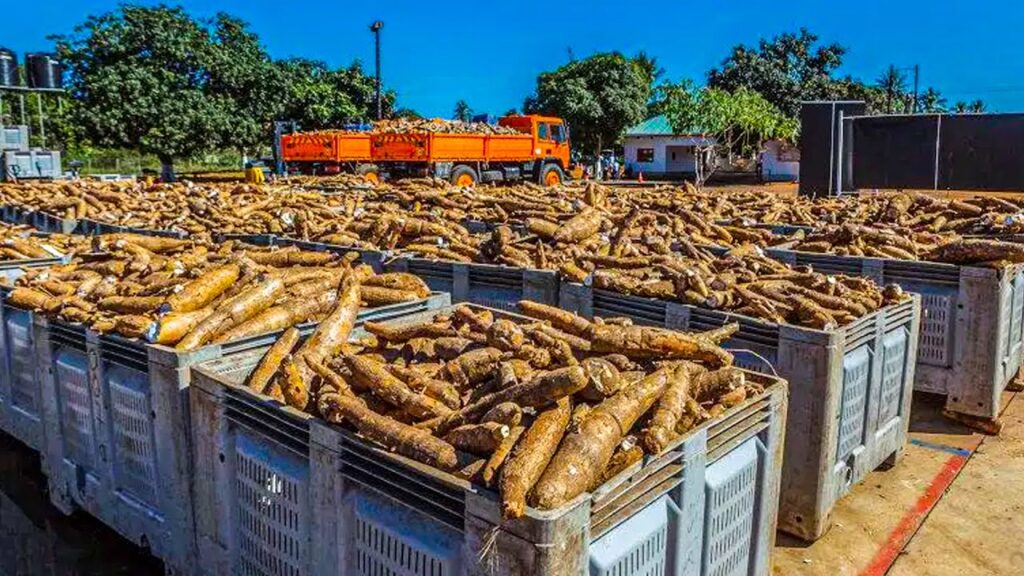
Cassava harvesting
However, planting cassava successfully is only part of the journey. What happens at harvest can determine whether a farmer makes a worthwhile profit or loses a substantial portion of the money invested in land preparation, planting materials, weeding, fertilizer, and labour.
Imagine spending eight months or more caring for a cassava farm, only to discover that many roots are too small, some have been cut by harvesting tools, and others begin to soften or deteriorate before they reach the market. The disappointment can be considerable, especially when the farmer has already made plans to pay workers, settle debts, or finance another planting season.
This is why cassava harvesting deserves as much attention as planting and crop maintenance. The right harvesting decisions help farmers identify mature roots, protect their size and quality, reduce unnecessary waste, and get the best possible value from the crop they have grown.
There is also an important distinction to understand: harvesting techniques do not magically make mature cassava roots larger. Root size is influenced by several factors, including the variety planted, soil fertility, moisture availability, spacing, weed competition, pest and disease pressure, and the length of time the crop grows. Good harvesting practices help preserve the size and quality that the crop has developed, while good management before harvest creates the conditions for better root development.
For Nigerian farmers, knowing the best time to harvest cassava in Nigeria is especially important because planting dates, rainfall patterns, soil types, and cassava varieties differ across states and farming communities. A harvesting schedule that works well for one farm may not be suitable for another.
This comprehensive guide explains eight practical ways to harvest cassava carefully, assess root maturity, reduce post-harvest losses, and improve the profitability of cassava production in 2026. It also discusses common harvesting mistakes, the handling of freshly harvested roots, storage options, and ways farmers can prepare for a more successful next planting season.
The goal is simple: help you make better decisions from the moment you inspect your cassava field to the time your harvested roots are sold, processed, or stored.

What is cassava harvesting, and why is it important in cassava farming?
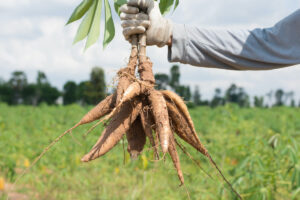
Cassava harvesting is the process of removing mature cassava roots from the soil for consumption, sale, or processing. Although it may appear to be a straightforward agricultural activity, it requires careful timing, suitable tools, proper lifting techniques, and good post-harvest handling.
Unlike maize, rice, and other crops whose mature products are harvested above ground, cassava develops its main economic product underground. This makes harvesting more challenging because farmers cannot always see the size, number, shape, or condition of the roots before digging.
A plant with a healthy-looking canopy may not necessarily produce the largest roots. Similarly, a plant that has experienced some leaf loss may still have useful roots beneath the soil. Farmers therefore need to combine visual observation with knowledge of the variety, planting date, field conditions, and the intended use of the crop.
According to the International Institute of Tropical Agriculture (IITA), cassava can be harvested across a relatively broad period, depending on the variety and growing conditions. The crop’s flexibility is useful, but it also means that farmers should avoid relying on a single fixed harvesting age for every field. The IITA cassava production and post-harvest training manual provides additional guidance on crop management and root handling.
Why proper cassava harvesting matters
Good cassava harvesting practices offer several important benefits.
1. They help preserve root quality. Fresh cassava roots can suffer internal discoloration and deterioration soon after harvest, particularly when they are cut, bruised, or roughly handled.
2. They reduce avoidable farm losses. Roots left broken in the soil, cut into pieces, or discarded unnecessarily represent part of the farmer’s investment that may never generate income.
3. They make processing easier. Whole, healthy roots are generally easier to sort, transport, peel, and prepare for processing than roots that have been badly damaged.
4. They support better market prices. Buyers may reject or discount roots that are rotten, severely bruised, excessively fibrous, or unsuitable for their intended use.
5. They improve farm planning. Harvesting according to demand helps farmers organize labour, arrange transport, and coordinate delivery to garri processors, starch producers, flour mills, and other customers.
6. They help farmers make better decisions for the next season. Observing root size, yield, disease symptoms, and harvesting difficulties provides useful information for selecting varieties and improving field management.
The important lesson is that cassava production does not end when roots reach maturity. A successful harvest depends on how carefully the crop is removed, handled, and moved to its next destination.
Understanding cassava root growth before harvesting
Before looking at the eight harvesting methods, it helps to understand how cassava roots develop and what determines their final size.
Cassava is a perennial woody shrub commonly cultivated as an annual or semi-perennial food crop. Farmers usually establish the crop using stem cuttings rather than seeds. After planting, the cuttings produce shoots and leaves, establish roots, and gradually develop enlarged storage roots that accumulate carbohydrates, particularly starch.
The amount of storage root produced by a plant depends on the interaction between its genetic characteristics and its growing environment.
Factors that determine the size of cassava roots
Variety: Some cassava varieties have greater yield potential or develop roots with different shapes, sizes, and starch characteristics. A high-yielding variety can still perform poorly when planted in unsuitable conditions.
Soil quality: Cassava can tolerate relatively poor soils, but tolerance does not mean that soil fertility is irrelevant. Appropriate nutrient availability, suitable soil structure, and adequate drainage all contribute to healthy growth.
Moisture: Water is necessary for plant establishment, leaf development, and root growth. Prolonged drought can restrict growth, while waterlogged soil can damage roots and increase disease risks.
Spacing: Appropriate spacing allows plants to access sunlight, water, and nutrients without excessive competition. Overcrowding can reduce root development, depending on the variety and growing conditions.
Weed management: Weeds compete with cassava plants for water, nutrients, light, and space. Early weed control is particularly important while cassava is establishing its canopy.
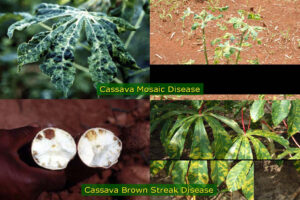
Pest and disease management: Cassava mosaic disease, cassava brown streak disease in affected regions, and pests such as mealybugs or mites can weaken plants and reduce productivity. The specific risks vary by location.
Harvesting age: Roots need enough time to develop, but leaving them in the soil indefinitely is not always beneficial. The best harvesting age depends on variety, climate, soil conditions, market demand, and whether the roots are intended for fresh consumption or industrial processing.
Can farmers make cassava roots bigger immediately before harvesting?
This is a question many cassava farmers ask, especially when the crop is approaching maturity.
The answer is that root size is mainly determined by growth conditions over the preceding months, not by a last-minute harvesting trick. There is no reliable method that can turn small, immature roots into large roots overnight.
Farmers can, however, make decisions that help protect root development and maximize the crop’s potential:
-
Choose a suitable, high-performing variety before planting.
-
Plant healthy, disease-free stem cuttings.
-
Maintain suitable plant spacing.
-
Control weeds during critical growth stages.
-
Manage soil fertility based on field needs.
-
Avoid unnecessary damage to the roots and stems.
-
Harvest when root maturity and market requirements justify it.
-
Prevent excessive deterioration between harvest and sale or processing.
If the cassava crop is already close to maturity, the most useful actions are to assess the roots, plan the harvest, protect the crop from avoidable damage, and arrange prompt transportation or processing.
Best time to harvest cassava in Nigeria
One of the most important decisions in cassava farming is determining when to harvest. Harvest too early, and the roots may not have reached their desired size or starch content. Harvest too late, and the roots may become more fibrous or woody, depending on the variety and environmental conditions.
There is no single month that is best for harvesting cassava throughout Nigeria. Rainfall patterns, planting dates, variety selection, and local soil conditions vary considerably between states and even between neighbouring farms.
How many months does cassava take to mature?
Some cassava varieties can be harvested from around six months after planting for particular uses, while many commercial crops are harvested later. Field trials commonly assess cassava at around nine to twelve months, although this is not a universal maturity rule. Certain varieties and production systems may require longer.
The following table provides a general planning guide, not a guarantee of maturity.
| Approximate age after planting | What farmers should consider |
|---|---|
| 6–8 months | Some early varieties may be suitable for selective harvesting, but root size and starch accumulation need to be checked. |
| 9–12 months | A common period for assessing roots for harvest, depending on the variety and intended use. |
| 12–18 months | Many crops may be harvested during this period if the roots remain suitable and market conditions support harvesting. |
| Beyond 18 months | Some varieties can remain in the ground longer, but root quality, fibre development, pest damage, disease, and land-use needs should be monitored. |
These ranges are indicative. The variety’s recommended maturity period and actual field condition should take priority over the calendar alone.
Signs that cassava roots may be ready for harvesting
Rather than relying only on the number of months since planting, look for several indicators together.
1. The crop has reached its expected age. Check planting records and the variety’s recommended harvest period.
2. The roots have developed adequate size. Carefully inspect a representative plant from the field before deciding whether to harvest the whole plot.
3. The plant’s growth pattern is consistent with its maturity stage. Changes in leaf production, canopy growth, or lower-leaf retention can provide clues, but they are not definitive on their own.
4. The roots suit the intended market. Fresh-food buyers, garri processors, and industrial users may have different preferences for root size, dry matter, starch content, and quality.
5. Weather and soil conditions are suitable. Moist soil can make lifting easier, but excessively wet or waterlogged conditions can complicate field operations and transport.
Does yellowing of cassava leaves mean the roots are mature?
Not necessarily. Yellowing can result from natural ageing, drought, nutrient deficiencies, disease, or other stress factors. A farmer who interprets every yellow leaf as a sign of maturity may harvest too early or overlook a crop-health problem.
Use leaf appearance as one clue among several. Check the crop’s age, variety, root development, and overall health before making a decision.
Should cassava be harvested during the rainy season or dry season?
Both periods can be suitable, depending on the local environment and the condition of the field.
During periods when the soil is moderately moist, roots may be easier to loosen and lift, particularly in heavier soils. However, heavy rain can make roads difficult to use, increase the risk of soil compaction, and complicate moving roots out of the field.
During dry periods, some soils become hard, making digging more labour-intensive. Farmers may need additional tools or more time to loosen the soil around each plant.
The practical approach is to choose a period when the crop is mature, the soil can be worked safely, and harvested roots can be moved promptly.
8 proven and powerful ways to improve cassava harvesting and reduce farm losses
The following eight methods cover the most important stages of a successful cassava harvest, from preparation and maturity checks to careful lifting, sorting, and transportation.
1. Choose the right maturity stage for cassava harvesting
The first step to a successful harvest is deciding whether the crop is ready. Even excellent harvesting tools cannot compensate for a crop that has been removed too early or left beyond its most suitable harvest period.
Farmers sometimes rush to harvest because they need money, want to free land for another crop, or have received an attractive offer from a buyer. These reasons may be understandable, but the decision should still take root maturity and intended use into account.
How to assess cassava maturity before harvesting
Start by reviewing the date of planting. If you know the variety, compare its expected maturity period with the crop’s current age.
Next, walk through different parts of the farm. Soil conditions, drainage, and plant performance can vary across the same field, so do not assess maturity from only one corner.
Select a few representative plants for a sample harvest. Choose plants from different sections of the farm rather than selecting only the healthiest-looking ones. Carefully remove the roots and examine:
-
Root size and shape.
-
The number of usable storage roots.
-
Root firmness and general condition.
-
Evidence of insect damage, rot, or disease.
-
The ease with which the roots can be removed.
-
Whether the roots meet the intended buyer’s requirements.
If the sample harvest indicates that most roots are still too small, consider allowing the crop additional time, provided that the variety, weather, root health, and market situation support doing so.
Why harvesting too early can reduce returns
Immature roots may have lower total weight and may not have developed the desired starch characteristics for certain processed products. If the farmer is paid according to total weight, harvesting before the roots have accumulated sufficient biomass can reduce revenue.
For example, imagine two otherwise similar plots with different harvest dates. The first plot is harvested before the roots reach their expected development stage, while the second is harvested when the roots are sufficiently mature. The second plot may produce a better saleable yield, although actual outcomes depend on variety, soil, water, and crop management.
This is not a reason to leave every crop in the field for as long as possible. Excessive delay can create its own problems, including deteriorating root quality, pest damage, and delayed use of the land.
Practical advice for Nigerian cassava farmers
Keep a simple record of planting dates for each plot. If you plant at different times, mark each section separately. This makes it easier to estimate when harvesting assessments should begin.
Key takeaway: Harvest according to crop maturity, root condition, and intended use—not merely because a particular month has arrived.
2. Prepare the cassava farm and harvesting tools before starting
Preparation is one of the simplest ways to make cassava harvesting more efficient. A farmer who begins digging without suitable tools, enough labour, or a plan for transporting the roots may waste time and damage the crop.
Preparation should begin before the first plant is removed from the ground.
Clear the area around the cassava plants
Remove troublesome weeds and vegetation that obstruct access to the plants. Clear pathways where workers will carry harvested roots, and identify the best route from the field to the collection point.
Do not burn vegetation indiscriminately or leave fires unattended. Where practical, manage plant residues appropriately and avoid activities that create unnecessary risks to people, crops, or the environment.
If the farm is large, divide it into manageable sections. This helps workers understand which plants have been harvested and which remain untouched.
Select the appropriate harvesting tools
The best tool depends on soil texture, root depth, variety, and the scale of the operation.
| Tool | Best use | Important precaution |
|---|---|---|
| Cutlass or machete | Cutting stems and removing obstructing vegetation | Keep the blade away from storage roots and workers’ hands. |
| Digging hoe | Loosening soil around the plant | Avoid chopping directly through roots. |
| Spade or shovel | Digging around root clusters | Insert carefully to prevent deep cuts. |
| Digging fork | Loosening soil in suitable conditions | Work around the root cluster rather than forcing the fork through it. |
| Rope or lifting aid | Helping loosen certain plants after the surrounding soil has been freed | Do not pull so forcefully that roots snap. |
| Wheelbarrow or suitable crates | Moving roots from the field to a collection point | Avoid overloading or crushing the roots. |
Tools should be strong enough for the soil conditions and comfortable for the workers using them. Blunt or unsuitable equipment can make the job harder, while poorly maintained sharp tools can cause injuries.
Organize labour according to the size of the farm
For a small farm, one or two people may be able to carry out the work in stages. A larger farm may need separate teams for lifting plants, removing roots, sorting, loading, and transportation.
Before work begins, explain the importance of avoiding unnecessary cuts and bruises. Workers should know where to place harvested roots and how to separate damaged roots from those intended for fresh sale.
It is also useful to have collection containers ready before the harvest begins. Roots left scattered on the ground are more likely to be stepped on, exposed to excessive sunlight, or damaged during repeated handling.
Why preparation reduces harvesting costs
Poor preparation creates small delays that accumulate. Workers may spend time looking for tools, carrying roots over long distances, or clearing paths while the crop remains exposed.
A well-organized operation can reduce wasted labour, improve harvesting speed, and help ensure that roots are moved promptly to the market or processing area.
Key takeaway: Before harvesting cassava, prepare the tools, field pathways, workers, collection area, and transportation arrangements.
3. Loosen the soil carefully to harvest cassava without damaging the roots
One of the most important cassava harvesting skills is learning how to remove the roots without cutting or breaking them.
Cassava storage roots grow underground and may spread in different directions. Depending on the variety and growing conditions, some roots may be close to the surface, while others extend deeper into the soil.
Trying to pull a plant straight out of hard soil without loosening the root zone can cause roots to break. Digging too close to the plant with a sharp tool can also slice through valuable roots.

How to harvest cassava without damaging the roots
Follow a careful lifting procedure.
Step 1: Inspect the plant. Look at the base of the stem and estimate where the main root cluster may be located. Remove obstructing weeds and debris.
Step 2: Shorten the stems if necessary. Cutting back the upper portion can make the plant easier to handle. Leave enough of the main stem to provide a firm grip where practical. Stem cutting should be done safely and without striking the root cluster.
Step 3: Loosen the soil around the plant. Use a hoe, spade, or digging fork to work around the outside of the expected root cluster. Start far enough away to reduce the chance of cutting the roots.
Step 4: Work progressively deeper. Remove soil in stages, especially when working in compacted or heavy soil. Do not force a tool through an area where roots are likely to be concentrated.
Step 5: Lift gradually. Once the soil has been loosened, hold the remaining stem firmly and lift with a controlled movement. If the plant resists, loosen more soil instead of increasing the pulling force.
Step 6: Free individual roots carefully. When the plant or root cluster is exposed, remove roots one at a time if necessary. Avoid twisting them aggressively or striking them against hard surfaces.
Why roots break during cassava harvesting
Common causes include:
-
Harvesting when the soil is too hard.
-
Pulling plants before the surrounding soil is loosened.
-
Digging too close to the main stem.
-
Using tools that are unsuitable for the soil or root depth.
-
Pulling roots sideways with excessive force.
-
Working too quickly because of labour pressure.
-
Failing to adjust the technique for varieties with different root arrangements.
A broken root is not automatically worthless, but it may deteriorate more quickly than an intact one. If it is suitable for food, handle it hygienically and process it promptly. Do not mix rotten or contaminated roots with healthy roots intended for sale.
Should farmers harvest cassava by pulling or digging?
Both approaches can work, but neither is suitable for every field.
Pulling may be effective in loose soil when the root cluster can be loosened sufficiently. Digging is often necessary where soil is compacted, roots are deep, or the plant resists lifting.
In many situations, a combination of digging and controlled lifting is the most practical approach.
Key takeaway: Loosen the soil before lifting. A few extra minutes spent freeing a plant can prevent the loss of several usable roots.
4. Choose the right harvesting method for the cassava variety and soil
Cassava harvesting methods should be adapted to field conditions rather than applied identically everywhere.
The most suitable method depends on the size of the farm, the number of workers available, soil texture, plant arrangement, and whether roots are intended for fresh sale, household consumption, or processing.
Manual cassava harvesting
Manual harvesting remains practical for many smallholder farms because it requires relatively simple equipment and can be adapted to individual plants.
The process typically involves cutting back stems where necessary, loosening soil around the root cluster, lifting the plant, separating the roots, and collecting them for sorting.
Advantages include:
-
Relatively low equipment costs.
-
Flexibility when dealing with unevenly developed plants.
-
Better opportunities to inspect individual roots.
-
Suitability for smaller plots and mixed farming systems.
The disadvantages are the labour required and the possibility of damage when workers use poor techniques or rush.
Semi-mechanized cassava harvesting
Some farms use tractors, powered equipment, or mechanical lifting aids to loosen soil and raise root clusters. These methods can increase work rates under suitable conditions.
However, machinery must match the field layout, soil conditions, and root arrangement. Incorrect adjustment can cut roots, leave roots buried, damage plants that should remain in the field, or increase operating costs.
For smaller farms, renting equipment or arranging cooperative access may be more practical than purchasing expensive machinery.
Mechanized harvesting
Mechanized harvesting can be useful on suitable large-scale farms where labour availability, field size, soil conditions, and crop uniformity justify the investment.
However, cassava roots do not grow in a perfectly uniform pattern. Machinery that works well in one field may perform poorly in another. Equipment costs, fuel, maintenance, operator skills, and root losses must all be considered.
Before investing in a mechanized system, farmers should compare its total cost with the cost of manual harvesting, including labour, damage, speed, and the value of roots recovered.
Comparison of cassava harvesting methods
| Harvesting method | Main advantage | Main limitation | Most suitable situation |
|---|---|---|---|
| Manual digging and lifting | Flexible and relatively affordable to start | Labour-intensive | Small and medium-sized farms |
| Pulling after loosening soil | Can be quick in suitable soil | Roots may break if soil remains compacted | Loose soil and accessible root clusters |
| Semi-mechanized lifting | Reduces some physical labour | Equipment access and adjustment are required | Medium-sized or organized commercial farms |
| Mechanized harvesting | Can cover large areas efficiently | Higher capital and operating costs; damage is possible | Large farms with suitable field conditions |
No harvesting method guarantees zero damage. Farmers should select the approach that offers the best balance between speed, cost, root recovery, and quality.
5. Handle cassava roots immediately after harvesting
Removing the roots from the soil is only the beginning of post-harvest management. Once detached from the plant, fresh cassava roots can deteriorate quickly, making prompt handling essential.
This is one of the most frequently overlooked stages of cassava production. A farmer may harvest healthy, attractive roots but lose much of their value by leaving them exposed for too long or delaying transportation to a processor.
The Food and Agriculture Organization of the United Nations (FAO) explains that fresh cassava roots are highly perishable and that injury can contribute to deterioration. Its technical guidance on handling and storage of fresh roots and tubers discusses practical ways to reduce damage and extend the usable period under appropriate conditions.
Why freshly harvested cassava roots deteriorate
Cassava roots remain biologically active after harvest. Wounding and other physiological changes can trigger internal discoloration, while microorganisms may later contribute to decay.
Early deterioration may appear as blue, dark, or brownish streaks inside the root. Later damage may include softening, unpleasant odours, and visible rot.
The speed of deterioration varies with variety, temperature, root condition, handling, and storage conditions. For planning purposes, farmers should treat fresh cassava as a crop that needs prompt delivery or processing rather than assuming it can remain in good condition for many days without special care.
Practical steps for handling harvested cassava
1. Collect roots promptly. Avoid leaving harvested roots scattered across the field for extended periods.
2. Keep them out of excessive direct sunlight. Use a shaded collection point while arranging transportation or sorting.
3. Avoid throwing roots into piles. Dropping them from a height or repeatedly striking them together can cause bruises and internal injuries.
4. Separate damaged roots. Roots that are badly cut, broken, or bruised should be assessed separately and prioritized for appropriate processing if they remain suitable.
5. Use suitable containers. Crates, baskets, or other clean containers can help reduce rough handling when used correctly.
6. Plan transportation in advance. Arrange a vehicle, cart, or other suitable means of moving roots before harvesting large quantities.
7. Keep the collection area clean. Reduce contact with dirty water, waste, chemicals, and decaying plant material.
Should cassava roots be washed immediately after harvesting?
It depends on the intended use and the storage or processing arrangement.
Roots destined for immediate processing can be cleaned according to the processor’s requirements. Roots intended for fresh storage should be handled according to an appropriate method because unnecessary washing, moisture retention, or rough cleaning may create additional problems if the roots are not properly dried or stored.
Avoid using contaminated water, and do not leave roots soaking without a suitable processing plan.
Why damaged cassava roots should be handled separately
Damaged roots are more vulnerable to deterioration. Separating them helps the farmer identify which roots need urgent attention and prevents spoiled material from contaminating or being mixed with healthy produce.
The priority should be to use suitable roots promptly while rejecting roots that are rotten or otherwise unsafe. Do not assume that cooking or processing will make every spoiled root safe.
Key takeaway: Handle fresh roots gently, keep them appropriately shaded, sort damaged produce, and organize prompt transportation or processing.
6. Sort cassava roots properly to reduce farm losses
Sorting is the process of separating harvested cassava roots according to quality, size, condition, and intended use. It may seem like an additional task, but it can save money by helping farmers identify damaged produce before it affects the rest of the harvest.
Sorting also makes it easier to meet different buyers’ requirements. A processor purchasing cassava for garri may have different preferences from a trader selling fresh roots to households.
How to sort harvested cassava roots
After collecting the roots, inspect them carefully and divide them into suitable groups.
Group A: Healthy, intact roots. These roots have no obvious serious cuts, rot, or other defects. They may be suitable for fresh sale, depending on the buyer’s requirements.
Group B: Slightly damaged but otherwise suitable roots. These may include roots with minor injuries or broken tips. They should be assessed carefully and prioritized for prompt use or processing where appropriate.
Group C: Small or irregular roots. These may still be valuable, depending on the market. Some buyers accept a range of root sizes, while others prefer larger or more uniform produce.
Group D: Roots showing signs of deterioration. Roots with serious softening, mould, unusual odours, or extensive discoloration should be kept separate and assessed for safe disposal. Do not mix them with healthy produce.
The groups are a practical farm-management system rather than a universal grading standard. If a commercial buyer provides specific grading requirements, follow those requirements.
Should small cassava roots be discarded?
Not necessarily. Small roots may still be suitable for household consumption or processing, provided they are healthy and the intended use is appropriate.
The farmer should consider the cost of collecting, transporting, and processing them. If the roots are usable and the buyer accepts them, selling or processing them may be better than leaving them in the field.
However, do not confuse small roots with immature roots that lack the desired quality for a particular product. Size alone does not determine suitability.
How sorting helps improve farm income
Sorting creates a clearer picture of the harvest. Farmers can estimate the quantity of marketable produce, identify the proportion affected by damage, and determine whether a different harvesting method may be needed in the future.
It also helps prevent a common business mistake: negotiating the sale of a large quantity of cassava without knowing how much of the harvest is actually usable.
For example, a farmer who separates sound roots from badly damaged ones can discuss quantity and quality with buyers more accurately. This can improve trust and make future transactions easier.
Key takeaway: Sort roots immediately after harvest, prioritize damaged but usable roots for prompt processing, and never mix spoiled produce with healthy roots.
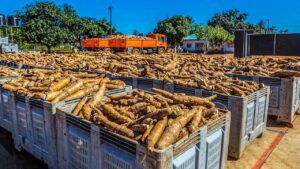
7. Plan transportation and storage before harvesting cassava
Many cassava losses occur not because the farmer grows a poor crop, but because the harvested roots cannot reach their destination quickly enough.
Imagine harvesting several tonnes of cassava when the processor has no space to receive them or the available vehicle cannot carry the entire load. The roots may remain on the farm while their quality declines.
Good cassava production therefore includes planning for what happens after harvesting.
Arrange a buyer or processing destination in advance
Where possible, contact buyers before harvesting. Confirm:
-
The quantity they can accept.
-
The expected delivery date and time.
-
Their preferred root sizes and quality standards.
-
The price and payment arrangements.
-
Who will pay for transportation.
-
Whether unloading and processing can begin immediately.
Farmers who sell to garri processors, flour producers, starch businesses, or other commercial users should coordinate harvesting with the buyer’s processing capacity.
If the buyer needs roots on a particular day, organize labour and harvesting so the produce is ready close to the agreed delivery time.
How to transport cassava roots safely
During loading and transport, the aim is to minimize cuts, bruises, crushing, contamination, and delays.
Use suitable containers or a vehicle that can carry the load without excessive compression. Avoid throwing roots into the vehicle or repeatedly transferring them from one pile to another.
Do not overload carts or vehicles to the point that roots are crushed under their own weight. Where practical, keep the load protected from excessive sunlight and rain while allowing appropriate ventilation.
Choose a route that minimizes unnecessary delays. Poor roads may increase both travel time and physical damage, so transport planning is particularly important during the rainy season.
Can fresh cassava be stored after harvesting?
Yes, but the options and duration depend on the method used, root condition, temperature, and intended use. Fresh cassava is much more perishable than many other staple crops.
Traditional approaches include leaving mature roots in the ground until needed, while improved methods may involve carefully controlled storage or preservation techniques. Each option has limitations.
Option 1: Leave mature cassava in the ground
Where the variety and field conditions permit, farmers may harvest roots progressively instead of removing the entire crop at once.
Advantages include:
-
Reducing the need for immediate storage space.
-
Allowing harvesting to match demand.
-
Avoiding the need to move the entire crop at once.
However, this is not risk-free. Roots may become more fibrous, suffer pest or disease damage, or experience changes in quality. Leaving mature cassava in the soil also prevents that land from being used for the next crop.
Option 2: Use short-term storage for fresh roots
Some traditional or improved methods can preserve fresh roots for a limited period. Their effectiveness depends on careful handling, suitable environmental conditions, and the particular method used.
Storage in moist media or specially designed systems may be useful in some situations, but farmers should follow a reliable technical procedure rather than improvise conditions that could encourage rot.
Option 3: Process cassava into a more stable product
Processing is often the more practical solution when fresh roots cannot be sold or consumed quickly.
Depending on local demand and the available facilities, healthy roots can be processed into products such as garri, properly prepared fermented cassava products, flour, or dried chips.
Processing methods must be appropriate for the product and include the necessary food-safety steps. Cassava contains naturally occurring cyanogenic compounds, so the roots must be properly processed before consumption. Never assume that simple drying or casual storage alone makes every cassava product safe.
Why storage decisions should be made before harvesting
Storage capacity determines how much cassava a farmer can safely harvest at once. If the farmer has no suitable storage system and no confirmed buyer, harvesting the whole field may create unnecessary losses.
Where possible, match daily harvesting quantities to transportation and processing capacity.
Key takeaway: Arrange the buyer, vehicle, storage method, and processing destination before harvesting large quantities of cassava.
8. Record harvesting results and use them to improve the next cassava crop
The final method is often neglected by smallholder farmers: measuring what happened during harvesting.
Many farmers know whether their cassava harvest was good or disappointing, but they do not always record the information needed to explain why. Without basic records, it becomes difficult to compare varieties, identify weak sections of the farm, or determine whether a new management practice improved the yield.
What information should cassava farmers record?
A simple notebook or spreadsheet can contain the following information:
-
Variety planted.
-
Planting date.
-
Farm location or plot number.
-
Land area cultivated.
-
Plant spacing.
-
Fertilizer or soil amendments applied, including quantities.
-
Major pest, disease, or weather problems.
-
Harvesting date.
-
Total weight harvested, if weighing is available.
-
Quantity sold, processed, retained, or discarded.
-
Labour and transportation costs.
-
Sale price and total revenue.
These records do not need to be complicated. Even a basic record of planting dates, harvest weights, expenses, and sales can improve decision-making.
Measure yield instead of relying only on appearance
A cassava farm may look productive because the plants have large canopies, but visual appearance does not always reveal the quantity of marketable roots beneath the soil.
If possible, weigh the harvested roots and record the area from which they were collected. This allows the farmer to estimate yield per unit of land.
For example, if a farmer harvests 2,000 kilograms from half a hectare, the estimated yield is 4,000 kilograms per hectare, assuming the measured area and harvested quantity are accurate and representative.
This simple calculation makes it easier to compare fields and seasons. It does not explain every difference in performance, but it provides a useful starting point.
Calculate whether cassava harvesting was profitable
Total sales do not equal profit. Farmers must account for production and harvesting expenses.
A basic calculation is:
Farm profit = Total revenue − Total production and marketing costs
Costs may include:
-
Land preparation.
-
Planting materials.
-
Planting labour.
-
Weeding.
-
Fertilizer and other inputs.
-
Harvesting labour.
-
Loading and transportation.
-
Processing or storage.
-
Market fees and other relevant expenses.
Suppose a farmer receives ₦500,000 from cassava sales but spends ₦350,000 on all relevant production and marketing costs. The estimated profit before any omitted expenses or taxes would be ₦150,000.
The figures are illustrative, not a prediction of what cassava farming will earn in Nigeria. Actual profitability depends on yield, location, input costs, selling price, and many other factors.
Use the harvest results to improve future production
If the roots are smaller than expected, investigate the variety, planting date, soil fertility, weed competition, moisture conditions, plant spacing, and crop health.
If many roots are cut or broken, review the harvesting technique, tool choice, soil condition, and worker training.
If a large quantity deteriorates before sale, improve buyer coordination, transport, handling, or processing arrangements.
If harvesting labour costs are unusually high, consider better field organization, appropriate equipment, or cooperative labour arrangements.
The goal is not simply to harvest more cassava. It is to produce a saleable crop efficiently and retain more of its value.
Key takeaway: Record the harvest, calculate costs, identify the biggest losses, and use those findings to guide the next planting season.
Common cassava harvesting mistakes farmers should avoid
Even experienced farmers can lose valuable produce when harvesting is rushed or poorly organized. Understanding common mistakes can help you prevent unnecessary losses and improve the quality of your harvest.
1. Harvesting before the roots are ready
Harvesting too early may result in smaller roots and lower total yield. Always assess the variety, planting date, root development, and intended use before making the decision.
2. Leaving mature cassava in the ground for too long
Although some varieties can remain in the soil beyond their usual harvest period, this does not mean that indefinite delay is beneficial. Root quality, fibre development, pest damage, disease, and land-use requirements should all be considered.
3. Pulling plants without loosening the soil
This is one of the main causes of broken roots. If the plant resists lifting, loosen more soil rather than pulling harder.
4. Using unsuitable harvesting tools
Tools that are too short, blunt, poorly maintained, or inappropriate for the soil can make harvesting slower and increase the risk of damage. Select equipment according to field conditions.
5. Throwing roots into large piles
Rough handling can cause bruising and cuts. Place roots carefully in a collection area and avoid repeatedly moving them from one pile to another.
6. Leaving harvested roots exposed for too long
Fresh cassava deteriorates quickly after harvest. Delays in transportation, processing, or appropriate storage can reduce quality and market value.
7. Mixing damaged roots with healthy roots
Sorting helps identify roots that need prompt attention. Mixing rotten or severely damaged roots with sound produce can complicate quality control and increase the risk of selling unsuitable produce.
8. Harvesting without a sales or processing plan
Harvesting a large quantity without arranging buyers, transport, or processing capacity can create avoidable delays. Plan the operation around the amount you can move and handle appropriately.
9. Ignoring the cost of harvesting
A high yield does not automatically mean a high profit. Harvesting labour, transport, processing, and losses can consume a significant part of the revenue. Record costs and compare them with sales.
How to get bigger cassava roots before harvesting: What farmers should do
Although this article focuses on harvesting, it is important to understand that large, healthy roots begin with sound crop management.
If you want better cassava yields in the next season, consider these practices.
Select suitable cassava varieties
Choose varieties with good yield potential and characteristics suited to your location and intended market. Consider maturity period, disease resistance, root quality, starch content, and availability of healthy planting material.
Ask a reputable agricultural extension officer or local agricultural research service which varieties are recommended for your area. A variety that performs well in one environment may not produce the same results elsewhere.
Use healthy stem cuttings
Cassava is commonly propagated through stem cuttings. Poor-quality planting materials can lead to weak establishment, uneven growth, and the spread of certain pests or diseases.
Select healthy, mature stems from reliable sources. Follow local recommendations for cutting length, planting orientation, and planting conditions.
Maintain appropriate plant spacing
Spacing affects the amount of sunlight, water, and nutrients available to each plant. Excessive crowding can increase competition, while inappropriate spacing may reduce the number of plants established per unit of land.
Use spacing recommendations suited to the variety, production system, and soil conditions rather than assuming that closer planting always produces more roots.
Manage weeds early
Weeds can compete strongly with young cassava plants. Regular inspection and timely weed control help the crop establish itself and develop a healthy canopy.
Choose weed-management methods that are suitable for the farm and safe for workers. If herbicides are used, follow the product label, local regulations, and appropriate protective measures.
Maintain soil fertility
Cassava’s ability to tolerate some low-fertility soils should not be mistaken for an absence of nutrient requirements.
Where practical, assess soil conditions and apply nutrients according to crop needs. Organic matter management, suitable crop rotations, erosion control, and balanced fertilizer use can support longer-term soil productivity.
Avoid applying fertilizer indiscriminately. The right type and amount depend on soil fertility, crop requirements, and local recommendations.
Protect the crop from drought, waterlogging, pests, and diseases
Good field management helps the plant develop roots under favourable conditions. Establish the crop at a suitable time, monitor rainfall and soil moisture, maintain drainage, and inspect plants regularly for signs of stress.
Where a pest or disease is suspected, seek appropriate identification before choosing a control method. Incorrect treatment may waste money without solving the underlying problem.
Avoid excessive leaf harvesting
Cassava leaves can be a valuable food and income source, but removing too much foliage may affect the plant’s ability to produce carbohydrates and develop storage roots. If leaves are harvested for consumption or sale, use a management approach that balances leaf production with root yield.
The central lesson is that root size is the result of the whole production process. Careful harvesting protects that investment, while effective management before harvest helps determine the crop’s potential.
Cassava harvesting checklist for farmers
Use this checklist before, during, and after harvesting.
Harvest preparation checklist
0/15 completed
Before harvesting
During harvesting
After harvesting
Copy checklist
Frequently asked questions about cassava harvesting
1. What is the best time to harvest cassava in Nigeria?
The best time depends on the cassava variety, planting date, local climate, soil conditions, and intended use. Some varieties may be harvested from around six months for particular purposes, while many crops are assessed for harvest at nine to twelve months or later. Check root development instead of relying only on a fixed number of months.
2. How many months does cassava take to produce big roots?
Cassava root development varies by variety and growing conditions. Many crops require several months to develop substantial storage roots, and some continue to grow beyond the first year. Healthy planting materials, suitable spacing, soil fertility, moisture, and effective weed control all influence root development.
3. How can I harvest cassava without damaging the roots?
Loosen the soil around the root cluster with an appropriate tool before lifting the plant. Work progressively, avoid digging directly through the roots, and do not pull forcefully when the plant resists. Handle exposed roots gently and collect them promptly.
4. Can cassava remain in the ground after maturity?
Yes. Some cassava varieties can remain in the ground for months after reaching maturity, depending on local conditions. However, prolonged field retention can affect root quality, increase exposure to pests and diseases, and delay the use of the land for another crop.
5. Why do cassava roots become soft after harvesting?
Softening can result from deterioration and microbial decay. Fresh cassava roots are perishable, particularly when damaged or stored under unsuitable conditions. Handle roots carefully and arrange prompt sale, consumption, processing, or an appropriate storage method.
6. How long can fresh cassava roots be stored after harvesting?
Fresh cassava roots may begin to deteriorate within about 24–48 hours, with visible or more extensive deterioration developing over the following days. The exact timing depends on variety, temperature, handling, injury, and storage conditions. Plan to process or sell the roots promptly rather than relying on prolonged storage without a suitable preservation method.
7. Is it better to harvest cassava during the rainy season?
Not always. Moderately moist soil can make digging easier, but heavy rain may complicate field access and transportation. Dry, compacted soil may require more digging and labour. Choose conditions that allow safe harvesting and prompt movement of the roots.
8. Can I increase cassava root size just before harvesting?
There is no reliable last-minute technique that can substantially increase the size of mature roots overnight. Root size depends on the crop’s growth history. Near harvest, focus on maturity assessment and damage prevention. For the next crop, improve variety selection, planting material, spacing, weed control, and soil management.
9. Should I wash cassava roots before selling them?
Follow the buyer’s requirements and the intended handling method. Washing can be appropriate for certain marketing and processing arrangements, but use clean water and avoid rough handling or storing wet roots under unsuitable conditions. Some buyers prefer roots delivered with their original soil removed only to a specified extent.
10. What should I do with broken cassava roots?
Separate broken roots from intact ones. If the roots are fresh, sound, and suitable for the intended use, prioritize prompt processing. Discard roots showing serious rot, contamination, or other signs that make them unsuitable for consumption or processing.
11. What is the most profitable way to sell harvested cassava?
Profitability depends on the farm’s location, yield, market prices, transport costs, processing access, and buyer requirements. Compare the net return from selling fresh roots with the cost and potential return of processing them into products such as garri or flour. Processing may add value, but it also requires labour, equipment, time, and appropriate food-safety practices.
12. What causes cassava roots to be small?
Possible causes include unsuitable varieties, poor-quality planting material, weed competition, inadequate nutrients, drought, waterlogging, pests, diseases, unsuitable spacing, and harvesting before sufficient root development. Examine the crop’s growing history before deciding which corrective measures are needed.
Conclusion: Make every cassava harvest count
Cassava harvesting is a crucial stage of cassava farming because it determines how much of the crop’s potential value is actually recovered. A healthy crop can still generate disappointing returns if roots are harvested too early, broken during lifting, damaged during transport, or left to deteriorate before processing.
The eight methods discussed in this guide provide a practical approach to reducing these losses: harvest at the appropriate maturity stage, prepare tools and labour, loosen soil carefully, select a suitable harvesting method, handle roots gently, sort them properly, arrange transportation and storage, and record results for future improvement.
Remember that bigger cassava roots begin with good crop management, while careful harvesting protects the value of those roots. There is no single harvesting month or technique that works perfectly for every farm. The best decisions depend on the variety, soil, weather, intended market, and available resources.
For Nigerian farmers, the opportunity lies in treating cassava production as a complete business rather than stopping at the point of harvest. By reducing avoidable damage, coordinating with buyers, processing roots promptly, and keeping reliable records, farmers can make better use of their investment and improve future farming decisions.
Start by inspecting your field, assessing root maturity, and preparing your harvesting plan before removing the first plant. Small improvements at each stage can make a meaningful difference to the quantity and quality of cassava that reaches the market.
About The Author