Watermelon Farming
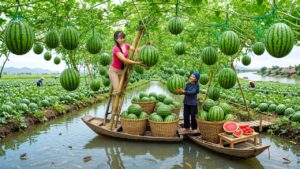
There is something interesting about watermelon farming in Nigeria: from a distance, it looks simple.
You plant the seed, the vine spreads across the field, flowers appear, fruits develop and, after some weeks, you harvest.
But anyone who has actually farmed watermelon knows that the difference between an average harvest and a commercially attractive harvest is rarely the seed alone.
Timing matters. Soil matters. Water matters. Pollination matters. Variety matters. Pest management matters. And perhaps most importantly, the market matters.
That is why approaching watermelon production as a business rather than simply planting a crop can make a major difference.
Watermelon (Citrullus lanatus) is a warm-season crop that responds strongly to environmental and management conditions. Research conducted in Ikom, Cross River State, for example, found substantial differences in watermelon performance depending on planting date and variety. In that study, a Koloss variety planted on September 8 produced the highest reported total fruit yield, reaching 47.77 tonnes per hectare under the experimental conditions. That figure should not be treated as a guaranteed Nigerian farm yield, but it demonstrates how strongly management and local conditions can influence results.
The lesson is important for farmers entering 2026–2027:
There is no single watermelon formula that works identically on every farm in Nigeria.
A farmer in Kano may approach production differently from one in Oyo, Cross River, Kaduna, Benue, Nasarawa or Ogun. Rainfall patterns, soil type, irrigation availability, market access, disease pressure, temperature and planting date can all change the economics.
This guide therefore focuses on the principles that can be adapted to different Nigerian production areas.
Watermelon Farming Nigeria: The 9 Secrets That Can Make or Break Your Farm
Before going into the detailed production process, here are the nine major areas this article will cover:
- Choose the right location and planting window
- Select suitable, quality watermelon seed
- Prepare fertile, well-drained soil
- Manage water carefully
- Feed the crop according to soil and crop needs
- Protect the vines from weeds, pests and diseases
- Improve pollination and fruit set
- Harvest at the right maturity stage
- Treat marketing and farm budgeting as part of production
These nine areas are interconnected.
For example, excellent seed cannot rescue a field with poor drainage. Good fertilizer cannot compensate for poor pollination. High yield cannot guarantee watermelon profit if the farmer harvests when prices have collapsed or transports damaged fruits to market.
Successful watermelon farming is therefore better understood as a chain.
If one major link fails, the entire business can suffer.
Watermelon Farming: 1. Choose the Right Location and Planting Time
One of the first questions a new farmer should ask is not, “Which fertilizer should I buy?”
It is:
“Where and when should I plant?”
Watermelon is a warm-season crop. It performs best where temperatures are sufficiently warm and where the soil drains well. Commercial production guides emphasize the importance of warm growing conditions, good soil drainage and a reliable moisture supply.
Nigeria has an advantage here because many parts of the country have climatic conditions capable of supporting watermelon production.
However, that does not mean every month is equally suitable.
Watermelon Farming Nigeria and the Importance of Planting Windows
The best time to plant watermelon in Nigeria depends on your location, rainfall pattern, irrigation system and target market.
This is one area where farmers should avoid blindly copying another farmer’s calendar.
A planting date that works in one state may not produce the same result somewhere else.
A 2026 Nigerian study from Ikom, Cross River State provides a useful example. Researchers compared September 8, September 28 and October 18 planting dates and found that September 8 produced the strongest performance among the dates tested. The September 8 planting date produced substantially more fruits per plant than the later dates, and the combination of Koloss variety and September 8 planting produced 47.77 tonnes per hectare in that experiment.
This does not mean every Nigerian farmer should plant watermelon on September 8.
Instead, it shows why local planting-date research matters.
Factors to consider before choosing your planting date
Consider:
- Expected rainfall
- Availability of irrigation
- Soil drainage
- Expected temperature
- Historical pest pressure
- Disease pressure
- Labour availability
- Expected harvesting period
- Local market demand
- Transportation conditions
- Availability and price of farm inputs
Rainy-season versus dry-season production
Watermelon can be produced during different periods depending on the production system.
Rain-fed farming can reduce irrigation costs, but excessive rainfall can create its own challenges.
Heavy rainfall may:
- Waterlog poorly drained fields
- Increase humidity around the crop
- Encourage certain fungal and bacterial diseases
- Make field operations difficult
- Cause nutrient losses
- Complicate harvesting and transportation
On the other hand, dry-season production can offer better control over water when irrigation is available.
But irrigation itself becomes an additional cost.
This is why farmers should not automatically assume that dry-season watermelon farming is more profitable.
The correct question is:
Will the additional revenue from the production window justify the additional cost of irrigation, labour and water management?
Watermelon Farming: 2. Choose the Right Variety and Quality Seed
Seed selection is another decision that can influence the entire crop.
Many new farmers focus heavily on the price of a seed packet.
That can be a mistake.
The cheaper seed is not automatically the cheaper production option.
If poor-quality seed results in weak germination, uneven growth, poor fruit quality or susceptibility to certain problems, the farmer may spend more money trying to compensate later.
Watermelon Farming Nigeria Requires Market-Suitable Varieties
There are many watermelon varieties and hybrids, and their characteristics differ.
Depending on the market, farmers may care about:
- Fruit size
- Fruit shape
- Flesh colour
- Sweetness
- Seeded or seedless characteristics
- Skin appearance
- Transportability
- Maturity period
- Disease resistance
- Yield potential
- Consumer preference
A variety that produces very large fruits may not necessarily be the best commercial choice if your customers prefer medium-sized fruits.
Likewise, a variety that performs well under one set of environmental conditions may perform differently elsewhere.
Research in Cross River State has demonstrated this point. A 2023 study recorded differences among Heracles F1, Kaolack and Sugar Baby varieties under acidic-soil conditions, with Heracles F1 and Kaolack outperforming Sugar Baby in several growth and yield characteristics in that particular experiment. (FAO AGRIS)
Again, the lesson is not that one variety is universally superior.
The lesson is that variety selection should be connected to your location, soil, production system and market.
What to check when buying watermelon seed
Before purchasing, check:
- Seed source
- Variety name
- Germination information
- Production characteristics
- Recommended growing conditions
- Disease resistance information where available
- Packaging and expiry information
- Whether the seed is genuine
- Whether the variety is suitable for your target market
Avoid buying unidentified seed simply because someone says it produces “very big watermelon.”
Seeded versus seedless watermelon
Seedless watermelon can attract consumer interest, but seedless production can require more careful management.
Commercial production guidance notes that seedless triploid watermelon needs a pollinator variety because the seedless plants require compatible pollen for fruit production.
Therefore, anyone planning commercial seedless production should understand the pollination requirements before planting.
Watermelon Farming: 3. Prepare the Soil Before Planting
One of the most overlooked secrets in watermelon farming is that the crop’s success begins before the seed enters the ground.
If the field is poorly prepared, the farmer may spend the rest of the season trying to fix problems that could have been prevented.
Watermelon Farming Nigeria and Soil Drainage
Watermelon prefers soil with good water movement.
The field should hold enough moisture for plant growth while allowing excess water to drain away.
This is especially important in areas where heavy rainfall occurs.
Waterlogged conditions can create problems for roots and increase disease risks.
Raised beds can therefore be useful where drainage is a concern.
Soil testing before planting
A soil test can help answer important questions:
- What is the soil pH?
- How much organic matter is present?
- What nutrients are available?
- Is phosphorus adequate?
- Is potassium adequate?
- Is the soil excessively acidic?
- Does the field require a soil amendment?
Rather than applying fertilizer based purely on what another farmer used, soil testing gives you information specific to your field.
Commercial production guidance also recommends basing fertilizer decisions on soil testing where possible.
Soil pH and watermelon production
Watermelon performs well within a moderately acidic to near-neutral soil range.
One commercial production guide gives a preferred soil pH range of approximately 5.8–6.6.
However, soil requirements should be interpreted according to local conditions and soil-test results rather than treated as a universal prescription.
This is particularly relevant in parts of southern Nigeria where acidic soils may occur.
Research in Calabar found that lime application increased soil pH in an acidic soil experiment and influenced watermelon growth and yield.
That does not mean every farmer should immediately apply lime.
It means:
Test first. Correct the soil according to the actual deficiency or acidity problem.
Preparing the field
Depending on your production system, field preparation may include:
- Clearing existing vegetation
- Removing problematic perennial weeds
- Ploughing where appropriate
- Harrowing
- Forming beds or ridges
- Incorporating suitable organic matter
- Installing irrigation
- Marking planting positions
- Creating drainage channels where necessary
The goal is not simply to make the field look neat.
The goal is to create an environment where watermelon roots can develop while water, nutrients and air are available in appropriate proportions.
Watermelon Farming: 4. Master Water and Irrigation Management
If there is one resource that can quickly determine whether watermelon production succeeds or struggles, it is water.
But watermelon does not simply need “a lot of water.”
It needs well-managed water.
Too little water can stress the crop.
Too much water can create other problems.
Watermelon Farming Nigeria and Irrigation
Where rainfall is unreliable, irrigation can give farmers greater control.
Drip irrigation is particularly useful because it delivers water close to the root zone and can also support fertigation, where soluble nutrients are supplied through irrigation.
Commercial watermelon guidance identifies drip irrigation as a useful production method and notes that it can support crop growth, yield and fertilizer application.
Research-based nutrient guidance also supports the use of drip irrigation and fertigation as tools for improving water and nutrient efficiency.
Why inconsistent irrigation can become expensive
Imagine a farmer allows the crop to experience serious water stress and then suddenly applies a large quantity of water.
That approach is not the same as maintaining relatively consistent moisture.
Sudden changes in water availability can contribute to fruit-quality problems.
Commercial production guidance warns that excess water, particularly as fruit approaches maturity, can contribute to fruit cracking. (Penn State Extension)
Practical irrigation principles
A farmer should monitor:
- Soil moisture
- Weather conditions
- Crop growth stage
- Soil type
- Drainage
- Irrigation equipment
- Signs of water stress
- Rainfall
The crop’s water needs can change as it moves from establishment through vine development, flowering and fruit enlargement.
Rather than using a rigid watering schedule copied from another farm, observe your own field.
Irrigation equipment should be included in the budget
When calculating watermelon farming cost and profit in Nigeria, remember that irrigation can involve:
- Water source development
- Pump
- Fuel or electricity
- Pipes
- Drip lines
- Filters
- Labour
- Maintenance
- Replacement parts
Ignoring these expenses can make an apparently profitable farm look more profitable on paper than it actually is.
Watermelon Farming: 5. Feed the Crop Without Wasting Money on Fertilizer
Fertilizer can increase crop performance when nutrients are limiting.
But more fertilizer does not automatically mean more watermelon.
That is one of the most expensive misconceptions in commercial farming.
Watermelon Farming Nigeria and Soil Fertility
The appropriate nutrient programme depends on:
- Soil fertility
- Soil pH
- Variety
- Plant population
- Irrigation
- Expected yield
- Organic matter
- Previous crop
- Fertilizer source
This is why fertilizer recommendations should ideally start with soil testing.
Research on watermelon nutrient management has shown that nutrient response is affected by irrigation, fertilizer placement and other production factors.
Nitrogen needs attention
Nitrogen supports vegetative growth, but excessive nitrogen can produce excessive vegetative growth without necessarily delivering the fruit-quality outcome the farmer wants.
The objective should therefore be balanced nutrition, not maximum fertilizer use.
Phosphorus and potassium
Phosphorus is associated with root development and plant reproductive processes, while potassium has important roles in plant water regulation and fruit development.
However, applying large amounts of nutrients without knowing what the soil already contains can waste money.
The better approach is:
- Test the soil.
- Identify nutrient needs.
- Select suitable fertilizer sources.
- Apply the correct amount.
- Apply at appropriate stages.
- Monitor the crop.
- Adjust future programmes using field results.
Organic matter
Well-managed organic matter can contribute to soil structure and nutrient management.
Possible sources include properly prepared:
- Compost
- Well-decomposed animal manure
- Other suitable organic amendments
Fresh manure should not simply be dumped around the crop.
Poorly managed manure can create nutrient, sanitation and crop-safety problems.
Watermelon Farming: 6. Control Weeds, Pests and Diseases Early
A watermelon field can look healthy in the morning and start showing serious problems surprisingly quickly.
This is why pest and disease management should not begin only after the farmer sees severe damage.
The better approach is regular monitoring and early intervention.
Watermelon Farming Nigeria and Weed Control
Weeds compete with watermelon for:
- Water
- Nutrients
- Space
- Light
They can also create a more humid environment around the crop and may provide shelter or alternative hosts for some pests and pathogens.
UF/IFAS disease-management guidance notes that weeds around watermelon can increase moisture and interfere with disease-management practices. (Ask IFAS – Powered by EDIS)
Common pest groups to monitor
Depending on the location and season, watermelon farmers may encounter pests such as:
- Aphids
- Whiteflies
- Thrips
- Beetles
- Caterpillars
- Mites
- Fruit-feeding insects
The exact pest complex differs by location.
Do not automatically spray every insect you see.
Some insects may be harmless or beneficial.
Diseases
Watermelon can be affected by various diseases, including fungal, bacterial and viral problems.
Disease pressure can increase under favourable environmental conditions.
For example, gummy stem blight and black rot can spread more readily under wet conditions, and splashing water can move spores between plants. (University of Minnesota Extension)
Integrated pest management
A better strategy is to combine several practices:
- Use quality seed.
- Select appropriate varieties.
- Maintain field hygiene.
- Control weeds.
- Avoid unnecessary overhead irrigation.
- Monitor the crop frequently.
- Remove severely infected plant material where appropriate.
- Rotate crops where practical.
- Use pesticides only when justified.
- Follow the product label.
- Observe pre-harvest intervals.
- Use appropriate protective equipment.
Do not increase pesticide concentration simply because you want a faster result.
More chemical does not necessarily mean better pest control.
It can create crop injury, residue concerns, resistance and unnecessary expense.
Watermelon Farming: 7. Improve Pollination and Fruit Set
A farmer can have healthy vines, beautiful flowers and plenty of leaves and still end up asking:
“Why are there so few fruits?”
Pollination may be part of the answer.
Watermelon produces separate male and female flowers on the same plant. Insects, particularly bees, play an important role in moving pollen.
Commercial production guidance emphasizes the importance of honeybee activity for fruit set and notes that insecticide applications around flowers can harm pollinators.
Watermelon Farming Nigeria and Pollinator Protection
Farmers should think carefully before spraying insecticides when flowers are actively attracting bees.
Practical measures include:
- Avoid unnecessary insecticide applications during peak bee activity.
- Follow pesticide labels.
- Avoid spraying blooming weeds unnecessarily.
- Maintain a healthy pollinator environment.
- Monitor flower development.
Seedless watermelon requires additional planning
Seedless varieties are triploid and require compatible pollen from seeded pollinator varieties.
Commercial guidance recommends planning pollinator placement rather than simply planting seedless watermelon alone.
For farmers entering commercial seedless production, this is an important detail to understand before purchasing seed.
Watermelon Farming: 8. Know Exactly When to Harvest
Growing the fruit is only half the job.
Harvesting too early can reduce eating quality.
Harvesting too late can create other marketing and handling problems.
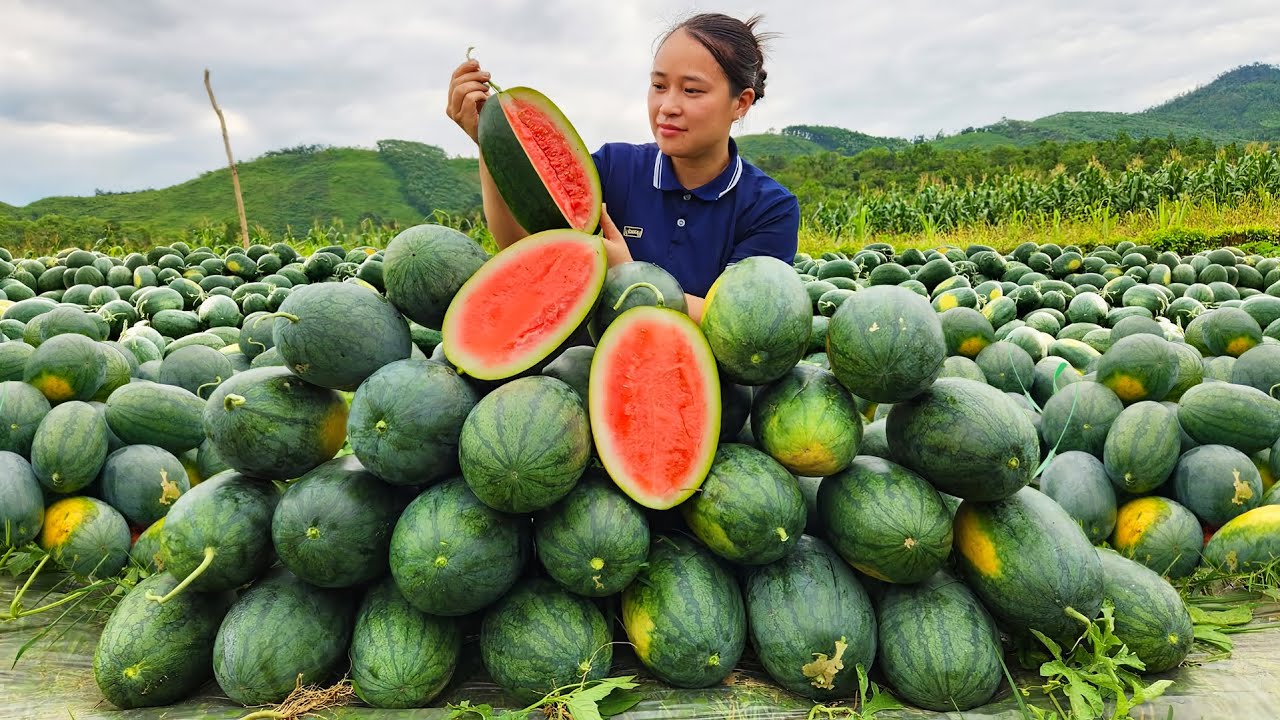
The farmer therefore needs to recognize maturity indicators.
Watermelon Farming Nigeria and Harvest Signs
Useful maturity indicators include:
- The tendril nearest the fruit becomes brown and dry.
- The ground spot changes colour, often becoming yellowish.
- The surface appearance changes as maturity develops.
- The fruit reaches expected size for the variety.
- The overall appearance becomes less glossy.
Commercial production guidance identifies a yellow contact spot, a dry brown tendril and a duller surface as useful maturity indicators. (Penn State Extension)
Do not rely on only one sign.
Combine several observations.
Harvest carefully
Watermelons can suffer physical damage during harvesting and transportation.
Avoid:
- Throwing fruits
- Dragging fruits across rough ground
- Cutting into fruits unnecessarily
- Loading damaged fruits with good-quality produce
A fruit that leaves the farm in excellent condition can arrive at the market damaged if handling is careless.
Watermelon Farming: 9. Treat Marketing as Part of Production
This may be the most overlooked secret of all.
Farmers often think:
“First, I will plant. When I harvest, I will look for buyers.”
That approach can create problems.
Marketing should begin before harvest.
Watermelon Profit Starts With Market Research
Before planting, investigate:
- Who buys watermelon in your area?
- What fruit sizes do they prefer?
- What varieties do they prefer?
- What is the usual seasonal demand?
- Where are the major markets?
- How much does transportation cost?
- Who buys directly from farms?
- Are wholesalers available?
- Are retailers available?
- Can you sell to restaurants, juice businesses or food processors?
- What happens to damaged or undersized fruit?
The market determines what production characteristics have economic value.
A high-yielding variety may not be commercially attractive if your target buyers heavily discount its fruit size or appearance.
Watermelon Farming Cost and Profit in Nigeria: What Should Farmers Budget For?
There is no single watermelon farming cost that applies to every Nigerian farm.
Anyone giving you one fixed 2026 or 2027 figure without knowing the farm’s location, acreage, production system and input prices should be treated cautiously.
Your budget should instead be built from actual local prices.
Watermelon Farming Cost Categories
A basic commercial budget can include:
| Cost Category | What to Include |
|---|---|
| Land | Rent, clearing and preparation |
| Seed | Variety, quantity and quality |
| Soil preparation | Ploughing, harrowing, beds/ridges |
| Fertilizer | Basal and supplementary applications |
| Organic inputs | Compost or well-decomposed manure |
| Irrigation | Pump, fuel/electricity, pipes, drip lines and maintenance |
| Labour | Planting, weeding, spraying, irrigation and harvesting |
| Crop protection | Approved pesticides/fungicides where needed |
| Weed control | Manual or appropriate chemical control |
| Harvesting | Labour, sacks/crates and handling |
| Transportation | Farm-to-market movement |
| Marketing | Loading, market fees and related costs |
| Contingency | Unexpected repairs and price changes |
The most important point is to record everything.
A farmer who spends ₦500,000 but remembers only ₦350,000 of the expenses may mistakenly believe the farm made a larger profit than it actually did.
Watermelon Profit: How to Calculate Your Real Profit
A simple formula is:
Gross Revenue = Total Marketable Watermelon Sold × Average Selling Price
Then:
Net Profit = Gross Revenue − Total Production and Marketing Costs
For example, suppose a farmer produces 8,000 kg of marketable watermelon.
If the average realized selling price is ₦X per kilogram:
Revenue = 8,000 × ₦X
The farmer then subtracts:
- Seed
- Land
- Fertilizer
- Labour
- Irrigation
- Crop protection
- Harvesting
- Transportation
- Marketing
- Other costs
The amount left is the operating profit before considering any broader business costs not included in the calculation.
Why “yield” alone can be misleading
Imagine Farmer A harvests 10 tonnes.
Farmer B harvests 8 tonnes.
It might appear that Farmer A performed better.
But suppose Farmer A spent much more on inputs, irrigation and labour and sold during a weak market.
Farmer B may have lower production costs and better timing.
Therefore:
Watermelon Yield ≠ Watermelon Profit
Yield matters, but profitability depends on the relationship between yield, quality, price and total cost.
Watermelon Yield: Understanding Yield Per Acre in Nigeria
Farmers frequently search for watermelon yield per acre in Nigeria.
That is understandable because yield is one of the easiest ways to estimate potential revenue.
But there is no single yield number that every Nigerian farmer should expect.
Yield can vary according to:
- Variety
- Soil
- Weather
- Plant population
- Planting date
- Fertility
- Irrigation
- Pollination
- Pest pressure
- Disease pressure
- Weed control
- Farmer experience
- Harvest losses
Watermelon Yield and the Difference Between Experimental and Farm Results
This distinction is extremely important.
A research trial can produce a particular yield under carefully defined experimental conditions.
A commercial farm may produce a different result.
The 2026 Ikom study reported 47.77 tonnes per hectare for the strongest variety-and-planting-date combination in its experiment.
That should be viewed as research evidence under specific conditions, not a promise that every farmer will harvest the same amount.
Converting hectares to acres
One hectare is approximately 2.471 acres.
Therefore, if a study reports 47.77 tonnes per hectare:
47.77 ÷ 2.471 ≈ 19.3 tonnes per acre
But this is simply a mathematical conversion of that particular research result.
It should not be presented as a guaranteed Nigerian commercial yield.
This distinction protects farmers from unrealistic expectations.
Watermelon Farming Nigeria: How Many Plants Should You Grow Per Acre?
Plant population affects competition for:
- Sunlight
- Water
- Nutrients
- Space
Watermelon vines can occupy substantial space.
Commercial production recommendations vary according to variety, planting arrangement and production system. One commercial guide describes approximately 2,800–4,400 plants per acre under a particular production system, with row and within-row spacing varying by crop arrangement. (Penn State Extension)
Farmers should therefore avoid choosing plant population based purely on a number seen online.
Instead, consider:
- Variety growth habit
- Vine length
- Soil fertility
- Irrigation
- Field size
- Machinery access
- Disease pressure
- Desired fruit size
The seed supplier’s recommendations can provide a starting point, but local agronomic advice and trial results are valuable.
Watermelon Farming: A Practical Seed-to-Harvest Production Process
For someone searching how to start watermelon farming in Nigeria, the entire production process can be simplified into stages.
Watermelon Farming Stage 1: Market Research
Before spending money:
- Identify buyers.
- Check current local prices.
- Identify your target harvest period.
- Estimate transport costs.
- Determine preferred fruit sizes.
- Identify competing production areas.
Watermelon Farming Stage 2: Select the Farm Location
Look for:
- Suitable soil
- Good drainage
- Reliable water access
- Road access
- Reasonable distance to market
- Adequate sunlight
- Land that can be properly prepared
Watermelon Farming Stage 3: Test the Soil
Determine:
- pH
- Nutrient status
- Organic matter where possible
- Potential soil limitations
Watermelon Farming Stage 4: Prepare the Land
Clear the field, prepare the soil and establish drainage or raised beds where needed.
Watermelon Farming Stage 5: Acquire Quality Seed
Purchase appropriate seed from a reliable supplier.
Do not make your decision solely on price.
Watermelon Farming Stage 6: Plant
Follow the recommended planting depth, spacing and local planting window for your chosen variety.
Watermelon Farming Stage 7: Manage Moisture
Maintain suitable soil moisture without creating prolonged waterlogging.
Watermelon Farming Stage 8: Manage Nutrients
Use soil-test information and crop needs to guide fertilizer decisions.
Watermelon Farming Stage 9: Scout the Field
Walk through the field regularly.
Look under leaves.
Check flowers.
Inspect young fruits.
Look for:
- Leaf spots
- Curling
- Discolouration
- Wilting
- Insect activity
- Stem lesions
- Fruit damage
- Weed pressure
Watermelon Farming Stage 10: Protect Pollinators
Be especially careful with pesticide applications when watermelon is flowering.
Watermelon Farming Stage 11: Prepare Your Buyers
Do not wait until harvest day.
Watermelon Farming Stage 12: Harvest at Proper Maturity
Use several maturity indicators instead of guessing.
Watermelon Farming Stage 13: Grade and Handle
Separate:
- Premium fruit
- Medium fruit
- Damaged fruit
- Undersized fruit
Watermelon Farming Stage 14: Record Your Results
Record:
- Seed cost
- Labour
- Fertilizer
- Irrigation
- Crop protection
- Harvest quantity
- Selling price
- Transport cost
- Total revenue
- Net return
These records become extremely valuable during the next production cycle.
Watermelon Farming: How to Improve Yield Without Simply Spending More
A common mistake among new farmers is to assume that higher yield always requires higher spending.
Not necessarily.
Sometimes yield improvement comes from better timing and better management rather than simply buying more inputs.
Watermelon Farming Yield Improvement Checklist
Focus on:
- Better seed selection
- Better field drainage
- Correct planting timing
- Better weed management
- Consistent moisture
- Balanced nutrition
- Better pollination
- Early pest detection
- Disease prevention
- Proper harvest timing
- Reduced post-harvest losses
Consider two farmers.
Farmer A spends more on fertilizer but plants at the wrong time, suffers poor pollination and loses fruit quality.
Farmer B spends less but manages the planting window, irrigation, weeds and market more carefully.
The second farm can potentially achieve a better economic result even without the larger fertilizer bill.
Watermelon Farming: Common Mistakes New Farmers Should Avoid
Watermelon Farming Mistake 1: Planting Without a Market
Producing thousands of kilograms without identifying buyers creates unnecessary risk.
Watermelon Farming Mistake 2: Choosing Seed Only Because It Is Cheap
Cheap seed can become expensive if germination or crop performance is poor.
Watermelon Farming Mistake 3: Ignoring Soil Testing
Without knowing the soil condition, fertilizer decisions become guesswork.
Watermelon Farming Mistake 4: Overwatering
Watermelon needs moisture, but excessive moisture can create root, disease and fruit-quality problems.
Watermelon Farming Mistake 5: Underestimating Labour
Watermelon production requires labour for:
- Land preparation
- Planting
- Weeding
- Irrigation
- Spraying
- Harvesting
- Sorting
- Loading
Watermelon Farming Mistake 6: Spraying Without Identifying the Problem
Not every damaged leaf is caused by insects.
Not every yellow leaf requires fertilizer.
Not every insect needs to be killed.
Identify the problem before choosing a control method.
Watermelon Farming Mistake 7: Ignoring Pollination
Poor pollination can reduce fruit set even when vines appear healthy.
Watermelon Farming Mistake 8: Harvesting Too Early
Fruit size alone does not always indicate maturity.
Watermelon Farming Mistake 9: Forgetting Transportation Costs
A farm close to a major market has a different economic structure from one far away.
Watermelon Farming: Dry-Season Production and Irrigation Strategy
Dry-season watermelon farming can be attractive because farmers can exercise greater control over rainfall.
But this advantage comes with responsibility.
You need a dependable water source.
Before planting, calculate:
- Pump cost
- Fuel or electricity
- Irrigation equipment
- Labour
- Water availability
- Maintenance
- Replacement parts
Watermelon Farming and Drip Irrigation
Drip systems can deliver water directly to the crop root zone and may also facilitate fertigation.
Research-based fertilizer guidance supports drip irrigation and fertigation as approaches that can improve water and nutrient efficiency. (Ask IFAS – Powered by EDIS)
However, drip irrigation is not automatically profitable for every small farmer.
The system should be evaluated against:
- Farm size
- Water source
- Crop value
- Number of production cycles
- Equipment cost
- Maintenance requirements
A small farmer may begin with a simpler system and improve infrastructure as the business grows.
Watermelon Farming: Rainy-Season Production Strategy
Rain can reduce irrigation costs.
But rainfall can also introduce management challenges.
During wetter periods, farmers should pay close attention to:
- Drainage
- Leaf wetness
- Disease symptoms
- Field accessibility
- Weed growth
- Nutrient losses
- Fruit contact with wet soil
- Harvest logistics
If your field holds water after heavy rain, drainage may be more important than adding another bag of fertilizer.
Watermelon Farming: Choosing Between Small, Medium and Large Scale
You do not necessarily need a huge farm to learn watermelon production.
For beginners, starting on a manageable area can reduce the financial consequences of mistakes.
Small-scale watermelon farming
Advantages may include:
- Easier monitoring
- Lower initial capital requirement
- Easier experimentation
- Easier direct marketing
Challenges include:
- Higher unit costs for some equipment
- Limited bargaining power
- Smaller total production volume
Medium-scale watermelon farming
A larger farm can provide:
- Greater production volume
- Better use of some equipment
- More opportunities for wholesale sales
But management complexity increases.
Large-scale watermelon farming
Large production requires stronger systems for:
- Irrigation
- Labour management
- Input purchasing
- Pest monitoring
- Harvesting
- Storage/handling
- Transportation
- Market coordination
- Financial record keeping
The bigger the farm becomes, the more important management becomes.
Watermelon Profit: How to Build a Simple Farm Budget
Before planting, create a spreadsheet or notebook with four major sections.
Section 1: Fixed or Setup Costs
Examples:
- Irrigation equipment
- Pump
- Pipes
- Tools
- Farm infrastructure
Section 2: Production Costs
Examples:
- Seed
- Fertilizer
- Labour
- Crop protection
- Land preparation
- Irrigation fuel
Section 3: Harvest and Marketing Costs
Examples:
- Harvest labour
- Sorting
- Packaging
- Loading
- Transportation
- Market fees
Section 4: Revenue
Record:
- Total fruits harvested
- Marketable fruits
- Average selling price
- Revenue by buyer
- Unsold/damaged fruit
Then calculate:
Net Profit = Revenue − Total Cost
You can also calculate:
Profit Margin = Net Profit ÷ Revenue × 100
This gives you a much clearer picture of the business.
Watermelon Farming: What Can Affect Your Selling Price?
The selling price of watermelon is not fixed.
It can change according to:
- Season
- Location
- Fruit size
- Fruit quality
- Supply
- Demand
- Market distance
- Transport cost
- Buyer type
- Timing
This means a farmer should be careful when reading social-media claims such as:
“One acre of watermelon always gives X million naira.”
Such claims can be misleading because the calculation may leave out important expenses or use a particularly high selling price.
A better approach is to create three scenarios:
Low-price scenario
Calculate what happens if the selling price is below your expectation.
Expected-price scenario
Use a realistic local price based on recent market information.
High-price scenario
Calculate what happens if market conditions are unusually favourable.
If your farm only makes sense under the high-price scenario, you should reconsider the business plan.
Watermelon Farming: Why Records Can Increase Future Profit
Farm records are not only for large agricultural companies.
Even a small farmer can record:
- Planting date
- Variety
- Number of seed packs
- Germination
- Fertilizer applied
- Pest problems
- Disease problems
- Irrigation frequency
- Harvest quantity
- Fruit sizes
- Selling prices
- Buyers
- Total expenses
After two or three production cycles, these records can reveal patterns.
For example:
You might discover that one planting window consistently produces better fruit.
Or you may discover that a particular field has higher disease pressure.
Or perhaps one market pays more but charges higher transportation costs.
Without records, these patterns can be difficult to see.

Watermelon Farming Nigeria: How Research Can Improve Your Farm Decisions
Modern farmers have access to more agricultural research than previous generations.
That is an advantage.
The challenge is learning how to use research properly.
Research from Ikom demonstrates that planting dates and varieties can influence watermelon growth, fruit production and economic returns.
Research indexed through FAO AGRIS also documents variety and soil-management experiments in southeastern Nigeria. (FAO AGRIS)
Extension research from other watermelon-producing regions provides additional guidance on irrigation, fertilizer management, pollination and harvest practices. (Penn State Extension)
But farmers should remember:
Research results are evidence, not guarantees.
A result from Cross River State does not automatically predict the yield of a farm in Kaduna.
A fertilizer recommendation developed for Florida should not simply be copied into a Nigerian field without local interpretation.
The strongest approach is to combine:
- Local experience
- Soil testing
- Agricultural extension advice
- Research evidence
- Market information
- Your own farm records
Watermelon Farming: A 2026–2027 Action Plan for Beginners
If you are planning to start watermelon farming in Nigeria during 2026 or 2027, use a staged approach.
Before planting
- Research your local market.
- Identify likely buyers.
- Select your farm location.
- Test the soil.
- Check water availability.
- Select an appropriate variety.
- Prepare your budget.
- Calculate your break-even point.
- Establish a planting and harvest calendar.
During land preparation
- Clear the field.
- Manage perennial weeds.
- Prepare the soil.
- Correct major soil limitations based on testing.
- Create suitable drainage.
- Install irrigation where needed.
During planting
- Use quality seed.
- Follow recommended spacing.
- Label different varieties if conducting trials.
- Record the planting date.
During crop development
- Monitor soil moisture.
- Weed early.
- Scout for pests.
- Monitor diseases.
- Apply nutrients according to your management plan.
- Protect pollinators.
- Keep farm records.
During flowering
Pay particular attention to:
- Pollination
- Bee activity
- Flower health
- Pest pressure
- Irrigation
During fruit development
Monitor:
- Fruit growth
- Plant health
- Water supply
- Disease
- Insect damage
- Fruit quality
Before harvest
Contact buyers.
Do not wait until the fruits are already mature before starting the marketing process.
At harvest
- Harvest mature fruit.
- Handle carefully.
- Sort fruit.
- Separate damaged produce.
- Arrange transportation.
- Record quantities sold.
Watermelon Farming: Key Numbers Every Farmer Should Track
A professional approach does not require complicated mathematics.
Track these numbers:
| Metric | Why It Matters |
|---|---|
| Land size | Determines production scale |
| Seed cost | Major starting input |
| Germination rate | Shows seed performance |
| Plant population | Helps evaluate field establishment |
| Fertilizer cost | Major variable expense |
| Labour cost | Often significant |
| Irrigation cost | Important in dry-season production |
| Crop-protection cost | Helps monitor pest-management expenses |
| Total harvested weight | Measures production |
| Marketable weight | More useful than total harvest alone |
| Average selling price | Determines revenue |
| Transport cost | Affects final margin |
| Total revenue | Measures sales |
| Total cost | Measures actual investment |
| Net profit | Shows economic outcome |
| Profit per acre | Helps compare production cycles |
This turns watermelon farming from guesswork into a measurable business.
Watermelon Farming: Frequently Asked Questions
Is watermelon farming profitable in Nigeria?
Watermelon farming can generate revenue, but profitability is not guaranteed.
The outcome depends on production cost, yield, fruit quality, selling price, market access, losses, irrigation and other factors.
A farmer should calculate expected revenue against realistic local costs before planting.
What is the best time to plant watermelon in Nigeria?
There is no single planting date for every part of Nigeria.
The best time depends on location, rainfall, temperature, irrigation and the target market.
Research in Ikom found significant differences among the planting dates tested, with September 8 producing the strongest results in that experiment.
Farmers should therefore use local climatic information and agricultural advice.
How long does watermelon take to mature?
Maturity varies by variety and growing conditions.
Farmers should use the seed supplier’s maturity information together with physical maturity signs rather than relying solely on a fixed number of days.
How much can one acre produce?
There is no universal watermelon yield per acre in Nigeria.
Yield varies widely with variety, soil, planting date, irrigation, nutrition, pest pressure, disease and management.
Research results should not be treated as guaranteed commercial yields.
What soil is best for watermelon?
Watermelon generally performs well in well-drained soils with suitable fertility and moderately acidic to near-neutral pH.
Soil testing is the best way to determine what your particular field requires.
Does watermelon need irrigation?
Not necessarily in every production system, but reliable moisture is important.
Irrigation becomes especially valuable where rainfall is inadequate or unpredictable.
Can watermelon be grown during the dry season?
Yes, where farmers have reliable irrigation and suitable growing conditions.
However, irrigation costs should be included in the farm budget.
What fertilizer is best for watermelon?
There is no single fertilizer that is best for every watermelon field.
The appropriate programme depends on soil-test results, crop requirements and the production system.
How can I increase watermelon yield?
Focus on the fundamentals:
- Suitable seed
- Correct planting window
- Healthy soil
- Proper water management
- Balanced nutrition
- Weed control
- Pest and disease monitoring
- Pollination
- Correct harvest timing
How can I reduce watermelon farming costs?
Look for efficiency rather than simply buying cheaper inputs.
You can potentially reduce waste by:
- Buying quality seed
- Testing soil
- Planning irrigation
- Reducing unnecessary pesticide applications
- Scheduling labour
- Finding buyers early
- Minimizing transport losses
- Keeping accurate records
Watermelon Farming: The Biggest Lesson for 2026–2027
The most important lesson is simple:
Do not measure a watermelon farm only by how many fruits it produces.
Measure the entire business.
A successful production cycle should answer five questions:
- How much did you spend?
- How much did you harvest?
- How much of the harvest was marketable?
- At what average price did you sell?
- How much money remained after all major costs?
This is the difference between farming as an activity and farming as a business.
The available Nigerian research also makes another point clear: management decisions such as planting date and variety can materially affect crop performance. The Ikom research found major differences between planting dates and varieties, while other Nigerian research has demonstrated that soil conditions and variety can influence watermelon growth and yield. (JAFE)
So the farmer’s job is not simply to put seed into soil.
The farmer must make a series of decisions from market research to land selection, seed selection, soil preparation, irrigation, nutrition, pest management, pollination, harvesting and marketing.
Watermelon Farming: Final Thoughts for Nigerian Farmers
Watermelon farming can look deceptively easy.
The crop grows quickly, the fruits are highly visible and consumer demand can create attractive opportunities.
But profitable production requires more than planting and waiting.
The strongest farmers approach the crop as a complete business system.
They think about the market before planting.
They test their soil.
They choose seed carefully.
They pay attention to planting dates.
They manage water rather than simply flooding the field.
They fertilize according to crop and soil needs.
They scout for pests and diseases before problems become severe.
They protect pollinators.
They harvest according to maturity rather than guesswork.
And they record every major expense.
Most importantly, they understand that Watermelon Yield and Watermelon Profit are not the same thing.
A high yield can still produce a disappointing business result if costs are excessive or the market price is poor.
Conversely, a moderate yield can potentially produce a better return when production costs are controlled, fruit quality is good and the farmer has a reliable market.
For anyone researching how to start watermelon farming in Nigeria, the safest approach is therefore to begin with a realistic budget, a manageable farm size, reliable production information and a clear marketing plan.
Do not copy another farmer’s figures blindly.
Do not assume a research yield is guaranteed.
Do not calculate profit using only the selling price.
And do not wait until harvest before thinking about the market.
Watermelon farming in Nigeria can become a structured agribusiness when the farmer combines good agronomy, careful budgeting, market intelligence and continuous learning.
As you plan your 2026–2027 production cycle, the goal should not simply be to grow more watermelon.
The goal should be to grow better-quality watermelon, reduce avoidable losses, understand your true costs and sell strategically.
That is where sustainable watermelon profit begins.
- 2026 Research on Watermelon Planting Dates and Varieties in Nigeria
- Watermelon Production Guide – Penn State Extension
About The Author