Agricultural Drones
Agriculture is experiencing one of the most significant technological transformations in its history. For centuries, farming relied heavily on manual labor, experience-based decision-making, and machinery that often treated entire fields the same way regardless of varying crop conditions. Today, however, a new era is emerging—one powered by Agricultural Drones, artificial intelligence, data analytics, and automation.
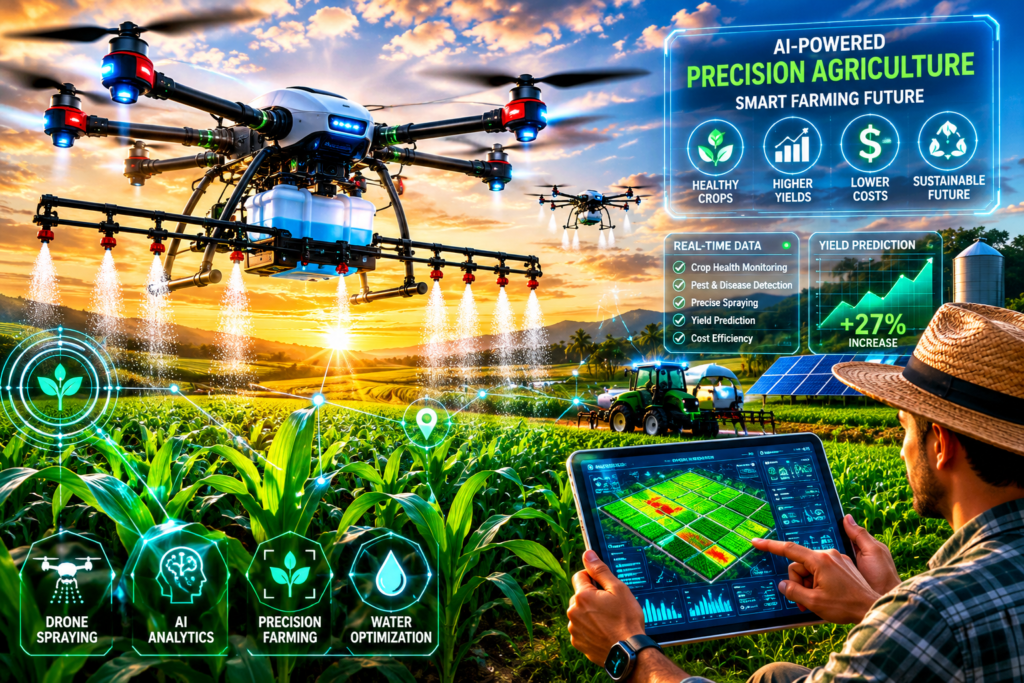
The rise of AI Farming is changing the way food is produced across the globe. Farmers are no longer limited to making decisions based solely on visual inspections or historical records. Instead, they can deploy sophisticated drones equipped with cameras, sensors, GPS systems, and AI-driven software to monitor crops, detect problems early, and apply treatments with unprecedented precision.
This technological shift is not merely about convenience. It is about solving some of agriculture‘s biggest challenges:
- Rising production costs
- Labor shortages
- Climate uncertainty
- Pest and disease outbreaks
- Water scarcity
- Pressure to increase food production sustainably
In response to these challenges, Drone Spraying has become one of the fastest-growing segments within modern agriculture. Agricultural drones can perform tasks that once required large crews, expensive machinery, and significant time investments.
What makes this revolution particularly exciting is that the benefits extend beyond large commercial farms. Small and medium-sized farmers are increasingly gaining access to drone technology through affordable service providers, leasing programs, and rapidly declining hardware costs.
As we move deeper into 2026 and beyond, understanding how Precision Agriculture works is no longer optional for farmers who want to remain competitive. It is becoming an essential component of profitable and sustainable farming operations.
In this guide, we’ll explore the powerful secrets behind this agricultural transformation and examine why drones may become one of the most valuable assets on the modern farm.

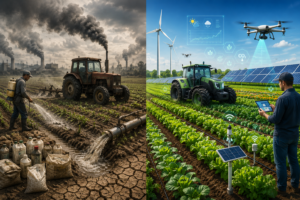
Agricultural Drones vs Traditional Farming Methods
| Feature | Traditional Farming | Agricultural Drones |
|---|---|---|
| Field Monitoring | Manual Inspection | Real-Time Aerial Analysis |
| Crop Health Detection | Often Delayed | Early Detection Using AI |
| Chemical Application | Broad Spraying | Precision Targeting |
| Labor Requirements | High | Low |
| Fuel Consumption | High | Minimal |
| Data Collection | Limited | Comprehensive |
| Operational Speed | Slow | Fast |
| Environmental Impact | Higher | Reduced |
| Yield Optimization | Moderate | High |
| Scalability | Limited | Excellent |
The comparison clearly shows why drone adoption is accelerating worldwide. Farmers are discovering that drone technology is not simply a gadget—it is a practical business tool capable of delivering measurable returns on investment.
Agricultural Drones: 11 Powerful and Profitable AI Farming Secrets That Are Revolutionizing Precision Agriculture in 2026 and Beyond
Secret #1: Drones Are Making Precision Agriculture More Accurate Than Ever
How Drones Are Transforming Precision Agriculture
The foundation of modern farming innovation lies in Precision Agriculture. This farming approach focuses on managing crops according to their specific needs rather than treating an entire field uniformly.
Historically, farmers applied fertilizers, pesticides, and water across entire fields at consistent rates. While this method was straightforward, it often resulted in waste and inefficiency because different areas of a field frequently require different treatments.
This is where Agricultural Drones excel.
Using advanced imaging systems, drones can identify:
- Nutrient deficiencies
- Water stress
- Weed infestations
- Pest outbreaks
- Disease development
- Plant growth inconsistencies
Instead of guessing where problems exist, farmers can see exactly where intervention is needed.
Benefits of Precision Agriculture Through Drones
Improved Decision-Making
Farmers gain access to highly detailed information that was previously unavailable or extremely expensive to obtain.
Reduced Input Waste
Resources are applied only where necessary.
Better Crop Health
Early intervention prevents minor issues from becoming major losses.
Increased Profitability
More efficient resource allocation directly impacts farm revenue.
As drone technology becomes more sophisticated, precision agriculture is evolving from a competitive advantage into a standard farming practice.
Secret #2: AI Farming Is Eliminating Costly Guesswork
Why AI Farming Is Becoming Essential for Modern Agriculture
The true power of drones emerges when combined with artificial intelligence.
Modern AI Farming systems can process massive amounts of agricultural data collected by drones and convert it into actionable insights.
Rather than simply collecting images, AI software can automatically identify:
- Signs of disease
- Crop stress
- Nutrient deficiencies
- Water shortages
- Growth abnormalities
This capability significantly reduces the need for manual scouting and allows farmers to respond faster to emerging problems.
How AI Improves Agricultural Decision-Making
Artificial intelligence analyzes patterns that humans might overlook.
For example, a drone may capture thousands of images from a field during a single flight. AI algorithms can process these images and identify subtle changes in plant health before symptoms become visible to the human eye.
This predictive capability allows farmers to:
- Prevent crop losses
- Reduce treatment costs
- Increase productivity
- Improve resource efficiency
The combination of AI and drone technology is creating a new generation of farms that operate based on data rather than assumptions.
Secret #3: Drone Spraying Is Revolutionizing Crop Protection
How Drone Spraying Is Changing Farm Operations
One of the most practical applications of agricultural drones is Drone Spraying.
Traditional spraying methods often involve:
- Tractors
- Aircraft
- Large labor teams
- Significant fuel consumption
Drone spraying offers a more targeted and efficient alternative.
Modern agricultural drones can accurately spray:
- Herbicides
- Fungicides
- Insecticides
- Foliar fertilizers
- Biological treatments
Advantages of Drone Spraying
Greater Accuracy
Sprays are delivered directly where needed.
Reduced Chemical Waste
Less product is wasted through over-application.
Improved Safety
Workers spend less time exposed to agricultural chemicals.
Faster Field Coverage
Large areas can be treated quickly.
Access to Difficult Terrain
Drones can easily operate in areas inaccessible to tractors or traditional equipment.
As regulations evolve and technology advances, drone spraying is expected to become one of the dominant crop protection methods worldwide.
Secret #4: How Drone Crop Spraying Reduces Farming Costs and Increases Yields
Understanding the Economics of Drone Crop Spraying
Many farmers initially hesitate when considering drone investments because they focus on upfront costs.
However, the real question is not how much a drone costs.
The real question is:
How much money can a drone save or generate?
The answer is often substantial.
Cost Reduction Areas
Drone technology helps reduce expenses through:
- Lower fuel usage
- Reduced labor requirements
- Less chemical waste
- Improved fertilizer efficiency
- Faster field inspections
Yield Improvement Areas
Higher yields often result from:
- Earlier disease detection
- Better nutrient management
- Precision spraying
- Optimized irrigation decisions
- Reduced crop stress
Example Economic Impact
Consider a farm that reduces pesticide usage by 20% while simultaneously increasing crop yield by 10%.
The financial impact can be significant:
- Lower operating expenses
- Higher production output
- Improved profit margins
- Faster return on investment
This explains why many farmers now view agricultural drones not as expenses but as revenue-generating assets.
Secret #5: Best Drones for Smart Farming and Crop Management
Choosing the Best Agricultural Drones for Smart Farming and Crop Management
One of the biggest questions farmers ask is:
“Which agricultural drone is right for my operation?”
The answer depends on several factors, including farm size, crop type, budget, and intended use.
Not all drones are created equal. Some are designed primarily for aerial mapping and crop monitoring, while others specialize in Drone Spraying and precision application.
As Precision Agriculture becomes more data-driven, choosing the right equipment can significantly influence profitability and operational efficiency.
Key Features to Look for in Agricultural Drones
Before investing in a drone, farmers should evaluate the following capabilities:
1. Payload Capacity
Payload determines how much liquid or equipment a drone can carry.
Higher payload capacity means:
- Fewer refill stops
- Faster field coverage
- Greater productivity
For spraying operations, payload capacity is often one of the most important factors.
2. Flight Time
Longer flight times increase operational efficiency.
A drone capable of extended flights can:
- Cover larger areas
- Reduce downtime
- Improve productivity
3. GPS Accuracy
Precision agriculture depends heavily on accurate navigation.
Advanced GPS systems help ensure:
- Consistent spraying patterns
- Accurate mapping
- Reduced overlap
- Lower chemical waste
4. AI Integration
Modern AI Farming platforms can automatically analyze crop health data and generate actionable recommendations.
AI-enhanced drones can identify:
- Disease outbreaks
- Nutrient deficiencies
- Weed pressure
- Water stress
before they become visible to the human eye.
5. Scalability
The best drone is one that grows with your business.
Farmers should consider future expansion and ensure the platform can handle increased workloads.
Categories of Agricultural Drones
Mapping and Monitoring Drones
These drones focus on collecting field data.
Typical uses include:
- Crop scouting
- Field mapping
- Soil analysis
- Plant health monitoring
Precision Spraying Drones
These drones specialize in applying:
- Herbicides
- Insecticides
- Fungicides
- Foliar nutrients
They are becoming increasingly popular because they combine efficiency with precision.
Multi-Purpose Drones
Many modern systems combine monitoring and spraying capabilities, making them ideal for farmers seeking maximum flexibility.
Why Smart Drone Selection Matters
The best agricultural drone is not necessarily the most expensive.
Instead, it is the drone that delivers:
- Measurable cost savings
- Higher crop productivity
- Faster decision-making
- Long-term return on investment
As drone technology continues to evolve, farmers who make informed equipment choices today will likely enjoy significant competitive advantages through 2027 and beyond.

Secret #6: AI-Powered Drones for Precision Crop Spraying
Why AI-Powered Drones for Precision Crop Spraying Are Changing Everything
The next major evolution in farming is not simply drone technology.
It is the combination of drones and artificial intelligence.
AI-powered drones for precision crop spraying represent one of the most important innovations in modern agriculture because they allow farmers to move beyond reactive farming and into predictive farming.
Traditional farming often follows a simple pattern:
- Problem appears.
- Farmer notices it.
- Treatment is applied.
The problem with this approach is timing.
By the time symptoms become obvious, damage may already be significant.
AI changes this equation entirely.
How AI-Powered Agricultural Drones Work
The process generally involves four stages:
Data Collection
Drones fly over fields collecting information through:
- High-resolution cameras
- Multispectral sensors
- Thermal imaging systems
- GPS technology
Data Processing
Artificial intelligence analyzes the collected information.
Patterns invisible to humans become detectable through machine learning algorithms.
Problem Identification
The system identifies:
- Early disease symptoms
- Weed outbreaks
- Water stress
- Nutrient deficiencies
- Pest infestations
Precision Application
Farmers can then apply treatments only where needed.
This minimizes waste while maximizing effectiveness.
Benefits of AI-Powered Precision Crop Spraying
Reduced Chemical Usage
One of the most attractive benefits is lower input costs.
Instead of spraying entire fields, treatments can be targeted to specific areas.
Better Environmental Stewardship
Precision spraying helps reduce:
- Chemical runoff
- Soil contamination
- Water pollution
This supports more sustainable farming practices.
Increased Yield Potential
Healthier crops typically produce:
- Better harvests
- Improved quality
- Greater profitability
Faster Response Times
AI-driven alerts allow farmers to act quickly before problems escalate.
The Shift Toward Predictive Agriculture
Predictive agriculture may become the defining characteristic of successful farms in the coming decade.
Instead of reacting to problems, farmers increasingly prevent them.
That shift can dramatically improve:
- Efficiency
- Sustainability
- Productivity
- Profitability
The farms that embrace AI-powered drone technology today are positioning themselves for long-term success.
Secret #7: Drone Spraying Services Business Startup Costs and Profit Potential
Why Drone Spraying Services Are Becoming a Fast-Growing Business Opportunity
Not every farmer wants to purchase a drone.
Many prefer hiring specialized operators.
This growing demand is creating exciting opportunities for entrepreneurs interested in launching a Drone Spraying Services Business.
In many regions, demand is rising faster than the supply of qualified drone service providers.
This gap creates a compelling business opportunity.
Understanding Drone Spraying Services Business Startup Costs and Profit Potential
Startup costs vary depending on:
- Drone type
- Licensing requirements
- Insurance
- Software subscriptions
- Training expenses
- Transportation equipment
Typical Startup Expense Categories
| Expense Category | Purpose |
|---|---|
| Agricultural Drone | Spraying operations |
| Batteries | Extended field operations |
| Charging Equipment | Power management |
| Software Platforms | Flight planning and analytics |
| Insurance | Risk protection |
| Licensing & Certification | Regulatory compliance |
| Vehicle & Transport | Equipment mobility |
| Marketing | Customer acquisition |
Although startup costs can be significant, revenue potential is often substantial due to increasing demand for precision spraying services.
Revenue Streams for Drone Spraying Businesses
Many entrepreneurs focus solely on spraying.
However, successful operators frequently diversify their services.
Potential Revenue Sources
- Crop spraying
- Field mapping
- Crop health monitoring
- Plant counting
- Irrigation assessments
- Pest detection
- Data analytics consulting
Offering multiple services can improve profitability and reduce seasonal revenue fluctuations.
Factors That Increase Profit Potential
Expanding Precision Agriculture Adoption
More farmers are recognizing the value of drone services.
Labor Shortages
Many agricultural regions struggle to find skilled labor.
Drone technology helps bridge that gap.
Demand for Sustainability
Precision application aligns with environmental goals while reducing costs.
Faster Service Delivery
Drone operators can cover fields quickly, improving productivity and customer satisfaction.
Is the Drone Spraying Business Saturated?
In many areas, the answer is no.
The agricultural sector is still in the early stages of widespread drone adoption.
As awareness grows, demand is expected to continue increasing through 2027 and beyond.
Entrepreneurs who establish themselves early may gain significant advantages.
Secret #8: Why Drones Are Creating New Rural Business Opportunities
Agricultural Drones Are Building Entirely New Economic Ecosystems
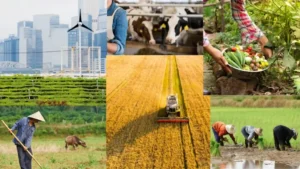
One of the most overlooked aspects of the drone revolution is its impact on rural economies.
Historically, technological innovation often concentrated opportunities in urban centers.
Agricultural drones are different.
They are creating opportunities directly within farming communities.
New Careers Emerging From Agricultural Drone Adoption
The growth of AI Farming and Precision Agriculture is generating demand for new skill sets.
Examples include:
Drone Pilots
Certified operators who conduct field missions and spraying operations.
Agricultural Data Analysts
Professionals who interpret drone-collected information.
Drone Maintenance Specialists
Technicians responsible for equipment servicing and repairs.
Precision Agriculture Consultants
Experts helping farms maximize productivity through technology.
AI Farming Advisors
Specialists who guide farmers in adopting AI-driven solutions.
Opportunities for Young Entrepreneurs
Agriculture is becoming increasingly attractive to younger generations because technology is transforming traditional farming.
Many young entrepreneurs see drone services as a way to:
- Enter agriculture without owning farmland
- Build scalable businesses
- Leverage technology skills
- Serve local farming communities
This shift could help address the aging farmer population seen in many countries.
How Agricultural Drones Support Rural Development
The benefits extend beyond individual businesses.
Growing drone adoption can contribute to:
- Job creation
- Economic diversification
- Technology transfer
- Increased agricultural productivity
- Improved food security
As rural communities embrace innovation, they become better positioned for long-term growth.
For readers interested in learning more about global precision agriculture trends and research, explore the resources available through the Food and Agriculture Organization (FAO). The organization provides extensive information on sustainable agriculture, digital farming technologies, and future food production strategies.
Key Takeaways From Part 2
By now, several patterns are becoming clear:
- Agricultural drones are evolving into essential farming tools.
- AI-powered agricultural drones for precision crop spraying are improving efficiency and profitability.
- Drone spraying services businesses offer growing entrepreneurial opportunities.
- Precision agriculture is driving demand for specialized skills and services.
- Rural economies are benefiting from the emergence of new technology-driven careers.

About The Author