Agricultural Fertilizers
Unfortunately, many farmers experience disappointing harvests even after investing considerable time, money, and effort in their farms. Some struggle with poor soil fertility, weak plant development, yellowing leaves, delayed maturity, and low crop yields. In other situations, crops may grow well during their early stages but fail to produce the expected number of fruits, seeds, or grains. While several factors can contribute to these problems, inadequate or unbalanced soil nutrients are among the important causes.
This is where agricultural fertilizers become particularly valuable.
Fertilizers are materials that supply plants with essential nutrients needed for healthy development, improved productivity, and successful crop production. They help replenish nutrients removed from the soil through continuous cultivation and harvesting while correcting nutrient deficiencies that may prevent crops from reaching their full potential.
Modern crop production increasingly depends on effective fertilizer management because agricultural land must support growing food demands while farmers work to maintain profitability and protect natural resources. When properly selected and applied, crop fertilizers can improve plant development, support strong root systems, encourage flowering and fruit formation, increase harvest quality, and contribute to better farm productivity.
However, there is something every farmer should understand: using more fertilizer does not automatically produce a better harvest. The actual benefits of fertilizer use depend on choosing the appropriate nutrient combination, understanding the condition of the soil, applying the correct quantity, and ensuring that nutrients are available when crops need them.
For example, nitrogen supports leafy growth, phosphorus encourages root development and energy transfer, while potassium helps regulate water movement and several important plant processes. These nutrients work together with secondary nutrients and micronutrients to support healthy crops throughout their growing cycles.
Understanding the benefits of using fertilizers in agriculture can therefore help farmers make better production decisions, reduce avoidable nutrient losses, and improve the overall performance of their farms.
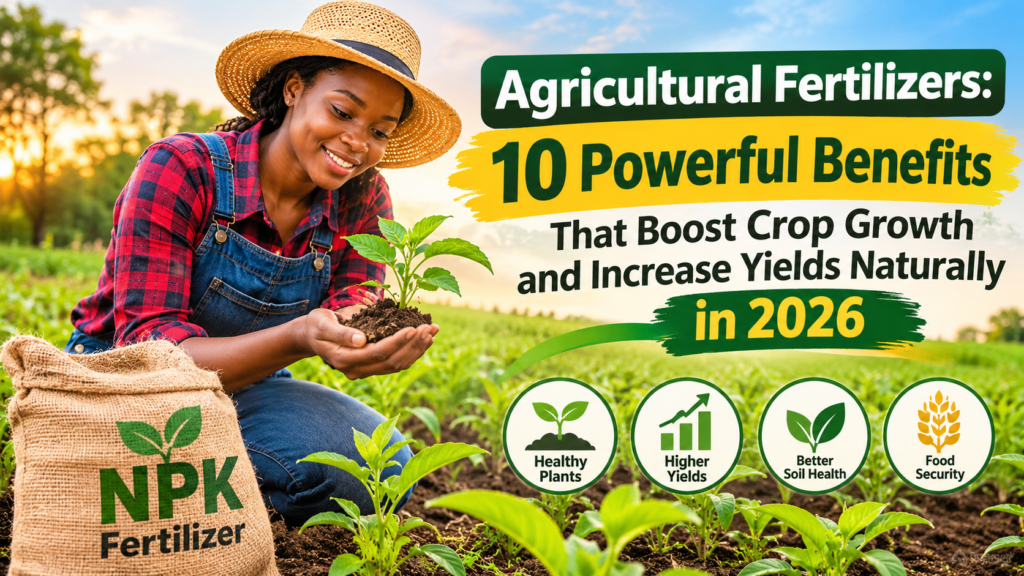
In this comprehensive guide, we will explore 10 powerful fertilizer benefits, explain how fertilizers improve crop growth and yield, examine the different types of agricultural fertilizers, discuss the importance of NPK fertilizers for plant growth, and provide practical recommendations for choosing and applying the right fertilizers.
Whether you are an experienced farmer, an agricultural student, a commercial crop producer, or someone interested in understanding modern farming practices, this article will help you appreciate why proper plant nutrition is essential for successful agriculture in 2026 and beyond.

What Are Agricultural Fertilizers?
Agricultural fertilizers are natural or manufactured materials applied to soil, plants, or growing media to supply essential nutrients required for plant growth and development.
Plants need several nutrients to complete their life cycles. Although they obtain carbon, hydrogen, and oxygen mainly from the air and water, most of their other essential mineral nutrients come from the soil or growing medium through their roots.
Unfortunately, not every soil contains sufficient quantities of these nutrients in forms that crops can absorb. Continuous farming, erosion, nutrient removal during harvesting, leaching, and poor soil management can gradually reduce the amount of available nutrients in agricultural land.
Agricultural fertilizers help address this problem by supplying nutrients that may be missing or insufficient.
For example, when a farmer cultivates maize repeatedly on the same farmland without replacing the nutrients removed during harvest, soil fertility can decline. Eventually, the maize plants may develop slowly, produce smaller leaves, form fewer grains, or deliver lower yields.
Applying an appropriate fertilizer based on soil conditions and crop requirements can help correct nutrient deficiencies and support better production.
However, fertilizers do not all perform the same function. Some primarily supply nitrogen, phosphorus, or potassium, while others provide calcium, magnesium, sulfur, iron, zinc, and other essential nutrients.
The effectiveness of a fertilizer therefore depends on its nutrient composition, the condition of the soil, the type of crop being cultivated, and the method of application.
Understanding the Main Functions of Agricultural Fertilizers
Agricultural fertilizers perform several important functions in crop production.
Some of their major functions include:
-
Supplying essential plant nutrients: Fertilizers provide nutrients that crops require for healthy growth, flowering, fruit development, and grain production.
-
Correcting nutrient deficiencies: They help address shortages of specific nutrients that may cause poor plant development.
-
Supporting root development: Appropriate phosphorus nutrition supports early root establishment and healthy plant development.
-
Encouraging vegetative growth: Nitrogen helps plants develop leaves, stems, and other green tissues.
-
Supporting flowering and fruit production: Balanced nutrition helps crops develop reproductive structures and produce marketable harvests.
-
Improving nutrient availability: Certain fertilizer materials and soil amendments can help correct specific nutrient limitations.
-
Replacing nutrients removed during harvesting: Fertilizer application can replenish nutrients exported from agricultural fields through harvested crops.
It is important to distinguish fertilizers from soil amendments. Fertilizers primarily supply plant nutrients, whereas soil amendments are used to improve soil properties such as structure, drainage, water retention, or organic matter content. Some materials, including compost and manure, can perform both functions.
Types of Agricultural Fertilizers Used in Crop Production
Before discussing the major fertilizer benefits, farmers should understand the different types of fertilizers available for agricultural production.
Choosing the right fertilizer is important because different crops have different nutritional requirements. A fertilizer that works well for maize may not necessarily be the best option for tomatoes, cassava, rice, or other crops.
Generally, agricultural fertilizers can be classified into organic fertilizers, inorganic or synthetic fertilizers, and specialized nutrient fertilizers.
1. Organic Agricultural Fertilizers
Organic fertilizers are obtained from plant materials, animal waste, and other naturally derived biological materials. They supply nutrients as organic materials decompose and are processed by soil microorganisms.
Common examples include:
-
Compost made from decomposed plant materials and organic waste.
-
Well-rotted animal manure from cattle, poultry, goats, and other livestock.
-
Vermicompost produced through the activity of earthworms.
-
Bone meal, which is commonly used as a phosphorus-containing organic fertilizer.
-
Blood meal, which is a concentrated organic nitrogen source.
-
Certain plant-based fertilizers and agricultural residues.
One major advantage of organic fertilizers is that many of them contribute organic matter to the soil. This can improve soil structure, support beneficial microorganisms, and enhance the soil’s ability to retain moisture and nutrients.
For farmers cultivating crops on land with low organic matter, properly prepared compost and manure can be useful components of long-term soil fertility management.
However, organic fertilizers generally have variable nutrient concentrations, and their nutrients may become available gradually as microorganisms break down the materials. Their effectiveness also depends on how well they have been prepared, their maturity, and their nutrient composition.
Fresh or improperly treated animal manure may contain pathogens, weed seeds, or excessive nutrient concentrations. Farmers should therefore use properly composted or treated manure and follow appropriate food safety practices.
2. Inorganic or Synthetic Agricultural Fertilizers
Inorganic fertilizers, commonly called synthetic or mineral fertilizers, are manufactured or processed to provide specific quantities of plant nutrients.
They are widely used in commercial agriculture because their nutrient concentrations are generally more predictable, and many formulations provide nutrients that plants can access relatively quickly.
Examples include:
-
Urea, which supplies nitrogen.
-
NPK compound fertilizers, which provide nitrogen, phosphorus, and potassium.
-
Single superphosphate (SSP), which supplies phosphorus and calcium.
-
Triple superphosphate (TSP), a concentrated phosphorus fertilizer.
-
Potassium chloride (muriate of potash), which supplies potassium.
-
Ammonium sulfate, which supplies nitrogen and sulfur.
-
Calcium ammonium nitrate (CAN), which supplies nitrogen and calcium.
One major advantage of synthetic fertilizers is that farmers can select products based on specific crop nutrient requirements.
For example, a maize farmer may use an appropriate NPK formulation during early crop establishment and apply additional nitrogen later if recommended by local crop guidelines and soil conditions.
Nevertheless, synthetic fertilizers must be used responsibly. Excessive application can cause nutrient imbalances, root damage, soil acidification with certain products, nutrient leaching, and water pollution.
3. Specialized and Micronutrient Fertilizers
Not every crop nutrient deficiency can be corrected by applying ordinary NPK fertilizers.
Plants also require secondary nutrients and micronutrients, although they need these in smaller quantities.
Specialized fertilizers are designed to supply nutrients that may be deficient in particular soils or production systems.
Examples include:
-
Zinc fertilizers for correcting zinc deficiency.
-
Boron fertilizers for crops with a diagnosed boron requirement.
-
Magnesium fertilizers for supporting chlorophyll production.
-
Calcium fertilizers for supplying calcium where needed.
-
Sulfur fertilizers for crops requiring additional sulfur.
-
Iron fertilizers for correcting certain iron deficiencies.
Micronutrients are particularly important because even small deficiencies can interfere with plant development, flowering, fruit formation, and overall crop performance.
However, micronutrients should not be applied indiscriminately. Some, particularly boron, can become toxic when applied in excessive quantities.
Understanding NPK Fertilizers and Their Importance in Agriculture
One of the most widely recognized fertilizer categories in modern agriculture is NPK fertilizer.
NPK fertilizers contain three primary plant nutrients: nitrogen (N), phosphorus (P), and potassium (K). These nutrients are required in relatively large quantities by most agricultural crops and perform different but complementary functions.
Understanding the importance of NPK fertilizers for plant growth can help farmers select appropriate fertilizer formulations for their crops.
Nitrogen (N): Supporting Leaf and Stem Development
Nitrogen is one of the most important nutrients for vegetative plant growth.
It is a major component of amino acids, proteins, chlorophyll, and other compounds involved in plant development.
Chlorophyll is the green pigment responsible for capturing sunlight during photosynthesis, the process through which plants produce sugars using light energy.
When crops receive adequate nitrogen, they can develop healthy green leaves, strong stems, and sufficient vegetative growth to support subsequent production.
Important functions of nitrogen include:
-
Supporting the development of green leaves.
-
Contributing to chlorophyll production.
-
Helping plants manufacture proteins.
-
Supporting photosynthesis and plant metabolism.
-
Encouraging healthy vegetative development.
-
Contributing to the formation of grain and other harvested products.
Nitrogen deficiency may cause older leaves to become pale green or yellow because nitrogen can move from older tissues to younger growing parts.
However, excessive nitrogen can encourage too much vegetative growth at the expense of flowering, fruiting, or grain development in some crops. It can also increase lodging in cereals and make some crops more vulnerable to certain pests and diseases.
This is why nitrogen application should be based on crop requirements, growth stage, and local recommendations.
Phosphorus (P): Encouraging Root Development and Energy Transfer
Phosphorus is another essential nutrient required for healthy crop development.
It plays an important role in energy transfer within plants and is involved in processes associated with root development, flowering, seed formation, and maturity.
Young crops particularly benefit from adequate phosphorus nutrition because healthy root establishment helps plants access water and nutrients from the surrounding soil.
Important functions of phosphorus include:
-
Supporting early root development.
-
Participating in energy transfer within plant cells.
-
Supporting flowering and reproductive development.
-
Contributing to seed and grain formation.
-
Supporting healthy plant establishment.
-
Helping crops complete important metabolic processes.
Phosphorus deficiency may cause slow growth, poor root development, and sometimes dark green or purplish discoloration, depending on the crop and environmental conditions.
One challenge with phosphorus is that it can become less available when it reacts with certain soil minerals. This is why soil pH, fertilizer placement, and soil conditions influence how effectively crops can use phosphorus fertilizers.
Potassium (K): Improving Plant Regulation and Crop Quality
Potassium is essential for numerous physiological functions in plants.
Unlike nitrogen and phosphorus, potassium is not a structural component of most organic plant compounds. Instead, it helps regulate important processes that allow plants to function properly.
Some of its major functions include:
-
Regulating the movement of water within plant cells.
-
Supporting the opening and closing of stomata.
-
Activating numerous plant enzymes.
-
Supporting carbohydrate movement within plants.
-
Contributing to fruit and crop quality.
-
Helping plants respond to certain environmental stresses.
Adequate potassium nutrition can support better water regulation, strong plant development, and improved crop quality.
Potassium deficiency may appear as yellowing or browning along leaf edges, especially on older leaves, although symptoms differ among crops.
What Do NPK Fertilizer Numbers Mean?
Farmers often see fertilizer labels such as 15-15-15, 20-10-10, and 10-20-20.
These numbers represent the percentage by weight of nitrogen, phosphate expressed as P₂O₅, and potash expressed as K₂O, respectively.
For example, a 50-kilogram bag of NPK 15-15-15 contains:
| Nutrient label | Percentage | Quantity in 50 kg |
|---|---|---|
| Nitrogen (N) | 15% | 7.5 kg |
| Phosphate (P₂O₅) | 15% | 7.5 kg |
| Potash (K₂O) | 15% | 7.5 kg |
| Other components | 55% | 27.5 kg |
This example shows why understanding fertilizer labels is important. A fertilizer bag does not contain 15 kilograms of each nutrient simply because the label displays 15-15-15.
Farmers should also remember that the phosphorus and potassium figures on conventional fertilizer labels are expressed as oxide equivalents rather than elemental phosphorus and potassium.
Different NPK formulations serve different purposes. The appropriate formulation depends on the crop, soil fertility, expected yield, and growing conditions.
10 Powerful Benefits of Agricultural Fertilizers in Crop Production
The importance of agricultural fertilizers extends far beyond simply making plants grow taller or giving leaves a greener appearance. Proper fertilizer management influences several stages of crop development, from seedling establishment to flowering, fruit formation, grain filling, and harvesting.
When farmers supply crops with the nutrients they actually need, they can address deficiencies, improve nutrient availability, and create better conditions for productive cultivation.
Below are 10 major fertilizer benefits that explain why fertilizers remain important in modern agricultural production.
1. Agricultural Fertilizers Promote Faster and Healthier Crop Growth
One of the most noticeable benefits of agricultural fertilizers is their ability to support healthy crop growth when nutrients are limiting.
Plants require a continuous supply of essential nutrients to develop leaves, stems, roots, flowers, and fruits. When the soil cannot provide sufficient quantities of these nutrients, plant development may slow down.
For example, a maize plant growing in nitrogen-deficient soil may develop pale leaves, weak stems, and reduced vegetative growth. Similarly, a vegetable crop experiencing phosphorus deficiency may struggle with early establishment and root development.
Applying an appropriate fertilizer can correct these deficiencies and provide nutrients needed for normal development.
Nitrogen is particularly important during vegetative growth because it contributes to chlorophyll production and protein formation. Phosphorus supports energy transfer and root development, while potassium regulates several physiological activities that influence plant growth.
When these nutrients are available in suitable quantities, crops can develop more effectively.
How agricultural fertilizers promote healthy growth:
-
They supply nutrients needed for the formation of new plant tissues.
-
They support leaf development and photosynthesis.
-
They encourage healthy root establishment.
-
They help plants develop stronger stems and branches.
-
They support important metabolic activities.
-
They correct nutrient deficiencies that interfere with normal development.
Consider a farmer cultivating vegetables on land that has been repeatedly used without adequate nutrient replacement. The plants may emerge normally but gradually develop slowly as available soil nutrients become insufficient.
A properly selected fertilizer can help address the nutrient shortage and improve crop development.
However, farmers should understand that fertilizer does not automatically accelerate growth under every condition. If plants already have adequate nutrition, adding more fertilizer may produce little additional growth.
Water availability, sunlight, soil structure, temperature, crop variety, and pest management must also be considered.
2. Agricultural Fertilizers Increase Crop Yield and Improve Farm Productivity
Increasing crop yield is one of the most important reasons farmers invest in agricultural fertilizers.
Crop yield refers to the quantity of agricultural produce harvested from a particular area of farmland. Depending on the crop, yield may be measured in kilograms, tonnes, bags, or other suitable units per hectare.
When crops suffer from nutrient deficiencies, they may fail to produce their full yield potential. They might develop fewer branches, produce smaller fruits, form fewer grains, or experience poor seed development.
Appropriate fertilizer application can help overcome these nutrient limitations.
For example, maize requires sufficient nitrogen for healthy vegetative development and grain production. Phosphorus contributes to early root development, while potassium supports water regulation and other physiological processes.
When these nutrients are supplied according to crop requirements, maize plants have a better opportunity to develop healthy leaves, form productive ears, and fill their grains.
The same principle applies to rice, wheat, tomatoes, peppers, cassava, and many other crops.
Ways fertilizers contribute to higher crop yields include:
-
Correcting nutrient shortages that limit production.
-
Supporting healthy flowering and fruit development.
-
Encouraging better grain and seed formation.
-
Supporting photosynthesis and carbohydrate production.
-
Helping crops maintain healthy development throughout their growing seasons.
-
Replacing nutrients removed from the soil during harvesting.
An important consideration is that fertilizer response varies considerably between farms.
A farmer cultivating nutrient-deficient soil may experience a significant improvement after applying the correct fertilizer. Another farmer working on fertile soil may see a smaller response because the crops already receive sufficient nutrients.
This explains why soil testing and crop-specific fertilizer recommendations are important.
The goal should not be to apply the highest possible fertilizer quantity. Instead, farmers should identify the nutrient limitations affecting their crops and correct them economically.
Ultimately, higher yields can increase the quantity of produce available for household consumption, commercial sales, processing, and other agricultural activities.
3. Agricultural Fertilizers Improve Soil Fertility and Replace Depleted Nutrients
Soil fertility is one of the foundations of successful agriculture.
Fertile soil contains essential nutrients in quantities and forms that can support healthy plant development. It also provides suitable physical and biological conditions for crop roots and beneficial soil organisms.
However, continuous cultivation can gradually reduce soil fertility.
Whenever farmers harvest maize, cassava, rice, vegetables, fruits, or other crops, nutrients contained in the harvested materials are removed from the farmland.
If these nutrients are not adequately replaced, the soil may gradually become depleted.
This problem is particularly important in farming systems where land is cultivated repeatedly without sufficient nutrient replenishment, organic matter management, or appropriate crop rotation.
Agricultural fertilizers help address this problem by returning essential nutrients to the soil.
For example:
-
Nitrogen fertilizers replenish nitrogen needed for crop development.
-
Phosphorus fertilizers help maintain adequate phosphorus availability.
-
Potassium fertilizers replace potassium removed through crop harvesting.
-
Calcium and magnesium fertilizers address deficiencies where necessary.
-
Sulfur and micronutrient fertilizers help correct specific nutritional limitations.
By replenishing nutrients, fertilizer management can help maintain the productive capacity of agricultural land.
However, it is important to understand that mineral fertilizers alone do not necessarily improve every aspect of soil health.
For example, applying NPK fertilizer does not automatically increase soil organic matter or improve the physical structure of compacted soil.
This is why combining mineral fertilizers with compost, properly treated manure, crop residues, cover crops, and other soil conservation practices can be beneficial.
Such an approach is commonly associated with integrated soil fertility management.
Why nutrient replenishment matters:
-
It helps prevent continuous nutrient depletion.
-
It supports the nutritional requirements of future crops.
-
It helps maintain balanced soil fertility.
-
It reduces the risk of repeated nutrient deficiencies.
-
It contributes to more sustainable long-term crop production.
Farmers who want to maintain productive farmland should view fertilizer application as part of a broader soil management strategy rather than a temporary solution for increasing harvests.
4. Agricultural Fertilizers Encourage Stronger Root Development
A healthy root system is essential for successful crop production.
Although farmers often pay more attention to leaves, flowers, fruits, and grains, the roots perform some of the most important functions in plant development.
Roots anchor plants in the soil and absorb water and essential nutrients required for growth.
When root development is poor, crops may struggle to access sufficient water and nutrients, particularly during periods of limited rainfall.
Phosphorus is particularly important for early root establishment and energy transfer within plants. Other nutrients, including nitrogen, potassium, calcium, and micronutrients, also contribute to root development and normal plant functioning.
Applying suitable crop fertilizers can therefore support the establishment of stronger and more effective root systems when nutrient deficiencies are limiting growth.
Benefits of healthy root development include:
-
Improved access to soil moisture.
-
Better absorption of available nutrients.
-
Stronger plant anchorage.
-
More effective establishment after transplanting.
-
Better development of the plant’s underground structures.
-
Improved ability to explore a larger volume of soil.
For example, cassava farmers depend on healthy root development because the crop is cultivated primarily for its storage roots.
Likewise, carrot, sweet potato, yam, and other root and tuber crops require suitable soil conditions and balanced nutrition for successful production.
However, the relationship between fertilizer and root development depends on the nutrient supplied.
Excessive nitrogen, for instance, may encourage excessive leaf and stem growth without producing a proportional improvement in root development.
Farmers should therefore use crop-specific recommendations rather than assuming that every fertilizer formulation will produce the same root response.
5. Agricultural Fertilizers Improve Flowering, Fruiting, and Seed Formation
For farmers cultivating fruit-bearing and seed-producing crops, successful flowering and fruit formation are essential stages of agricultural production.
A crop may develop healthy leaves and stems but still produce a disappointing harvest if flowering, pollination, fruit development, or seed formation is poor.
Plant nutrients contribute to these reproductive processes in different ways.
Phosphorus participates in energy transfer and supports reproductive development. Potassium helps regulate water movement, enzyme activity, and carbohydrate transport. Nitrogen is also necessary for healthy growth, although excessive nitrogen can encourage vegetative development at the expense of reproductive growth in certain crops.
Balanced nutrient management helps plants maintain the nutritional conditions required for successful reproductive development.
For example, tomato farmers need healthy plants capable of producing flowers, setting fruits, and supporting fruit enlargement.
Similarly, maize farmers require suitable nutritional conditions for ear development and grain filling.
How fertilizers support flowering and fruit production:
-
They supply nutrients needed for normal reproductive development.
-
They support the formation of flowers and reproductive tissues.
-
They contribute to successful fruit development.
-
They support seed and grain formation.
-
They help maintain healthy plant metabolism during reproductive stages.
-
They contribute to the development of marketable agricultural produce.
It is also important to recognize that flowering and fruit formation depend on more than fertilizer application.
Pollination, temperature, water availability, sunlight, pest control, crop variety, and plant health can all influence reproductive success.
For example, a tomato plant may receive adequate fertilizer but still experience poor fruit setting under extreme temperatures.
Therefore, farmers should combine balanced nutrition with suitable environmental and crop management practices.
6. Agricultural Fertilizers Improve the Quality and Market Value of Agricultural Produce
Producing large quantities of crops is important, but quality is equally valuable.
Farmers who cultivate crops for commercial purposes must consider the appearance, size, texture, nutritional composition, storage characteristics, and market requirements of their produce.
Agricultural fertilizers can contribute to improved crop quality by ensuring that plants receive the nutrients required for normal development.
For example, potassium is involved in several processes associated with carbohydrate transport, water regulation, and crop quality.
Calcium contributes to cell wall structure and membrane stability, making it important for the development and quality of certain fruits and vegetables.
Nitrogen is necessary for protein formation and healthy vegetative development, while phosphorus contributes to energy transfer and crop metabolism.
When plants receive balanced nutrition, they have a better opportunity to produce high-quality agricultural products.
Examples of how fertilizer nutrition can influence crop quality:
-
Adequate potassium can contribute to desirable fruit development and quality.
-
Sufficient calcium can help reduce certain physiological disorders associated with calcium deficiency.
-
Balanced nitrogen nutrition supports healthy leaf development and crop growth.
-
Adequate phosphorus supports normal plant development and seed formation.
-
Appropriate micronutrient nutrition helps prevent deficiency-related quality problems.
For example, calcium deficiency can contribute to blossom-end rot in tomatoes, while potassium deficiency can affect the development and quality of several fruit and vegetable crops.
Farmers cultivating commercial tomatoes, peppers, onions, fruits, and other vegetables should therefore pay attention to the nutritional requirements of their crops.
However, fertilizer application cannot guarantee a particular market grade. Harvesting practices, crop variety, disease management, irrigation, transportation, and storage conditions also influence final produce quality.
7. Agricultural Fertilizers Help Crops Cope With Certain Environmental Stresses
Agricultural crops regularly experience environmental challenges that can affect their growth and productivity.
These challenges include irregular rainfall, high temperatures, temporary drought, excessive moisture, nutrient-deficient soils, and other unfavorable growing conditions.
Although fertilizers cannot eliminate environmental stress, adequate plant nutrition can help crops maintain normal physiological functions and respond more effectively to certain challenges.
Potassium is particularly important because it helps regulate water movement and stomatal activity.
Stomata are tiny openings found mainly on plant leaves. They regulate the exchange of gases and the loss of water through transpiration.
Adequate potassium nutrition supports the regulation of these openings, helping plants manage water use under different environmental conditions.
Other nutrients also contribute to plant stress responses.
For example, calcium participates in cellular signaling and helps maintain the stability of plant cell structures.
Ways balanced fertilizer nutrition can support crop resilience include:
-
Supporting normal water regulation.
-
Maintaining healthy plant metabolism.
-
Helping plants maintain functional leaf tissues.
-
Supporting root development and nutrient absorption.
-
Contributing to normal physiological responses to environmental stress.
For farmers in regions where rainfall patterns are unpredictable, maintaining balanced soil fertility is an important part of climate-resilient crop production.
However, fertilizers are not substitutes for irrigation, drainage, mulching, water conservation, or drought-tolerant crop varieties.
A crop experiencing severe drought may fail to absorb applied nutrients effectively because water is required for nutrient movement and uptake.
Therefore, proper fertilizer management should be combined with suitable water and soil conservation practices.
8. Agricultural Fertilizers Support Faster Crop Establishment and More Efficient Production
Successful crop production begins with proper establishment.
After seeds germinate, young plants require suitable environmental conditions and adequate nutrients to develop healthy roots, leaves, and stems.
When essential nutrients are insufficient during early development, seedlings may grow slowly and struggle to establish themselves.
Appropriate fertilizer management can help address nutrient limitations during this important stage.
For example, phosphorus is particularly important for early root development, while nitrogen supports the formation of healthy leaves and stems.
However, fertilizer placement and application rates matter considerably.
Applying concentrated fertilizer directly against seeds or young roots can cause injury, particularly when fertilizer salts create excessive concentrations around the developing plant.
This is why farmers should follow crop-specific recommendations concerning fertilizer placement, timing, and quantity.
Benefits of supporting early crop establishment include:
-
Encouraging healthy seedling development.
-
Supporting early root growth.
-
Promoting more uniform crop establishment where nutrient deficiency is limiting.
-
Helping plants develop sufficient leaf area.
-
Supporting early vegetative development.
-
Reducing delays associated with inadequate nutrient supply.
For example, a farmer cultivating maize may use a recommended starter fertilizer to support early crop establishment, followed by additional nutrient applications at suitable growth stages.
The objective is to ensure that crops have access to nutrients when demand increases.
Farmers should also understand that fertilizers cannot correct poor-quality seeds, unsuitable planting depth, inadequate land preparation, or unfavorable weather conditions.
Healthy establishment requires several factors working together.
9. Agricultural Fertilizers Can Improve Farm Profitability and Economic Returns
Agriculture is not only about growing crops. For commercial farmers, it is also a business that requires careful financial planning.
Farmers invest money in land preparation, seeds, labor, irrigation, machinery, pest control, transportation, and other production activities.
Fertilizers represent another important production expense.
Although purchasing fertilizers increases initial farming costs, appropriate fertilizer use can improve economic returns when the additional value of the harvest exceeds the cost of the fertilizer and its application.
For example, imagine a farmer cultivating one hectare of maize.
Without adequate nutrients, the farmer may experience poor plant development and a relatively low harvest. After identifying a nutrient deficiency and applying the recommended fertilizer, the farmer may obtain a higher yield.
If the additional maize produced generates more income than the extra fertilizer and application costs, the fertilizer investment can improve profitability.
However, this outcome is not guaranteed.
Fertilizer prices, crop market prices, soil conditions, rainfall, labor costs, and the crop’s response to applied nutrients all influence the final financial result.
How agricultural fertilizers can contribute to better farm economics:
-
Increasing marketable crop production when nutrients are limiting.
-
Supporting more efficient use of available farmland.
-
Reducing losses associated with preventable nutrient deficiencies.
-
Improving the quantity and sometimes the quality of harvested produce.
-
Supporting more predictable crop nutrition when properly managed.
-
Helping farmers make informed decisions about nutrient investments.
Farmers should calculate the economic value of fertilizer application rather than judging its effectiveness solely by how green or tall their crops appear.
A useful calculation is:
Additional profit = Additional crop revenue − Additional fertilizer and application costs.
For example, if a fertilizer investment costs ₦100,000 and the additional marketable harvest generates ₦180,000 in revenue, the additional gross return after that fertilizer expense is ₦80,000.
This is a simplified illustration. A complete farm budget should also account for other additional costs, market losses, and changes in production expenses.
The most profitable fertilizer strategy is not necessarily the one that produces the highest possible yield. It is the one that delivers the best economic return while maintaining soil productivity.
10. Agricultural Fertilizers Contribute to Sustainable Food Production and Food Security
Food production remains one of the most important responsibilities of the agricultural sector.
As populations grow and food consumption patterns change, farmers face increasing pressure to produce sufficient quantities of nutritious food while managing limited land and natural resources.
Agricultural fertilizers can contribute to this objective by correcting nutrient deficiencies and supporting productive crop cultivation.
When farmers maintain adequate soil fertility, crops have a better opportunity to produce the yields required for household consumption, commercial markets, food processing, and other uses.
This is particularly important for staple crops such as maize, rice, wheat, cassava, and other agricultural products that contribute significantly to food supplies.
Proper fertilizer management can also help farmers obtain more production from existing farmland, potentially reducing the pressure to cultivate additional land solely to compensate for low yields.
However, sustainable food production requires more than fertilizer application.
Farmers must also protect soil structure, conserve water, manage erosion, control pests, maintain biodiversity, and prevent unnecessary nutrient losses.
How responsible fertilizer management supports food security:
-
Helping correct soil nutrient deficiencies.
-
Supporting increased production where nutrient limitations restrict yields.
-
Maintaining the fertility of cultivated land through nutrient replacement.
-
Supporting the production of staple food crops.
-
Helping farmers improve agricultural productivity.
-
Contributing to more reliable food supplies when combined with other good farming practices.
An important distinction is that fertilizers do not automatically make farming sustainable.
Poor fertilizer management can contribute to water pollution, soil acidification, nutrient losses, and other environmental problems.
The real benefit comes from applying the right nutrients in the right quantities and at the right time, while combining fertilizer use with responsible soil and water management.
For this reason, agricultural fertilizers remain important tools for modern food production, but their long-term value depends on responsible management.

How Agricultural Fertilizers Improve Crop Growth and Yield: A Practical Comparison
Different agricultural crops require different nutrients and fertilizer management practices.
Understanding these differences helps farmers avoid the common mistake of using the same fertilizer formulation and application method for every crop.
The following table explains how major nutrients contribute to the development of some commonly cultivated crops.
| Crop | Important nutrient considerations | Potential fertilizer benefits |
|---|---|---|
| Maize | Nitrogen, phosphorus, potassium, and sulfur | Supports vegetative growth, root establishment, and grain production |
| Rice | Nitrogen, phosphorus, and potassium | Supports tillering, healthy growth, and grain development |
| Cassava | Balanced nitrogen, phosphorus, and potassium | Supports canopy development and storage-root production |
| Tomatoes | Nitrogen, phosphorus, potassium, and calcium | Supports flowering, fruit development, and fruit quality |
| Pepper | Balanced NPK and appropriate micronutrients | Supports healthy plant growth and fruit formation |
| Yam | Balanced nutrient supply, particularly potassium and phosphorus where needed | Supports vine development and tuber production |
| Vegetables | Nitrogen, phosphorus, potassium, and crop-specific micronutrients | Supports leaf production, root development, and marketable harvests |
| Groundnuts | Phosphorus, potassium, calcium, and other nutrients based on soil conditions | Supports root development, nodulation, and pod formation |
The table provides general nutrient considerations rather than universal fertilizer prescriptions. Exact nutrient requirements vary according to soil conditions, varieties, climate, production systems, and expected yields.
Organic vs Synthetic Agricultural Fertilizers: Which Is Better for Crop Production?
One question farmers frequently ask is whether organic fertilizers are better than synthetic fertilizers.
The answer depends on the purpose of fertilizer application, the condition of the soil, the crop being cultivated, and the farmer’s production objectives.
Both categories can provide essential plant nutrients, but they differ in nutrient concentration, nutrient release patterns, soil effects, cost, and management requirements.
Understanding these differences helps farmers select the most suitable fertilizer for their agricultural activities.
1. Organic Agricultural Fertilizers: Advantages and Disadvantages
Organic fertilizers are particularly useful in farming systems where improving soil organic matter and supporting long-term soil health are important objectives.
They are derived from biological materials and generally depend on microbial decomposition to release many of their nutrients.
Advantages of organic fertilizers
-
Improve soil structure: Compost and other organic materials can help improve soil aggregation and physical condition.
-
Support beneficial microorganisms: Organic materials provide food sources for microorganisms involved in nutrient cycling.
-
Improve water retention: Organic matter can help certain soils retain more moisture.
-
Provide nutrients gradually: Many organic fertilizers release nutrients over time as they decompose.
-
Recycle agricultural waste: Composting and manure use can convert suitable organic waste into useful agricultural inputs.
-
Support long-term soil management: Regular additions of suitable organic materials can contribute to maintaining soil organic matter.
Disadvantages of organic fertilizers
-
Their nutrient concentrations can vary considerably.
-
Nutrient release may be too slow to correct some immediate deficiencies.
-
Large quantities may be required to supply substantial amounts of particular nutrients.
-
Transportation and handling can be expensive.
-
Poorly prepared manure may contain harmful microorganisms or weed seeds.
-
Some organic materials may contain excessive salts or nutrients if used incorrectly.
2. Synthetic Agricultural Fertilizers: Advantages and Disadvantages
Synthetic fertilizers are widely used in commercial farming because they provide predictable nutrient concentrations and can be selected to address specific crop requirements.
Advantages of synthetic fertilizers
-
Concentrated nutrients: Many products supply substantial quantities of essential nutrients in relatively small amounts.
-
Predictable composition: Fertilizer labels provide information about the nutrient content.
-
Rapid nutrient availability: Many soluble formulations supply nutrients that plants can absorb relatively quickly.
-
Convenient application: Granular, liquid, and water-soluble products offer different application options.
-
Specific nutrient correction: Farmers can select products to supply nitrogen, phosphorus, potassium, or other nutrients.
-
Commercial farming suitability: Their predictable nutrient composition can make nutrient planning easier.
Disadvantages of synthetic fertilizers
-
Excessive application can damage crops and roots.
-
Some nitrogen fertilizers can contribute to soil acidification.
-
Nutrients may be lost through leaching or surface runoff.
-
They generally do not add meaningful organic matter to soil.
-
Poor management can contribute to water pollution.
-
Repeated unbalanced application can create nutrient deficiencies or imbalances.
Comparison Between Organic and Synthetic Agricultural Fertilizers
| Comparison factor | Organic fertilizers | Synthetic fertilizers |
|---|---|---|
| Source | Plant and animal materials | Manufactured or processed mineral materials |
| Nutrient concentration | Usually lower and more variable | Generally higher and more predictable |
| Nutrient release | Often gradual | Often rapid, depending on formulation |
| Soil organic matter | Can increase soil organic matter | Generally does not increase it |
| Microbial activity | Can provide organic substrates for microorganisms | Primarily supplies mineral nutrients |
| Application quantity | Often larger quantities required | Usually smaller quantities required |
| Immediate deficiency correction | May be slower | Often faster with suitable soluble products |
| Transportation | Can be bulky | Often more concentrated |
| Environmental risks | Can cause pollution if poorly managed | Can cause pollution if poorly managed |
| Best use | Nutrient supply and organic matter management | Targeted nutrient supplementation |
3. Can Organic and Synthetic Agricultural Fertilizers Be Used Together?
Yes. In many agricultural systems, combining suitable organic materials with mineral fertilizers can provide practical benefits.
This approach is known as integrated soil fertility management.
It recognizes that successful crop production requires more than supplying nutrients through a single fertilizer source.
For example, a farmer cultivating maize may incorporate mature compost or properly treated manure into the soil to contribute organic matter while using a recommended mineral fertilizer to meet the crop’s immediate nutrient requirements.
This combination can provide several advantages:
-
Organic materials contribute to soil organic matter.
-
Mineral fertilizers supply concentrated nutrients.
-
Compost and manure can support beneficial soil biological activity.
-
Mineral fertilizer application can be adjusted to account for nutrients supplied by organic materials.
-
A combination of nutrient sources can support both immediate crop requirements and longer-term soil management.
However, farmers must account for the nutrient content of manure and compost when calculating mineral fertilizer requirements.
Applying large quantities of both without considering their combined nutrient contribution can result in excessive phosphorus, nitrogen, or other nutrients.
The objective is to achieve balanced nutrition, not simply to increase the number of fertilizer products being applied.
Best Agricultural Fertilizers for Increasing Crop Production
Choosing the best fertilizers for increasing crop production requires understanding the nutritional needs of the crop and the existing fertility of the soil.
There is no single fertilizer that is universally suitable for every agricultural crop.
A fertilizer that supplies the right nutrients for maize may not provide the ideal nutrient balance for tomatoes, cassava, rice, or groundnuts.
Farmers should therefore consider the following commonly used agricultural fertilizers.
1. NPK Compound Fertilizers
NPK fertilizers contain nitrogen, phosphorus, and potassium in specified proportions.
Common formulations include:
-
NPK 15-15-15.
-
NPK 20-10-10.
-
NPK 12-12-17.
-
NPK 10-20-20.
-
Other crop-specific formulations.
These fertilizers are useful when the supplied nutrients match the needs of the crop and the soil.
For example, NPK 15-15-15 supplies equal proportions of nitrogen, phosphate, and potash on the fertilizer label.
However, equal proportions do not mean it is automatically the best fertilizer for every crop.
2. Urea Fertilizer
Urea is a concentrated nitrogen fertilizer commonly used in crop production.
It is particularly useful where additional nitrogen is required.
Its applications include:
-
Supporting vegetative growth.
-
Correcting nitrogen deficiency.
-
Supporting maize production.
-
Supplying nitrogen to certain cereal crops.
-
Supporting leafy vegetable production where nitrogen is required.
Urea should be applied carefully because nitrogen can be lost through ammonia volatilization, especially when it remains on the soil surface under unfavorable conditions.
Incorporation, suitable rainfall or irrigation after application, and proper timing can improve nitrogen use efficiency.
3. Calcium Ammonium Nitrate (CAN)
CAN is a nitrogen fertilizer that also supplies calcium.
It is used in different crop production systems where additional nitrogen is required.
Depending on the formulation, it can be suitable for:
-
Maize.
-
Vegetables.
-
Cereals.
-
Other crops with nitrogen requirements.
The appropriate quantity depends on the crop, soil conditions, and the amount of nitrogen already supplied through other sources.
4. Single Superphosphate (SSP)
Single superphosphate is a phosphorus-containing fertilizer that also supplies calcium and sulfur.
It can be useful where soil analysis indicates a need for phosphorus and associated nutrients.
Phosphorus is particularly important for early plant establishment, energy transfer, and root development.
5. Potassium Fertilizers
Potassium chloride and other potassium-containing fertilizers supply potassium needed for plant physiological processes.
They are useful where soil tests or crop recommendations indicate insufficient potassium.
Potassium is particularly important for water regulation, enzyme activation, and crop development.
6. Compost and Well-Rotted Animal Manure
Compost and properly treated animal manure can provide nutrients while contributing organic matter to agricultural soil.
They are particularly useful in soil fertility management systems that combine nutrient supply with improvements in soil physical and biological properties.
Their nutrient content should be considered before calculating additional fertilizer requirements.

How to Choose the Right Agricultural Fertilizers for Different Crops
Choosing suitable crop fertilizers is one of the most important decisions farmers make during production planning.
Different crops have different nutrient requirements, and these requirements change throughout their growing cycles.
A fertilizer that supports healthy early vegetative growth may not necessarily provide the ideal nutrient balance during flowering, fruit development, or grain filling.
Here are important considerations when selecting fertilizers for different agricultural crops.
1. Best Agricultural Fertilizers for Maize Farming
Maize is one of the most widely cultivated cereal crops and requires adequate nutrition to achieve productive growth.
Nitrogen is particularly important because maize requires substantial amounts during vegetative growth and grain development.
Phosphorus supports early root establishment, while potassium contributes to water regulation and other physiological processes.
Farmers cultivating maize should consider:
-
Soil nutrient availability before planting.
-
Appropriate starter fertilizer recommendations.
-
Nitrogen requirements at different growth stages.
-
Adequate rainfall or irrigation.
-
The nutrient contribution of previous crops and organic materials.
In many production systems, nitrogen is split into multiple applications rather than applied entirely at planting. This can help synchronize nitrogen availability with crop demand and reduce losses.
2. Best Agricultural Fertilizers for Cassava Farming
Cassava is an important root crop cultivated across many tropical regions, including Nigeria.
Its production depends on suitable soil conditions, healthy planting materials, adequate rainfall, and balanced nutrient availability.
Cassava requires nitrogen, phosphorus, and potassium, but the appropriate proportions depend on soil fertility and production conditions.
Potassium is particularly important in cassava nutrient management because the crop removes substantial quantities of this nutrient through harvested roots and other plant materials.
Farmers should consider:
-
The nutrient status of the farmland.
-
The nutrient requirements of the cassava variety.
-
Adequate potassium availability.
-
Appropriate planting density.
-
Weed control and moisture management.
-
Nutrient replacement after harvesting.
Applying excessive nitrogen without considering the crop’s overall nutritional requirements may encourage vegetative growth without delivering the expected improvement in storage-root production.
3. Best Agricultural Fertilizers for Tomato Farming
Tomatoes require balanced nutrition throughout their growing cycle.
Nitrogen supports healthy leaves and stems, phosphorus contributes to early development, and potassium supports water regulation and fruit development.
Calcium is also important for maintaining healthy fruit tissues.
Tomato farmers should pay attention to:
-
Adequate nutrition during early growth.
-
Balanced nutrient supply before and during flowering.
-
Potassium availability during fruit development.
-
Calcium nutrition and proper water management.
-
Avoiding excessive nitrogen.
-
Monitoring leaf and fruit symptoms associated with nutrient deficiencies.
For instance, blossom-end rot is associated with insufficient calcium reaching developing fruit tissues. This can be influenced by irregular water supply, root problems, and other environmental factors, not simply a lack of calcium in the soil.
4. Best Agricultural Fertilizers for Rice Production
Rice production requires careful nutrient management because fertilizer efficiency can be influenced by water management, soil characteristics, and the rice production system.
Nitrogen supports tillering and leaf development, phosphorus contributes to early growth, and potassium supports plant regulation and development.
Rice farmers should consider:
-
Appropriate nitrogen application timing.
-
The nutrient status of the soil.
-
Water management practices.
-
The rice variety being cultivated.
-
Potential nutrient losses under flooded conditions.
-
Local fertilizer recommendations.
Splitting nitrogen applications according to crop demand can improve the synchronization between nutrient availability and plant uptake.
5. Best Agricultural Fertilizers for Vegetable Production
Vegetable crops often have different nutrient requirements depending on whether farmers harvest their leaves, roots, fruits, or seeds.
For example, leafy vegetables generally require sufficient nitrogen to support leaf production, while fruiting vegetables require balanced nutrition throughout flowering and fruit development.
Farmers should consider the following:
-
Leafy vegetables require balanced nutrition that supports healthy leaf development.
-
Fruiting vegetables need appropriate nitrogen, phosphorus, and potassium nutrition.
-
Root vegetables require suitable nutrient availability for root development.
-
Calcium and micronutrients may be important for specific crops and soil conditions.
-
Over-fertilization should be avoided, particularly for vegetables harvested frequently.
The most suitable fertilizer program should therefore be based on the crop and the specific production system.
How to Apply Agricultural Fertilizers Correctly for Maximum Benefits
Even the best agricultural fertilizers may fail to deliver their expected benefits when they are applied incorrectly.
Poor application methods can lead to nutrient losses, wasted money, root damage, and environmental problems.
For farmers, understanding how to apply fertilizers correctly is just as important as knowing which fertilizer to purchase.
A useful approach is the internationally recognized 4R Nutrient Stewardship framework.
It focuses on four important principles:
-
Right source.
-
Right rate.
-
Right time.
-
Right place.
These principles help farmers match fertilizer application to crop requirements and environmental conditions.
1. Apply the Right Agricultural Fertilizer Source
The first step is selecting a fertilizer that supplies the nutrients required by the crop.
Different fertilizers have different nutrient compositions.
For example:
-
Urea supplies nitrogen.
-
NPK fertilizers supply nitrogen, phosphorus, and potassium.
-
Potassium chloride supplies potassium.
-
Ammonium sulfate supplies nitrogen and sulfur.
-
Appropriate micronutrient fertilizers address specific micronutrient deficiencies.
Farmers should avoid purchasing fertilizers simply because they are popular or commonly used in neighboring farms.
A product that works well for another farmer may not be suitable for their soil or crop.
Where possible, soil analysis should guide fertilizer selection.
2. Apply the Right Fertilizer Quantity
Using the correct fertilizer quantity is essential for achieving good results.
Applying too little fertilizer may fail to correct nutrient deficiencies, while excessive application can damage crops and increase production expenses.
The appropriate application rate depends on:
-
Soil nutrient status.
-
Crop nutrient requirements.
-
Expected yield.
-
Fertilizer nutrient concentration.
-
Previous fertilizer applications.
-
Nutrients supplied by manure, compost, and crop residues.
Farmers should follow locally recommended rates rather than using arbitrary quantities.
For commercial production, soil testing and advice from qualified agricultural extension professionals can help determine suitable application rates.
3. Apply Agricultural Fertilizers at the Right Time
The timing of fertilizer application influences how effectively crops can absorb and use nutrients.
Different nutrients have different movement patterns in soil, and crops do not require the same quantities throughout their entire growing cycles.
For example, nitrogen demand may increase considerably during periods of rapid vegetative growth.
Phosphorus is often important during early establishment, while potassium is required throughout plant development.
Farmers should therefore consider the crop’s growth stages when planning fertilizer applications.
Applying fertilizers before heavy rainfall may increase the risk of nutrient losses through runoff or leaching.
Similarly, applying nitrogen too early may result in significant losses before the crop can absorb it.
4. Apply Agricultural Fertilizers in the Right Place
Fertilizer placement influences how easily plant roots can access nutrients.
Different methods may be appropriate depending on the crop, fertilizer formulation, soil conditions, and available equipment.
Common fertilizer application methods include:
Broadcasting: Fertilizer is distributed across the soil surface. It may be incorporated into the soil before planting or applied according to the crop’s nutrient management plan.
Band placement: Fertilizer is placed in narrow bands near crop rows, allowing nutrients to be positioned within reach of developing roots. Care must be taken to prevent direct contact with seeds.
Side-dressing: Fertilizer is applied beside established crop rows during the growing season to supply additional nutrients.
Foliar application: Suitable water-soluble fertilizers are applied to leaves to supply particular nutrients. This is generally used to address specific nutrient requirements and should not automatically replace soil fertilization.
Fertigation: Water-soluble fertilizers are supplied through an irrigation system, allowing nutrients to be delivered alongside irrigation water.
Each method has advantages and limitations. Farmers should choose methods appropriate for their crops and follow product instructions.
5. Water the Soil Appropriately After Fertilizer Application
Water plays an important role in nutrient movement and plant uptake.
Many fertilizer nutrients must dissolve in soil water before they can be absorbed by roots.
Appropriate rainfall or irrigation can help move nutrients into the root zone.
However, excessive watering or heavy rainfall can also move mobile nutrients below the root zone or carry nutrients away through runoff.
Farmers should therefore consider:
-
Soil moisture before application.
-
Expected rainfall.
-
Irrigation availability.
-
Soil drainage.
-
Fertilizer formulation.
-
Crop growth stage.
The objective is to make nutrients available to crops without creating unnecessary nutrient losses.
Common Mistakes Farmers Should Avoid When Using Agricultural Fertilizers
Although agricultural fertilizers provide important benefits, incorrect use can reduce their effectiveness and sometimes damage crops.
Many fertilizer-related problems occur because farmers concentrate on the quantity of fertilizer purchased rather than understanding the actual nutritional requirements of their farmland.
Avoiding these mistakes can help improve fertilizer efficiency and protect agricultural investments.
1. Applying Excessive Fertilizer
One common mistake is assuming that more fertilizer automatically produces more crops.
This is incorrect.
Excessive fertilizer application can create high salt concentrations around roots, cause nutrient toxicity, and interfere with the absorption of other nutrients.
For example, excessive nitrogen can encourage excessive leaf growth, delay maturity in some crops, and increase lodging risks in certain cereals.
Farmers should follow recommended application rates.
2. Using the Same Fertilizer for Every Crop
Different crops have different nutritional requirements.
Applying the same fertilizer formulation to every crop without considering soil conditions may result in nutrient imbalances.
Maize, cassava, tomatoes, rice, and groundnuts should not automatically receive identical fertilizer programs.
Crop-specific recommendations are important.
3. Ignoring Soil Testing
Some farmers purchase fertilizers without first checking the nutrient status of their farmland.
This can lead to unnecessary expenses.
For example, applying additional phosphorus to soil that already contains sufficient available phosphorus may produce little benefit.
Soil testing helps identify existing nutrient levels, pH problems, and other conditions that may affect fertilizer performance.
4. Applying Fertilizer Too Close to Seeds or Roots
Concentrated fertilizer can injure seeds and young roots when placed in direct contact with them.
This is particularly important when applying soluble or salt-containing fertilizers.
Farmers should use recommended placement methods and avoid placing concentrated fertilizer directly against seeds or delicate plant tissues.
5. Applying Fertilizers Before Heavy Rainfall
Heavy rainfall can wash fertilizers away from the intended application area or move soluble nutrients below the root zone.
Nitrogen and other mobile nutrients are particularly vulnerable to certain forms of loss.
Checking weather conditions before fertilizer application can help reduce unnecessary losses.
6. Ignoring Organic Matter and Soil Health
Mineral fertilizers supply nutrients, but they do not replace every benefit provided by organic matter.
Farmers who rely entirely on mineral fertilizers without maintaining soil organic matter may overlook important aspects of soil management.
Suitable compost, crop residues, cover crops, and properly treated manure can contribute to healthier soil conditions.
7. Failing to Follow Fertilizer Instructions
Every fertilizer product should be used according to its label instructions.
Incorrect storage, mixing, handling, or application can reduce effectiveness and create safety problems.
Farmers should:
-
Read product labels carefully.
-
Wear appropriate protective equipment.
-
Store fertilizers in dry, secure locations.
-
Keep fertilizers away from children and animals.
-
Avoid contaminating water sources.
-
Follow manufacturer and extension recommendations.
Environmental Effects of Agricultural Fertilizers and How to Use Them Responsibly
Agricultural fertilizers can contribute to improved crop production, but poor management can create environmental challenges.
This is particularly important because nutrients that are not absorbed by crops may move into surrounding ecosystems.
Responsible fertilizer management aims to supply crops with the nutrients they need while minimizing unnecessary losses.
1. Preventing Water Pollution
Excess nitrogen and phosphorus can move from agricultural land into rivers, streams, lakes, and other water bodies.
When excessive nutrients enter aquatic ecosystems, they can contribute to eutrophication, a process that promotes excessive algae growth and can reduce dissolved oxygen in water.
In severe cases, this can harm fish and other aquatic organisms.
Farmers can reduce these risks by:
-
Avoiding excessive fertilizer application.
-
Applying nutrients at suitable times.
-
Maintaining vegetation near waterways.
-
Preventing fertilizer spills.
-
Avoiding application immediately before heavy rainfall.
-
Following recommended nutrient management practices.
2. Reducing Soil Acidification
Some nitrogen fertilizers can contribute to soil acidification, particularly when used repeatedly without appropriate soil management.
Soil acidity can affect nutrient availability and interfere with crop development.
Farmers should monitor soil pH and follow local recommendations for correcting acidity.
Where necessary, agricultural lime may be recommended to help adjust soil pH.
However, lime is not a substitute for fertilizer. It performs a different soil management function.
3. Reducing Nitrogen Losses
Nitrogen can be lost through several pathways, including ammonia volatilization, nitrate leaching, and denitrification.
These losses reduce the amount of nitrogen available to crops and may increase environmental pollution.
Farmers can improve nitrogen use efficiency by:
-
Splitting applications when appropriate.
-
Applying nitrogen close to periods of crop demand.
-
Using suitable fertilizer placement methods.
-
Avoiding application before heavy rainfall.
-
Considering controlled-release or stabilized nitrogen products where appropriate.
-
Managing irrigation carefully.
4. Protecting Soil Structure and Organic Matter
Maintaining soil organic matter is important for productive agricultural systems.
Farmers should combine appropriate mineral fertilizer use with practices that help maintain soil structure and biological activity.
Useful practices include:
-
Adding mature compost.
-
Applying properly treated animal manure.
-
Maintaining suitable crop residues.
-
Planting cover crops.
-
Practicing crop rotation.
-
Reducing unnecessary soil disturbance.
-
Controlling erosion.
These practices can help support long-term soil productivity.
Practical Tips for Getting the Best Results From Agricultural Fertilizers in 2026
Modern agriculture requires farmers to make informed decisions about soil fertility, crop nutrition, fertilizer selection, and farm management.
As fertilizer prices and production costs change, farmers need to use available resources efficiently.
The following practical recommendations can help farmers obtain better results from fertilizer investments.
1. Conduct Soil Tests Before Purchasing Fertilizers
Soil testing should be one of the first steps in developing a fertilizer management plan.
It provides information about important soil properties, including pH and the availability of selected nutrients.
This information can help farmers identify nutrient deficiencies and avoid applying fertilizers that their crops do not need.
For example, if soil analysis indicates adequate phosphorus but insufficient potassium, a fertilizer program that supplies unnecessary additional phosphorus may not be the most economical option.
2. Understand the Nutritional Requirements of Your Crops
Different crops have different nutrient requirements.
Farmers should understand which nutrients are important during seedling establishment, vegetative development, flowering, fruiting, and maturity.
This helps ensure that fertilizer applications are planned around actual crop demand.
3. Combine Organic and Mineral Nutrient Sources
Where practical, farmers should consider integrating suitable organic materials with mineral fertilizers.
Compost, well-rotted manure, and appropriate crop residues can contribute to soil organic matter, while mineral fertilizers can supply nutrients in more concentrated and predictable quantities.
However, the nutrient content of organic materials should be considered when determining additional fertilizer requirements.
4. Follow the Four Principles of Fertilizer Management
Always consider:
-
The right fertilizer source.
-
The right fertilizer rate.
-
The right application time.
-
The right placement method.
These four principles help improve fertilizer use efficiency and reduce environmental risks.
5. Monitor Crop Development After Fertilizer Application
Farmers should regularly inspect their crops to identify signs of nutrient deficiencies, excessive growth, pest attacks, or other production problems.
Monitoring allows farmers to respond to problems before they become more serious.
However, not every yellow leaf or growth problem is caused by fertilizer deficiency. Water stress, diseases, pests, root damage, and unsuitable soil pH can produce similar symptoms.
Where possible, use soil or plant tissue analysis to confirm suspected nutrient problems.
6. Keep Records of Fertilizer Applications
Keeping farm records is an important but frequently overlooked aspect of agricultural production.
Farmers should document:
-
Fertilizer products purchased.
-
Fertilizer application dates.
-
Quantities applied.
-
Crop varieties cultivated.
-
Weather and irrigation conditions.
-
Harvest quantities.
-
Production expenses.
-
Crop selling prices.
These records help farmers compare fertilizer performance across different growing seasons and make better decisions in the future.
The Future of Agricultural Fertilizers: Important Developments to Watch Beyond 2026
Agriculture continues to evolve as farmers, researchers, and agricultural companies explore more efficient ways to manage plant nutrition.
The future of agricultural fertilizers is increasingly connected to precision farming, sustainable soil management, nutrient efficiency, and technologies that help reduce environmental losses.
Several developments are particularly important.
1. Precision Fertilizer Application
Precision agriculture involves using information and technology to manage farmland more accurately.
Farmers can use soil maps, satellite imagery, sensors, GPS-guided equipment, and digital agricultural tools to identify differences in crop conditions across their fields.
Rather than applying the same fertilizer quantity everywhere, precision farming can help farmers identify areas requiring additional nutrients.
Potential benefits include:
-
More targeted fertilizer application.
-
Reduced unnecessary fertilizer use.
-
Better identification of nutrient deficiencies.
-
Improved farm record management.
-
More efficient use of agricultural resources.
Although advanced precision farming equipment may be expensive, some technologies are becoming increasingly accessible through digital agricultural services.
2. Slow-Release and Controlled-Release Fertilizers
Conventional soluble fertilizers can release nutrients rapidly after application.
Depending on soil conditions, rainfall, and irrigation, some nutrients may be lost before crops absorb them.
Slow-release and controlled-release fertilizers are designed to make nutrients available over a longer period.
These products can help synchronize nutrient release with crop requirements.
Potential advantages include:
-
Improved nutrient availability over time.
-
Reduced frequency of certain fertilizer applications.
-
Better synchronization with crop nutrient demand.
-
Potential reduction in nutrient losses under suitable conditions.
However, their effectiveness depends on formulation, temperature, moisture, soil conditions, and crop management.
3. Biofertilizers and Beneficial Soil Microorganisms
Biofertilizers contain beneficial microorganisms that help improve nutrient availability or support plant nutrition through biological processes.
Examples include certain nitrogen-fixing bacteria, phosphate-solubilizing microorganisms, and mycorrhizal fungi.
These microorganisms can support plant nutrition in different ways.
For example, certain rhizobia bacteria form relationships with leguminous crops and help convert atmospheric nitrogen into forms the plants can use.
Biofertilizers are attracting attention because they offer opportunities to improve nutrient management through biological processes.
However, their effectiveness depends on the microorganism, crop variety, soil conditions, environmental factors, and correct product handling.
They should not be assumed to replace all conventional fertilizer requirements.
4. Climate-Smart Fertilizer Management
Climate-smart agriculture focuses on improving agricultural productivity while strengthening resilience and reducing environmental impacts.
Fertilizer management is an important part of this approach.
Farmers can improve nutrient efficiency by matching fertilizer applications to rainfall patterns, soil moisture, crop development, and local growing conditions.
Practices such as split nitrogen application, soil testing, cover cropping, and integrated nutrient management can contribute to more efficient agricultural production.
5. Digital Tools for Fertilizer Recommendations
Digital agricultural platforms are making it easier for farmers to access information about crop nutrition, fertilizer products, and soil management.
Some tools provide fertilizer calculators, crop management recommendations, and farm monitoring services.
These technologies can help farmers make more informed decisions, especially when combined with reliable soil analysis and advice from agricultural extension professionals.
As these technologies develop, access to accurate agricultural information will become increasingly important for improving fertilizer management.
Frequently Asked Questions About Agricultural Fertilizers
The following questions address some of the most common concerns farmers and agricultural learners have about fertilizer use.
1. What Are the Main Benefits of Agricultural Fertilizers?
The main benefits of agricultural fertilizers include supplying essential plant nutrients, correcting soil nutrient deficiencies, supporting healthy crop growth, improving root development, encouraging flowering and fruit formation, increasing crop yields, and helping maintain soil nutrient levels.
When applied correctly, fertilizers can also improve the economic performance of farming operations by increasing marketable production.
2. What Are the Three Most Important Nutrients in Fertilizers?
The three primary nutrients commonly found in agricultural fertilizers are nitrogen, phosphorus, and potassium.
-
Nitrogen (N): Supports leaf development, chlorophyll production, and vegetative growth.
-
Phosphorus (P): Supports root development, energy transfer, and reproductive processes.
-
Potassium (K): Helps regulate water movement, activate enzymes, and support crop development.
These nutrients are commonly combined in NPK fertilizers.
3. Which Fertilizer Is Best for Increasing Crop Production?
There is no single fertilizer that is best for every agricultural crop.
The most suitable fertilizer depends on the crop, soil nutrient status, climate, production system, and expected yield.
NPK fertilizers, urea, calcium ammonium nitrate, phosphorus fertilizers, potassium fertilizers, compost, and well-rotted manure are among the commonly used agricultural nutrient sources.
Farmers should use soil testing and crop-specific recommendations to select the most appropriate products.
4. What Is the Difference Between Organic and Chemical Fertilizers?
Organic fertilizers are derived from plant and animal materials, while synthetic or mineral fertilizers are manufactured or processed to provide specific nutrients.
Organic fertilizers often contribute organic matter and release nutrients gradually.
Synthetic fertilizers generally provide more concentrated and predictable nutrient quantities and can supply nutrients more rapidly.
Both can be useful in agriculture when selected and applied appropriately.
5. How Do NPK Fertilizers Improve Plant Growth?
NPK fertilizers improve plant nutrition by supplying three essential nutrients.
Nitrogen supports vegetative growth, phosphorus contributes to root development and energy transfer, and potassium supports water regulation and other physiological functions.
Together, these nutrients help crops maintain healthy development when they are required by the plants.
6. Can Agricultural Fertilizers Increase Crop Yield?
Yes. Agricultural fertilizers can increase crop yield when nutrient deficiencies are limiting plant production.
They supply essential nutrients that support crop growth, flowering, fruit development, and grain formation.
However, the amount of yield improvement depends on the crop, soil fertility, weather, water availability, fertilizer management, and other production conditions.
7. Can Too Much Fertilizer Damage Crops?
Yes. Excessive fertilizer application can damage crops.
High fertilizer concentrations may cause root injury, nutrient toxicity, and imbalances that interfere with nutrient absorption.
Excessive nitrogen can also encourage excessive vegetative growth and affect reproductive development in some crops.
Farmers should follow recommended application rates and avoid applying fertilizers without considering existing soil nutrient levels.
8. How Often Should Farmers Apply Agricultural Fertilizers?
There is no universal fertilizer application schedule for every crop.
Some fertilizers are applied before planting, while others are applied during crop development.
The appropriate timing depends on the crop, fertilizer formulation, soil conditions, nutrient requirements, and local recommendations.
Certain nitrogen fertilizers are applied in split doses to improve nutrient availability during periods of high crop demand.
9. Are Organic Fertilizers Better Than Synthetic Fertilizers?
Neither category is automatically better in every situation.
Organic fertilizers can contribute organic matter and support soil biological activity, while synthetic fertilizers provide concentrated nutrients with predictable compositions.
Combining suitable organic and mineral nutrient sources can be an effective approach to managing both crop nutrition and soil health.
10. Do Fertilizers Improve Soil Health?
Fertilizers improve nutrient availability, but their effects on soil health depend on the materials used and how they are managed.
Mineral fertilizers replenish nutrients but generally do not add meaningful organic matter.
Organic fertilizers such as compost and properly treated manure can contribute organic matter and support soil structure and biological activity.
For better long-term soil management, farmers should combine balanced fertilizer use with soil conservation and organic matter management.
11. What Is the Best Time to Apply Fertilizers to Crops?
The best application time depends on the crop and the nutrient being supplied.
Phosphorus is often important during early establishment, while nitrogen may need to be applied at different stages of crop development.
Farmers should avoid applying fertilizers when heavy rainfall is expected and should follow local crop-specific recommendations.
12. Why Is Soil Testing Important Before Fertilizer Application?
Soil testing helps determine the nutrient status and pH of agricultural land.
It provides useful information for selecting appropriate fertilizers and determining application rates.
Testing can also help farmers avoid unnecessary fertilizer expenses and reduce the risk of nutrient imbalances.
Conclusion: Why Agricultural Fertilizers Remain Essential for Successful Crop Production
Agricultural fertilizers play an important role in modern farming because they help supply the essential nutrients required for healthy plant development and productive crop cultivation.
From supporting stronger root systems and healthier leaves to encouraging flowering, fruit formation, grain development, and higher yields, the benefits of using fertilizers in agriculture extend throughout the crop production cycle.
However, successful fertilizer management involves much more than purchasing fertilizer and applying it to farmland.
Farmers must understand their soil conditions, identify crop nutrient requirements, select appropriate fertilizer products, and apply the correct quantities at suitable times.
It is equally important to recognize that fertilizers cannot independently solve every agricultural production problem. Water availability, soil structure, crop variety, pest management, weather conditions, and farming practices all influence the final harvest.
For this reason, combining agricultural fertilizers with organic matter management, soil testing, crop rotation, irrigation, and responsible farming practices can provide a more sustainable approach to agricultural production.
As agriculture continues to develop beyond 2026, efficient nutrient management, precision farming, biofertilizers, and improved fertilizer technologies will remain important areas of innovation.
Ultimately, the goal is not simply to apply more fertilizers but to ensure that crops receive the nutrients they need, when they need them, in the quantities they can effectively use.
When farmers understand and apply these principles, agricultural fertilizers can become valuable tools for improving crop productivity, maintaining soil fertility, strengthening farm profitability, and supporting a more reliable food supply.
The following two credible agricultural resources provide additional technical information about fertilizer selection, nutrient management, and sustainable crop production.
1. University of Florida IFAS Extension: Understanding Fertilizers and Soil Amendments. This resource explains organic and synthetic fertilizers, their nutrient characteristics, advantages, disadvantages, and how they can be integrated into crop production.
2. African Plant Nutrition Institute: The 4R Nutrient Stewardship Concept. This guide explains the right fertilizer source, right rate, right time, and right place, with useful information for improving nutrient management in African farming systems.
About The Author