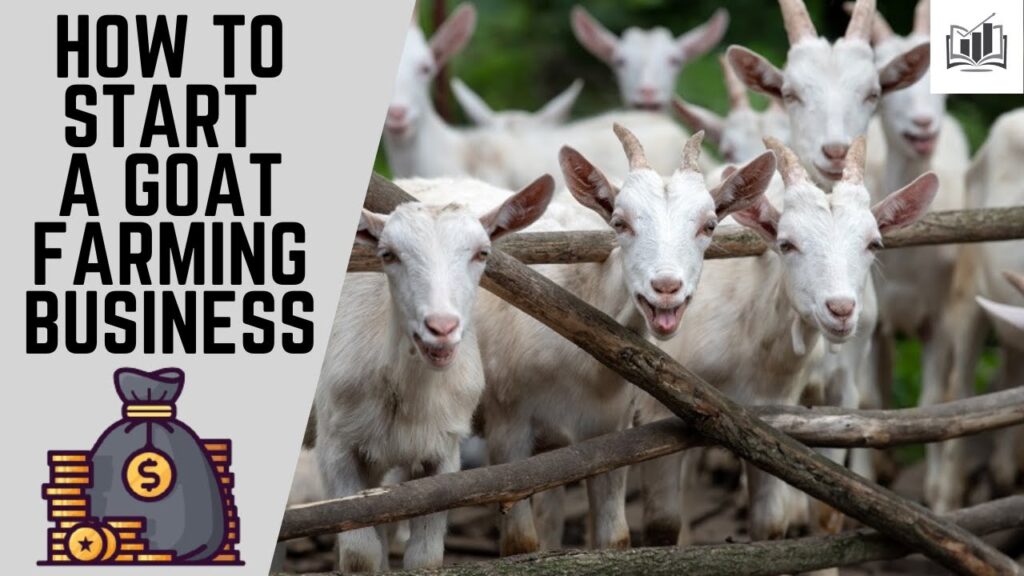
Goat Farming Business
Goat farming business is becoming an increasingly interesting opportunity for Nigerians who want to enter livestock farming without starting with the enormous capital often associated with cattle or large commercial farms.
Walk through a rural community, visit a livestock market, or speak with someone preparing animals for a major celebration, and you will quickly notice something: goats are rarely difficult to find a buyer for. Goat meat is widely consumed in Nigeria, while live goats are also traded for household consumption, ceremonies, religious celebrations, restaurants, meat sellers and breeding purposes.
But there is an important difference between owning goats and running a profitable goat farming business.
A person can keep ten goats and still lose money. Another farmer can start with a smaller herd and gradually build a valuable breeding operation.
The difference usually comes down to management.
Choosing the right goats, controlling feeding costs, preventing disease, maintaining good housing, managing breeding, keeping records and knowing when and where to sell can determine whether your farm becomes a source of income or simply an expensive hobby.
Nigeria has several important indigenous goat types, including the West African Dwarf, Sokoto Red and Sahel goats. Their distribution and characteristics differ across the country, which means breed selection should be connected to your environment and production objective rather than simply choosing the biggest animal you can find
So, is goat farming profitable in Nigeria?
Yes, it can be.
However, profitability is not automatic.
This complete guide explains how to start a goat farming business in Nigeria, how much you may need, how to choose goats, how to feed and house them, how breeding affects your returns, how to calculate goat farming profit and the mistakes that can quietly destroy your investment.
If you are serious about building a profitable farm, the goal should not simply be to buy goats.
The goal should be to build a goat production system that consistently turns feed, labour, breeding and management into healthy animals that the market wants to buy.

Goat Farming Business: Why Goat Farming in Nigeria Is Attracting Attention
The Nigerian livestock sector offers opportunities for farmers who understand local demand and manage production carefully.
Goats are particularly attractive because they can be raised under different production systems and can make use of pasture, browse plants and suitable agricultural by-products.
The Food and Agriculture Organization has documented the importance of goats in Nigerian livestock production and identifies the West African Dwarf, Sokoto Red and Sahel types among the country’s major goat varieties. (FAOHome)
One reason goat farming is attractive to beginners is flexibility.
You do not necessarily need to begin with 100 animals.
A farmer can start with a small breeding group, learn the business, improve management and expand as the herd reproduces.
That makes goat farming different from businesses where every expansion requires buying a completely new production unit.
Goat Farming Business: The Demand Behind the Opportunity
Goat meat, commonly called chevon, is consumed in different forms across Nigeria.
It appears in:
- Pepper soup
- Suya
- Grilled goat meat
- Stews
- Traditional meals
- Restaurant dishes
- Festive meals
- Ceremonial cooking
There is also demand for live goats.
Potential customers include:
- Butchers
- Restaurants
- Meat sellers
- Livestock traders
- Breeding farmers
- Event caterers
- Households
- Religious and cultural buyers
- Other farmers
Demand can become particularly strong around major celebrations and religious festivals.
Recent Nigerian reporting on the sector has also highlighted the combination of market demand, relatively modest entry requirements and the ability of goats to make use of locally available feed resources as reasons investors are showing interest in the business.
This does not mean every farmer will automatically make money.
It means there is a market opportunity for farmers who can consistently supply healthy, well-grown animals at competitive prices.
Goat Farming Business: 9 Powerful Secrets for Building a Profitable Farm
The following nine secrets are not shortcuts.
They are management principles.
If you apply them consistently, they can significantly improve your chances of building a sustainable goat farming business.
Goat Farming Business Secret #1: Start With a Clear Goat Farming Business Plan
One of the biggest mistakes beginners make is buying goats before deciding what they want the farm to achieve.
They see an attractive goat at the market, negotiate a price and take the animal home.
Then the questions begin:
Where will it stay?
What will it eat?
Who will care for it?
When should it be bred?
Who will buy the offspring?
How much will it cost each month?
What happens if the goat becomes sick?
A proper plan answers these questions before you spend your money.
Goat Farming Business: Decide Your Production Goal
There are several possible directions.
1. Meat production
The objective is to raise goats primarily for meat.
The farmer focuses on:
- Fast growth
- Good body condition
- Efficient feeding
- Appropriate breeds or crosses
- Good health
- Market weight
- Strategic selling
2. Breeding stock
Here, the objective is to produce quality goats for other farmers.
This requires greater attention to:
- Genetics
- Conformation
- Fertility
- Mothering ability
- Growth
- Disease history
- Pedigree or breeding records
3. Fattening
A farmer may buy relatively young or lean animals, feed them properly and sell them when they reach a desirable market condition.
This can have a shorter production cycle than building a large breeding herd, but profitability depends heavily on purchase price, feed cost, mortality, selling price and timing.
4. Milk production
Dairy goat production is a more specialised operation.
It requires appropriate breeds, nutrition, milking hygiene, market access and knowledge of dairy management.
A beginner should not automatically assume that the most expensive goat is the best goat.
Goat Farming Business: Write Down Your Numbers
Your plan should contain:
- Number of goats to start with
- Breed or type
- Purchase price
- Housing cost
- Land cost
- Feeding cost
- Water cost
- Veterinary expenses
- Labour
- Transportation
- Equipment
- Breeding plan
- Expected mortality
- Expected sales
- Emergency reserve
- Marketing strategy
The most important rule is simple:
Do not spend your entire capital on goats.
A farmer who uses all available money to buy animals and has nothing left for feed or veterinary care has not actually solved the startup problem.
Goat Farming Business Secret #2: Choose the Right Goats for Your Environment
Breed selection is one of the most important decisions in goat farming.
Nigeria does not have one uniform climate.
Conditions in northern Nigeria are different from those in the humid south. Therefore, a breed that performs well under one production system may not necessarily be the best choice for another farmer.
The major indigenous Nigerian goat types documented by FAO include the West African Dwarf, Sokoto Red and Sahel goat
Goat Farming Business: West African Dwarf Goat
The West African Dwarf goat is widely associated with southern and humid areas of West Africa.
It is valued for adaptation to local conditions and can be an attractive option for small-scale farmers operating in humid environments.
For a beginner, locally adapted animals can have a major advantage because they are already suited to the environmental conditions in which they have been raised.
Goat Farming Business: Sokoto Red Goat
The Sokoto Red is associated particularly with northern Nigeria and the wider savanna zone.
It is also known as Red Sokoto in many farming discussions.
It can be attractive for meat and skin production and has long been an important indigenous genetic resource.
Goat Farming Business: Sahel Goat
Sahel-type goats are associated with northern and semi-arid areas.
Their suitability to their environment is one reason local adaptation should be considered when choosing breeding stock.
Goat Farming Business: What Should a Beginner Look For?
Do not buy a goat simply because it looks large.
Inspect the animal carefully.
Look for:
- Bright and alert eyes
- Good appetite
- Normal movement
- Strong legs
- Healthy skin and hair coat
- No persistent coughing
- No obvious nasal discharge
- No severe diarrhoea
- Good body condition
- Healthy-looking hooves
- No obvious wounds or abscesses
- Properly developed body
- Good general alertness
For breeding animals, also examine:
- Reproductive history
- Age
- Previous kidding performance
- Udder condition in does
- Testicles and reproductive soundness in bucks
- Growth performance
- Family history where available
If you are inexperienced, taking a knowledgeable livestock farmer or veterinarian with you when buying breeding stock can save you from an expensive mistake.
Goat Farming Business Secret #3: Understand Goat Farming Cost Before Buying Animals
The question “How much does it cost to start goat farming in Nigeria?” has no single answer.
Anyone who gives you one fixed figure without asking about location, herd size, breed, housing system and production method is oversimplifying the business.
A tiny family operation and a 100-goat commercial farm are completely different investments.
Recent 2026 Nigerian cost estimates put small operations in the hundreds of thousands of naira, while larger farms can require several million naira. These figures are highly variable and should be treated as planning ranges rather than official national prices. (Legit.ng – Nigeria news.
Goat Farming Business: Main Startup Costs
Your initial budget may include:
| Startup item | What it covers | Cost behaviour |
|---|---|---|
| Goat stock | Does, bucks, growers or fattening animals | Depends heavily on breed, age and size |
| Housing | Goat shed, raised floor, roofing and partitions | Depends on materials and capacity |
| Fencing | Protection and confinement | Depends on land size and material |
| Feed | Initial forage, concentrates and supplements | Recurring |
| Water | Containers, pipes, tanks or wells | Depends on location |
| Veterinary care | Inspection, drugs, preventive care and emergencies | Variable |
| Equipment | Feeders, drinkers, buckets and tools | Mostly initial |
| Land | Purchase or lease | Highly location-dependent |
| Labour | Farm worker or caretaker | Recurring |
| Transportation | Moving animals, feed and equipment | Variable |
| Emergency reserve | Unexpected illness, mortality or repairs | Essential |
Goat Farming Business: Example of a Small Startup Budget
Suppose a beginner wants to start with a small breeding herd.
Instead of asking:
“How many goats can I buy with my money?”
ask:
“How many goats can I buy and still comfortably feed and care for them?”
For example, a hypothetical beginner could divide available capital like this:
- 45–55% for livestock
- 15–25% for housing and fencing
- 10–15% for initial feed
- 5–10% for healthcare and biosecurity
- 5–10% emergency reserve
These are not fixed rules.
They are simply a way to prevent the common mistake of putting nearly all your money into animal purchases.
Goat Farming Business: Why Goat Farming Cost Changes So Much
Prices vary because of:
- State
- Location
- Breed
- Age
- Sex
- Weight
- Season
- Health
- Pregnancy status
- Market demand
- Transportation
- Seller
- Purpose of purchase
A breeding doe with good reproductive history should not be valued the same way as a small young goat intended for future fattening.
Similarly, an established breeding buck with desirable characteristics can command a very different price from an ordinary market animal.
Goat Farming Business Secret #4: Build Housing That Protects the Herd
Good housing is not about constructing the most beautiful goat house.
It is about creating an environment where goats can remain:
- Dry
- Clean
- Safe
- Well ventilated
- Comfortable
- Protected from excessive rain
- Protected from predators and thieves
- Easy to inspect
- Easy to clean
In humid areas, poor drainage and wet floors can create serious management problems.
This is why elevated housing can be useful in some Nigerian production systems.
Recent Nigerian farmers interviewed by BusinessDay specifically highlighted elevated goat pens as a way to reduce dampness and waterlogging during rainy periods. (Businessday NG)
Goat Farming Business: Important Housing Features
A functional goat house should provide:
Adequate ventilation
Fresh air is important.
A poorly ventilated building can become hot, humid and unpleasant, particularly when many animals are crowded together.
Dry flooring
Goats should not spend their lives standing in wet, dirty conditions.
Protection from rain
The roof should prevent rainwater from entering the main resting area.
Easy cleaning
If cleaning is difficult, farmers tend to postpone it.
Design the pen so manure and waste can be removed efficiently.
Separate areas
Where possible, consider separate areas for:
- Does
- Bucks
- Pregnant animals
- Kids
- Sick animals
- Newly purchased goats
Isolation space is particularly useful because a newly purchased animal should not immediately be mixed with the established herd.
Goat Farming Business: Avoid Overcrowding
Overcrowding increases stress and can make disease management more difficult.
It also creates competition for:
- Feed
- Water
- Resting space
The exact space requirement depends on animal size, housing design and management system, so work with a livestock professional or established production guide when designing a larger commercial facility.
Goat Farming Business Secret #5: Control Feed Costs Without Sacrificing Nutrition
Feed is one of the areas where many goat farmers either make or lose money.
A common misconception is:
“Goats eat anything.”
Goats are adaptable browsers, but that does not mean they can grow efficiently on whatever waste happens to be available.
If your animals are poorly nourished, you may experience:
- Slow growth
- Poor fertility
- Low milk production
- Weak kids
- Increased disease susceptibility
- Poor body condition
- Longer time to market
- Reduced profitability
Research on Nigerian West African Dwarf goats has shown that appropriate forage and supplementation can improve growth and feed intake.
Goat Farming Business: What Can Goats Eat?
Depending on availability and nutritional suitability, goat diets can include:
- Grasses
- Browse plants
- Legumes
- Leaves
- Hay
- Silage
- Crop residues
- Appropriate agricultural by-products
- Concentrate feeds
- Mineral supplements
- Clean water
FAO resources on integrated crop-livestock systems describe the use of browse, grasses, crop residues and suitable household/agricultural by-products as components of small-ruminant feeding systems, while stressing the importance of adequate feed and wholesome water. (FAOHome)
Goat Farming Business: Never Make Feed Guesswork Your Strategy
Some farmers use cassava peels, maize residues or other locally available materials.
That can help reduce feed expenses, but the material must be appropriately processed and included in a balanced feeding program.
Do not assume every agricultural waste product is automatically safe or nutritionally complete.
Some materials may require:
- Drying
- Processing
- Proper storage
- Nutritional balancing
- Professional guidance
Goat Farming Business: Water Is Not Optional
Clean water should always be available.
Water requirements change according to:
- Temperature
- Feed type
- Animal size
- Pregnancy
- Lactation
- Activity
Dirty or contaminated water can become a disease risk.
Goat Farming Business Secret #6: Make Disease Prevention a Priority
A healthy goat is a productive asset.
A sick goat is a financial liability.
One of the biggest differences between amateur goat keeping and professional goat farming is the attitude toward prevention.
Instead of waiting for animals to become visibly sick, successful farmers establish routines for:
- Observation
- Quarantine
- Hygiene
- Parasite management
- Vaccination where appropriate
- Veterinary consultation
- Isolation of sick animals
- Record keeping
Goat Farming Business: Quarantine New Goats
This is one of the simplest but most overlooked practices.
When you buy new animals, do not immediately place them inside the established herd.
Keep them separate while assessing their:
- Health
- Appetite
- Stool
- Respiratory condition
- Body condition
- Parasite status
- General behaviour
A veterinarian can advise you on appropriate quarantine and disease-control measures for your location.
Goat Farming Business: Common Health Problems
Goat farmers may encounter problems involving:
- Internal parasites
- External parasites
- Pneumonia and respiratory illness
- Diarrhoea
- Foot problems
- Nutritional deficiencies
- Reproductive problems
- Bacterial and viral diseases
A particularly important point is that not every sick goat needs the same medicine.
Avoid randomly buying antibiotics or dewormers based on advice from another farmer.
Incorrect medication can waste money, delay proper treatment and contribute to antimicrobial resistance.
Goat Farming Business: Build a Relationship With a Veterinarian
You do not need to wait for an emergency before finding professional help.
Identify a veterinarian or livestock health professional before the herd becomes large.
Ask about:
- Vaccination
- Parasite control
- Disease prevention
- Nutrition
- Breeding
- New animal inspection
- Emergency treatment
Prevention is generally cheaper than repeatedly losing valuable animals.
Goat Farming Business Secret #7: Master Breeding and Herd Management
Breeding is where a goat farming business can begin to compound.
A good breeding program means today’s animals can become tomorrow’s productive herd.
But breeding should not simply mean putting every male goat together with every female goat.
You need to think about:
- Genetics
- Age
- Health
- Body condition
- Reproductive performance
- Birth history
- Growth
- Parentage
Goat Farming Business: Why Does Matter So Much
In a breeding operation, the doe is an income-producing asset.
A productive doe can produce kids repeatedly over her productive life.
Therefore, do not judge a female solely by size.
Pay attention to:
- Fertility
- Kidding history
- Mothering ability
- Kid survival
- Udder condition
- Growth of offspring
- General health
Goat Farming Business: Manage Your Bucks Carefully
You do not necessarily need a large number of bucks.
A good breeding buck can service multiple does, depending on the production system and breeding strategy.
The important thing is quality.
Look for:
- Strong body
- Healthy reproductive organs
- Good legs
- Good growth
- Healthy history
- Desirable breed characteristics
Avoid keeping a poor-quality buck simply because you already own him.
One inferior breeding male can influence a large proportion of your next generation.
Goat Farming Business: Keep Breeding Records
Record:
- Doe identification
- Buck identification
- Mating date
- Expected kidding date
- Actual kidding date
- Number of kids
- Kid sex
- Birth problems
- Weaning performance
- Growth
- Health treatments
You may be surprised how quickly memory becomes unreliable when you have dozens of animals.
Records turn a collection of goats into a managed breeding enterprise.
Goat Farming Business Secret #8: Understand Goat Farming Profit Before You Sell
Many beginners ask:
“How much profit can I make from goat farming?”
The honest answer is:
It depends.
Goat farming profit is influenced by:
- Number of productive animals
- Mortality
- Reproduction
- Feed cost
- Purchase price
- Selling price
- Labour
- Veterinary costs
- Housing
- Land
- Transportation
- Market access
- Selling season
Recent Nigerian estimates have suggested that small farms can generate meaningful annual returns, while larger farms may produce substantially higher revenues. However, those figures are estimates and should never be treated as guaranteed income. (Legit.ng – Nigeria news.)
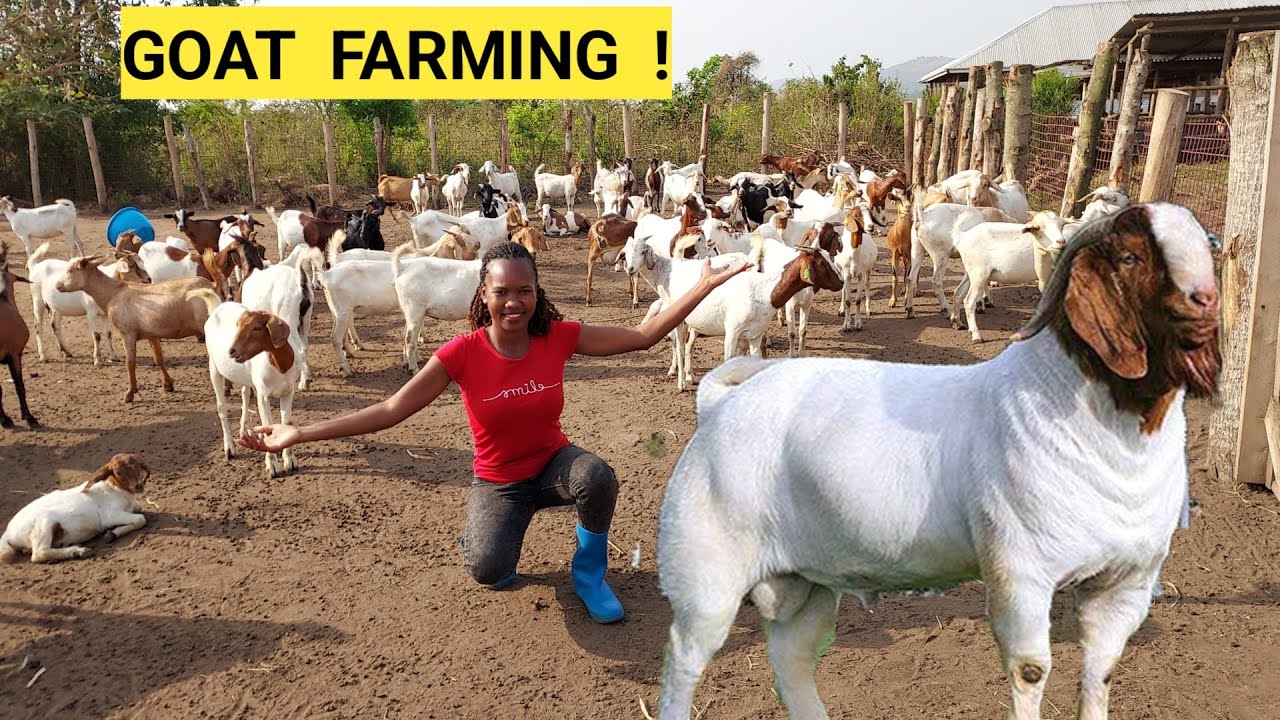
Goat Farming Business: A Simple Profit Formula
You can use:
Net Profit = Total Sales Revenue − Total Business Costs
For example, imagine a farmer sells:
- 20 goats at an average of ₦70,000
Total sales:
20 × ₦70,000 = ₦1,400,000
Now suppose total production and selling costs associated with those animals amount to ₦900,000.
Estimated gross operating surplus:
₦1,400,000 − ₦900,000 = ₦500,000
This is only an illustration.
It is not a promise that 20 goats will generate ₦500,000 profit.
Your actual result could be much higher or lower.
Goat Farming Business: Don’t Confuse Revenue With Profit
This is extremely important.
If you sell goats for ₦2 million, you have generated ₦2 million in revenue.
You have not necessarily made ₦2 million profit.
You still need to account for:
- Purchase of animals
- Feed
- Labour
- Medication
- Housing
- Transport
- Mortality
- Land
- Utilities
- Marketing
- Equipment depreciation
- Other operating costs
Only after calculating these costs can you estimate your real profit.
Goat Farming Business: Is Goat Farming Profitable in Nigeria?
Yes, goat farming can be profitable in Nigeria, but profitability depends heavily on management.
The strongest opportunities tend to come from farmers who control costs while maintaining animal performance.
Several factors make the business attractive:
Strong market demand
Goat meat is consumed across many parts of the country.
Reproductive potential
A well-managed breeding herd can increase its numbers over time.
Local feed resources
Goats can utilise pasture, browse and suitable agricultural by-products.
Adaptation
Indigenous goats have been raised under Nigerian environmental conditions for generations.
Flexible scale
Farmers can begin relatively small and expand gradually.
But profitability has an opposite side.
Poor management can turn the same advantages into problems.
For example:
- Cheap feed is useless if it is nutritionally inadequate.
- Many goats are useless if mortality is high.
- High selling prices do not guarantee profit if production costs are uncontrolled.
- A large farm is not necessarily more profitable than a small efficient farm.
The real goal should therefore be profit per healthy productive animal, not simply the number of goats you own.
Goat Farming Business: How Much Does It Cost to Start Goat Farming in Nigeria?
There is no universal startup figure.
Current Nigerian estimates suggest that a small-scale operation can begin with several hundred thousand naira, while larger operations may require millions. One recent 2026 estimate placed a 5–10-goat operation around ₦300,000–₦700,000, with larger 30–50-goat operations estimated at approximately ₦1.5 million–₦3 million. (Legit.ng – Nigeria news.)
However, treat these figures as illustrative market estimates, not official fixed prices.
Your own budget should be based on current quotations from:
- Local livestock markets
- Breeders
- Feed suppliers
- Building-material suppliers
- Veterinarians
- Landowners
- Transporters
Goat Farming Business: Small-Scale Approach
A beginner might choose to start with:
- 2–5 goats
- 5–10 goats
- 10–20 goats
The appropriate number depends on available capital and experience.
Starting small is not a sign of failure.
It can actually be a smart risk-management strategy.
Goat Farming Business: Medium-Scale Approach
Once the farmer understands:
- Feeding
- Breeding
- Disease prevention
- Sales
- Record keeping
- Labour management
the herd can gradually expand.
Goat Farming Business: Commercial Approach
A commercial operation requires much more than simply purchasing many goats.
You need:
- Reliable land
- Proper housing
- Feed supply
- Veterinary support
- Labour
- Water
- Biosecurity
- Records
- Marketing contracts
- Working capital
- Emergency reserves
A commercial goat farm should be managed as a business rather than as an oversized backyard herd.
Goat Farming Business: The Best Location for a Goat Farm in Nigeria
Location affects cost and productivity.
When selecting land, consider:
Access to feed
A farm near affordable pasture, browse and agricultural by-products can reduce transport costs.
Water
Reliable clean water is essential.
Road access
You need to move:
- Goats
- Feed
- Equipment
- Workers
- Manure
- Finished animals
Security
Livestock theft can destroy a profitable business.
Market proximity
Being close to customers can reduce transportation expenses and stress on animals.
Climate
Consider:
- Rainfall
- Heat
- Humidity
- Drainage
- Seasonal feed availability
Goat Farming Business: Rural Versus Peri-Urban Location
A rural farm may provide cheaper land and greater access to natural feed resources.
A peri-urban farm may provide easier access to:
- Customers
- Restaurants
- Butchers
- Markets
- Veterinary services
There is no universal winner.
Choose the location that provides the best balance between production costs and market access.
Goat Farming Business: Intensive, Semi-Intensive or Extensive System?
Your management system affects your costs and labour requirements.
Intensive goat farming
Goats remain mostly within controlled housing.
Advantages:
- Easier monitoring
- Better control over breeding
- Easier manure collection
- Easier record keeping
- Better control over feeding
Disadvantages:
- Higher feed and labour requirements
- Greater need for good housing
- More management responsibility
Semi-intensive goat farming
Goats receive a combination of controlled feeding and grazing/browsing.
This can provide a balance between:
- Feed cost
- Labour
- Animal movement
- Nutritional control
Extensive goat farming
Goats rely more heavily on natural grazing and browsing.
Advantages:
- Potentially lower purchased-feed costs
- Less intensive housing requirements
Disadvantages:
- Greater exposure to theft
- Disease and parasite exposure
- Less control over nutrition
- Potential environmental challenges
- More difficult breeding control
For commercial production, many farmers use a system adapted to their land, climate, labour and market.
Goat Farming Business: How to Buy Healthy Goats
Buying livestock requires patience.
Do not rush because the seller says:
“This is the last one.”
Take time to inspect the animal.
Check the eyes
They should appear reasonably bright and alert.
Check body condition
Avoid animals that are severely thin unless you have a specific reason and the expertise to manage them.
Check movement
Look for obvious lameness or difficulty walking.
Check the coat
A dull or abnormal coat can sometimes indicate poor health or nutrition.
Check the mouth
Age and dental condition can influence productivity and value.
Check the abdomen and stool
Persistent diarrhoea or obvious digestive problems should raise concerns.
Ask about history
Find out:
- Where the goat came from
- Age
- Previous illness
- Vaccination
- Deworming
- Pregnancy
- Previous births
- Feeding system
When purchasing expensive breeding stock, professional inspection becomes even more valuable.
Goat Farming Business: How to Reduce Feeding Costs
Feed can become your largest recurring expense if poorly managed.
Instead of depending entirely on purchased feed, explore locally available resources.
Possible options include:
- Napier/elephant grass
- Guinea grass
- Legume forages
- Browse plants
- Hay
- Silage
- Crop residues
- Properly processed agricultural by-products
However, local availability does not automatically mean nutritional adequacy.
A good feeding strategy should provide the animal with the nutrients needed for:
- Maintenance
- Growth
- Pregnancy
- Lactation
- Reproduction
The Nigerian West African Dwarf goat has been studied extensively in relation to locally available forages and supplementation, with research showing the importance of improving feed quality rather than relying on low-quality roughage alone. (FAOHome)
Goat Farming Business: Grow Some Feed Yourself
If land is available, producing part of your forage can help reduce dependence on purchased feed.
This can also protect your farm during periods when market feed prices rise.
Think of forage production as part of the goat business rather than a separate activity.
Goat Farming Business: Marketing Strategies That Can Increase Profit
A farmer can raise excellent goats and still struggle financially if there is no good marketing strategy.
Start marketing before your animals reach selling age.
Goat Farming Business: Identify Buyers Early
Potential buyers include:
- Local livestock traders
- Butchers
- Restaurants
- Caterers
- Households
- Breeders
- Other farmers
- Event organisers
- Meat distributors
Goat Farming Business: Sell Directly Where Possible
Every additional middleman may reduce your final margin.
Direct sales can sometimes improve profitability, especially when you develop relationships with repeat customers.
Goat Farming Business: Sell at the Right Time
Market demand can change during:
- Religious celebrations
- Christmas
- Weddings
- Festivals
- Holiday periods
- Community events
Do not build your entire business around one festive season, but learn how seasonal demand affects prices in your local market.
Goat Farming Business: Build a Customer Database
Keep records of buyers.
For example:
- Butcher A — buys 5 goats monthly
- Restaurant B — buys 10 goats during festive periods
- Farmer C — buys breeding does
- Trader D — buys mature males
Over time, these contacts can become one of your most valuable business assets.
Goat Farming Business: Keep Farm Records Like a Real Entrepreneur
A surprising number of farmers do not know exactly how much each goat costs them.
That makes it almost impossible to know whether the business is profitable.
Your records should include:
Animal records
- Identification number
- Breed
- Sex
- Age
- Purchase price
- Parentage
- Birth date
- Breeding history
- Health history
Financial records
- Feed expenses
- Labour
- Veterinary costs
- Transportation
- Housing repairs
- Equipment
- Sales revenue
Production records
- Births
- Deaths
- Weaning
- Growth
- Sales
- Breeding failures
At the end of every month, calculate:
Total income − total expenses = operating result
This simple calculation can reveal problems before they become disasters.
Goat Farming Business: Common Mistakes Beginners Should Avoid
Mistake #1: Buying too many goats at the beginning
More animals mean more:
- Feed
- Water
- Labour
- Disease risk
- Housing requirements
Start at a scale you can manage.
Mistake #2: Choosing goats based only on size
A large goat is not automatically a profitable goat.
Health, genetics, adaptation and reproductive performance matter.
Mistake #3: Ignoring housing
A cheap goat house that creates constant wetness and poor ventilation can become expensive later.
Mistake #4: Waiting until goats become sick
Prevention should come before emergency treatment.
Mistake #5: Feeding only agricultural waste
Waste products can be useful, but they should not automatically become the entire diet.
Mistake #6: No breeding records
Without records, genetic selection becomes guesswork.
Mistake #7: No emergency fund
Disease, sudden feed-price increases, theft, transport problems and repairs can happen unexpectedly.
Mistake #8: Selling without calculating costs
A farmer may celebrate a high selling price without realising the animal cost more to produce than expected.
Mistake #9: Depending on one buyer
Develop several market channels.
Goat Farming Business: A Practical Beginner Roadmap
If you are completely new to goat farming, the following sequence can make the process easier.
Step 1: Study the market
Visit livestock markets and speak to:
- Farmers
- Breeders
- Butchers
- Traders
- Veterinarians
Find out current local prices.
Step 2: Choose your production objective
Decide whether you want:
- Meat production
- Breeding
- Fattening
- Milk
- Mixed production
Step 3: Choose your location
Consider:
- Water
- Feed
- Security
- Roads
- Market
- Land cost
Step 4: Prepare the housing
Do not buy animals before their shelter is ready.
Step 5: Find a reliable livestock health professional
Establish veterinary support before an emergency occurs.
Step 6: Purchase a small number of healthy animals
Focus on quality rather than quantity.
Step 7: Quarantine new animals
Protect your existing herd.
Step 8: Start feeding and health routines immediately
Do not wait until animals look weak.
Step 9: Record everything
Record purchases, feeding expenses, breeding, treatments and sales.
Step 10: Sell strategically
Do not sell simply because you need cash unless the situation requires it.
Understand the market.
Step 11: Review performance
After several months, calculate:
- Mortality rate
- Growth
- Reproductive performance
- Feed expenses
- Veterinary expenses
- Sales revenue
Step 12: Expand gradually
Only increase the herd when your management system can handle the extra animals.
Goat Farming Business: A Simple Business Plan Template
A basic goat farming business plan can contain the following sections.
Executive summary
Explain:
- What the farm will produce
- Location
- Target market
- Expected scale
Farm objectives
For example:
- Produce quality meat goats
- Build a breeding herd
- Supply local restaurants
- Sell breeding stock
Market analysis
Identify:
- Customers
- Competitors
- Local prices
- Demand periods
- Distribution channels
Production plan
Describe:
- Breed
- Number of animals
- Housing
- Feeding
- Breeding
- Health management
Financial plan
Include:
- Startup capital
- Operating expenses
- Expected revenue
- Cash flow
- Emergency reserve
Risk management
Consider:
- Disease
- Theft
- Feed price increases
- Mortality
- Market price changes
- Drought
- Flooding
- Labour shortages
A business plan does not need to be 100 pages long.
Even a simple five-page plan can dramatically improve decision-making.
Goat Farming Business: How to Calculate Your Break-Even Point
Break-even is the point where your revenue covers your costs.
For example, imagine your total cost for producing and marketing a group of goats is:
₦1,000,000
If the average contribution toward recovering that investment is ₦50,000 per goat, you would need the equivalent of:
₦1,000,000 ÷ ₦50,000 = 20 goats
to cover the cost.
Again, this is an illustration.
Your actual calculation should include the appropriate fixed and variable costs for your farm.
Understanding break-even helps answer a more useful question than:
“How much can I make?”
Instead, you can ask:
“How many animals must I successfully produce and sell before this investment becomes profitable?”
That is a much better business question.
Goat Farming Business: How to Scale From 5 Goats to a Larger Farm
Expansion should be earned by performance.
If you start with five goats, do not immediately think:
“I need 500 goats.”
Think:
“How can I successfully manage these five goats?”
Once you understand the system, increase gradually.
For example:
Stage 1: 5 goats
Stage 2: 10–20 goats
Stage 3: 30–50 goats
Stage 4: 50–100 goats
Stage 5: Commercial operation
The exact numbers do not matter as much as your ability to manage each stage.
Before expansion, ask:
- Do I have enough feed?
- Do I have enough housing?
- Do I have enough water?
- Can I monitor the animals?
- Can I afford veterinary care?
- Do I have enough labour?
- Do I have buyers?
- Can I survive a bad season?
If the answer is no, expansion may create more problems than profit.
Goat Farming Business: What Makes a Successful Goat Farmer Different?
The most successful farmer is not necessarily the one with the largest herd.
It is often the farmer who understands the numbers.
A successful goat farmer knows:
- What each animal costs
- How much feed is being used
- Which does are productive
- Which goats repeatedly become sick
- Which animals should be culled
- Which customers pay reliably
- When market prices are favourable
- How much profit the farm actually makes
This mindset changes everything.
You stop looking at goats as animals you simply own.
You start seeing them as productive business assets.
Goat Farming Business: The Role of Local Knowledge
There is no substitute for learning from farmers who already operate in your area.
Climate, feed availability, disease pressure and market prices vary significantly between Nigerian regions.
A farmer in Kano may have completely different challenges from a farmer in Rivers, Cross River, Ogun or Kaduna.
Therefore:
- Visit farms.
- Attend agricultural events.
- Speak with livestock extension officers.
- Talk to veterinarians.
- Study local livestock markets.
- Compare prices before buying.
- Learn what breeds perform well locally.
Practical local information can prevent expensive mistakes.
Goat Farming Business: Can You Start With Little Capital?
Yes, but expectations must be realistic.
You can start small.
However, “small capital” does not mean “no capital.”
Even a tiny goat farm needs:
- Animals
- Shelter
- Feed
- Water
- Health management
- Security
- Time
If your capital is limited, the better strategy may be to begin with a small number of animals and reinvest profits rather than borrowing heavily to build a large farm immediately.
The goal is controlled growth.
Goat Farming Business: How to Reinvest Your First Profits
Suppose your first production cycle generates a profit.
Do not immediately spend everything.
Consider reinvesting part of the money into:
- Better breeding stock
- Improved housing
- Feed production
- Water infrastructure
- Veterinary care
- Fencing
- Record systems
- Marketing
This creates a compounding effect.
Instead of repeatedly starting from zero, the farm gradually becomes stronger.
Goat Farming Business: Risk Management for Nigerian Farmers
Every agricultural business carries risks.
Goat farming is no exception.
Disease risk
Response: Biosecurity, veterinary support and preventive health management.
Feed-price risk
Response: Produce or conserve suitable forage where possible.
Theft risk
Response: Strong fencing, identification, secure housing and reliable farm supervision.
Market-price risk
Response: Develop multiple customers and avoid relying on one market.
Weather risk
Response: Provide adequate shelter, drainage, water and feed reserves.
Cash-flow risk
Response: Maintain emergency funds and track monthly expenses.
Breeding risk
Response: Keep productive breeding stock and maintain accurate records.
Goat Farming Business: The Biggest Secret Is Not the Goat
After all the discussion about breeds, prices, feed and housing, there is one lesson that deserves special attention.
The biggest secret is management.
Two farmers can buy similar goats at similar prices.
One may lose money.
The other may build a successful farm.
Why?
Because profitability comes from the entire system.
The farmer must connect:
Breed → Nutrition → Health → Breeding → Growth → Marketing → Record keeping → Profit
If one part fails repeatedly, the entire business suffers.
For example:
A farmer buys excellent goats but provides poor nutrition.
Growth slows.
The selling period becomes longer.
Feed costs accumulate.
Profit falls.
Another farmer may purchase ordinary but locally adapted goats, feed them appropriately, prevent disease, control breeding and sell strategically.
That farmer may achieve a better return.
This is why beginners should focus less on finding a “magic breed” and more on building a reliable production system.
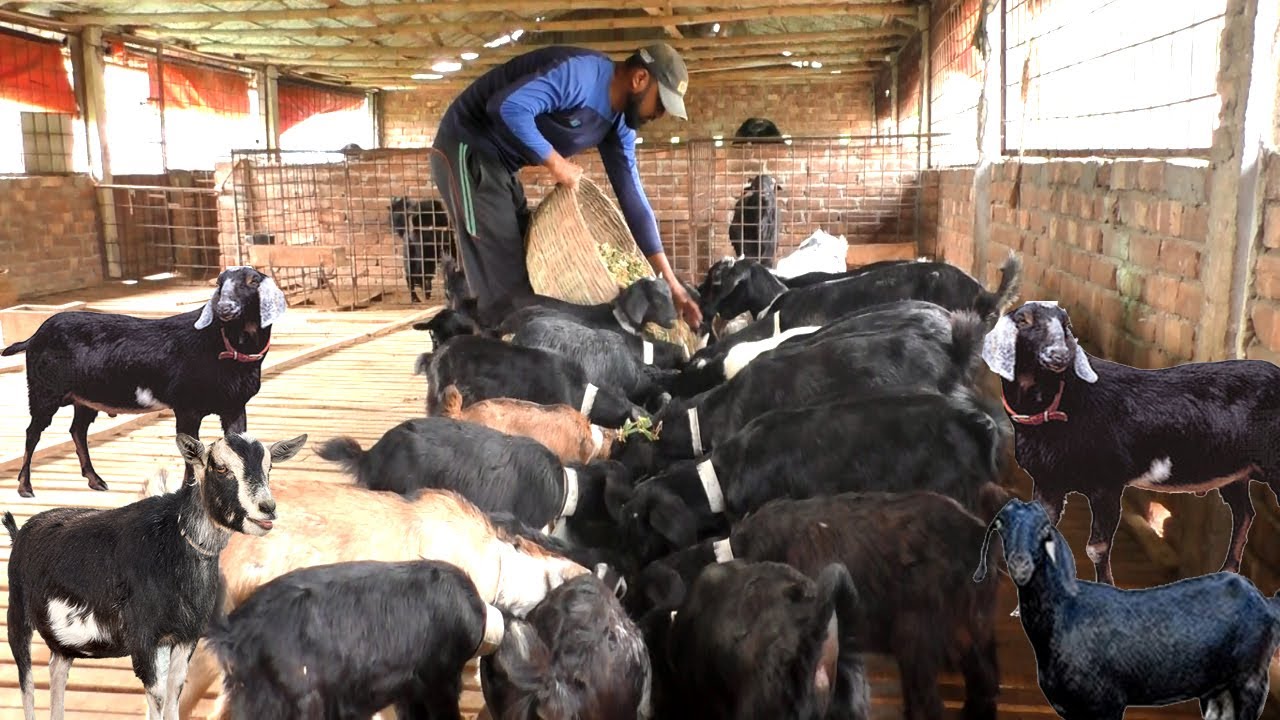
Final Checklist Before You Start
Before buying your first goat, ask yourself:
Capital
- Do I have enough money for more than the purchase of animals?
- Do I have an emergency reserve?
Land
- Is the location secure?
- Is water available?
- Is feed accessible?
- Can vehicles reach the farm?
Housing
- Is the pen ready?
- Is it dry?
- Is it ventilated?
- Can I clean it easily?
Animals
- Have I selected an appropriate breed?
- Are the goats healthy?
- Have I inspected them properly?
Feeding
- Where will feed come from?
- What will happen during the dry season?
- Can I produce some forage myself?
Health
- Do I have access to veterinary support?
- Do I have a quarantine area?
Breeding
- What is my breeding objective?
- How will I record mating and kidding?
Marketing
- Who will buy my goats?
- What price are buyers currently paying?
- When is demand strongest?
Records
- Do I have a farm record book?
- Will I track every major expense?
If you cannot answer these questions, pause before buying animals.
Planning first can save you money later.
Final Thoughts
Starting a goat farming business in Nigeria can be an exciting opportunity for farmers, entrepreneurs and families looking for a livestock enterprise that can begin on a relatively small scale and grow over time.
But profitable goat farming is not simply about buying goats and waiting for their numbers to increase.
It is about building a system.
You need to choose animals that fit your environment, provide suitable housing, manage nutrition carefully, protect the herd from disease, control breeding, maintain records and develop reliable markets.
The question “Is goat farming profitable in Nigeria?” therefore has a better answer than simply “yes” or “no.”
It is profitable when the business is managed profitably.
A farmer who controls costs, reduces unnecessary mortality, maintains productive breeding stock and sells intelligently has a much stronger chance of earning sustainable returns.
Start with a scale you understand.
Learn before expanding.
Record everything.
Protect your animals.
Know your customers.
And most importantly, treat every goat as part of a business system rather than simply another animal on the farm.
That mindset can be the difference between keeping goats and building a successful goat farming business in Nigeria.
Goat Farming Business: Frequently Asked Questions
Goat Farming Business: How much does it cost to start goat farming in Nigeria?
There is no fixed amount because startup costs depend on herd size, breed, location, housing, land and feeding system. Recent 2026 Nigerian estimates suggest that a small 5–10-goat operation may require roughly ₦300,000–₦700,000, while medium and commercial operations can require significantly more. Treat these figures as planning estimates and obtain current local quotations before investing. (Legit.ng – Nigeria news.)
Goat Farming Business: Is goat farming profitable in Nigeria?
Yes, goat farming can be profitable when animals are healthy, feed costs are controlled, mortality is low, breeding is managed properly and goats are sold into good markets. Profitability varies considerably from one farm to another.
Goat Farming Business: Which goat breed is best in Nigeria?
There is no single best breed for every farmer. West African Dwarf goats can be particularly suitable in humid southern environments, while Sokoto Red and Sahel-type goats are important in northern production systems. Your choice should depend on location, purpose, climate, feed and market.
Goat Farming Business: How many goats should a beginner start with?
A beginner can start with a small herd, such as 2–5 or 5–10 goats, depending on available capital and management experience. Starting small allows you to learn before committing substantial capital.
Goat Farming Business: What do goats eat?
Goats can consume suitable grasses, browse, legumes, hay, silage, crop residues and appropriately processed agricultural by-products. However, their diets must provide adequate nutrients for growth, reproduction and health.
Goat Farming Business: How long does it take for goat farming to become profitable?
There is no universal timeline. Profit depends on whether you are breeding, fattening or producing for another market. Breeding operations generally require patience because the herd must reproduce and grow before significant sales can occur.
Goat Farming Business: Can I run a goat farm alongside another job?
Yes. A small operation may be manageable alongside another occupation, but goats require daily attention to feeding, water, health, security and observation. As the herd grows, labour requirements also increase.
Goat Farming Business: What is the biggest cost in goat farming?
The largest expenses vary by farm. Common major costs include livestock acquisition, feed, housing, labour, veterinary care and land. Feed can become a particularly significant recurring cost if forage is not properly planned.
Goat Farming Business: Should I buy local or exotic goats?
For beginners, locally adapted goats can reduce some of the risks associated with environmental adaptation. Exotic or crossbred animals may offer specific production advantages but can require more specialised management. Choose based on your production objective and local conditions.
Goat Farming Business: What is the most important factor in profitability?
Management is one of the most important factors. A profitable farm must control feed costs, maintain healthy animals, manage reproduction, minimise mortality, keep records and sell strategically.
Goat Farming Business: Conclusion
The Nigerian goat industry offers genuine opportunities, but it rewards preparation rather than guesswork.
You do not need to start with hundreds of goats.
You need to start with a good plan.
Choose suitable animals.
Build proper housing.
Secure reliable feed and water.
Establish veterinary support.
Manage breeding.
Track expenses.
Find buyers.
Reinvest wisely.
Then expand.
That is how a small herd can gradually become a serious agricultural enterprise.
If you approach goat farming as a business rather than simply livestock ownership, your decisions become clearer—and your chances of building a profitable and successful goat farm become much stronger
About The Author