Crop Yield
How much food can one acre of farmland really produce?
It sounds like a straightforward question, but the answer can be surprisingly complicated.
An acre may look like a relatively small piece of land when you stand in the middle of it. Yet, under the right conditions, that same acre can produce several tonnes of food in a single growing season. The difference between a disappointing harvest and an impressive one often comes down to the crop selected, soil fertility, planting material, water availability, pest management, farming technique and the length of the growing season.
This is why crop yield is one of the most useful measurements in agriculture.
Crop yield tells us how much harvested produce is obtained from a particular area of land. Farmers, researchers, governments, agribusinesses and food planners use yield figures to understand how productive farmland is and how efficiently agricultural resources are being used.
According to the Food and Agriculture Organization of the United Nations (FAO), agricultural statistics cover harvested area, production and yield across a huge range of crops and countries. FAOSTAT’s current crop-production dataset covers data through 2024 and uses official statistics, surveys, administrative information and estimates from member countries.
That matters because there is a major difference between potential yield and actual farm yield.
A variety might be capable of producing an impressive harvest under research or highly managed conditions, while an ordinary farmer may obtain much less because of drought, poor soil, disease, weeds, inadequate fertilizer, poor planting material or other constraints.
In this article, we will examine nine crops that can generate substantial production from an acre and explain what makes each one interesting from a food-production perspective.
The crops include:
- Cassava
- Sweet potato
- Potato
- Yam
- Tomato
- Maize
- Rice
- Banana
- Cabbage and other intensive vegetables
The goal is not simply to identify the crop with the largest number on paper.
The more important question is this:
Which crops can turn a relatively small area of farmland into a meaningful amount of food when they are matched with the right environment and good agricultural practices?

Crop Yield Explained: What Does One Acre Actually Produce?
Before comparing crops, it is important to understand what agricultural yield means.
When farmers talk about crop yield, they are usually referring to the amount of harvested crop obtained from a specified area.
Yield is commonly expressed as:
- tonnes per hectare
- kilograms per hectare
- tonnes per acre
- bushels per acre
- kilograms per acre
An acre is smaller than a hectare.
One hectare contains approximately 2.471 acres, while one acre is approximately 0.405 hectares.
This conversion is important because agricultural statistics are frequently reported in tonnes per hectare.
For example, if a crop produces 10 tonnes per hectare, a simple conversion gives approximately:
10 tonnes ÷ 2.471 = 4.05 tonnes per acre
That does not mean every farmer will actually harvest 4.05 tonnes from an acre.
It is simply the mathematical conversion of the reported yield.
Actual farm yield can be considerably higher or lower.
Crop Yield Depends on More Than Land Size
Two farmers can cultivate exactly one acre of the same crop and harvest completely different quantities.
Why?
Because farmland is not a factory where putting in one acre automatically produces a fixed amount.
Important factors include:
- Soil fertility
- Soil structure
- Rainfall
- Irrigation
- Temperature
- Sunlight
- Seed or planting material quality
- Planting density
- Fertilizer management
- Weed control
- Pest management
- Disease control
- Crop variety
- Planting date
- Harvesting time
- Farmer experience
- Post-harvest losses
This explains why online claims about “the amount one acre can produce” should always be treated carefully.
A figure from a commercial farm in an intensive production system may not represent what a smallholder farmer can obtain.
Crop Yield and the Question: How Much Food Can 1 Acre Produce?
So, how much food can 1 acre produce?
The honest answer is:
It depends on the crop and production system.
One acre of maize might produce a few tonnes under a good production system. One acre of cassava can produce considerably more fresh root weight. Intensive vegetable production can generate repeated harvests from the same land, while a tree crop such as banana has a completely different production cycle.
This is why comparing crops only by tonnes can sometimes be misleading.
Imagine two crops:
- Crop A produces 5 tonnes per acre.
- Crop B produces 15 tonnes per acre.
At first glance, Crop B appears three times more productive.
But what if Crop A is a dry grain with much less water content while Crop B consists mostly of fresh water-rich roots or vegetables?
The physical weight is not the same thing as nutritional value, calories, protein, dry matter or economic value.
FAO data similarly distinguish production and yield statistics from other agricultural measures. Its crop datasets record production in tonnes and yield separately, making it possible to compare agricultural output across crops and locations.
That distinction becomes particularly important when comparing root crops, grains and vegetables.
Crop Yield: 9 High Yield Crops That Can Produce Remarkable Food Per Acre
There is no universal ranking that applies to every country.
Instead, the following nine crops represent important examples of crops capable of producing substantial food output from relatively small areas under suitable conditions.
Crop Yield #1: Cassava Can Produce Huge Quantities of Food Per Acre
Cassava deserves a prominent place in any discussion about high yield crops in tropical agriculture.
It is particularly important across Africa, Asia and Latin America because it can tolerate conditions that are difficult for some other crops.
Cassava produces carbohydrate-rich roots underground, while the leaves can also be used as food in some cultures after appropriate preparation.
One reason cassava attracts attention is its ability to produce substantial fresh-root biomass.
Research and agricultural programs in Nigeria have demonstrated that improved cassava varieties can produce very high yields under suitable conditions.
For example, FAO documentation on improved cassava cultivars in Nigeria records varieties with reported fresh-root yields ranging from roughly 16 to 43 tonnes per hectare in the referenced trials and production records. These figures represent particular varieties and conditions, rather than a guaranteed commercial yield for every farm. (FAOHome)
A more recent study indexed through FAO’s AGRIS system reported average yields among sampled Nigerian Fadama III farmers of about 29.1 tonnes per hectare for cassava, alongside 11.2 tonnes per hectare for rice and 9.7 tonnes per hectare for tomatoes. Again, these are study-specific results rather than universal national averages. (FAO AGRIS)
Why Cassava Has Strong Crop Yield Potential
Cassava has several characteristics that make it valuable:
- It can tolerate periods of relatively low rainfall.
- It can grow in a range of tropical environments.
- It produces substantial underground biomass.
- Some varieties have strong disease or pest tolerance.
- Harvesting can sometimes be delayed, providing flexibility.
- The roots can be processed into several food products.
- It is an important staple crop in many African communities.
FAO notes that cassava is especially important in tropical regions and that millions of people in Africa depend on it as a major food source.
However, farmers should not interpret high potential yield as guaranteed income.
Cassava profitability depends on variety, local market prices, processing opportunities, transportation, labor costs, disease pressure and the distance to buyers.
For farmers close to processors, cassava can be particularly interesting because the crop can serve both food and industrial markets.
Crop Yield #2: Sweet Potato Is a Powerful High-Yield Food Crop
Sweet potato is another crop that can produce a large quantity of edible roots from a relatively small area.
It is especially interesting because of its relatively short production cycle compared with many perennial crops.
Depending on variety and management, sweet potatoes can produce substantial root yields.
The crop also offers nutritional diversity.
Orange-fleshed sweet potato varieties, for example, are well known for their beta-carotene content, which the body can convert to vitamin A.
Why Sweet Potato Stands Out in Crop Production
Sweet potato has several advantages:
- It can mature relatively quickly.
- It can produce substantial root biomass.
- It can be grown in different production systems.
- Some varieties tolerate short dry periods better than certain other crops.
- It can provide both household food and market opportunities.
- Orange-fleshed varieties can contribute valuable micronutrients.
The crop is also useful when farmers are trying to increase food production without requiring extremely large landholdings.
But again, yield is not guaranteed.
Poor-quality planting material, viruses, inadequate soil fertility, drought, weevils and poor weed management can substantially reduce production.
Therefore, the phrase high yield crops per acre should never be interpreted as “plant this crop and automatically harvest a huge quantity.”
The genetics of the crop and the management of the field work together.
Crop Yield #3: Potato Can Deliver Impressive Production From Small Land Areas
Potatoes are another major example of a crop with strong production potential per unit of land.
Unlike cereals such as maize and rice, potatoes produce underground tubers.
Under favorable conditions, potato production can generate substantial tonnage from an acre.
This is one reason potatoes are important in many high-intensity agricultural systems.
Potatoes also have an important characteristic: farmers can harvest a crop that contains significant amounts of carbohydrate and water from a relatively small area.
What Determines Potato Crop Yield?
Potato production can be strongly affected by:
- Variety selection
- Seed-tuber quality
- Soil drainage
- Temperature
- Irrigation
- Fertilizer application
- Hilling
- Disease control
- Planting density
- Harvest timing
Potatoes do particularly well when farmers maintain appropriate soil moisture without allowing waterlogging.
Disease management is equally important.
Late blight and other diseases can rapidly damage crops when environmental conditions are favorable to disease development.
Therefore, excellent potato farm yield is not simply about planting more plants.
It is about maintaining the right balance between plant population, nutrition, water and crop protection.
Crop Yield #4: Yam Can Produce a Substantial Harvest From One Acre
Yam is particularly important in West Africa, where it is deeply connected to food systems, household consumption and local markets.
Yams are starchy tubers that can provide substantial food output.
Their production is more labor-intensive than some crops, and they often require good soil preparation and support structures depending on the variety and production system.
Why Yam Matters for Crop Production
Yam has several characteristics that make it attractive:
- It produces large edible tubers.
- It is an important staple in West Africa.
- It has strong local demand in many markets.
- It can be stored for considerable periods under appropriate conditions.
- It can be processed into different food products.
- Some varieties have strong yield potential.
However, yam should not be selected purely because it can produce heavy tubers.
Farmers also need to consider:
- Seed yam costs
- Labor
- Staking
- Land preparation
- Soil fertility
- Market access
- Storage
- Variety suitability
A crop that produces more tonnes but costs dramatically more to establish may not necessarily generate more profit.
That is an important lesson when interpreting highest yielding crops per acre.
Crop Yield #5: Tomato Can Produce Exceptional Fresh-Weight Output Per Acre
Tomato is one of the most interesting crops when discussing intensive crop production.
Unlike maize or rice, tomato is frequently grown under intensive management, and harvest can occur over a period rather than all at once.
That creates an important distinction.
A farmer may harvest tomatoes several times from the same field during one production cycle.
This can make tomato farming attractive where there is strong market demand.
A study indexed by FAO AGRIS reported an average tomato yield of about 9.7 tonnes per hectare among the sampled farmers in its Nigerian Fadama III study.
That number should not be treated as a national benchmark, because production varies significantly across locations and farming systems.
What Can Increase Tomato Crop Yield?
Farmers looking to improve tomato yield commonly pay attention to:
- High-quality seedlings
- Suitable varieties
- Soil fertility
- Irrigation
- Mulching
- Proper spacing
- Staking where appropriate
- Weed management
- Pest management
- Disease management
- Timely harvesting
Tomatoes also demonstrate why farm yield is connected to management.
A farmer with excellent irrigation, disease prevention and market access may produce very different results from a farmer relying entirely on unpredictable rainfall.
Tomatoes can also be highly sensitive to market conditions.
A large harvest is only economically valuable if the farmer can sell it before quality deteriorates.
That means production planning and marketing must go together.
Crop Yield #6: Maize Remains One of the World’s Most Important Crops
Maize is one of the most widely grown food and feed crops in the world.
It is also one of the clearest examples of why yield should be compared within a specific agricultural context.
Maize is generally measured as grain yield, meaning the harvested dry grain is more meaningful for comparison than the weight of the entire plant.
FAO’s global agricultural statistics show that cereal production increased substantially between 2010 and 2024, with yield improvements playing an important role in the increase. (FAOHome)
In the United States, for example, USDA’s January 2026 crop report estimated the 2025 national average corn yield at 186.5 bushels per acre, a record level for that estimate. That figure demonstrates the productivity possible under a highly mechanized agricultural system, but it should not be transferred directly to farms in Africa or other regions with different environments and production systems.
What Makes Maize an Important Crop Yield Benchmark?
Maize is valuable because:
- It has broad food uses.
- It is used extensively for animal feed.
- It is an important raw material for industry.
- It can be mechanized relatively efficiently.
- Improved hybrids can have high yield potential.
- Its production cycle can fit into different farming calendars.
However, maize is also highly sensitive to water and nutrient availability.
A farmer may plant an excellent hybrid but still receive a poor harvest if drought occurs during critical stages of development.
This is why improved genetics must be combined with good agronomic management.
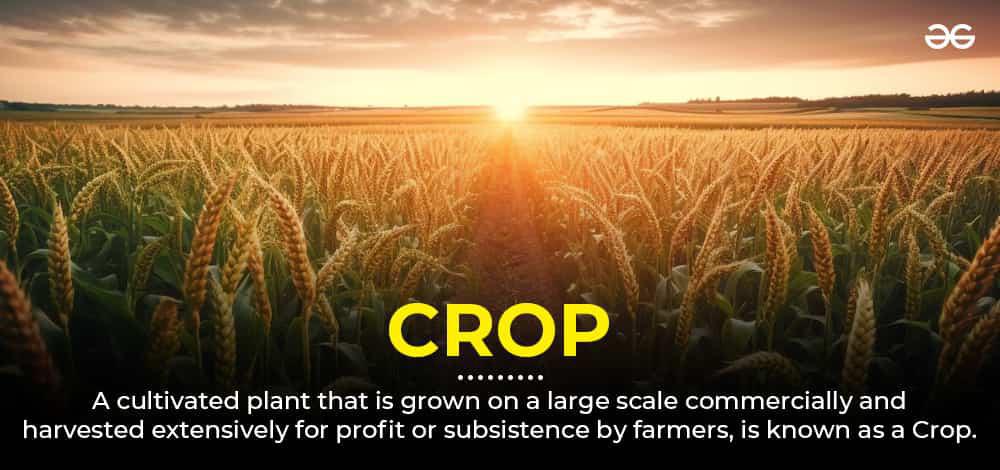
Crop Yield #7: Rice Can Produce Large Quantities of Staple Food
Rice is another major food crop with significant production potential.
It is particularly important because it feeds billions of people and is grown under very different production systems.
Rice can be cultivated under:
- Irrigated systems
- Rain-fed lowland systems
- Upland systems
- Mechanized commercial systems
- Smallholder systems
Consequently, rice yield can vary dramatically.
USDA’s Rice Yearbook, updated in March 2026, provides current acreage, production and yield information for U.S. rice and also contains world supply and use estimates. (Economic Research Service)
A particularly useful point is that rice yield is usually reported as paddy rice before milling.
This matters because a tonne of harvested paddy is not the same as a tonne of polished edible rice.
There are losses and processing differences between the harvested crop and the final food product.
How Rice Crop Yield Can Improve
Better rice production can involve:
- Quality seed
- Timely planting
- Appropriate plant spacing
- Water management
- Weed control
- Balanced fertilizer
- Pest management
- Disease management
- Improved varieties
- Timely harvesting
- Proper drying and storage
For farmers, improving rice yield is therefore not only about planting more seed.
It is about managing the entire production system.
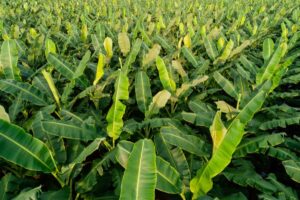
Crop Yield #8: Banana Can Provide Repeated Food Production From the Same Land
Banana is different from annual crops such as maize and rice because it is a perennial crop that can continue producing from the same planting system.
This makes banana particularly interesting when discussing how much food can 1 acre produce over time.
A banana plantation can produce bunches repeatedly, depending on variety, climate, management and plant health.
That means annual production should be considered differently from a one-time harvest.
Why Banana Is a High-Output Food Crop
Bananas offer:
- Repeated production
- Strong demand in many markets
- High fresh-food value
- Potential for smallholder production
- Multiple varieties
- Opportunities for local and regional marketing
However, banana requires careful management.
Important considerations include:
- Soil fertility
- Water
- Wind protection
- Disease management
- Spacing
- Weed control
- Mulching
- Removal of unwanted shoots
- Harvest timing
Banana also highlights a major problem with simple acre-by-acre comparisons.
A farmer cannot necessarily compare one acre of banana harvested repeatedly over several years with one acre of maize harvested once.
The time dimension matters.
Crop Yield #9: Cabbage and Intensive Vegetables Can Maximize Food From Limited Land
The ninth category is intensive vegetables, with cabbage as a useful example.
Vegetables can produce impressive fresh-weight output from small plots when irrigation, fertility and crop management are carefully controlled.
This is especially important for farmers operating close to cities.
Urban and peri-urban agriculture can benefit from crops that:
- Mature relatively quickly
- Can be harvested frequently
- Have strong local demand
- Can generate high revenue from small areas
- Can fit into multiple production cycles
Cabbage, leafy vegetables, onions, peppers and other horticultural crops can therefore be important components of intensive agriculture.
But vegetables also carry significant risks.
They can require:
- Frequent irrigation
- Regular pest monitoring
- Intensive labor
- Good fertility management
- Timely harvesting
- Reliable markets
- Rapid transportation
The biggest lesson is that high physical yield does not automatically mean high profit.
A crop can produce many tonnes per acre and still be financially disappointing if production costs are high or market prices collapse.
Crop Yield Comparison: How Much Can One Acre Produce?
The table below provides a practical way to understand the differences between crops.
Because agricultural yields vary enormously by country, variety, soil, climate and management, these should be treated as illustrative production ranges and documented examples rather than guaranteed 2026 yields.
| Crop | Approximate yield potential/example | Approximate equivalent per acre | Main food product | Important yield factors |
|---|---|---|---|---|
| Cassava | 15–40+ tonnes/ha in suitable high-performing systems | 6–16+ tonnes/acre | Fresh roots | Variety, soil, rainfall, disease, fertility |
| Sweet potato | 10–30+ tonnes/ha | 4–12+ tonnes/acre | Roots | Planting material, water, soil, weevil control |
| Potato | 15–40+ tonnes/ha in intensive systems | 6–16+ tonnes/acre | Tubers | Seed quality, irrigation, fertility, disease |
| Yam | 10–30+ tonnes/ha in productive systems | 4–12+ tonnes/acre | Tubers | Variety, staking, soil, labor, fertility |
| Tomato | 20–60+ tonnes/ha in intensive systems | 8–24+ tonnes/acre | Fruit | Irrigation, variety, disease and pest control |
| Maize | 3–12+ tonnes/ha depending on system | 1.2–4.9+ tonnes/acre | Grain | Hybrid, rainfall, nutrients, plant population |
| Rice | 3–10+ tonnes/ha depending on system | 1.2–4.0+ tonnes/acre | Paddy grain | Water, variety, fertility, weed control |
| Banana | Highly variable; substantial annual production possible | Highly variable | Fruit | Water, fertility, spacing, disease |
| Cabbage/vegetables | 20–60+ tonnes/ha in intensive systems | 8–24+ tonnes/acre | Vegetables | Irrigation, fertility, pests, crop cycle |
Important: The ranges above are not a universal global ranking. They are intended to illustrate the very different production scales possible across crops and farming systems. FAO’s official datasets should be used when a specific country, year or crop yield needs to be verified. (FAO Data)
For example, the documented Nigerian Fadama III study cited through FAO AGRIS reported average yields of 29.1 tonnes/ha for cassava, 11.2 tonnes/ha for rice and 9.7 tonnes/ha for tomatoes among its sampled farmers. (FAO AGRIS)
Crop Yield vs Farm Yield: Why Your Acre May Produce Less or More
One of the biggest mistakes farmers and new agricultural investors make is treating published yield figures as promises.
They are not.
Farm yield is the actual amount harvested from a particular field under particular conditions.
Consider two farms growing the same cassava variety.
Farm A has:
- Fertile soil
- Good planting material
- Adequate rainfall
- Timely weed control
- Good spacing
- Strong pest and disease management
Farm B has:
- Poor soil fertility
- Irregular rainfall
- Weak planting material
- Late weed control
- Disease pressure
- Poor spacing
Even though both farmers planted the same crop on one acre, their harvests could be dramatically different.
This is why improving crop yield usually requires looking at the entire production system rather than searching for a “magic crop.”
Crop Yield: The 7 Biggest Factors That Determine Production Per Acre
Understanding these factors is more useful than simply memorizing yield numbers.
Crop Yield Factor #1: Soil Fertility
Plants need nutrients to grow.
Nitrogen, phosphorus, potassium and several micronutrients all play different roles.
But fertilizer should not be applied blindly.
A soil test can help determine what the soil actually needs.
Farmers should also consider organic matter, soil structure, drainage and pH.
A fertile soil can support stronger plant growth, but excessive fertilizer can waste money and potentially create environmental problems.
Crop Yield Factor #2: Quality Planting Material
A farmer cannot expect exceptional production from weak seed or diseased planting material.
For different crops, this might mean:
- Certified seed
- Improved varieties
- Healthy cassava stems
- Quality seed potatoes
- Disease-free seedlings
- Healthy sweet potato vines
The starting material establishes the genetic and health foundation of the crop.
Crop Yield Factor #3: Water Management
Water is one of the most important determinants of production.
Too little water can cause:
- Poor germination
- Wilting
- Flower abortion
- Poor grain filling
- Small tubers
- Low fruit production
Too much water can also cause:
- Root problems
- Nutrient loss
- Waterlogging
- Disease
- Poor soil aeration
This is why irrigation can be transformative in areas where rainfall is unreliable.
Crop Yield Factor #4: Plant Population and Spacing
Farmers sometimes assume that more plants automatically mean more food.
That is not always true.
If plants are too close together, they may compete for:
- Light
- Water
- Nutrients
- Air movement
- Root space
If they are too far apart, valuable land may be underutilized.
The best spacing depends on the crop and variety.
Crop Yield Factor #5: Weed Management
Weeds compete with crops.
They can consume water and nutrients while also providing shelter for pests and diseases.
Early weed control is especially important because young crops are often vulnerable to competition.
Good weed management does not necessarily mean constant manual labor.
Farmers can combine:
- Mulching
- Timely hoeing
- Mechanical cultivation
- Appropriate herbicides
- Cover crops
- Good crop spacing
depending on the crop and farming system.
Crop Yield Factor #6: Pest and Disease Management
A high-potential variety cannot perform well if pests destroy its leaves, roots, stems or fruits.
Disease can be equally destructive.
Integrated pest management is often more sustainable than relying exclusively on one chemical treatment.
Farmers can combine:
- Resistant varieties
- Field sanitation
- Crop rotation
- Monitoring
- Biological control
- Cultural practices
- Targeted pesticide use where appropriate
The goal is not simply to spray more.
The goal is to protect the crop efficiently.
Crop Yield Factor #7: Harvest Timing
A crop can be grown successfully and still lose value because it is harvested too early or too late.
Harvest timing affects:
- Weight
- Quality
- Storage life
- Market price
- Processing suitability
For highly perishable vegetables such as tomatoes, harvesting and marketing logistics can be just as important as production itself.
Crop Yield and the Difference Between Yield and Profit
This is perhaps the most important lesson in the entire discussion.
The highest-yielding crop is not automatically the most profitable crop.
Suppose one acre of Crop A produces 15 tonnes while Crop B produces 7 tonnes.
Crop A appears superior if we only measure weight.
But suppose:
- Crop A costs much more to produce.
- Crop A requires expensive irrigation.
- Crop A has high pest pressure.
- Crop A has poor market access.
- Crop A experiences major post-harvest losses.
Meanwhile:
- Crop B costs less.
- Crop B has stable demand.
- Crop B stores well.
- Crop B has a nearby buyer.
The financial result could be very different.
Therefore, farmers should examine yield per acre, production cost, selling price and market risk together.
Crop Yield and Food Value: Tonnes Are Not the Whole Story
Another common misunderstanding is assuming that the crop producing the most kilograms automatically produces the most food value.
Fresh cassava, for example, contains a considerable amount of water.
Dry grains have much less water.
Therefore, one tonne of maize grain cannot be directly compared with one tonne of fresh tomatoes or cassava as if they represented identical nutritional output.
There are several ways to evaluate agricultural productivity:
- Fresh weight
- Dry matter
- Calories
- Protein
- Micronutrients
- Economic value
- Edible portion
- Marketable yield
This is particularly important when the question is how much food can 1 acre produce.
If the goal is food security, calories and nutrients may matter.
If the goal is livestock feed, dry matter and energy may matter.
If the goal is commercial farming, revenue and profit may matter.
Crop Yield and High Yield Crops Per Acre in 2026
The agricultural landscape in 2026 continues to emphasize productivity because farmers face pressure to produce more food while managing limited land, water, labor and inputs.
FAO’s latest agricultural statistics show that the world’s harvested area for major primary crops reached approximately 1.5 billion hectares in 2024, while global cereal production increased by 27% from 2010 to 2024, with yield improvements contributing significantly to that growth.
This is important because increasing food production does not necessarily mean simply clearing more land.
One approach is increasing production from land already being farmed.
That can involve:
- Better varieties
- Improved irrigation
- Better soil management
- Precision fertilizer use
- Better pest management
- Mechanization
- Improved extension services
- Better storage
- Reduced post-harvest losses
The idea is sometimes described as increasing agricultural productivity.
Crop Yield and the Most Important Question: What Should a Farmer Plant?
There is no single answer.
The right crop depends on the farm.
Before choosing a crop based on a headline promising extraordinary yield, consider these questions:
Crop Yield Question #1: What Is the Climate Like?
A crop suited to humid tropical conditions may perform poorly in an arid environment.
Temperature, rainfall and growing-season length all matter.
Crop Yield Question #2: Is Water Available?
If irrigation is available, farmers have more control over production.
Without irrigation, rainfall becomes a major risk.
Crop Yield Question #3: What Is the Soil Like?
A soil test can reveal:
- pH
- Nutrient status
- Organic matter
- Salinity
- Other limitations
Crop Yield Question #4: Is There a Reliable Market?
Before planting, identify potential buyers.
Ask:
- Who will purchase the crop?
- What price is realistic?
- How far is the market?
- How quickly must the crop be sold?
- Are there processors nearby?
- What happens if prices fall?
Crop Yield Question #5: What Is the Production Budget?
Calculate:
- Land preparation
- Seed or planting material
- Fertilizer
- Chemicals
- Labor
- Irrigation
- Transport
- Harvesting
- Storage
- Marketing
A high-yield crop can become a poor investment if production costs are uncontrolled.
Crop Yield and How Farmers Can Improve Production Per Acre
Farmers interested in increasing farm yield should focus on practical improvements rather than chasing unrealistic yield promises.
A strong improvement plan can include:
- Test the soil before major fertilizer decisions.
- Choose varieties adapted to the local environment.
- Use healthy, high-quality planting material.
- Plant at the recommended time.
- Maintain appropriate plant spacing.
- Control weeds early.
- Monitor pests and diseases regularly.
- Use water efficiently.
- Apply nutrients according to crop and soil requirements.
- Harvest at the correct maturity stage.
- Reduce post-harvest losses.
- Keep farm records from one season to another.
The last point is often overlooked.
A farmer who records planting date, variety, fertilizer use, rainfall, labor, harvest quantity and selling price can gradually discover what actually works on their own land.
That information can be more useful than copying a yield figure from another country.
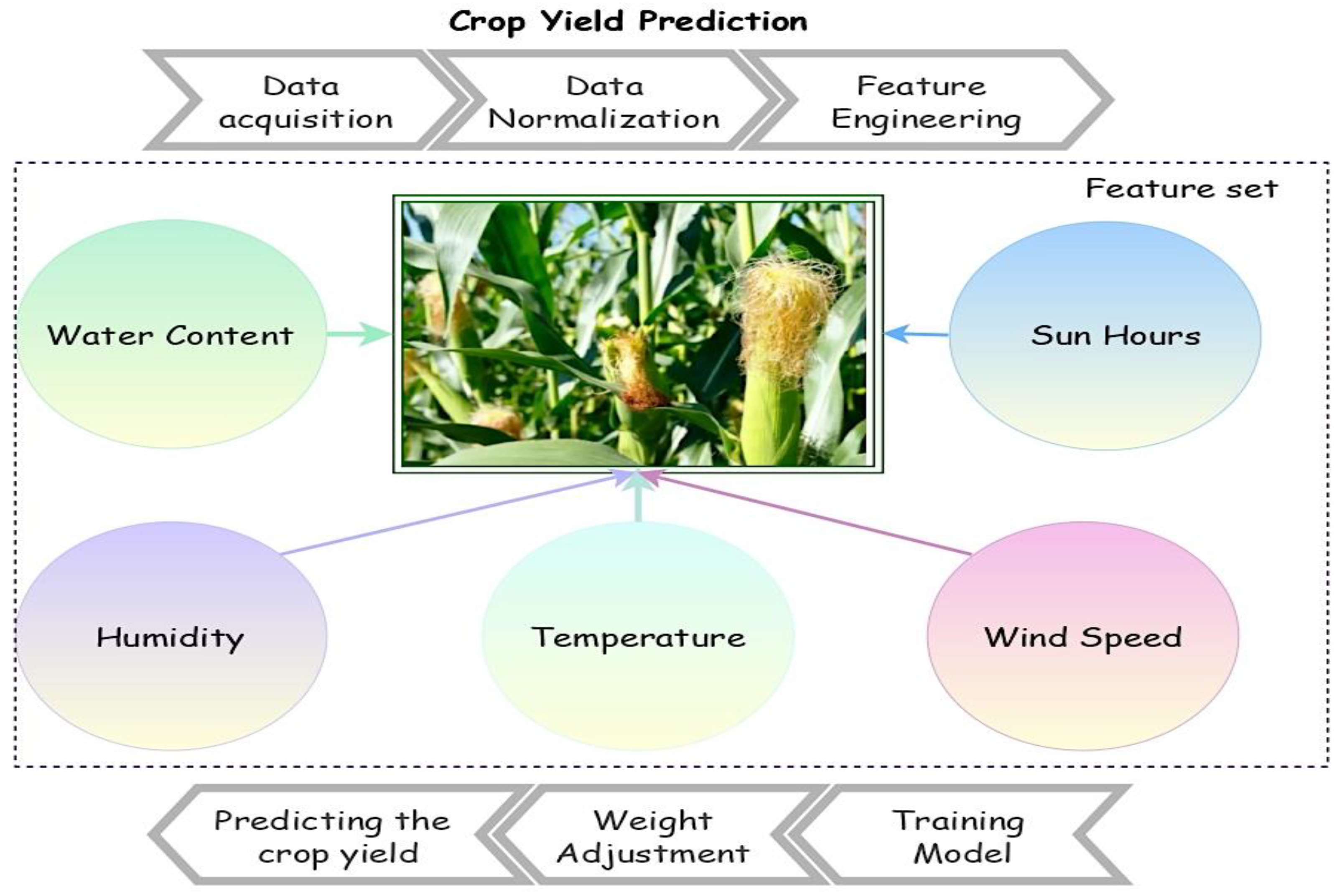
Crop Yield Records: Why Farmers Should Measure Their Own Farm Yield
Suppose a farmer cultivates one acre of cassava.
At harvest, the farmer records:
Total harvested roots = 8 tonnes
The farmer now has a genuine farm-level yield measurement.
If the farmer repeats the process next season and harvests 10 tonnes, they can investigate what changed.
Maybe the farmer:
- Used better stems
- Improved spacing
- Controlled weeds earlier
- Improved soil fertility
- Reduced disease
- Received better rainfall
The farmer now has evidence.
This is how agricultural improvement becomes practical rather than theoretical.
Instead of simply asking:
“What is the highest yield possible?”
the better question becomes:
“What is my current yield, what is limiting it, and what can I realistically improve?”
Crop Yield and Post-Harvest Losses Matter More Than Many Farmers Realize
Production does not end when the crop leaves the field.
Food can be lost during:
- Harvesting
- Sorting
- Washing
- Drying
- Storage
- Transportation
- Processing
- Marketing
For highly perishable crops such as tomatoes, losses can be particularly costly.
A farmer might produce an impressive field yield but receive poor returns because a significant percentage of the harvest becomes unsellable.
This means improving food production is not only about increasing the number of tonnes harvested.
It is also about protecting the food after harvest.
Better storage, transportation, processing and market coordination can effectively increase the amount of food that reaches consumers without expanding farmland.
Crop Yield and Why Improved Varieties Can Change the Numbers
Plant breeding has played an enormous role in agricultural productivity.
Modern varieties may be developed for characteristics such as:
- Higher yield
- Disease resistance
- Drought tolerance
- Early maturity
- Better grain quality
- Improved nutritional characteristics
- Pest tolerance
- Market preferences
But improved genetics only reach their potential when environmental and management conditions support them.
A high-performing variety planted in poor soil without adequate water may still produce a disappointing harvest.
This is why modern agriculture increasingly treats genetics, environment and management as interconnected parts of the production system.
Crop Yield and the Role of Technology in 2026
Technology is increasingly influencing agricultural production.
Some farms now use technologies such as:
- Soil sensors
- Satellite imagery
- Weather forecasting
- GPS-guided machinery
- Automated irrigation
- Drones
- Digital farm records
- Mobile agricultural advisory tools
- Artificial intelligence for selected farm-management tasks
Not every farmer needs expensive technology.
Sometimes a simple rainfall record, soil test, improved seed and good farm calendar can make a significant difference.
Technology should solve a specific problem rather than become an expense simply because it is fashionable.
Crop Yield: What the Data Really Tell Us About One Acre
When someone asks, “how much does one acre of farmland produce?”, there is no universal number.
An acre can produce:
- Less than one tonne of a particular crop under poor conditions
- Several tonnes under ordinary productive conditions
- Many tonnes of roots, tubers or vegetables under intensive production
- Repeated harvests in certain horticultural and perennial systems
The variation is enormous.
The key is understanding what the number represents.
Is it:
- Experimental yield?
- Demonstration-plot yield?
- Average national yield?
- Commercial farm yield?
- Smallholder farm yield?
- Potential yield?
- Marketable yield?
- Fresh weight?
- Dry weight?
Without that context, a yield number can be misleading.
FAOSTAT is particularly useful because it provides country-level and global data for harvested area, production and yield across many crops, allowing users to examine agricultural production in a defined geographic and temporal context. (FAO Data)
For readers who want to explore official crop statistics, the FAOSTAT crop production and yield database is a useful starting point.
Crop Yield: What Farmers Can Learn From Nigeria’s Production Experience
Nigeria provides an interesting example because it has a wide range of climates and agricultural systems.
The country produces crops including:
- Cassava
- Yam
- Maize
- Rice
- Sorghum
- Millet
- Cowpea
- Tomatoes
- Plantain
- Banana
- Sweet potato
- Groundnuts
Yield varies considerably from one region and farm to another.
Research indexed by FAO AGRIS found that extension services and input consultants were associated with agricultural production outcomes among sampled Fadama III farmers, while the study reported average yields of approximately 29.1 tonnes per hectare for cassava, 11.2 tonnes per hectare for rice, 9.7 tonnes per hectare for tomatoes and 1.33 tonnes per hectare for sorghum among the enterprises examined. (FAO AGRIS)
The study is useful because it illustrates how different crops can have dramatically different yield profiles.
It also reinforces a larger point:
Farm productivity is not determined by land area alone.
Knowledge, inputs, management and local conditions matter.
Crop Yield: The Difference Between Potential Yield and Real Farm Yield
Let’s imagine a seed company advertises a crop variety with a potential yield of 20 tonnes per hectare.
A farmer should not automatically expect 20 tonnes.
Potential yield generally assumes favorable conditions.
Real farms experience:
- Uneven rainfall
- Nutrient limitations
- Pests
- Diseases
- Weeds
- Soil variation
- Labor constraints
- Equipment limitations
- Harvest losses
Therefore, a farmer might harvest 12 tonnes even though the variety has a much higher potential under ideal conditions.
That does not necessarily mean the seed failed.
It may mean one or more limiting factors prevented the crop from reaching its genetic potential.
This is why agricultural extension advice is valuable.
Farmers need to identify the biggest limiting factor instead of simply adding more inputs.
Crop Yield: 5 Mistakes That Can Reduce Production Per Acre
Crop Yield Mistake #1: Choosing a Crop Only Because Its Yield Looks High
A crop may produce impressive tonnage but have weak market demand in your area.
Always investigate the market.
Crop Yield Mistake #2: Ignoring Soil Conditions
The same crop can perform very differently on fertile soil and degraded soil.
Test and manage the soil.
Crop Yield Mistake #3: Using Poor Planting Material
Weak seed, infected cuttings or poor seedlings can reduce the crop before the season has properly started.
Crop Yield Mistake #4: Overlooking Water
Even high-yielding varieties need appropriate water.
Irrigation can improve reliability where rainfall is uncertain, but it must be planned economically.
Crop Yield Mistake #5: Measuring Only Harvest Weight
Track revenue and costs too.
A 10-tonne harvest is not necessarily better than a 7-tonne harvest if the 10-tonne crop costs twice as much to produce and sells at a much lower price.
Crop Yield: How to Compare the 9 Crops Properly
A useful comparison should consider at least six dimensions:
| Measurement | Why It Matters |
|---|---|
| Yield per acre | Shows physical production |
| Production cycle | Shows how quickly the land can produce |
| Market price | Indicates revenue potential |
| Production cost | Shows how expensive the crop is |
| Storage life | Determines how much flexibility the farmer has |
| Nutritional value | Shows food contribution |
This creates a much more realistic picture than simply ranking crops according to tonnes.
For example, a vegetable crop may have impressive fresh-weight production but require frequent harvesting and immediate marketing.
Cassava may have substantial fresh-root production and can remain in the ground for longer periods depending on the system.
Maize has lower fresh-weight production than some root crops but offers advantages in storage, transportation and processing.
There is no single measurement that captures all of these differences.
Crop Yield: Can One Acre Really Feed a Family?
Sometimes, yes—but the answer depends on what “feed a family” means.
A family’s food requirement depends on:
- Number of people
- Age
- Activity level
- Dietary pattern
- Crop type
- Portion of the crop actually edible
- Storage losses
- Processing losses
- Length of time considered
An acre producing a few tonnes of a staple crop could represent a significant food resource.
But food security is not simply about producing calories.
A healthy diet requires diversity.
That may include:
- Carbohydrates
- Protein
- Fats
- Vitamins
- Minerals
- Fiber
This is why diversified farming systems can be valuable.
Instead of putting every acre into a single crop, some farmers may combine staple crops with vegetables, legumes, fruits or livestock depending on their goals and local conditions.
Crop Yield: What the Future of High-Yield Farming Could Look Like
The future of agriculture is unlikely to be based on one miracle crop.
Instead, productivity improvements are likely to come from combinations of technologies and practices.
These may include:
- Better genetics
- Precision nutrient management
- Efficient irrigation
- Climate-smart practices
- Improved soil health
- Digital weather information
- Better pest monitoring
- Mechanization
- Reduced post-harvest losses
- Better farmer training
- Stronger agricultural markets
FAO’s current statistical work shows the continuing importance of measuring production and productivity as agricultural systems evolve. FAOSTAT’s agricultural database is updated regularly, with a further agricultural production release planned for December 2026. (FAOHome)
That means yield information will continue changing as new data become available.
For farmers and agricultural writers, this creates an important opportunity: focus on principles that remain useful while updating specific numbers when newer official statistics are released.
Crop Yield: The 9 Crops at a Glance
If you are looking for a quick summary, here are the nine crops discussed:
Crop Yield Summary #1: Cassava
Excellent fresh-root production potential, particularly in tropical environments.
Crop Yield Summary #2: Sweet Potato
Fast-growing root crop with strong food and nutritional value.
Crop Yield Summary #3: Potato
High-value tuber crop capable of substantial production under intensive management.
Crop Yield Summary #4: Yam
Important West African staple with substantial tuber production potential.
Crop Yield Summary #5: Tomato
Intensive vegetable crop capable of high fresh-weight production but requiring careful management.
Crop Yield Summary #6: Maize
Major global cereal with strong yield potential under suitable varieties and management.
Crop Yield Summary #7: Rice
One of the world’s most important staple crops, with yields strongly affected by water and management.
Crop Yield Summary #8: Banana
Perennial crop capable of repeated fruit production from the same land.
Crop Yield Summary #9: Cabbage and Vegetables
Intensive crops that can generate substantial output from relatively small areas when markets and irrigation are available.
Crop Yield: Final Thoughts on How Much Food One Acre Can Produce
So, how much food can 1 acre produce?
The answer is much more interesting than a single number.
One acre can produce a surprisingly large quantity of food, but the amount depends on the crop, farming system, climate, soil, water, variety and management.
Cassava, sweet potato, potato, yam, tomato, maize, rice, banana and vegetables can all produce meaningful amounts of food from relatively small areas under suitable conditions.
Some can produce many tonnes of fresh produce.
Others produce less physical weight but offer important advantages in calories, storage, processing or marketability.
The most important lesson is that crop yield is not simply a property of the land.
It is the result of an interaction between land, genetics, climate, water, nutrients, management and time.
For farmers, this means the search for the “highest yielding crop” should not stop at the largest number.
A better approach is to ask:
Which crop can produce a strong and reliable yield on my land, at a manageable cost, with a market I can actually reach?
That question leads to better agricultural decisions.
And for anyone wondering how much one acre of farmland can produce, the answer is clear: an acre can be extraordinarily productive—but only when the crop and production system are suited to the conditions.
The future of food production will not necessarily depend on owning more land.
In many situations, it will depend on learning how to make the land already available more productive, resilient and efficient.
For readers who want to verify production statistics and explore crop-specific data, the following official resources provide useful information:
- FAOSTAT: The FAO’s agricultural database provides crop production, harvested-area and yield statistics across countries and regions. (FAO Data)
- FAO Agricultural Production Statistics: The organization’s latest production-statistics releases provide broader information on global agricultural production and trends. (FAOHome)
- FAO AGRIS: The agricultural research database includes studies such as research examining crop yields among Nigerian farmers. (FAO AGRIS)
About The Author