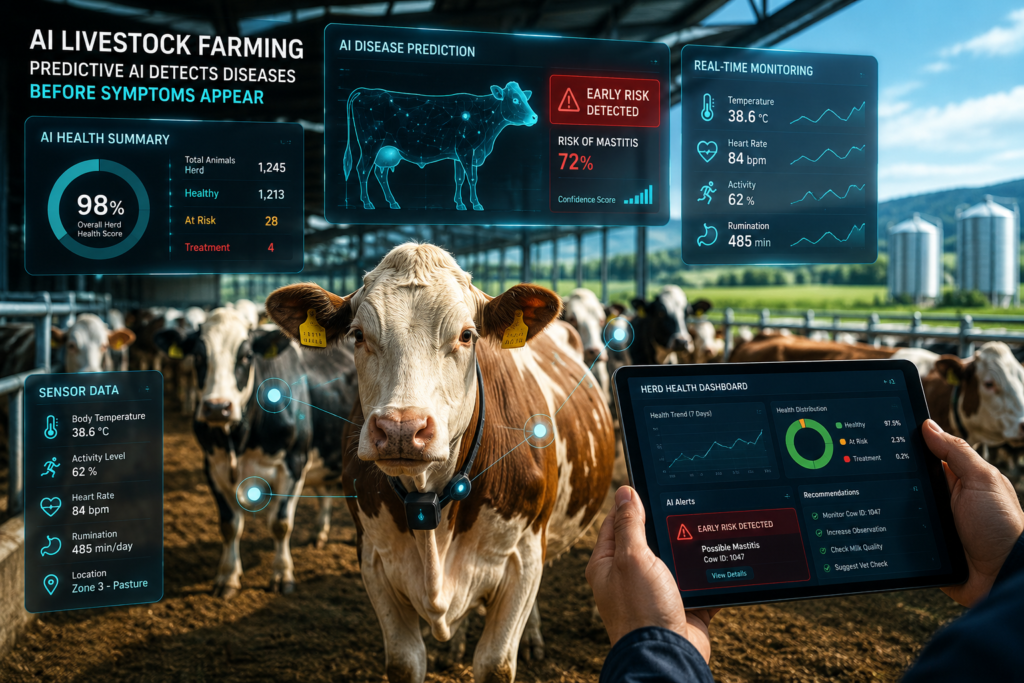
AI Livestock Farming
The livestock industry is experiencing one of the biggest technological revolutions in its history. For generations, farmers have relied on experience, observation, and traditional husbandry practices to maintain animal health and productivity. While those methods remain valuable, modern farming faces challenges that are larger and more complex than ever before.
Rising feed costs, disease outbreaks, labor shortages, increasing consumer demand for animal welfare, and the need for sustainable food production are pushing farmers to seek smarter solutions. This is where AI Livestock Farming is transforming the agricultural landscape.
Artificial Intelligence is no longer a futuristic concept reserved for technology companies. It has become a practical tool that helps farmers monitor livestock in real time, detect diseases before symptoms become severe, improve breeding decisions, reduce mortality rates, and increase overall farm profitability.
At the center of this transformation are Smart Livestock Monitoring systems, predictive analytics, machine learning algorithms, computer vision technologies, and intelligent sensors that continuously gather and analyze animal data.
The result is a farming environment where decisions are no longer based solely on observation but are supported by real-time insights generated by advanced technologies.
In this comprehensive guide, we will explore seven groundbreaking innovations driving AI Livestock Farming in 2026 and examine how these technologies are reshaping animal health management for the future.

Why AI Livestock Farming Is Becoming Essential in 2026
The global demand for meat, dairy, eggs, and animal-derived products continues to rise. At the same time, livestock producers face mounting pressure to improve efficiency while maintaining high standards of animal welfare.
Traditional monitoring methods often struggle to identify subtle behavioral changes that indicate health problems. By the time visible symptoms appear, diseases may have already spread through a herd or flock.
AI Livestock Farming addresses this challenge by enabling:
- Continuous monitoring of animal health
- Early disease detection
- Improved feed efficiency
- Better reproductive management
- Reduced veterinary costs
- Enhanced animal welfare
- Increased farm profitability
Artificial intelligence can process thousands of data points every minute, far beyond what a human observer can realistically monitor.
This capability is making AI-powered livestock monitoring systems for animal health management one of the fastest-growing sectors in modern agriculture.
for more details:
Food and Agriculture Organization (FAO)
https://www.fao.org
The Evolution of Precision Livestock Farming
Precision Livestock Farming refers to the use of advanced technologies to monitor, manage, and optimize livestock production.
Unlike conventional management approaches that treat herds as a single group, Precision Livestock Farming focuses on monitoring individual animals.
Using sensors, cameras, wearable devices, and AI software, farmers can gather detailed information regarding:
- Movement patterns
- Feeding behavior
- Water consumption
- Body temperature
- Heart rate
- Respiratory activity
- Social interactions
This individual-level monitoring allows farmers to identify problems earlier and make more informed decisions.
The combination of AI and precision farming is creating a future where animal care becomes more proactive than reactive.
2 Powerful AI Livestock Farming Innovations Delivering Remarkable Results
1. Smart Livestock Monitoring Through Wearable Sensors
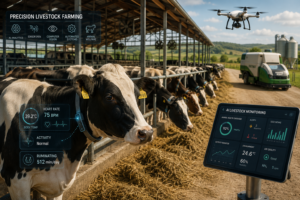
One of the most significant breakthroughs in Smart Livestock Monitoring is the widespread adoption of wearable sensor technology.
Modern livestock wearables function similarly to fitness trackers used by humans. These devices continuously collect valuable biological and behavioral data.
Examples include:
- Smart collars
- Ear tags
- Leg bands
- Implantable microchips
- GPS trackers
These sensors can monitor:
- Body temperature
- Activity levels
- Eating habits
- Rumination patterns
- Sleep behavior
- Location tracking
A cow experiencing illness often shows subtle behavioral changes long before physical symptoms become visible.
The AI system recognizes these deviations and immediately alerts farmers.
Benefits of Smart Sensors for Cattle Health Monitoring and Disease Prevention
Smart sensors provide several advantages:
- Early illness detection
- Reduced mortality rates
- Lower veterinary expenses
- Better herd management
- Improved productivity
- Enhanced welfare standards
Instead of manually inspecting hundreds of animals daily, farmers receive real-time alerts that highlight animals requiring attention.
This shift saves labor while improving animal outcomes.
2. AI-Powered Livestock Disease Detection Systems
Disease outbreaks remain one of the greatest threats to livestock operations worldwide.
The emergence of Livestock Disease Detection systems powered by AI is changing how farms respond to health risks.
Artificial intelligence analyzes data from multiple sources:
- Wearable sensors
- Veterinary records
- Environmental data
- Feeding patterns
- Camera footage
By identifying unusual patterns, AI can detect potential health problems before farmers notice visible symptoms.
How Predictive AI Detects Livestock Diseases Before Symptoms Appear
Predictive AI uses machine learning models trained on millions of historical data points.
The system learns to recognize early warning signs associated with diseases such as:
- Mastitis
- Foot-and-mouth disease
- Respiratory infections
- Heat stress
- Digestive disorders
For example, a slight decrease in feed intake combined with reduced movement and elevated temperature may indicate the early stages of illness.
The AI system identifies this combination instantly and sends alerts to farm managers.
This proactive approach significantly reduces treatment costs and disease spread.

Comparison Table: Traditional vs AI-Powered Livestock Monitoring
| Monitoring Factor | Traditional Farming | AI Livestock Farming |
|---|---|---|
| Disease Detection | Often after symptoms appear | Before symptoms become visible |
| Monitoring Frequency | Periodic manual checks | 24/7 continuous monitoring |
| Data Collection | Human observation | Automated real-time sensors |
| Labor Requirement | High | Reduced |
| Accuracy | Variable | High |
| Response Time | Slower | Immediate alerts |
| Animal Welfare | Reactive | Proactive |
AI Livestock Farming and Smart Livestock Monitoring: Revolutionizing Animal Health Management
The livestock industry is undergoing a remarkable transformation, and at the center of this change is AI Livestock Farming. What was once considered futuristic technology is now becoming an essential tool for farmers seeking to improve animal health, increase productivity, and reduce operational costs. As farms grow larger and the demand for animal products continues to rise, traditional livestock management methods are no longer enough to meet modern challenges. This is where Smart Livestock Monitoring is proving to be a game-changer.
For decades, livestock farmers relied heavily on visual observation to assess the health and well-being of their animals. While experience and intuition remain valuable, even the most skilled farmers can miss subtle signs of illness or distress, especially when managing hundreds or thousands of animals. Artificial intelligence is changing this reality by providing continuous, real-time monitoring that helps farmers make faster and more informed decisions.
What Is Smart Livestock Monitoring?
Smart Livestock Monitoring refers to the use of advanced technologies such as artificial intelligence, sensors, wearable devices, cameras, and data analytics to monitor livestock health and behavior around the clock. These systems collect vast amounts of information from individual animals and transform that data into actionable insights.
Rather than relying solely on periodic inspections, farmers can now receive instant updates about the condition of their livestock. This shift from reactive management to proactive management is one of the biggest advantages of modern AI-powered livestock monitoring systems for animal health management.
The technology can track various indicators, including:
- Body temperature
- Heart rate
- Activity and movement patterns
- Feeding behavior
- Water consumption
- Weight changes
- Rumination activity
- Reproductive cycles
- Sleeping patterns
By continuously monitoring these metrics, AI systems can identify unusual changes that may indicate health problems long before visible symptoms appear.
How AI Livestock Farming Improves Animal Health
One of the most significant benefits of AI Livestock Farming is its ability to improve overall animal health. Healthy animals grow faster, produce more efficiently, and require fewer medical interventions. Early detection plays a critical role in achieving these outcomes.
Artificial intelligence analyzes data collected from sensors and compares it against normal behavior patterns. When an animal begins to exhibit unusual activity, the system immediately flags the issue and alerts farm managers.
For example, a dairy cow experiencing the early stages of mastitis may show slight changes in movement, feeding habits, or body temperature. These changes may be too subtle for humans to notice during routine inspections. However, AI systems can detect these abnormalities instantly, allowing farmers to intervene before the condition worsens.
This proactive approach offers several important advantages:
- Reduced disease outbreaks
- Lower mortality rates
- Improved recovery outcomes
- Reduced veterinary expenses
- Better animal welfare standards
- Increased farm profitability
The Role of Wearable Technology in Smart Livestock Monitoring
Wearable technology has become one of the most valuable tools in modern livestock management. Similar to fitness trackers used by humans, livestock wearables continuously collect health and behavioral data from animals.
Common wearable devices include:
Smart Ear Tags
Smart ear tags monitor movement, location, and activity levels. They help farmers track individual animals and identify behavioral changes that could signal health concerns.
Smart Collars
These devices are widely used in cattle farming and can monitor rumination, feeding habits, and physical activity. AI algorithms analyze this information to identify potential health issues.
Leg Sensors
Leg-mounted devices track walking patterns and mobility. Changes in movement can indicate lameness, injury, or illness.
GPS Tracking Systems
GPS-enabled devices help farmers monitor grazing patterns, detect missing animals, and manage large herds more efficiently.
Together, these technologies create a comprehensive monitoring network that supports better decision-making and improved livestock management.
Why Real-Time Data Is Transforming Animal Health Management
One of the greatest strengths of Smart Livestock Monitoring is access to real-time data. In traditional farming systems, valuable information is often collected only during routine inspections. This can create delays in identifying and addressing health problems.
AI-powered systems eliminate this gap by continuously collecting and analyzing information every minute of the day.
Real-time monitoring allows farmers to:
- Detect illnesses sooner
- Monitor treatment effectiveness
- Prevent disease spread
- Optimize feeding programs
- Improve breeding outcomes
- Reduce labor requirements
The ability to make immediate decisions based on accurate data significantly improves farm efficiency and animal welfare.
AI-Powered Livestock Monitoring Systems for Animal Health Management
Modern AI-powered livestock monitoring systems for animal health management combine multiple technologies into a single platform. These systems gather data from sensors, cameras, environmental monitors, and farm management software.
The AI engine processes this information and generates recommendations that help farmers optimize operations.
Key features often include:
- Automated health alerts
- Predictive disease detection
- Reproductive monitoring
- Heat stress management
- Feeding optimization
- Performance tracking
- Behavioral analysis
Instead of spending hours manually reviewing animal records, farmers can access detailed insights through user-friendly dashboards and mobile applications.
Enhancing Animal Welfare Through AI Livestock Farming
Animal welfare is becoming increasingly important to consumers, regulators, and food producers. Modern consumers want assurance that animals are raised under healthy and humane conditions.
AI Livestock Farming helps meet these expectations by providing continuous oversight of animal well-being.
Benefits include:
- Reduced stress levels
- Faster response to injuries
- Better environmental conditions
- Improved nutrition management
- Enhanced comfort and care
For example, AI systems can monitor barn temperatures and ventilation levels. If environmental conditions become unsafe, automated alerts enable farmers to take immediate action.
This level of precision helps create healthier living environments and improves the quality of life for livestock.
more details: United States Department of Agriculture (USDA)
https://www.usda.gov
Economic Benefits for Farmers
While many farmers initially adopt Smart Livestock Monitoring to improve animal health, the financial benefits are equally compelling.
Healthier animals generally result in:
- Higher milk production
- Improved weight gain
- Better reproductive performance
- Reduced treatment costs
- Lower mortality rates
- Increased overall profitability
Labor efficiency also improves significantly. Instead of spending countless hours conducting manual inspections, farmers can focus their attention where it is needed most.
As AI technology becomes more affordable and accessible, farms of all sizes are beginning to realize substantial returns on investment.
The Future of AI Livestock Farming
The future of AI Livestock Farming extends far beyond simple monitoring. Emerging technologies are expected to integrate advanced machine learning, computer vision, predictive analytics, and automation into a unified ecosystem.
Future developments may include:
- Fully autonomous livestock monitoring systems
- Advanced disease prediction models
- AI-driven breeding recommendations
- Automated treatment systems
- Digital twins of livestock operations
- Enhanced sustainability monitoring
As these innovations continue to evolve, farmers will gain even greater visibility into animal health and farm performance.
Ultimately, Smart Livestock Monitoring is not about replacing farmers—it is about empowering them with better information. By combining traditional farming expertise with artificial intelligence, the livestock industry is entering a new era where animal health management becomes more precise, efficient, and proactive than ever before. This transformation is making AI Livestock Farming one of the most important developments shaping the future of agriculture in 2026 and beyond.
How Predictive AI Detects Livestock Diseases Before Symptoms Appear
Key Points
1. Continuous Data Collection
Predictive AI gathers information from multiple sources, including:
- Smart collars and ear tags
- Temperature sensors
- Feeding monitors
- GPS tracking devices
- Farm surveillance cameras
This continuous stream of data allows AI systems to monitor animal health 24/7.
2. Early Detection of Abnormal Behavior
AI can identify subtle behavioral changes that humans may overlook, such as:
- Reduced feed intake
- Less movement or activity
- Changes in sleeping patterns
- Unusual social behavior
- Reduced water consumption
These changes often occur days before visible signs of illness appear.
3. Machine Learning Identifies Disease Patterns
Machine learning algorithms analyze historical and real-time data to recognize patterns associated with common livestock diseases.
Examples include:
- Mastitis in dairy cattle
- Respiratory infections
- Foot-and-mouth disease
- Heat stress
- Digestive disorders
The system becomes more accurate over time as it processes additional data.
4. Real-Time Health Alerts
When AI detects a potential health issue, it immediately notifies farmers through:
- Mobile apps
- SMS alerts
- Farm management dashboards
- Automated reports
This enables rapid intervention before the disease spreads.
5. Reduced Disease Outbreaks
Early identification helps farmers isolate affected animals quickly, reducing:
- Disease transmission
- Treatment costs
- Production losses
- Mortality rates
This is one of the biggest advantages of modern Livestock Disease Detection systems.
6. Improved Animal Welfare
Predictive AI supports better animal care by ensuring that health issues are addressed promptly.
Benefits include:
- Less suffering for animals
- Faster treatment
- Improved recovery rates
- Better overall herd health
7. Cost Savings and Increased Productivity
Healthy animals are generally more productive and profitable.
Predictive AI helps farmers achieve:
- Higher milk yields
- Better weight gain
- Improved breeding performance
- Reduced veterinary expenses
- Increased farm efficiency
8. Integration with Precision Livestock Farming
Predictive AI works alongside other Precision Livestock Farming technologies to create a complete health management system.
Combined technologies include:
- Smart livestock monitoring
- Computer vision systems
- Environmental sensors
- Automated feeding systems
- Health tracking software
Together, these tools provide farmers with a comprehensive view of herd health and performance.
Key Takeaway
Predictive AI is transforming livestock management by shifting disease control from a reactive approach to a proactive one. Instead of waiting for animals to show obvious symptoms, farmers can identify risks early, take preventive action, and maintain healthier, more productive herds. This capability is making predictive AI one of the most valuable innovations in AI Livestock Farming in 2026 and beyond.

Smart Sensors for Cattle Health Monitoring and Disease Prevention: Benefits, Challenges, and Real-World Applications
1. Continuous Health Monitoring
Smart sensors provide round-the-clock monitoring of cattle, collecting valuable data that helps farmers identify potential health problems early.
They can track:
- Body temperature
- Heart rate
- Activity levels
- Feeding behavior
- Rumination patterns
- Water consumption
This continuous monitoring reduces reliance on manual inspections and helps farmers make faster decisions.
Conclusion
AI Livestock Farming is rapidly transforming the way farmers manage animal health, productivity, and welfare. Through innovations such as Smart Livestock Monitoring, predictive disease detection, and advanced sensor technologies, farmers can identify health issues earlier, make more informed decisions, and improve overall farm efficiency. As artificial intelligence continues to evolve, these tools will become even more accessible and powerful, helping create healthier livestock, more sustainable farming practices, and a more resilient agricultural future. For farmers looking to stay competitive in 2026 and beyond, embracing AI-powered solutions is no longer just an advantage—it is becoming a necessity.
About The Author